One Outbreak Exposed a Gap in Food Safety Tracking Nobody Wants to Talk About

Cyclospora

A sharp rise in foodborne illness cases this summer has renewed attention on how the U.S. tracks contaminated produce through a sprawling supply chain. The clearest example came on July 17, 2026, when Taylor Farms de Mexico pulled iceberg lettuce from the U.S. market after federal investigators tied it to a fast-growing Cyclospora outbreak.

Taylor Farms recall turned a summer outbreak into a national test case

Taylor Fresh Foods announced on July 17, 2026 that Taylor Farms de Mexico was voluntarily removing all iceberg lettuce sourced from central Mexico from the U.S. market because of possible Cyclospora contamination, according to the company announcement posted by the FDA. The recall covered foodservice products sold under brands including CV, JB, MARK, PK, SUB, SY, and TF, plus Marketside retail products sold at Walmart as “Iceberg Salad” in 12-ounce and 24-ounce packages and “Shredded Lettuce” in 8-ounce and 16-ounce packages, all with best-if-used-by dates from July 18, 2026 through August 3, 2026.

The company said the shredded iceberg product had been distributed from June 29 through July 16 in Alabama, Arkansas, Connecticut, Florida, Georgia, Iowa, Illinois, Indiana, Kansas, Kentucky, Louisiana, Massachusetts, Maryland, Michigan, Missouri, Mississippi, North Carolina, New Hampshire, New Jersey, Ohio, Oklahoma, Pennsylvania, South Carolina, Tennessee, Texas, Virginia, and Wisconsin. Taylor Fresh Foods told consumers to discard the recalled iceberg lettuce immediately, not consume it, or seek a full refund at the place of purchase.

By August 13, the FDA said the multistate outbreak had reached 9,481 confirmed illnesses, 398 hospitalizations, and two deaths across 17 states. The agency said many illnesses began before the July 17 recall, underscoring how outbreaks can keep growing even after a product is pulled because case confirmation and reporting can take weeks.

The outbreak’s biggest lesson was not just contamination, but limited visibility

What made the Cyclospora outbreak stand out was not only its scale, but how difficult it was to map in real time. The CDC said Cyclospora is harder to track than many bacterial pathogens because whole genome sequencing is not available for it, which limits investigators’ ability to quickly connect cases the way they often can with Salmonella or Listeria.

That weakness matters in a produce outbreak tied to restaurants, retailers, and multiple downstream products. FDA said the illnesses in this outbreak involved people who reported exposure to processed iceberg lettuce from Taylor Farms de Mexico served or purchased at various locations, including Taco Bell, while the broader 2026 Cyclospora season stretched far beyond this one cluster. CDC reported 13,895 laboratory-confirmed domestically acquired Cyclospora cases since May 1, 2026, with at least 10,455 additional cases still requiring investigation and analysis.

Consumer Reports said in its August 2026 Food Policy Insider that the outbreak showed why CDC and FDA funding needs to be restored for FoodNet tracking of Cyclospora and seven other pathogens dropped because of budget cuts. The group also said the FDA traceability rule, already delayed for years and not scheduled to take effect until July 2028, should move faster.

For shoppers and restaurants, the gap is in tracing what moved where and when

For consumers, most of the recalled retail dates have already passed, and both the FDA and CDC said the affected products should no longer be available in stores or restaurants. Even so, the agencies advised people who previously bought or received recalled iceberg lettuce to clean and sanitize any surfaces or containers it touched, a reminder that food safety problems can linger beyond the shelf life of the product itself.

For restaurants and grocers, the practical issue is supplier visibility. Consumer Reports said stores and restaurants often absorb the reputational and economic damage from outbreaks even when contamination began farther upstream, and it urged them to scrutinize suppliers more rigorously, enforce safety standards, and be prepared to switch suppliers when risks emerge.

The broader policy issue is that traceback remains slower and less precise than regulators and buyers want. FDA said it has increased border screening and sampling and launched an onsite inspection at Taylor Farms de Mexico with Mexican officials, while CDC said it continues to integrate interviews, laboratory data, and food traceback information to define the outbreak. Until those systems improve, this outbreak will remain a case study in how a recall can move faster than the country’s ability to fully track a pathogen.

Stanley Tucci Once Called This Dish “One of the Best Things” He’s Ever Eaten

Stanley_Tucci

Italian regional dishes continue to find new global audiences through television, tourism, and social media. One of the clearest examples remains Stanley Tucci’s praise for spaghetti alla Nerano, a zucchini pasta linked to the village of Nerano on Italy’s Sorrento Peninsula. The moment that pushed the dish into wider public view came in CNN’s February 14, 2021, premiere of Stanley Tucci: Searching for Italy.

The TV moment that made the dish a headline

CNN’s Stanley Tucci: Searching for Italy debuted on February 14, 2021, with the episode “Naples and the Amalfi Coast,” according to CNN’s press materials and episode listings. In that episode, Tucci tasted spaghetti alla Nerano and described it as “one of the best things” he had ever eaten, a line that has continued to circulate in food coverage and recipe stories. The dish was presented as a local specialty in Campania, the southern Italian region that includes Naples, the Sorrento Peninsula, and the Amalfi Coast.

Coverage that followed helped cement the quote in the food media cycle. The Independent later described the scene as Tucci calling the pasta “one of the best things he’s ever eaten,” while The Daily Meal and other outlets tied the comment directly to spaghetti alla Nerano. That repeated attribution matters because it moved the pasta from regional specialty to recognizable international dish.

The dish itself is notably simple. Reports describing the episode identify spaghetti alla Nerano as pasta dressed with fried zucchini, cheese, and basil, with some versions emphasizing Provolone del Monaco as a key local ingredient. Its rise was less about a new launch or corporate campaign than a specific on-camera endorsement that audiences remembered.

Why Nerano and the Amalfi Coast stayed central to the story

The geography is unusually important in this case because the dish is not just “Italian pasta” in a broad sense. The New Yorker reported that Tucci visited Nerano, described as a village on the Sorrento Peninsula at the beginning of the Amalfi Coast, and that the appearance helped raise the profile of spaghetti alla Nerano and draw visiting diners. That makes the local impact more specific than a general tourism bump for Italy.

The restaurant most often connected to Tucci’s televised meal is Lo Scoglio da Tommaso, which has been repeatedly cited in follow-up coverage. Forbes, in a 2026 travel piece, also referenced Lo Scoglio on the Amalfi Coast when pointing readers to the signature dish Tucci praised on television. Even years later, the dish remains tied to that coastline in travel and dining coverage.

What is less clear is any verified count of how much tourism or restaurant traffic increased because of the episode. Public reporting has described a steady stream of visitors and heightened interest, but a comprehensive official tally of affected businesses in Nerano or along the Amalfi Coast has not been publicly released. The confirmed point is narrower: the dish’s modern fame remains anchored to Campania, and specifically to Nerano and nearby coastal dining destinations.

What the quote says about food media and what diners can expect

The wider context is that food television increasingly shapes destination dining. In this case, Tucci’s endorsement worked because it elevated a highly localized dish without changing its identity. The New Yorker noted that the segment gave spaghetti alla Nerano A-list culinary prominence, while later food and travel coverage continued to use his praise as shorthand for the dish’s appeal.

That pattern also reflects what audiences respond to now: specificity, place, and recognizable ingredients. Spaghetti alla Nerano is not a mass-market branded product or a seasonal chain menu item. It is a regional pasta with a clearly defined origin story in Campania and a television moment that made viewers want to seek out the original.

For diners, the practical takeaway is straightforward. Anyone encountering the dish today should expect a zucchini-based pasta closely associated with Nerano, typically built around spaghetti, fried zucchini, basil, and cheese, though restaurant versions may vary. The dish’s public identity still rests on the same factual touchpoints: a February 14, 2021 CNN episode, a meal on the Amalfi Coast, and Tucci’s now-famous assessment that it ranked among the best things he had ever eaten.

A Michigan Town Just Found Out Which Store Isn’t Making the Cut

Kroger

Kroger is trimming its national store base as grocery chains face higher costs and changing shopping patterns. In Michigan, that broader strategy has now produced a specific local result: the Kroger at 5249 Corunna Road in Flint Township is set to close. The decision gives Genesee County residents the first confirmed example of which Michigan store is being eliminated in Kroger’s current downsizing plan.

Kroger names a Flint Township store in its 60-store reduction plan

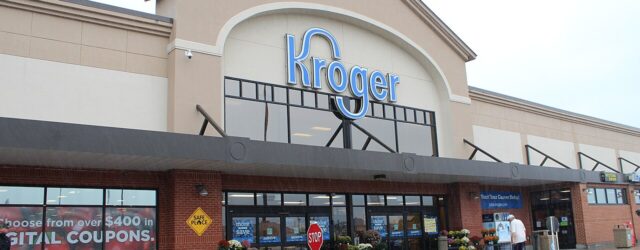
Kroger confirmed that its Flint Township store at 5249 Corunna Road will permanently close on September 30. The location is part of the company’s plan to shutter approximately 60 underperforming stores over the next 18 months, a move Kroger disclosed in its first-quarter 2025 earnings materials and earnings call on June 20, 2025. In that filing, the company said it took a $100 million impairment charge tied to the planned closures.

The Flint Township store appears to be Michigan’s first publicly confirmed location in that national reduction. Kroger’s store directory has listed the Corunna Road site among its Flint-area stores, and local reporting identified that address as the one scheduled to close at the end of September. Kroger also said employees at affected stores would be offered roles in other locations, a point executives repeated when discussing the broader closure plan.

The company has framed the closures as a portfolio decision rather than a full-scale retreat. Kroger said the goal is to improve efficiency and strengthen long-term profitability while keeping the vast majority of its more than 2,700 stores open. Company executives said the closures should allow Kroger to reinvest in stronger-performing stores and support future growth across its remaining network.

What is confirmed in Michigan, and what remains unclear

For Michigan shoppers, the confirmed impact is narrow but significant. The only location publicly identified in the available reporting is the Flint Township store on Corunna Road, with a closing date of September 30. That gives residents in and around Flint Township a firm timeline, but it does not yet answer whether additional Michigan stores will also be included in Kroger’s 18-month plan.

Kroger has not released a comprehensive list of affected Michigan locations. That means it is not yet possible to confirm a statewide closure count beyond the Flint Township store. Reporting tied to the announcement has also not identified additional city-level closures elsewhere in Michigan, so any broader map of impacted communities remains incomplete.

The local effect is especially relevant because Kroger still operates other Flint-area stores. Kroger’s online store listings recently showed multiple locations in Flint, including the Corunna Road address now slated to close. For customers who use the Flint Township location, Kroger has said nearby stores will remain open, though the company has not publicly outlined any route changes, service transfers, or location-specific transition details beyond saying workers may transfer.

Why Kroger is closing stores now, and what customers should expect

Kroger’s stated reason is operational efficiency. In its first-quarter 2025 earnings release, the company said the store closures were tied to underperforming locations and presented the move as part of a strategy to improve profitability over the next 18 months. During the earnings call, executives said they expected sales from some closed stores to shift to other nearby Kroger locations, helping the company operate a more productive network.

That explanation fits wider pressures across the grocery business. Industry reporting has tied recent supermarket closures nationally to rising operating costs, stronger competition from discount chains and warehouse clubs, and continued shifts toward digital grocery ordering. Kroger’s own comments emphasized reinvestment in remodels, digital capabilities, and e-commerce rather than an across-the-board reduction in brick-and-mortar grocery demand.

For residents in Flint Township, the practical expectation is straightforward: the Corunna Road store is scheduled to stop operating on September 30, while other nearby Kroger stores are expected to remain open. Kroger has said associates will be offered opportunities at neighboring stores, and the company has not announced additional confirmed Michigan closures at this stage. Until Kroger releases a fuller list, Flint Township remains the clearest identified Michigan community affected by the company’s current national downsizing effort.

McDonald’s Just Teamed Up With a Drink Brand Nobody Expected to See on the Menu

McDonald's

Cold drinks have become a bigger battleground for fast-food chains as companies look for growth beyond burgers, fries, and the breakfast rush. McDonald’s is now bringing that strategy into a new category with an unexpected menu pairing: Red Bull drinks at participating U.S. restaurants starting August 17, 2026.

McDonald’s puts Red Bull on the menu

McDonald’s has started offering Red Bull-branded beverages at participating U.S. locations, with the launch date confirmed as August 17, 2026 in recent menu materials and store-level rollout information. Earlier this year, Reuters reported that McDonald’s was preparing to add a Red Bull Dragonberry Energizer as part of a broader overhaul of its cold drink lineup in U.S. restaurants, citing company documents and a Wall Street Journal report. McDonald’s had already signaled a larger beverage push in an April 28, 2026 company announcement introducing its first nationwide lineup of Refreshers and Crafted Sodas.

That April announcement showed McDonald’s moving well beyond its traditional fountain-drink lineup. The company said it was launching new Refreshers and Crafted Sodas in the U.S., building on work that came out of CosMc’s, the beverage-focused concept McDonald’s opened in late 2023. McDonald’s later said the CosMc’s test would help bring “CosMc’s-inspired beverages” to hundreds of standard McDonald’s restaurants in the U.S., confirming the scale of its beverage expansion in a May 23, 2025 corporate update.

The Red Bull move stands out because McDonald’s beverage strategy had largely been associated with soft drinks, coffee, and internally developed specialty beverages. A Red Bull-branded product places a major energy drink name directly on McDonald’s menu boards, which is a notable shift for a chain long associated with Coca-Cola fountain products and McCafé offerings. McDonald’s online drinks menu also shows the company’s beverage section continuing to expand in 2026.

What the rollout means in U.S. restaurants

For customers, the clearest confirmed point is that the drinks are being sold at participating U.S. McDonald’s restaurants rather than every location nationwide. McDonald’s has not released a comprehensive public list of participating cities, states, or franchise locations, so it is not yet possible to verify exactly which local markets received the Red Bull drinks first. The company’s consumer-facing menu language for other specialty beverages also uses participating-location terms, underscoring that availability can vary by restaurant.

That means the local impact is real but uneven. Some restaurants appear to have added the drinks as part of a wider specialty beverage setup, while others may not be included in the initial wave. Without a full list from the company, readers should understand that menu availability is confirmed at participating U.S. restaurants but not yet mapped market by market.

The limited public detail also reflects how McDonald’s typically handles menu tests and phased rollouts. The company’s previous beverage test tied to CosMc’s-inspired drinks was introduced in more than 500 restaurants in Wisconsin and Colorado, according to Restaurant Business, before broader menu expansion followed. In this case, McDonald’s has confirmed the category push, while the exact city-by-city footprint for Red Bull drinks remains undisclosed.

Why McDonald’s is making this move now

McDonald’s has been explicit that beverages are a bigger strategic priority. In its April 28, 2026 announcement, the company said its new lineup was designed to open “a new era of drinks” in the U.S., framing beverages as a traffic and innovation opportunity rather than just an add-on purchase. Reuters also reported in April that the company planned to price new drinks below specialty beverage rivals such as Starbucks, Dutch Bros, and Sonic, placing McDonald’s directly into a fast-growing competitive set.

The Red Bull addition also fits the company’s post-CosMc’s playbook. McDonald’s said its CosMc’s concept gave it a real-world “Learning Lab” that helped it test, refine, and narrow beverage ideas before bringing the strongest options to more traditional restaurants. By May 2025, McDonald’s had already said CosMc’s-inspired beverages would land in hundreds of U.S. locations, showing that the company intended to scale the category even after closing the standalone concept.

For customers, the practical takeaway is that McDonald’s beverage menu is no longer limited to the chain’s legacy staples. Depending on the restaurant, customers may now see refreshers, crafted sodas, and Red Bull-based drinks alongside the usual soft drinks and McCafé items. McDonald’s has framed the broader rollout as part of a continuing beverage expansion in U.S. restaurants, suggesting drinks will remain a visible part of the chain’s menu strategy through 2026.

Millions of Eggs Just Got a Warning Label the FDA Reserves for Its Worst Cases

Egg recalls have taken on added urgency this summer as federal health officials track several multistate foodborne illness investigations. In this case, the focus is a Texas-linked shell egg recall that the U.S. Food and Drug Administration has now placed in its most serious hazard category. The affected products were sold under grocery and store brands across parts of the South and Southwest.

FDA assigns its highest-risk label to a Texas egg recall

Midwest Poultry Services, L.P. initiated the recall on July 22, 2026, covering 1,589,577 dozen white shell eggs and brown cage-free shell eggs produced in Texas, according to the company announcement posted by the FDA. The agency later classified the action as a Class I recall, the FDA category reserved for cases in which there is a reasonable probability that exposure could cause serious adverse health consequences or death.

The recalled eggs were produced between June 6, 2026, and July 3, 2026, and carry sell-by or best-by dates from July 20, 2026, through August 17, 2026, according to the FDA outbreak advisory. Federal officials said the products were sold in bulk and in retail cartons containing 6, 12, 18, 24, 30, 36, and 60 eggs under Country Morning, Cal-Maine Sunups, Brookshire’s, Simple Truth, and Kroger brand names.

FDA materials identify the recalled cartons by plant codes P-1950 or 0840962 and Julian dates 157 through 184 printed on the carton. Product listings published by the FDA include varieties such as Kroger Large 12 eggs, Kroger Large 18 eggs, Simple Truth Cage Free Large Brown 12 eggs, Brookshire’s Large 12 Eggs, and Country Morning Large 12 Eggs, along with UPCs tied to each item. The FDA said consumers, restaurants, and retailers that purchased or received the eggs should throw them away or return them to the place of purchase for a refund.

Distribution was confirmed in six states, with Texas at the center

The FDA said product distribution has been confirmed in Arkansas, Louisiana, Mississippi, New Mexico, Oklahoma, and Texas. In the company recall notice, Midwest Poultry Services said eggs were shipped to foodservice and retail customers in Texas, Oklahoma, and Louisiana, and were also available through Brookshire Grocery stores in Texas, Oklahoma, Arkansas, Louisiana, New Mexico, and Mississippi, as well as other smaller retail outlets.

Texas is the key geography in the recall because the eggs were produced and distributed from farms in Texas, per the FDA and the company notice. Kroger store sales cited in the recall were confirmed in Texas and Louisiana, while Brookshire’s distribution extended to the six-state footprint listed by the FDA. The company has not released a comprehensive city-by-city list of affected stores or foodservice customers in Texas or the other states.

The public health impact reaches beyond those six distribution states. As of the FDA’s July 24, 2026 update, 98 people infected with the outbreak strain of Salmonella Enteritidis had been reported across 17 states, with 26 hospitalizations and no deaths. The states with confirmed illnesses were Arizona, California, Colorado, Georgia, Illinois, Louisiana, Michigan, Missouri, Mississippi, North Carolina, New Mexico, Nevada, New York, Oklahoma, South Carolina, Texas, and West Virginia.

Testing linked the eggs to part of a wider Salmonella outbreak

The FDA said laboratory, epidemiological, and traceback evidence determined that shell eggs recalled by Midwest Poultry Services are a likely source of illnesses in the outbreak. According to the agency, the company shared third-party testing results with FDA on July 21, 2026, and samples collected at farms in Texas tested positive for Salmonella. Whole genome sequencing performed by the firm’s third-party lab found that some samples matched the outbreak strain.

Federal investigators also drew a narrower conclusion: Midwest Poultry Services appears linked to part, but not all, of the outbreak. The FDA said the producer was identified as a common egg source during traceback work, but it “does not account for all the illnesses” in the multistate investigation. The agency said additional investigation is ongoing to determine whether other sources are contributing to reported illnesses.

For shoppers and food businesses in the affected states, the practical impact is specific rather than open-ended. The FDA said recalled eggs can be identified by the listed plant codes, Julian dates, and date range, and that any purchased or received products should be discarded or returned for a refund, with potentially contaminated areas disinfected afterward. As of the latest FDA outbreak update, the investigation remained active and the advisory was subject to further revision as new information became available.

After 32 Years, One California Institution Is Serving Its Last Plate

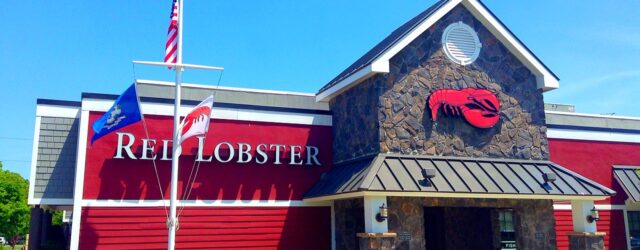
Restaurant chains across the U.S. are still shrinking footprints as operators sort through higher labor costs, lease obligations and uneven customer traffic. In Santa Maria, that pressure is now hitting one of the city’s longtime national chain restaurants: Red Lobster at 1525 S. Bradley Road is scheduled to close at the end of August after about 32 years in business. The move ties a local loss to the company’s broader post-bankruptcy restructuring.

Santa Maria’s Red Lobster is scheduled to close on August 31

Red Lobster Restaurants LLC has filed a California WARN notice showing that its Santa Maria restaurant at 1525 S. Bradley Road is set for permanent closure effective August 31, 2026. State-tracked WARN data reviewed through layoff monitoring services lists the event as a closure affecting 37 employees, while local reporting by KSBY also stated the restaurant is closing at the end of August. The location has operated in Santa Maria for roughly 32 years, according to local coverage.

The filing is significant because WARN notices are among the clearest public indicators that a closure has moved beyond rumor and into a formal labor action. In this case, the effective date is publicly listed and the employer is specifically identified as Red Lobster Restaurants LLC. That gives Santa Maria residents a confirmed timeline for when the restaurant is expected to stop serving customers.

The closure adds another California chapter to Red Lobster’s long restructuring process. The company filed for Chapter 11 bankruptcy protection in May 2024, then moved through a court-approved sale and reorganization later that year. Since then, Red Lobster has continued evaluating its restaurant base as it works to stabilize operations under new ownership.

What is confirmed in Santa Maria, and what remains unclear in California

What is confirmed is narrow but important: the Santa Maria location is the restaurant identified in the available WARN records, and the address attached to the filing is 1525 S. Bradley Road in Santa Maria. The worker count publicly associated with that filing is 37 employees. The closure date publicly tied to the notice is August 31, 2026.

What is not yet clear is whether any additional California Red Lobster locations are facing similar action at the same time. The company has not released a comprehensive public list of affected California restaurants tied to this specific round of evaluation. Publicly available reporting tied to this event centers on Santa Maria, not a broader statewide shutdown.

For Santa Maria, the impact is immediate and local. A national chain restaurant that had been part of the city’s dining mix for more than three decades is preparing to leave, and dozens of workers are attached to that change. For customers, the practical takeaway is simple: unless Red Lobster announces otherwise, the Santa Maria restaurant is expected to operate only through the stated August 31 closure date.

The closure reflects Red Lobster’s broader turnaround after bankruptcy

Red Lobster’s larger financial problems have been documented in bankruptcy filings and national reporting since 2024. The company said when it sought Chapter 11 protection in May 2024 that the process was intended to strengthen its financial position and maximize value for stakeholders. Reporting from the Associated Press and Bloomberg Law tied the filing to rising lease and labor costs, debt pressure and declining performance at some locations.

Court and restructuring records also show the chain had already begun trimming weaker stores before and during the bankruptcy process. Case trackers covering the reorganization reported that Red Lobster closed 93 underperforming restaurants in May 2024, and later emerged from bankruptcy under new ownership led by Fortress-backed lenders. That context matters because the Santa Maria decision fits the same pattern of portfolio review rather than an isolated local event.

For customers and residents, the immediate meaning is limited but concrete. The Santa Maria restaurant is scheduled to close, and the public filing gives a date and an employee count, but it does not provide a detailed public explanation for why this single site was selected. The broader company context suggests an ongoing effort to keep only locations viewed as viable over the long term, as Red Lobster continues operating while reducing costs and reshaping its footprint.

Some U.S. Cities Are Considering Cutting Out the Grocery Store Middleman Entirely

Grocery stores have long been treated as a private-sector problem. Now, a growing number of cities are asking whether food access should be handled more like public infrastructure.

That shift reflects frustration with store closures, rising prices, and neighborhoods that national chains still do not see as profitable.

Why cities are stepping into the grocery business

The push for public grocery models is rooted in a stubborn market failure. USDA’s Food Access Research Atlas continues to map low-income areas where residents are far from SNAP-authorized retailers or large grocery stores, underscoring how distance, transportation, and income still shape who can buy healthy food easily. In many cities, elected officials have concluded that waiting for a major chain to return is no longer a strategy at all.

Chicago became one of the clearest examples of that frustration. After floating a city-owned grocery concept in 2023, officials said a feasibility review found a public role was necessary where private operators had not delivered sustainable options. But by February 2025, the city pivoted toward municipally backed public markets instead of a single city-run supermarket, arguing that a broader food ecosystem approach could better support local growers, existing vendors, and neighborhood demand, according to the Chicago Sun-Times.

Madison, Wisconsin, has taken a slightly different route. Rather than operate a supermarket itself, the city secured a lease in November 2024 for Maurer’s Market to open in a 24,000-square-foot city-owned grocery space at 815 Cedar Street, with an anticipated mid-2025 opening. That model keeps the real estate in public hands while relying on an experienced private operator to run the store day to day.

What “cutting out the middleman” actually means

In practice, most cities are not trying to replace every supermarket. They are trying to reduce the layers of cost and risk that make groceries expensive or unavailable in underserved areas. That can mean public ownership of the building, subsidized rent, discounted fit-out costs, direct procurement partnerships, or a city contracting with an operator instead of leaving the entire project to a chain’s return-on-investment formula.

Atlanta’s emerging model shows how aggressive that support can become. Invest Atlanta approved more than $8.1 million in financial incentives for two stores announced on December 31, 2024, including a municipal grocery in southwest Atlanta to be operated by Savi Provisions under a sublease agreement with Invest Atlanta. City leaders said the stores would accept SNAP, offer discounts, partner with local farmers and vendors, and are expected to create 80 jobs with an estimated $21 million economic impact.

New York City has pushed the idea furthest into the mainstream. In July 2026, Mayor Zohran Mamdani announced that five city-run grocery stores, one in each borough, would offer a core basket of staple goods at prices set 30% below typical retail levels once a month. The city says the stores will be publicly backed but run with experienced private operators through an RFP process, an acknowledgment that governments may be able to lower overhead without pretending they are automatically better grocers.

The promise is real, but so are the risks

The appeal of these models is obvious. A city can lower occupancy costs, target neighborhoods that chains avoid, and treat food access as a service instead of a profit center. In a period when federal inflation data showed grocery prices were still elevated, with the BLS reporting the food-at-home index up 2.4% year over year in June 2025, public officials have a strong political case for experimenting with anything that can make staples cheaper.

Still, municipal groceries are not a magic trick. Even supporters acknowledge that food retail remains a low-margin business with spoilage, labor, logistics, refrigeration, and security costs that do not disappear just because a city owns the walls. Chicago’s retreat from a traditional city-run store to a public-market concept reflects that reality: governance is easier to announce than to operationalize.

The most credible lesson so far is that cities are not truly eliminating the middleman as much as redesigning it. They are using public land, financing, leases, and procurement power to make stores viable where private markets have failed. If these experiments work, they may not kill the supermarket model, but they could permanently change who gets to build it, subsidize it, and decide where it belongs.

New Jersey Just Outlawed a Pricing Tactic Hiding in Plain Sight at the Checkout

Shoppers have long worried about hidden fees. Now New Jersey is taking aim at something more subtle: the possibility that two people could pay different prices for the same groceries based on their data.

The state’s new law is a direct shot at a pricing strategy that many consumers never see, even when it is happening right at the shelf or checkout.

What New Jersey banned, and why it matters

In July 2026, Governor Mikie Sherrill signed the Fair Price Protection Act, a law designed to stop retailers from using personal information to set individualized prices on groceries and other necessities. According to the governor’s office, the law bars businesses from using data such as purchase history, online activity, and location to charge different prices for identical products based on what an algorithm predicts a shopper will pay. That is the core of what critics call surveillance pricing.

The issue matters because this tactic can be almost invisible to the customer. A shopper may simply see a price on a screen, scan an item, or load an app discount without realizing the number could have been shaped by personal data rather than a broadly available sale. Consumer advocates have warned for years that digital retail tools make this kind of price discrimination easier to deploy at scale.

New Jersey lawmakers framed the practice as a fairness issue, not a ban on ordinary promotions. Legislative materials make clear that loyalty, membership, and reward programs can still exist, as long as personally identifiable information collected for those programs is not used to personalize the actual sale price of groceries. In other words, stores can still offer discounts, but they cannot secretly use your data profile to decide whether you should pay more.

The technology behind the checkout concern

The law arrives as major retailers have expanded digital tools across stores, from app-based coupons to electronic shelf labels that can update prices rapidly. Supporters of the measure argue that these systems create the infrastructure for frequent, individualized pricing changes that would have been far harder with paper tags and static signs. The concern is not just speed, but precision: software can test what different shoppers will tolerate.

Legislative documents in New Jersey specifically referenced surveillance-based price discrimination, dynamic pricing, and personalized pricing in grocery sales. That language is important because it captures more than a simple sale that changes by time of day. It targets price changes informed by surveillance data collected from consumers, a distinction that separates ordinary markdowns from data-driven pricing tailored to the individual.

The law also drew attention to electronic shelf labels. The governor’s office said the measure includes a one-year moratorium on the use of new electronic shelf labels while the New Jersey Innovation Authority studies the technology’s effects and impacts. That does not mean every digital price tag is illegal forever, but it signals deep concern that modern shelf technology could make opaque pricing easier to normalize before consumers fully understand it.

What shoppers and retailers should expect next

For consumers, the practical takeaway is simple: New Jersey is trying to preserve the idea that the posted grocery price should be the same for everyone unless a clearly defined discount applies. That could make checkout more predictable at a time when food budgets remain strained. It also gives regulators a clearer basis to challenge pricing practices that may have seemed novel or difficult to police only a few years ago.

For retailers, the new rules raise the compliance bar. Committee statements tied the measure to the state’s Consumer Fraud Act, meaning violations could carry serious legal and financial consequences. Businesses will need to separate legitimate promotions from any pricing model that relies, even in part, on personal data to alter what a shopper pays for groceries or similar food items.

More broadly, New Jersey’s move could become a template for other states. Across the country, policymakers have been cracking down on junk fees, opaque surcharges, and misleading advertised prices. This law pushes that effort into a newer frontier: not just the fees added at checkout, but the hidden logic that may determine the price before the shopper ever reaches the register.

Storms, Conflict Abroad, and a Sudden Plant Closure Are Colliding in the Same Market

Tyson_Fresh_Meats_pork_plant

Weather disruptions, export risk overseas, and meatpacking cutbacks are all landing on U.S. agriculture at the same time. In western Illinois and the broader Corn Belt, that convergence now includes Tyson Foods’ decision to end operations at its Joslin-area beef facility on August 13, 2026, as grain traders also react to storm damage concerns and renewed Black Sea supply anxiety. Pro Farmer said those forces were all moving the market in the same mid-August stretch, with corn, wheat, cattle, and hog contracts all under pressure or support for different reasons.

Tyson confirms a sudden beef network restructuring

Tyson Foods said on August 13 that it will end operations at its Joslin, Illinois, beef facility as part of a broader restructuring of its beef network. In the same announcement, the company said it will also end operations at its Eagle Mountain, Utah, case-ready facility and pursue the sale of its Pasco, Washington, beef plant, while concentrating harvest capacity in Dakota City, Nebraska, Holcomb, Kansas, and Amarillo, Texas. Tyson said the moves are intended to create “a more competitive footprint” during what it described as one of the most historic cattle shortages the U.S. has experienced.

The company did not publicly release a worker count in that August 13 statement. What is confirmed is the location of the plant tied to the closure: federal EPA facility records list Tyson Fresh Meats’ Joslin operation at Highway 92 and I-88, 28424 38th Ave. N, Hillsdale, Illinois, in Rock Island County. Illinois’ WARN guidance says employers must notify the state when they plan a plant closure or mass layoff, but as of the latest state pages reviewed, a public notice with Joslin-specific worker totals was not readily posted.

The timing mattered immediately for markets. Pro Farmer reported on August 14 that cattle futures were under pressure heading into the weekend after Tyson announced the Joslin closure. That made the plant decision more than a local employment story; it became part of the same trading session that was already digesting fresh USDA supply data and volatile weather.

Western Illinois feels the local shock first

For the Quad-Cities side of Illinois, the confirmed impact starts with the loss of a major beef-processing site near Joslin and Hillsdale. Tyson has not released a comprehensive public list of affected western Illinois communities, local supplier relationships, or employee counts by town. It has said only that it recognizes the impact on team members and communities and will help affected workers apply for open jobs at other facilities.

That leaves several local questions unresolved. The company has not publicly detailed the final operating day for each department inside the Joslin facility beyond the August 13 closure announcement, and it has not published a full breakdown of severance terms, transfer opportunities by state, or how much of the plant’s capacity will be reassigned to each remaining beef site. No city-by-city Illinois closure list was included in Tyson’s release because the company is closing the single Joslin-area facility rather than a retail chain footprint.

The plant sits in a region where agriculture, freight, and food manufacturing overlap closely. That matters because the same Pro Farmer market summary that flagged Tyson’s decision also described heavy, widespread storms with high winds and excessive precipitation across a broad swath of the Corn Belt. In practical terms, western Illinois is now confronting a plant closure while nearby farm country is also managing weather-related field and transport uncertainty.

Why these three forces are colliding now

The most direct reason Tyson gave for the closure is the U.S. cattle cycle. In its August 13 release, the company cited recent USDA cattle inventory data and continued evidence of limited heifer retention, saying supply constraints are likely to persist. Tyson had already told investors on August 3 that USDA projects domestic beef production to decline about 3% in fiscal 2026 and that Tyson expects an adjusted operating loss of $650 million to $500 million in its beef segment, underscoring the financial pressure behind the network reset.

At the same time, grain markets have been absorbing fresh geopolitical risk from the Black Sea. Reuters reported on July 30 that a Ukrainian drone attack caused significant damage to a major Russian grain export terminal at Taman with capacity of 5 million metric tons, while shipping in the Sea of Azov and Kerch Strait had been halted since July 10 because of drone attacks. Earlier, on July 15, Reuters reported that Ukraine had lost about a third of its Black Sea grain export capacity due to intensifying Russian missile and drone attacks, with monthly grain shipments slipping from about 6 million metric tons to roughly 4 million.

That overseas disruption helps explain why wheat futures found support even as U.S. livestock contracts weakened. Pro Farmer said wheat rallied on intensifying fighting in the Black Sea that damaged Russian and Ukrainian grain facilities and raised export concerns, while storms across the Corn Belt added another layer of uncertainty for row-crop movement and condition. For customers and residents in Illinois, the immediate takeaway is confirmed but narrow: Tyson’s Joslin plant is being shut, the company says support for workers will follow, and broader grain and livestock markets remain driven by weather, cattle scarcity, and disrupted export channels abroad.

3 Everyday Foods Doing Quiet Work on Your Liver and Blood Sugar

Oats

National guidance on metabolic health has increasingly tied liver health and blood sugar control to the same day-to-day food choices. That overlap is especially relevant as clinicians track rising rates of type 2 diabetes and metabolic dysfunction-associated steatotic liver disease, or MASLD, the condition formerly known as NAFLD. In current recommendations from federal agencies and major medical groups, three ordinary foods show up repeatedly: oats, beans, and unsweetened yogurt.

Oats show up in guidance built around lower-glycemic, higher-fiber eating

The National Institute of Diabetes and Digestive and Kidney Diseases states that people trying to prevent or manage fatty liver disease may benefit from eating more low-glycemic foods, including whole grains, because those foods affect blood glucose less than high-glycemic choices such as white bread or white rice. The American Diabetes Association’s 2025 Standards of Care also advises people with diabetes or at risk for it to emphasize carbohydrates from whole grains and to consume at least 14 grams of fiber per 1,000 calories.

Oats fit both of those standards in a practical way because they are a whole grain and a source of soluble fiber. The National Heart, Lung, and Blood Institute lists oatmeal among foods that provide soluble fiber, a type of fiber long used in heart-healthy dietary patterns that also supports slower digestion than refined grains. That does not make oats a treatment, and federal guidance does not single out oatmeal as a liver therapy on its own.

What is confirmed is that oats align with the broader pattern recommended for both glycemic management and liver-friendly eating: minimally processed, higher-fiber, lower-sugar meals. What is not known from current guidance is a single national threshold for how much oatmeal alone changes liver fat in the general population. The practical meaning for shoppers is narrower but clear: plain oats are one of the most accessible ways to swap a refined breakfast for a whole-grain option that fits current diabetes and liver recommendations.

Beans and other legumes are consistently tied to steadier carbohydrate quality

The American Diabetes Association’s 2025 nutrition guidance encourages carbohydrates from legumes, alongside vegetables, fruit, dairy, and whole grains, rather than foods high in added sugar and refined starch. That recommendation matters because legumes deliver carbohydrate with fiber and plant protein, a combination that generally produces a slower glucose response than many processed snack foods or white-flour side dishes.

Federal and specialty liver guidance points in the same direction. NIDDK recommends low-glycemic foods as part of an eating pattern that can help prevent or manage fatty liver disease, and European MASLD guidelines recommend improving diet quality while limiting ultra-processed foods and sugar-sweetened beverages. Beans fit that framework without requiring specialty products or a branded meal plan.

The confirmed takeaway is that beans are not being promoted as a cure, but they are repeatedly included in the kinds of eating patterns used for cardiometabolic disease. What has not been publicly established in those broad guidelines is that one specific bean variety is superior for everyone. For consumers, the significance is practical: black beans, chickpeas, lentils, and similar legumes can replace more refined starches in meals while matching the fiber-forward, minimally processed approach that major guidance documents continue to emphasize.

Unsweetened yogurt remains one of the dairy foods included in diabetes-focused plans

The American Diabetes Association’s 2025 Standards of Care says people with diabetes and those at risk are encouraged to focus on carbohydrates from foods such as dairy, including milk and yogurt, while minimizing foods with added sugar that displace more nutrient-dense options. The National Institutes of Health’s nutrition materials also list yogurt as a source of key nutrients, including protein and potassium, depending on the product.

For liver health, the significance is less about yogurt as a standalone intervention and more about what it can replace. Liver guidance from NIDDK and the American Association for the Study of Liver Diseases emphasizes limiting added sugars, refined carbohydrates, and saturated fat while favoring higher-quality eating patterns. An unsweetened or lower-added-sugar yogurt can fit that approach better than many sweetened desserts or sugary breakfast items.

What is confirmed is that yogurt appears in mainstream diabetes nutrition guidance as a nutrient-dense food category, not as a prescription product. What remains product-specific is the sugar content, fat level, and portion size, which vary widely across brands and flavors. For shoppers, that means the label matters: plain or lower-sugar yogurt is the version most consistent with the broader advice now used in blood sugar and liver care.