
Something Changed at Olive Garden, And Regulars Are Finally Saying It Out Loud

Olive Garden

People still come to Olive Garden for the same familiar comforts. But regulars have started noticing that the chain feels a little different lately. The food, the offers, and even the idea of value are being presented in a new way.

Olive Garden is redefining what “abundance” looks like

For years, Olive Garden built its reputation on generosity. Endless salad, warm breadsticks, hefty pasta plates, and promotions that made dinner feel like a deal helped define the chain’s appeal. That identity has not disappeared, but the company’s recent moves show it is being updated for a different kind of diner.

The clearest example is the brand’s newer focus on smaller portions. According to the Associated Press, Olive Garden rolled out a seven-item “Lighter Portions” menu nationwide in January 2026 after first testing the idea earlier. Darden CEO Rick Cardenas said the chain wanted to appeal not only to guests seeking healthier meals, but also to diners looking for a lower-priced option and to customers using GLP-1 drugs who may want less food at once.

That is a meaningful shift for a chain long associated with oversized plates. Cardenas framed it as a rethinking of abundance rather than a retreat from it, saying that plenty “is different for everybody,” a message that explains why longtime guests are starting to talk about the brand in a new way. Olive Garden is still selling comfort, but now it is also selling control.

Value is still the message, but it now comes in more forms

Olive Garden’s business results suggest the strategy is resonating. Darden reported that Olive Garden posted 6.9% same-restaurant sales growth in the fourth quarter of fiscal 2025, while full-year same-restaurant sales rose 1.7%. Those numbers indicate the chain has held up well even as many restaurant brands have faced pressure from cost-conscious consumers.

At the same time, Olive Garden is leaning harder into promotions that stretch a dollar without looking cheap. Its Never Ending Pasta Bowl was recently advertised starting at $13.99, while the revived Buy One, Take One deal returned in March 2026 at a starting price of $14.99. Olive Garden’s own promotional materials also highlight lower-cost add-ons like $6 take-home entrées, showing how the company is trying to keep value visible at multiple price points.

That combination matters because regulars are not simply asking whether Olive Garden is affordable. They are asking whether it still feels worth it. By giving diners more ways to choose between indulgence, leftovers, lighter meals, and bundled deals, the chain is answering that question with flexibility instead of a one-size-fits-all portion.

The modern Olive Garden is built for convenience as much as dine-in nostalgia

Another major change is how Olive Garden reaches customers outside the dining room. In 2024, Darden announced an exclusive multi-year delivery partnership with Uber, with Olive Garden as the first brand to pilot it. The company said national expansion was expected to be complete by May 2025, a significant move for a chain that had long been more cautious about third-party delivery than some rivals.

That may sound like a back-end operational update, but diners feel the effect directly. Olive Garden now promotes family-style meals, wine to go where allowed, take-home entrées, and app- or site-based offers that make the experience less dependent on sitting down for a full meal in the restaurant. The brand is no longer just protecting a classic dine-in ritual; it is packaging that ritual for off-premise life.

So when regulars say something has changed at Olive Garden, they are right. The chain still trades on familiarity, but it is quietly moving from a pure abundance model to a more tailored one, where portion size, price, and convenience can all be adjusted. That is not a small tweak. It is a modern rewrite of what Olive Garden means to its most loyal customers.

One Fruit, Eight States, and a Recall You Might Have Already Eaten Through

Frozen fruit recalls can move quickly from store freezers to public health alerts because many households keep products for weeks or months. That is the backdrop for a July 2026 recall involving GreenWise frozen blueberries sold through Publix stores in the Southeast.

Frutas y Hortalizas del Sur recalled one lot of GreenWise blueberries

Frutas y Hortalizas del Sur S.A., based in San Carlos, Chile, initiated the recall on July 3, 2026, according to the FDA recall notice and the agency’s outbreak investigation update. The product is GreenWise Organic IQF Frozen Blueberries in 10-ounce packages, with lot code 60401 and a best-by date of February 9, 2028.

The FDA said the recall was tied to possible contamination with Escherichia coli O145:H28, a Shiga toxin-producing E. coli strain. In its July 6 update, the FDA said 12 people in two states had been reported sick, with illnesses beginning between May 11, 2026, and June 5, 2026. Four people were hospitalized, and no deaths had been reported as of that update.

Federal investigators said seven of nine interviewed patients reported eating frozen blueberries, and five specifically identified GreenWise-brand organic frozen blueberries purchased from Publix. The company said no other lot codes or best-by dates are affected by this recall. The source material provided for this article does not list an FDA enforcement recall number or a hazard classification such as Class I, and the agency’s public outbreak page says the investigation remains ongoing.

Distribution reached Alabama, Florida, Georgia, Kentucky, North Carolina, South Carolina, Tennessee, and Virginia

The recalled blueberries were shipped to Publix retail stores in Alabama, Florida, Georgia, Kentucky, North Carolina, South Carolina, Tennessee, and Virginia, according to both the FDA outbreak page and the company’s recall announcement. That is the confirmed eight-state distribution footprint tied to the current advisory.

What is confirmed so far is narrower on illnesses than on distribution. The FDA said reported cases have been identified in Florida and Georgia, with Florida accounting for 11 cases and Georgia for one case on the agency’s map update dated July 6. The company has not released a comprehensive list of affected store locations by city, and the FDA said the blueberries may have been distributed to other retailers beyond the currently confirmed list.

That means shoppers across all eight named states may have purchased the recalled fruit even if no illnesses have been publicly reported in their state. Publix, according to the FDA, immediately conducted an internal stop sale after Florida state partners shared their findings with company headquarters on July 1. The FDA also said retailers that repackaged the berries for individual sale should remove them from the market and not sell them.

Investigators are still working to determine the contamination source

The FDA said it is working with the CDC and state and local partners to determine the source of the contamination. The agency said additional products may be added to the advisory as the investigation continues, which means the current public guidance is limited to the identified GreenWise product, package size, lot code, and best-by date.

For customers, the instructions are specific. The FDA said consumers should not eat, sell, or serve the recalled frozen GreenWise-brand organic blueberries. The product should be thrown away or returned to the place of purchase, and people who froze the berries without the original packaging and cannot identify them should discard them.

The agency also said consumers, restaurants, retailers, and foodservice customers should carefully clean and sanitize any surfaces or containers that touched the recalled blueberries to reduce the risk of cross-contamination. People who ate the product and develop symptoms consistent with E. coli infection, including severe stomach cramps, diarrhea, fever, nausea, or vomiting, should contact a health care provider, according to the FDA. As of July 6, federal investigators said the advisory would be updated as new information becomes available.

Chefs Say These 7 Vegetables Should Always Be Bought Frozen, Never Fresh

Fresh isn’t always the gold standard. In many kitchens, the smartest vegetable buy is the one that was picked at peak ripeness and frozen before it had time to decline.

Chefs have known this for years, especially with vegetables that lose sweetness, texture, or convenience almost as soon as they’re harvested. For seven standouts, frozen can be the more practical and even more flavorful choice.

Why frozen vegetables often outperform fresh

The case for frozen starts with timing. According to USDA and long-cited nutrition research, vegetables destined for freezing are typically processed soon after harvest, which helps preserve nutrients that can fade during transport and storage. A widely cited comparison published in the Journal of Agricultural and Food Chemistry also found that frozen produce can match, and sometimes exceed, the nutrient retention of fresh items that spend several days in the refrigerator.

That matters because “fresh” at the store may already be a week removed from the field. The New York Times recently noted that out-of-season produce often travels long distances and can lose quality before it reaches a home kitchen. Frozen vegetables, by contrast, are usually picked at peak maturity, blanched, and quick-frozen, locking in color and flavor before natural enzymatic breakdown takes over.

Chefs also prize consistency. Bon Appétit has highlighted peas, spinach, and artichokes as vegetables whose flavor and cooking performance hold up especially well in frozen form, while The Washington Post has pointed to corn and cauliflower as freezer staples that save prep time without sacrificing utility. In practical terms, frozen means less trimming, less spoilage, and a reliable ingredient ready whenever dinner needs it.

The 7 vegetables chefs reach for in the freezer aisle

Peas are probably the clearest example. Their sugars convert to starch quickly after harvest, so frozen peas often taste sweeter than “fresh” peas that have sat in transit. Martha Stewart has reported that chefs favor frozen peas because of their short refrigerator life and dependable flavor.

Spinach is another easy win. Once cooked, spinach naturally collapses into a soft texture, so freezing does little harm to how it performs in dips, soups, saag-style dishes, egg bakes, or pasta fillings. The Kitchn has featured chefs who keep frozen spinach on hand specifically because it is fast, portionable, and easy to squeeze dry for recipes.

Corn belongs on the list for the same reason: sweetness and convenience. Off-season corn on the cob can be starchy and expensive, while frozen kernels are harvested ripe and ready for chowders, fried rice, salads, and fritters. Broccoli and cauliflower also make sense frozen when they are headed for roasting, soups, casseroles, mashes, or blended sauces rather than a raw crudité platter.

When frozen is the smarter buy at home

Green beans and artichokes round out the list because they are high-effort vegetables with uneven fresh quality. Frozen green beans skip the washing and trimming, and they work especially well in sautés, casseroles, and sheet-pan dinners. Artichokes may be the most persuasive case of all: buying whole fresh artichokes means paying for leaves, choke, and labor, while frozen hearts deliver the edible part immediately.

There is also an economic argument. USDA economic research has shown that frozen vegetables can be cost-competitive or cheaper per edible serving because there is less waste and a longer shelf life. That makes a real difference for households trying to cook more vegetables without watching half a bunch spoil in the crisper drawer.

The best approach is simple. Buy fresh when texture is the point, as with salads, raw platters, or peak-season produce from a local market. But for peas, spinach, corn, broccoli, cauliflower, green beans, and artichokes, chefs are right: frozen is often the better-performing, lower-waste, and more dependable choice.

10 Grocery Store Brands Could Vanish From Middle Class Carts Within the Next Five Years

The middle-class grocery cart is under pressure. Shoppers are still buying plenty of food, but they are becoming far less sentimental about which labels earn a place in the basket.

That is bad news for big legacy brands stuck between cheaper store brands and more distinctive premium challengers.

Why middle-class shoppers are abandoning familiar labels

The broad shift is not subtle anymore. McKinsey reported in late 2024 that nearly 75% of U.S. consumers were trading down in some way, and switching to private label accounted for a meaningful share of that behavior. By 2025, the firm said private brands were winning because many large brands were trapped in the middle, without a strong edge on either price or differentiated benefits.

The market data backs that up. According to PLMA using Circana data, U.S. store-brand sales hit a record $282.8 billion in 2025, rising 3.3%, while national brands grew just 1.2%. Unit volume also moved in opposite directions: store brands rose 0.6% to 68.7 billion units, while national-brand units fell 0.6%.

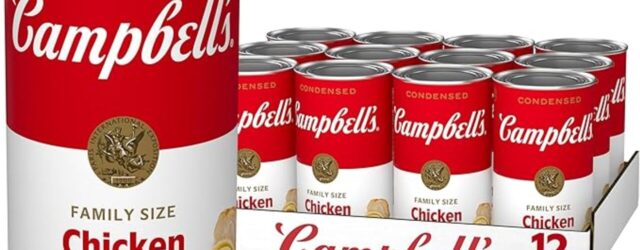
That environment creates the risk that some once-stable names simply fade from regular middle-class rotation. The 10 brands most exposed are Del Monte canned fruit and vegetables, Campbell’s condensed soups, Kraft Singles, Oscar Mayer processed meats, Lunchables, Velveeta, General Mills boxed cereal lines, WK Kellogg cereals, Jell-O desserts, and Conagra’s shelf-stable meal brands such as Chef Boyardee and canned pasta lines. These brands still have recognition, but recognition no longer guarantees repeat purchase when shoppers see a cheaper lookalike beside them.

The 10 brands most at risk of losing middle-class relevance

Del Monte stands out because its challenge is structural, not just cyclical. Reuters and the company said Del Monte Foods filed for Chapter 11 in July 2025 while pursuing a sale, a sign that even iconic pantry brands are not immune when debt, category fatigue, and changing food preferences collide. AP noted that canned-food demand has also been pressured by shoppers seeking either healthier or cheaper alternatives.

Cereal is another flashing warning light. Reuters reported that WK Kellogg cut forecasts after softer demand for higher-priced cereals, while AP described U.S. cereal sales as being in a decades-long decline. That puts household staples like Frosted Flakes, Froot Loops, Corn Flakes, and similar boxed cereals at risk of becoming occasional nostalgia buys rather than weekly essentials.

Then there are the ultra-familiar processed brands that face a double squeeze: price sensitivity and ingredient scrutiny. Kraft Heinz has warned of muted demand, and Reuters said the company lowered forecasts as shoppers pulled back on snacks, ready-to-eat kits, and pantry staples after years of higher prices. That makes Kraft Singles, Oscar Mayer, Lunchables, Velveeta, and Jell-O especially vulnerable, while Campbell’s and Conagra products face similar pressure from private-label soup, pasta, and canned-meal alternatives that now look good enough for families trying to protect the weekly grocery budget.

What vanishing from carts would really look like

Most of these brands are unlikely to disappear outright from stores. What is more plausible is a slower erosion in middle-class relevance: fewer households buying them weekly, more shoppers waiting for promotions, and more shelf space being handed to retailer-owned products or fresher alternatives. McKinsey has described exactly this kind of polarization, where the low end and high end grow faster while the middle loses share.

That matters because middle-class shoppers historically kept many national brands alive through habit. Now habit is weakening. McKinsey found that more than 80% of U.S. consumers rate private-brand food quality the same as or better than national brands, and nearly 90% say private brands offer similar or better value. Once that perception takes hold, it becomes hard for legacy labels to reclaim routine pantry space without deeper innovation or sharper pricing.

So the real prediction is not extinction but displacement. Over the next five years, the brands most likely to vanish from middle-class carts are the ones that feel too expensive to be basic, too ordinary to be special, and too processed to match where household food habits are heading. In modern grocery, shelf presence is not the same thing as basket priority, and that distinction is getting harsher every year.

A Chef Revealed the One Trick to Picking the Juiciest Limes, Every Single Time

A great lime can transform a dish. A dry one can ruin a dressing, flatten a taco, or leave your cocktail tasting dull.

The one trick chefs trust at the store

If you want the juiciest lime, ignore shine and focus on weight. The best lime should feel heavy for its size, a classic citrus cue that usually signals a higher juice content and a less dehydrated interior. Food Network gives the same advice for citrus more broadly, and produce standards from the USDA emphasize firmness and freedom from dryness as signs of quality.

That simple lift test matters because limes lose moisture over time. A fruit that feels unexpectedly light may still look attractive, but it is more likely to have dried out inside. Heaviness, by contrast, suggests the segments are still holding plenty of liquid, which is exactly what you want for vinaigrettes, marinades, ceviche, and drinks.

Professional cooks also pair that weight test with a quick touch check. A good lime should feel firm, but not rock hard, and the skin should have a smoother, tighter appearance rather than a shriveled or leathery one. USDA grade language for Persian limes specifically calls out firmness, fairly smooth texture, and the absence of hard or dry skins as quality markers.

In practice, that means the juiciest lime is often the one that feels dense, looks vibrant, and has skin that is not drying out. You are not shopping for the most beautiful specimen in a decorative sense. You are shopping for water content, freshness, and usable yield.

What to look for beyond color alone

Many shoppers assume the greenest lime must be the best, but color can mislead. USDA standards for Persian limes do value good green color, yet color alone does not guarantee juiciness. A lime can be vividly green and still be older, lighter, or less useful than a slightly less saturated fruit sitting right beside it.

Texture tells you more. Smooth skin often points to a lime that is fresh and full, while wrinkling can indicate moisture loss. That does not mean every slightly bumpy lime is bad, but deep shriveling is a warning sign. If the fruit has soft collapsed spots, broken skin, or obvious blemishes, move on.

Size can be deceptive too. A giant lime is not automatically a juicy one, and a smaller lime can outperform it if it feels denser in your hand. That is why chefs rely on comparison shopping: pick up two or three limes of similar size and choose the one with the most heft.

This matters in home kitchens because limes are rarely used decoratively. They are bought to be squeezed, zested, or both. For that job, density beats appearance almost every time.

How to keep limes juicy once you get them home

Choosing well is only half the battle. Once home, storage affects how long that juiciness lasts. USDA SNAP-Ed guidance says limes can be kept at room temperature out of sunlight for up to one week or refrigerated for up to four weeks, making refrigeration the better choice if you are not using them quickly.

Temperature control matters because produce gradually loses quality as moisture escapes. The USDA’s food storage guidance notes that refrigerators should stay at 41 °F or below for safe cold holding, though produce quality can vary depending on placement. For everyday use, the crisper drawer or a less cold produce zone works better than letting limes rattle around on a hot counter.

When you are ready to use one, let a chilled lime sit out briefly, then roll it firmly on the counter before cutting. That does not create more juice, but it helps release what is already inside. In a restaurant kitchen, that small prep step is standard because it improves extraction and reduces waste.

The smartest approach is simple: buy limes that feel heavy, store them well, and use them before the skin starts to toughen. It is a chef’s trick because it works, and once you start using it, you will notice the difference immediately.

I Tried a 1940s Biscuit Recipe, and I’ll Never Make Biscuits the Same Way Again

Biscuits seem simple until a truly good one resets your standards. That is exactly what happened when I baked from a 1940s-era formula and realized how much modern habit had flattened the experience.

What surprised me most was not nostalgia. It was how practical, smart, and effective the old method still feels in a contemporary kitchen.

What made the 1940s recipe feel so different

The recipe I tried followed a structure common to older American biscuit formulas: flour, salt, a generous chemical leavener, solid fat, and milk or sour milk, often with lard or shortening standing in for butter. Period cookbooks and wartime baking pamphlets routinely leaned on pantry staples and efficient mixing, especially in the early 1940s when home cooks were navigating rationing and ingredient variability. The U.S. Capitol’s historical note on wartime baking documents how 1943 recipe booklets were specifically designed to work around shortages of sugar, eggs, and shortening.

That context matters because biscuits were never meant to be precious. According to King Arthur Baking’s history of American biscuits, Southern biscuit traditions grew from practical ingredients that were widely available, especially flour, buttermilk, and lard. Long before ultra-buttery social media biscuits became the default aspiration, home bakers were chasing tenderness, lift, and reliability.

The 1940s recipe I used also treated the dough more firmly than many modern instructions do. Instead of obsessing over elaborate laminating, it emphasized quick handling, minimal warmth, and a soft but not wet dough. That older balance produced biscuits that rose evenly and held their shape, with a finer crumb than many shaggy contemporary versions.

The technique shift that changed my biscuits for good

The biggest lesson was fat choice. Modern biscuit culture tends to celebrate butter above all else, but older recipes often used lard or shortening because they were dependable and structurally effective. King Arthur Baking’s biscuit testing has shown that different fats produce distinctly different textures, and solid fats with higher melting stability can help preserve lift while keeping the crumb tender.

The second lesson was the liquid. Older recipes frequently called for sour milk or buttermilk, and that acidity was not incidental. It worked with baking soda when called for, while also contributing tenderness and a subtle tang. Baking experts at King Arthur note that buttermilk is prized in biscuits for both flavor and texture, and that recipes using both baking soda and baking powder usually do so because the dough contains an acidic ingredient.

Then there was mixing. The 1940s approach was direct: cut the fat in, add the liquid, stir only until combined, then pat and cut. King Arthur’s biscuit guidance still echoes that principle, warning that overworking dough and using dull cutters can interfere with rise. Once I stopped chasing perfection and started respecting restraint, my biscuits became lighter, straighter, and far more consistent.

Why I will not go back to my old method

What came out of the oven was not just a good batch of biscuits. It was a clearer argument for simplicity. The tops browned evenly, the sides climbed high, and the interior pulled apart in soft layers without crumbling into dust. They had a savory depth that butter-only biscuits sometimes miss, especially when served with jam, sausage gravy, or salted honey.

I also came away with a new respect for how older recipes were engineered. They were built for repeat success, not performance. In the 1940s, a biscuit recipe had to work in kitchens without digital scales, designer flours, or carefully curated cultured dairy. That pressure seems to have produced formulas that are forgiving, adaptable, and remarkably efficient.

So no, I am not giving up modern baking knowledge. I still care about cold ingredients, fresh leaveners, and a hot oven. But this experiment convinced me that the smartest biscuit upgrade is actually a step backward: use a sturdier old-school formula, handle the dough less, and stop assuming newer automatically means better. My biscuits are taller now, more tender, and much closer to what the best old recipes intended all along.

The Ingredient Fight Quietly Reshaping What’s Actually Allowed in Your Pantry

A fast-moving state policy push is changing how food ingredients are regulated in the United States, even as federal agencies are still working through broader nutrition and labeling proposals. This week’s focus is not on a single recall or brand dispute, but on the widening state-by-state fight over additives, dyes and processed foods that could reshape what ends up in home pantries.

States are moving faster than Washington on food ingredients

State legislatures introduced more than 100 bills and enacted at least 11 laws in 2026 aimed at food additives, school meals and low-income food assistance, according to analysis by government relations firm MultiState reported by Bloomberg Law on July 6. That pace adds to nearly 200 related measures proposed in 2025 and at least 16 finalized last year, showing that the regulatory fight is no longer limited to a few states.

The new laws and bills do not all do the same thing. Some target artificial colors and preservatives in school meals, while others seek tighter rules on what can be bought with Supplemental Nutrition Assistance Program benefits. MultiState said the proposals span both nutrition policy and ingredient oversight, creating a broader compliance issue for food makers than a single federal rule would.

Susan Schneider, a law professor at the University of Arkansas, told Bloomberg Law that lawmakers in many states are responding to constituent pressure around food, health, nutrition and additives. Katherine Tschopp of MultiState said the issue is bipartisan, but the measures are moving more quickly in Republican-led states.

The practical impact depends on where you live

For shoppers, the immediate effect is uneven because the rules vary by state and, in many cases, by setting. Bloomberg Law reported that four states this year banned school meals from containing certain color dyes or ingredients, joining eight states that enacted similar restrictions in 2025, meaning some changes are showing up first in public-school cafeterias rather than in every grocery aisle.

Other proposals reach more directly into household buying habits. Roughly two dozen states now restrict the use of food assistance benefits for products such as soda or candy, propelled in part by laws enacted in five states this year, according to Bloomberg Law. A federal judge, however, recently overturned restrictions in five states after finding officials had sidestepped federal law, leaving the durability of some state actions uncertain.

What is not yet known is how quickly national brands will standardize formulas across all states instead of making narrower changes for specific markets. The Consumer Brands Association has warned that a patchwork of different state standards could disrupt supply chains and raise grocery costs, while some school nutrition leaders say manufacturers may struggle if separate state requirements make the K-12 market too complex.

Why the ingredient fight is expanding now

The political backdrop is the Make America Healthy Again movement and the slower pace of federal action. Bloomberg Law reported that while Health and Human Services Secretary Robert F. Kennedy Jr. has praised state action, several major federal proposals, including work on ultra-processed food definitions and mandatory ingredient disclosures, remain under development or in White House review.

Public opinion has helped drive the issue. KFF reported in a 2025 survey of parents that 85% supported more government regulation of dyes and chemical additives in food, 82% supported more regulation of highly processed foods and 80% backed tighter rules on added sugars. That support has given lawmakers in multiple states a clearer opening to act before federal agencies finalize nationwide standards.

Money is also part of the story. Bloomberg Law reported that a $50 billion pool of federal funding created by the 2025 tax and spending law includes support for states that align with the administration’s health priorities. For consumers, that means the pantry debate is likely to remain less about one headline-grabbing ban and more about a steady expansion of rules that could affect labels, school menus and product formulations until federal standards catch up.

Aldi Shoppers Are Noticing Something Different at Stores Nationwide, and Not Everyone’s Happy

Aldi’s

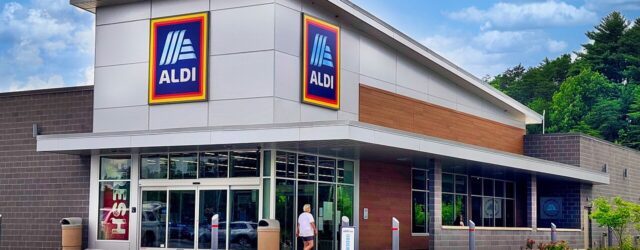
Aldi’s nationwide footprint is changing quickly as discount grocers compete for more shoppers and push harder on private-label branding. At Aldi, that shift is showing up in stores through new packaging, reformulated products and a growing number of locations, including converted former Southeastern Grocers sites.

Aldi is changing stores on several fronts at once

Aldi confirmed in an April 22, 2026 announcement that it is removing 44 additional ingredients from its private-label food, vitamin and supplement products by the end of 2027, expanding its restricted ingredient list from 13 to 57. The company said the reformulated products will roll out in phases through 2027, with updated ingredient information appearing on packaging as changes are made.

That product update is arriving alongside a broader branding reset. In a September 24, 2025 packaging announcement, Aldi said it was launching its largest packaging refresh to date, putting the Aldi name more prominently on exclusive-brand products and adding an “an ALDI Original” endorsement to many items. Aldi said more than 90% of its assortment is private label, which means the visual change is likely to be noticeable across much of the store.

The company is also expanding rapidly. Aldi said on January 12, 2026 that it plans to open more than 180 new U.S. stores by the end of 2026 across 31 states, bringing its total U.S. store count to nearly 2,800. That same announcement said the company remains on track toward a goal of 3,200 U.S. stores by the end of 2028.

The most visible local impact is in converted former Winn-Dixie and Harveys sites

For many shoppers, the biggest change is not a label but the store itself. Aldi said in its 2025 and 2026 expansion materials that it is converting former Southeastern Grocers properties, including Winn-Dixie and Harveys locations, into the Aldi format as part of its Southeast growth strategy.

According to Aldi, the company plans to convert close to 80 Southeastern Grocers locations during 2026. Aldi also said it had already converted and opened nearly 90 stores and expects to convert approximately 220 Southeastern Grocers locations to the Aldi format through 2027.

What is not yet public is a comprehensive nationwide list of every affected community. Aldi has identified the Southeast as the center of the conversion effort, but the company has not released a full location-by-location list covering every market referenced in its broader national rollout. That means some shoppers may first notice the change only when a nearby former conventional supermarket reopens as a smaller Aldi store with a different layout and narrower assortment.

Aldi says the changes are tied to growth, recognition and customer demand

Aldi has framed the store changes as part of a larger modernization effort rather than a shift away from its low-price model. In its January 12, 2026 release, the company said demand from 17 million new customers in 2025 helped drive its decision to keep investing in new stores, distribution centers and digital upgrades.

The packaging overhaul was also tied directly to shopper feedback. In its September 2025 announcement, Aldi said customers already viewed many of its private-label items as “Aldi brands,” and the redesign was intended to make those products easier to recognize and shop. The company said legacy labels including Clancy’s, Simply Nature and Specially Selected would remain, but with updated branding.

For customers, the practical result is a more standardized Aldi experience across more markets, even as some longtime Winn-Dixie or Harveys shoppers adjust to a different format. Aldi said its reformulated products will maintain the same low prices shoppers expect, signaling that the company intends to keep price as the central part of the shopping experience while these nationwide changes continue rolling out through 2027.

Alabama Just Lost 3 of Its Most Beloved Restaurants, and Locals Are Still Processing It

Restaurant closures have continued across the U.S. as chains and regional operators reassess leases, traffic, and market performance. In Alabama, that trend became especially visible in recent weeks with three confirmed shutdowns in Vestavia Hills, Mountain Brook, and Mobile.

Three confirmed closures in Alabama

Alabama lost three recognizable restaurant locations in a short stretch of late spring and early summer 2026: Red Lobster in Vestavia Hills, Walk-On’s Sports Bistreaux in Mobile, and Condado Tacos in Mountain Brook. Red Lobster confirmed in a written statement that its Vestavia Hills restaurant at 1030 Montgomery Highway permanently closed on May 24, 2026, while Birmingham Business Journal reported on June 10 that Condado Tacos in Mountain Brook had closed after three years. In Mobile, a closure notice posted at Walk-On’s said the Airport Boulevard restaurant closed effective June 1, according to 205Focus.

The three restaurants were not all the same type of closure. Red Lobster was a decades-old seafood location that had operated since the 1970s and was reportedly the first Red Lobster in Alabama, according to Vestavia Voice. Condado Tacos represented a newer entry into the Birmingham market, and its Mountain Brook restaurant had served as Alabama’s first location for the Ohio-based brand before shutting down this month.

Walk-On’s in Mobile occupied a middle ground between those two examples. The restaurant had been one of the chain’s established Alabama outposts and, according to 205Focus, management told customers it had been an honor to serve the community since the location opened in summer 2019. The posted notice also directed customers to use remaining gift cards at other Walk-On’s locations.

What is confirmed in Vestavia Hills, Mountain Brook, and Mobile

The local impact is clearest in the specific cities where the closures occurred. Vestavia Hills lost a restaurant that had operated in the same Montgomery Highway corridor for more than five decades, and the Vestavia Hills Chamber of Commerce publicly mourned the loss in comments reported by local outlets. Mountain Brook lost a casual taco-and-bar concept in Cahaba Village Plaza, while Mobile lost a sports-bar location at 3673 Airport Boulevard.

Some statewide details are confirmed, while others are not. Red Lobster said seven other Alabama restaurants remain open in Trussville, Dothan, Florence, Gadsden, Huntsville, Montgomery, and Oxford, meaning the Vestavia Hills closure reduced the chain’s Alabama count to seven confirmed operating locations. Condado Tacos’ official Alabama locations page now lists only Huntsville, indicating Mountain Brook is no longer part of the company’s in-state footprint.

For Walk-On’s, the public record is less tidy. 205Focus reported that seven Alabama locations remained active after the Mobile closure, but the company has not released a comprehensive statewide closure update tied to the Mobile shutdown. What is confirmed is that Mobile, Mountain Brook, and Vestavia Hills each lost a known dining option, and none of the three companies has announced a reopening date for those specific sites.

Why these closures are happening, and what residents should expect

The companies have offered different levels of explanation. Red Lobster gave the clearest reason, stating that it “continuously evaluates individual restaurant performance and lease terms” and may close select restaurants as part of normal business decisions, according to Vestavia Voice. That closure came after the chain’s May 2024 Chapter 11 bankruptcy filing, when Red Lobster reported more than $1 billion in debt and later emerged from bankruptcy in September 2024 under new leadership.

Condado Tacos has not publicly given a reason for the Mountain Brook closure. Based on the timing and the official Alabama location page, what is confirmed is that the company has pulled back to one remaining Alabama restaurant in Huntsville. Birmingham Business Journal described the Mountain Brook shutdown as the end of a three-year run along a heavily traveled retail corridor.

Walk-On’s has also not issued a detailed public explanation for the Mobile closure. Even so, the shutdown fits into a wider pattern of selective pullbacks alongside continued growth in other markets; the company’s own press page continues to promote expansion activity and brand campaigns in 2026. For Alabama residents, the immediate effect is practical rather than theoretical: the Vestavia Hills Red Lobster, Mountain Brook Condado Tacos, and Mobile Walk-On’s are closed, while the remaining in-state locations for those brands continue operating where confirmed.

The Grocery Bill Spike Nobody’s Talking About Yet, And Why It’s Coming Whether You’re Ready or Not

National grocery inflation has cooled from the double-digit spikes of 2022, but the latest federal and academic data show that a new round of pressure is building in several staple categories. The shift is not centered on one recall or one supermarket chain; it is showing up in USDA forecasts, Bureau of Labor Statistics data and new upstream cost analysis that together point to a higher grocery bill later in 2026.

USDA’s latest forecast points to a broader grocery increase later this year

The clearest new benchmark came from the USDA Economic Research Service, which said food-at-home prices are predicted to rise 2.8% in 2026, above the 20-year historical average of 2.6%. USDA also said seven of the 15 grocery categories it tracks are expected to rise faster than their long-run average, including beef and veal, fish and seafood, fresh fruits, fresh vegetables, processed fruits and vegetables, sugar and sweets, and nonalcoholic beverages.

The category detail is where the pressure becomes more concrete. USDA said beef and veal prices are predicted to increase 7.5% in 2026, while sugar and sweets are projected to rise 6.9%. By May 2026, beef and veal prices were already 12.9% higher than a year earlier, according to the same USDA summary and BLS price data.

Not every aisle is moving the same way. USDA said egg prices are predicted to decrease 30.4% in 2026, and it also expects declines for dairy products and fats and oils. That means shoppers may not see a uniform spike across an entire receipt, but they are likely to feel increases in categories that make up a large share of weekly household spending, especially meat and produce.

What the latest consumer data confirms, and what it does not show yet

The most recent BLS Consumer Price Index showed food-at-home prices up 2.7% in May 2026 from a year earlier, with a modest 0.1% month-over-month increase. That relatively soft monthly reading helps explain why the coming increase is not yet dominating public discussion, even as total food prices rose 3.1% year over year.

A closer look at the same federal data shows bigger movement inside the basket. BLS said meats were up 7.6% from May 2025 to May 2026, and beef and veal were up 12.9%. Poultry rose 1.3% and pork 2.6%, showing that the sharpest pressure is concentrated rather than economy-wide across every protein category.

What is not yet visible in full is how much of the upstream cost surge has reached store shelves. Purdue University’s Center for Commercial Agriculture said on June 12 that the “food price pipeline is loading at record rates,” while noting that the May CPI grocery reading reflected conditions collected roughly through May 18. In other words, the shelf data has been relatively calm, but the cost build-up behind it is more recent and may not yet be fully reflected in what shoppers have paid so far.

Why economists and industry groups say more pressure is building

USDA tied the biggest meat pressure to cattle supply. The agency said the U.S. cattle herd has fallen to its lowest level in 75 years, while wholesale beef prices remain at all-time highs for this time of year and consumer demand has stayed strong despite tighter supply. That combination helps explain why beef is expected to remain one of the largest drivers of grocery inflation this year.

Purdue’s June analysis added another layer: input costs used before food reaches the shelf are climbing faster than retail prices. The report said the most upstream stage of intermediate demand rose 3.2%, the highest monthly increase in that series since December 2009, while plastic resins rose 14.0% for the month and Stage 4 inputs to food retail and service producers rose 1.1%. The authors said that gap represents cost pressure that has been loaded into the system but not yet fully discharged to retail.

Industry groups are also warning about imported ingredients and packaging. The Consumer Brands Association said many food manufacturers rely on global supplies for inputs that cannot be sourced domestically in sufficient quantity or quality, including coffee, cocoa, spices and tin mill steel used in packaging. The group said tariffs on those materials can raise the price and reduce the availability of American-made consumer goods, leaving shoppers with a grocery bill that may keep climbing even if headline inflation looks calmer than it did a few years ago.