
A first trip to New York often comes with a food checklist before the suitcase is even packed. Pastrami, pizza, bagels, hot dogs, and cookies become a kind of edible sightseeing map.
That instinct is not wrong. But treating seven famous stops as a mandatory exam misses what actually makes New York eating culture great.
Why these seven places became shorthand for “real” New York
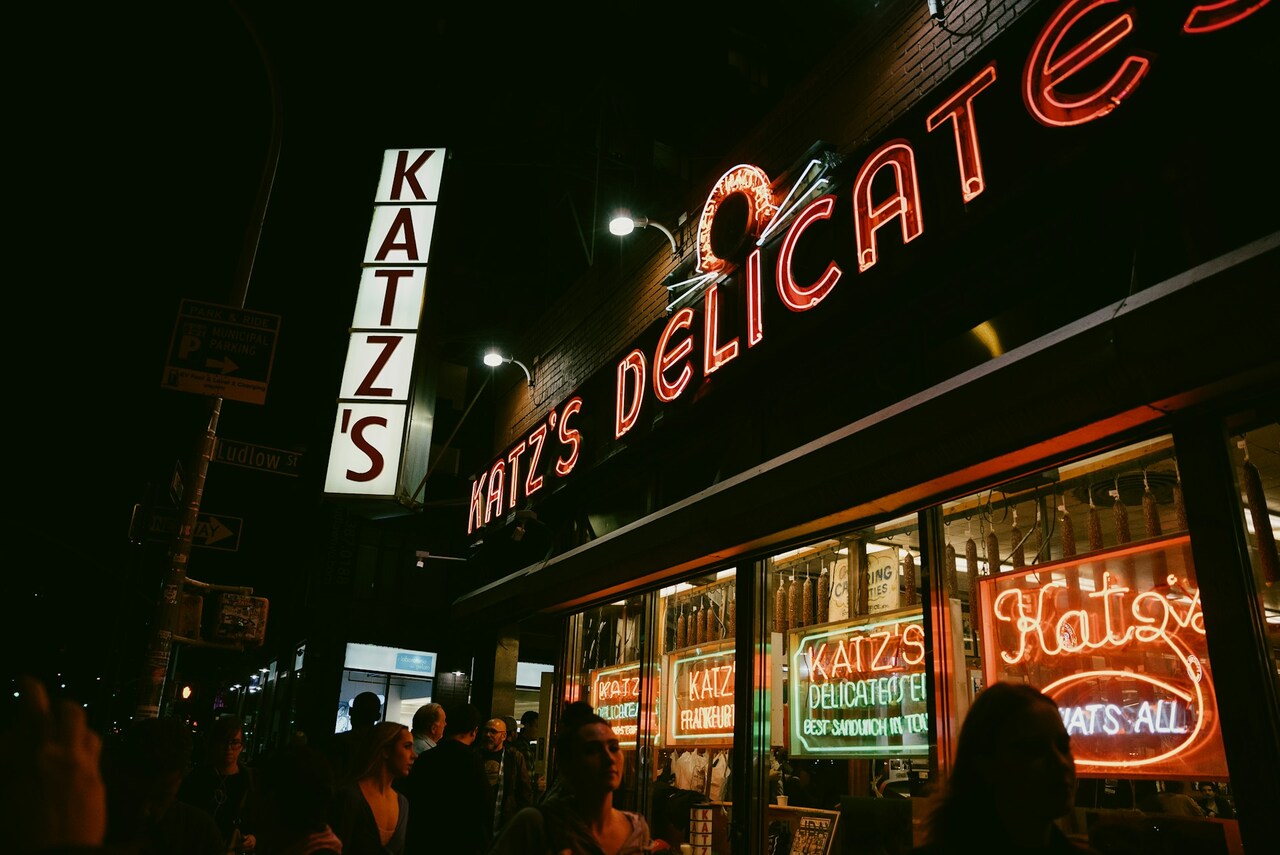
When New Yorkers insist on certain food stops, they are usually talking about places that compress the city’s history into one bite. Katz’s Delicatessen, founded in 1888, is not just a deli but a surviving piece of the Lower East Side immigrant story, and Time Out recently still ranked it the city’s best deli. Russ & Daughters, which has operated since 1914, remains one of the country’s defining appetizing shops, preserving a distinctly New York tradition of smoked fish, bagels, and carefully sliced lox. Joe’s Pizza, opened by Joe Pozzuoli in 1975 on Carmine Street, has become the reference point for the classic foldable Village slice.
The same logic applies to the rest of the list. Gray’s Papaya still trades on the no-frills hot dog-and-tropical-drink ritual that generations of New Yorkers associate with late nights and uptown life. Levain Bakery, born on West 74th Street in 1995, turned a hulking chocolate chip walnut cookie into a modern New York icon. Nathan’s Famous, which began in Coney Island in 1916, carries a century of boardwalk mythology with it.
Even the black and white cookie has that symbolic power. New York State tourism still promotes it as one of the city’s signature foods, and major food guides continue to treat it as an essential local sweet. These places and foods endure because they tell a visitor something true about New York’s layered immigrant, working-class, and neighborhood-driven identity.
The seven stops that actually earn their reputation
If you build a seven-stop list, the strongest version starts with Katz’s for pastrami on rye. Michelin still highlights it for first-time visitors, and its longevity matters because so few old-line Jewish delis remain. Russ & Daughters belongs on the list too, especially for a bagel with lox, because it represents the appetizing-store tradition rather than the deli tradition, a distinction outsiders often miss.
Joe’s Pizza makes sense because it distills New York slice culture without unnecessary reinvention. For hot dogs, the debate splits in two directions: Gray’s Papaya for the everyday Manhattan experience, Nathan’s for the historic Coney Island pilgrimage. Those are different meals with different meanings, and both are valid.
Levain Bakery has the newest claim to icon status, but it is now too established to dismiss as hype. Its original Upper West Side story and nationally copied cookie format gave it staying power. The final spot should go to a black and white cookie from a respected old-school bakery or food institution, because the dessert is bigger than any single shop now. Guides from New York State tourism, Condé Nast Traveler, and The Infatuation all still treat it as one of the city’s defining sweets.
So, does your visit “count” without them?
Not literally. New York has more than 25,000 restaurants by Eater’s estimate, and any claim that seven stops can define the whole city is obviously too narrow. A visitor who eats exceptional Tibetan food in Jackson Heights, West African food in the Bronx, or Cantonese seafood in Sunset Park has not somehow missed New York. In fact, those meals may reveal the contemporary city more accurately than a checklist of legends.
Still, the classic stops are not meaningless tourist traps. Michelin, Eater, The Infatuation, and New York City tourism materials all continue to frame pastrami, bagels with lox, pizza, and similar staples as core first-timer experiences because they embody cuisines the city helped define. The smarter view is that these seven stops are not required for your trip to count, but they are credible anchors for understanding how New York built its food identity.
So yes, New Yorkers are partly right. Skip all seven and you may miss the city’s edible greatest hits; visit only those seven and you will miss the city itself.