
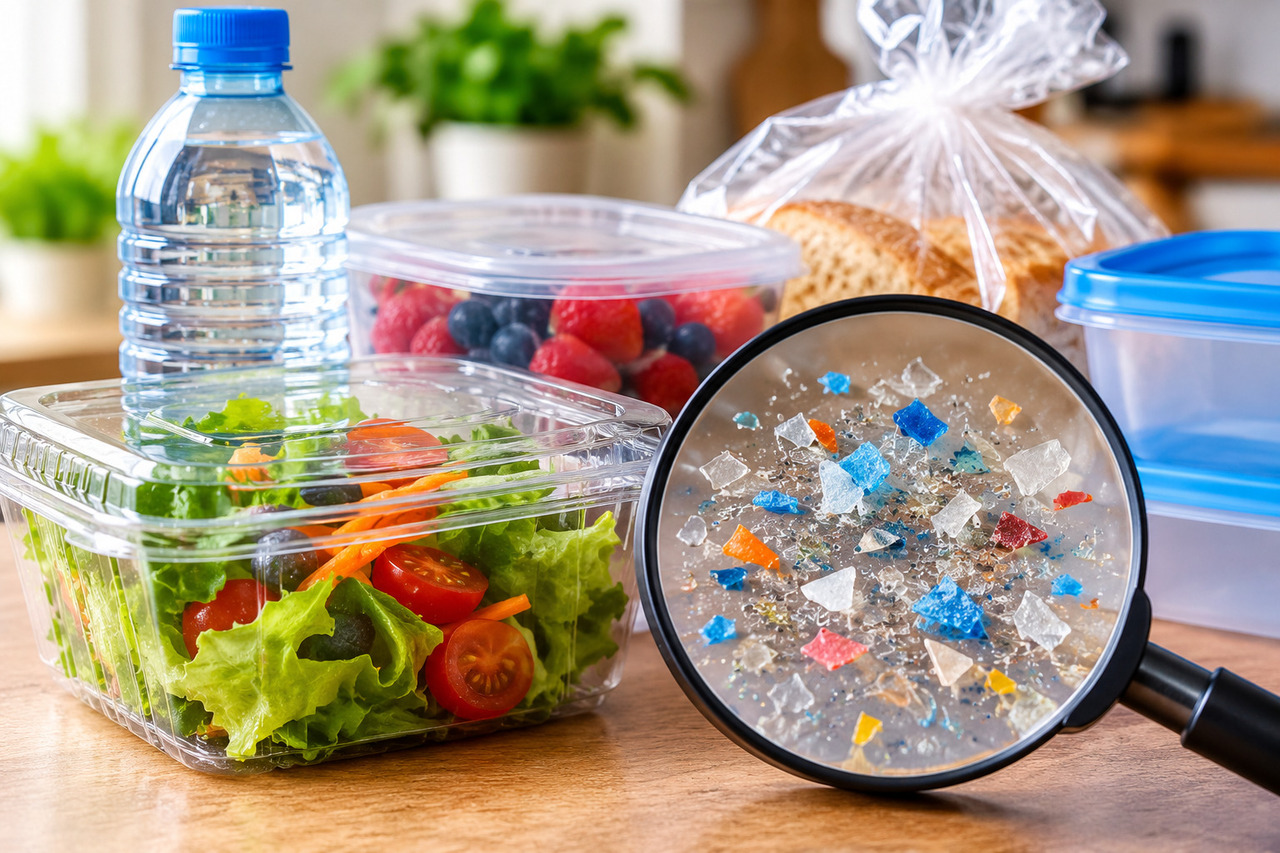
A 2025 research review found that food packaging and other food contact items can release microplastics and nanoplastics into food during normal use. For home cooks, the key point is simpler than the headlines, exposure is being studied closely, but a direct health risk from everyday food packaging has not been established.
What the 2025 packaging review found
The paper, published June 17, 2025 in npj Science of Food, mapped 103 published studies on plastic food contact articles, including packaging, bottles, cups, bags, trays, and some kitchen and processing surfaces. The researchers concluded that the normal and intended use of these products can introduce microplastics and nanoplastics into food and drinks. That conclusion was broad, but the paper also made clear that the underlying evidence was uneven.
The authors said they created 600 database entries from the 103 eligible studies. Most of those entries involved microplastics, with fewer on nanoplastics and larger mesoplastics. Bottles were among the most commonly studied products, and the review also covered repeat use items, flexible packaging, and coated materials.
Just as important, the review did not treat every study as equally strong. The authors identified 50 high reliability data entries, and those came from only seven studies. That means the overall evidence map points to a real exposure question, while also showing that much of the research field still needs better methods and stronger repeatable data.
What regulators and newer cancer research actually say
The FDA says there is not sufficient scientific evidence to show that microplastics and nanoplastics from plastic food packaging migrate into foods and beverages in a way that can support regulatory risk assessment. The agency also says it is aware of studies finding these particles in the food supply and in human samples, but that significant research gaps remain.
That public guidance matters because some viral summaries jump from detection to danger. The FDA says microplastics and nanoplastics have been found in human blood, stool, urine, and organs, but it does not say those findings prove harm from normal food packaging exposure. At this stage, the presence of particles in the body and proof of disease are not the same thing.
A newer study, published October 29, 2026 in Molecular Cancer, adds another layer but not a final answer. In that study, researchers reported that chronic oral exposure to polystyrene nanoplastics promoted colorectal tumor development in mice in a chemically induced cancer model. The team also reported nanoplastic buildup in the colon, damage to intestinal microvilli, changes in gut bacteria, lower propionic acid, and altered immune activity involving Th17 cells.
What this means in the kitchen right now
For readers trying to make sense of the story, the clearest takeaway is that the packaging evidence and the cancer study should not be read as the same kind of proof. The 2026 Molecular Cancer paper was animal research, and its human tissue findings showed detection of microplastics in colorectal cancer patient tissue and blood, not that the plastics caused those cancers.
That leaves consumers in a familiar place with emerging food science. Researchers have enough evidence to keep studying how particles are released from food contact materials and how people are exposed. They do not yet have evidence that establishes a human health risk from ordinary food packaging use in everyday life.
In practical terms, this is a food packaging and exposure story, not a confirmed food safety emergency. People who want to follow the science should watch for more human studies, stronger exposure measurements, and clearer regulatory assessments. For now, the best reading of the evidence is cautious and narrow, tiny plastic particles can enter food from some packaging and food contact materials, but the health consequences for people remain uncertain.
## Web Sitesini İşletmenin Hedefleriyle Buluşturmak