This Fast-Growing Chicken Chain Just Topped a Major New Ranking

Chicken_Salad_Chick_

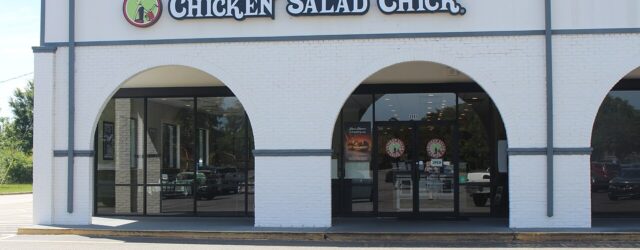
Restaurant chains are still chasing growth in a market shaped by cautious consumer spending, regional brand loyalty, and demand for fresh formats. Into that backdrop, Chicken Salad Chick has landed at the top of a new national ranking that measures which emerging restaurant brands are gaining traction with consumers. The result gives one of the South’s fastest-expanding fast-casual concepts a new data point as it pushes deeper into markets outside its traditional footprint.

Chicken Salad Chick took the top spot in YouGov’s new study

Chicken Salad Chick ranked No. 1 in YouGov’s first 2026 U.S. emerging dining brands study, according to reporting by Nation’s Restaurant News and YouGov’s published overview of the new research. Nation’s Restaurant News reported that the Atlanta-based chain posted an Emerging Momentum score of 83.2, ahead of No. 2 Cook Out at 75.3 and No. 3 Just Salad at 72.9. The top five also included Nothing Bundt Cakes and KPOT Korean BBQ & Hot Pot.

The study screened 70 emerging brands and advanced 34 chains that had reached at least 10% national awareness, according to Nation’s Restaurant News. YouGov said the full study measures more than recognition alone, evaluating consideration, brand impression, innovation, customer experience, and whether consumers see a brand as on the rise. That made the final list a broader test of consumer momentum rather than simple name familiarity.

Chicken Salad Chick stood out across those measures, with Nation’s Restaurant News reporting that 54% of aware consumers said the brand is bringing new ideas to foodservice and also viewed it as on the rise. The publication said the chain performed especially well on innovation and upward momentum. Those findings put a measurable number behind the brand’s fast expansion and growing national profile.

The ranking matters because the chain is moving beyond its Southern base

For readers across the South, the ranking reflects a chain that already has deep regional awareness and is now using that base to expand further. YouGov said Chicken Salad Chick reached 34.4% awareness in the South, compared with 19.1% nationally, showing that the brand’s recognition remains strongest in its home region even as it grows beyond it. That regional strength helps explain why the brand could score highly in a study built around consumer perception and momentum.

The company said on July 29 that it had more than 340 restaurants open nationwide and had reached 25 states with planned summer openings in Apple Valley, Minnesota, and Allentown, Pennsylvania. Chicken Salad Chick also said it opened 42 restaurants across 14 states in 2025 and sold another 52 restaurants during the first quarter of 2026. Those figures show that the ranking arrived during an active expansion stretch rather than after a quiet operating period.

What is not yet publicly detailed is a full market-by-market breakdown tied to the YouGov ranking itself. The company has not released a state-by-state list showing which existing markets contributed most to the score, and YouGov’s public materials do not identify performance by individual city. What is confirmed is that the brand’s strongest awareness remains in the South while its current growth strategy is extending into the Midwest and Northeast.

Expansion, awareness, and category positioning help explain the result

The ranking comes as chicken remains one of the restaurant industry’s most competitive categories, but Chicken Salad Chick is positioned differently from chains built around tenders, wings, or fried chicken. Nation’s Restaurant News noted that the chain ranked ahead of several better-known emerging players by leaning into a chicken-salad-centered menu that stands apart in fast casual. In practical terms, the concept benefits from clear category distinction at a time when many restaurant brands are competing for similar occasions.

YouGov’s own methodology points to why that matters. The firm said brands had to clear a 10% national awareness threshold to advance, then were assessed on measures including consideration, innovation, and whether consumers see them as rising. A chain that can combine a strong Southern base, a recognizable niche, and visible new-market openings is likely to perform well on those dimensions.

The company has described 2026 as a period of continued national growth, and its recent announcements show that it is still entering new territories rather than only densifying existing ones. For customers, that means the ranking is less about a one-day accolade than about the chain’s growing visibility in more U.S. markets. The practical takeaway is straightforward: Chicken Salad Chick’s No. 1 finish formalizes the momentum the brand has been building as it expands beyond the South.


10 Recipes Your Grandparents Made With Almost Nothing: And They Still Slap

Potato soup

Some of the best food in America was born when money was tight and waste was unacceptable. These recipes lasted because they were cheap, filling, and far better than their humble ingredient lists suggested.

Why “make-do cooking” still hits today

Frugal cooking was never just about deprivation. It was about technique: stretching protein, rescuing stale bread, and turning low-cost staples into meals with texture and depth. Smithsonian’s writing on lean-time eating and Depression-era food culture shows just how inventive home cooks became when dried beans, onions, potatoes, cornmeal, and scraps had to do the heavy lifting.

That is the world that gave us dishes like beans and cornbread, potato soup, fried cabbage and noodles, milk toast, bread pudding, rice pudding, salmon patties, tomato gravy, creamed chipped beef on toast, and skillet hash. None of them needed luxury ingredients. Most relied on bulk staples, leftovers, or preserved foods that could sit in the pantry and wait.

There is solid nutritional logic behind that old wisdom. USDA nutrition guidance notes that beans deliver protein, fiber, iron, potassium, and other key nutrients, which helps explain why they anchored so many low-cost meals. A pot of beans with cornbread was not trendy “plant-forward” eating. It was dinner, and it worked.

Stale bread was another secret weapon. King Arthur Baking points out that bread pudding remains one of the classic ways to transform old bread into something rich and comforting. National Geographic has also highlighted how many cultures built signature dishes from leftovers rather than treating them as waste. Grandparents did not “upcycle.” They simply knew better than to throw away perfectly usable food.

The 10 recipes that prove less can taste like more

Beans and cornbread may be the purest example of thrift meeting satisfaction. Dried beans were cheap, shelf-stable, and filling, while cornbread came together from cornmeal, fat, salt, and leavening. Add onion, a ham hock if you had one, or even just pepper, and dinner was set.

Potato soup, skillet hash, and fried potatoes with onions all came from the same principle: the potato is endlessly stretchable. A little milk, broth, bacon drippings, or flour could turn it creamy, crisp, or hearty. That flexibility made potatoes a cornerstone of working-class kitchens for generations.

Then came the bread savers: milk toast, tomato gravy over toast, bread pudding, and rice pudding. These were texture-driven foods, not just filler. Soft custard, browned edges, and savory gravies made them comforting enough that people still cook them by choice, not necessity.

The protein-stretchers rounded out the list. Salmon patties used canned fish, crumbs, and egg to become a full meal. Creamed chipped beef on toast turned preserved meat and white sauce into something substantial, while fried cabbage and noodles proved that butter, starch, and a brassica can punch far above their price point. Even today, these recipes feel less like relics and more like proof that seasoning and know-how beat expensive groceries.

What these recipes teach modern cooks

The first lesson is that cost control starts with pantry design. Keep dried beans, rice, flour, cornmeal, potatoes, onions, canned fish, pasta, and bread in circulation, and you can build half this list on demand. That is not nostalgia talking; it is efficient household management.

The second lesson is that waste reduction improves flavor as much as it saves money. Slightly stale bread absorbs custard better. Leftover potatoes fry better. Extra rice becomes pudding or supper the next day. National Geographic’s reporting on cooking with discards makes the same point: many beloved foods began as intelligent salvage, not compromise.

The third lesson is emotional, and it matters. These meals endured because they fed people reliably, but also because they created comfort during unstable times. According to National Geographic, Americans spend far less time cooking than they did in the mid-1960s, which makes these older, simple preparations feel newly relevant.

That is why these recipes still slap. They are cheap without feeling sad, practical without being joyless, and familiar without being boring. Your grandparents were not chasing authenticity or vintage charm. They were making dinner from almost nothing, and in the process, they built some of the most durable comfort food ever cooked.

This Illinois Family Restaurant Survived 71 Years: But Not This

Restaurant operators across the U.S. continue to rework footprints as large dining rooms become harder to justify amid shifting customer traffic and higher operating costs. In Glenview, Hackney’s has announced that its Lake Avenue restaurant, a long-running family destination on the North Shore, will close in early September after 71 years. The move ends a decades-long run for one of the Chicago area’s best-known family-owned restaurant names at that address.

Hackney’s confirms the Lake Avenue closure after 71 years

Hackney’s announced on August 8 that its Lake Avenue restaurant at 1514 East Lake Avenue in Glenview will permanently close in early September after 71 years, according to the company’s public statement as reported by CBS Chicago and Patch. The business did not provide a final day of service, but it said the closure will take effect at the beginning of September. The restaurant has operated in that building since 1955, giving the site its 71-year run in 2026.

The closure affects one specific Glenview restaurant, not the entire Hackney’s business. Patch reported that the Masterson family, which has owned Hackney’s since 1939, is consolidating activity around the Harms Road location rather than shutting down the brand. CEO Mike Masterson said the company plans to focus on what he described as a re-energized customer experience at the remaining Glenview restaurant.

Hackney’s also confirmed that renovation work is underway at Hackney’s on Harms, located at 1241 Harms Road in Glenview. According to Patch, interior construction began July 27 and is scheduled to continue through August 27, with updates to the bar, lobby, and booths. During that work, the indoor bar and dining room are closed, while the patio and kitchen remain open.

What is confirmed in Glenview, and what has not been released

The confirmed Illinois impact is centered on Glenview. The Lake Avenue restaurant at 1514 East Lake Avenue is the location set to close, while the Harms Road restaurant at 1241 Harms Road remains open and is being updated, according to Hackney’s website and local reports. No other Illinois city was identified in the company’s current closure announcement.

What is not yet known is the exact final operating date for the Lake Avenue site. CBS Chicago reported that the owners did not give a specific date beyond saying the restaurant will close in early September. The company also has not released staffing figures tied to the closure, so the number of workers affected has not been publicly confirmed.

The company likewise has not released a broader state-by-state breakdown because the current announcement concerns a single Illinois location. For readers in Glenview, the practical takeaway is that the Lake Avenue address is winding down while the Harms Road restaurant continues service during renovations. Customers can still order from the Harms location, and the company has publicly directed Lake Avenue diners there as the next chapter of the business moves forward.

The company says changing dining habits drove the decision

Hackney’s tied the closure directly to changing restaurant usage patterns. In comments reported by Patch, Mike Masterson said a 700-seat restaurant fit the market in the 1960s but no longer fits how customers use restaurants in 2026. That statement is the clearest explanation the company has given for why the Lake Avenue site is closing now after surviving for generations.

The decision also reflects a strategy of concentrating investment in one updated property rather than operating two nearby Glenview locations. Patch reported that the company is modernizing the Harms Road restaurant while preserving its longtime character, and Masterson said the goal is a classic but updated look. That suggests the family is repositioning the business around a smaller, refreshed footprint instead of maintaining the much larger Lake Avenue dining room.

For customers and residents, the immediate expectation is continuity at Harms Road rather than a full disappearance of the brand from Glenview. Hackney’s said it hopes Lake Avenue customers will continue visiting the Harms location, which is about a mile and a half away. The company’s public message framed the closure as the end of one address, not the end of Hackney’s in Illinois.

Scientists Are Growing Meat’s Main Ingredient in Two Plants You’d Never Suspect

Plant-based meat companies have spent years trying to replicate the color, flavor, and nutrition that animal proteins bring to conventional meat. Now a new study has narrowed that challenge to a specific ingredient: myoglobin, the oxygen-binding protein that helps give meat its color and some of its taste, and researchers say they have grown it inside two plants few shoppers would associate with meat production.

Researchers produced a meat protein in two crop plants

Scientists at Imperial College London and collaborators reported in Frontiers in Plant Science on August 6, 2026, that they stably produced porcine myoglobin in the chloroplasts of cultivated tobacco and lettuce plants. According to the peer-reviewed paper, the team generated one transplastomic tobacco line and one transplastomic lettuce line, and both plants maintained normal morphology, produced fertile flowers, and generated viable seeds under selection.

The paper states that myoglobin accumulated at about 2.8% of total soluble protein in tobacco and about 1.5% in lettuce, with a repeat tobacco measurement estimating 2.6%. The researchers also reported that the engineered protein appeared at the expected 17-kDa size and that tobacco-produced myoglobin was purified and analyzed for heme incorporation and absorbance characteristics associated with functional myoglobin.

The specific plants are notable because lettuce is an edible crop while tobacco is not typically linked to food production. The study says tobacco was used as a high-performing model system for chloroplast engineering, while lettuce offers a possible food ingredient platform if regulatory pathways eventually allow commercial use.

What the finding could mean for food production

The research does not describe a consumer product launch, a restaurant rollout, or a commercial manufacturing plant in any U.S. state. What is confirmed is that the work demonstrates stable myoglobin production in two higher plants, and that lettuce, in particular, could serve as a future crop-based platform for ingredients used in plant-based meat. The researchers have not announced a timeline for commercialization, and no public list of U.S. production sites or retail partners has been released.

That matters because most consumers currently encounter “meaty” plant-based ingredients through fermentation-based systems rather than crops grown specifically to express animal proteins. The paper itself notes Impossible Foods uses soy leghemoglobin produced in the yeast Komagataella pastoris, illustrating that the industry’s current model depends heavily on bioreactors and industrial fermentation.

The broader plant molecular farming sector is already testing other crops for similar uses. A June 2025 Good Food Institute fact sheet says IngredientWerks uses corn to express myoglobin, while Moolec Science has USDA approval to grow peas that can produce iron-rich bovine myoglobin. That places the lettuce-and-tobacco study within an expanding effort to shift some specialty food ingredient production into field or greenhouse crops.

Why scientists are trying plants instead of tanks

The main driver is cost and scale. According to the study, heterotrophic systems such as bacteria and yeast can produce myoglobin, but they remain constrained by expensive feedstocks, energy use, and reliance on bioreactors. Chloroplast transformation, the authors wrote, offers high transgene expression, many genome copies per cell, and limited gene dispersion compared with some other genetic engineering approaches.

The paper also ties the effort directly to sensory and nutritional gaps in meat alternatives. Myoglobin contains heme, which the researchers say contributes to meat’s red color, metallic and umami flavor notes, and a more bioavailable form of iron than the non-heme iron that dominates in plants. In practical terms, that means companies are not only chasing protein quantity but also the specific molecules that make beef and pork taste and look the way consumers expect.

For shoppers, the immediate takeaway is that this remains an early-stage ingredient story rather than a supermarket change. No national food safety regulator has yet approved a protein ingredient made through plant molecular farming for commercial sale, according to the Good Food Institute’s 2025 industry overview. The next steps, based on the study and industry briefings, are likely to focus on improving yields, confirming regulatory status, and determining whether edible crops like lettuce can move from lab proof-of-concept to food manufacturing.

After 11 Years on Top, Chick-fil-A Just Lost Its Crown: Guess Who Took It

Chick-fil-A

The quick-service restaurant industry entered 2026 under pressure from higher menu prices, cautious consumer spending, and intensifying competition on service and value. That broader backdrop came into focus on June 16, when the American Customer Satisfaction Index reported that Chick-fil-A was no longer the top-rated chain in its national fast-food rankings after 11 consecutive years. The brand that moved ahead was Jersey Mike’s, a result that gives one of the country’s fastest-growing sandwich chains a new distinction in a closely watched industry survey.

Jersey Mike’s ended an 11-year streak in the 2026 rankings

Jersey Mike’s took the No. 1 position in the 2026 American Customer Satisfaction Index Restaurant and Food Delivery Study, according to the organization’s June 16 press release. ACSI said Jersey Mike’s debuted as the top-rated quick-service restaurant with a score of 84 on its 100-point scale, while Chick-fil-A posted an 83 and finished second. The study said overall quick-service restaurant satisfaction held at 79 for the third straight year.

That result ended Chick-fil-A’s 11-year run at the top of the ACSI quick-service category. ACSI’s prior restaurant study showed Chick-fil-A leading the segment in 2025 with an 83, which means its score did not fall year over year even though it lost the top spot. The shift came from Jersey Mike’s entering the ranking at a level above the former leader rather than from a measurable Chick-fil-A decline in the index.

The same 2026 benchmark placed Panda Express third at 81, followed by Starbucks, Arby’s and Panera Bread at 80, according to ACSI’s published results. The rankings are based on customer evaluations of factors including order accuracy, staff courtesy, speed, digital ordering and the cleanliness and layout of restaurants. In practical terms, the new ranking reflects relative gains by competitors in a year when the broader category was essentially flat.

The national result matters locally, even without city-by-city rankings

Because ACSI reports national brand-level scores, the result applies broadly across the United States rather than to one specific state or metro area. The index does not break out separate public rankings for individual cities, counties or states in the June 16 release, so there is no verified list showing where Jersey Mike’s outperformed Chick-fil-A on a local basis. That means readers should treat this as a national customer-satisfaction result, not as a confirmed change in standings for any one community.

What is confirmed is that both chains have substantial footprints across many U.S. markets, making the ranking relevant to a large share of restaurant customers. The ACSI study measures consumer sentiment across the quick-service category, so the change has significance for operators, franchisees and landlords even without neighborhood-level detail. It is also one of the more visible scorecards used to compare restaurant brands on service and consistency rather than just unit growth or revenue.

What is not yet known from the published ACSI materials is whether the same pattern appears evenly across suburban, urban and small-market trade areas. ACSI has not released a comprehensive city-by-city or state-by-state breakdown in the public-facing study materials tied to the June 16 announcement. As a result, no specific local market can be confirmed as the place where Chick-fil-A lost ground or where Jersey Mike’s gained the most.

Stable scores, higher prices and competition shaped the backdrop

ACSI attributed the broader restaurant picture to a consumer environment in which satisfaction has stabilized even as chains continue to compete on convenience, speed and perceived value. The organization said quick-service satisfaction remained unchanged at 79, suggesting the category as a whole is not seeing major across-the-board improvement. In that environment, a brand can move up by executing slightly better on the measures customers notice most.

Separate coverage of the ACSI findings noted that restaurant sales rose in 2025, but at a pace below menu-price inflation, indicating that topline gains were being helped more by higher prices than by stronger traffic. That matters for fast-food and fast-casual chains because customer satisfaction can become a differentiator when diners are making more selective visits. A brand that delivers reliable service and order accuracy may gain an edge even if consumer demand is not expanding quickly.

For customers, the immediate takeaway is straightforward: Chick-fil-A did not collapse in the rankings, and Jersey Mike’s did not win because the former leader posted a sharp drop. The June 16 ACSI results show Chick-fil-A holding at 83 while Jersey Mike’s entered at 84, a narrow but significant margin in a tightly bunched field. For now, the data points to a competitive market in which service quality remains a deciding factor and national brand leaders can change even when overall satisfaction barely moves.

COVID Is Back! Here’s How to Tell It Apart From “Just a Cold”

Respiratory viruses continue to circulate year-round in the U.S., and federal health officials now track COVID-19 alongside flu and RSV as part of routine respiratory surveillance. As late-summer illness picks up again, the practical question for households is not whether a sniffle is “just a cold,” but when COVID-19 should still be considered part of the picture. The short answer from public health agencies is that the overlap is real, and symptoms alone do not reliably separate one from the other.

COVID and colds can look similar, but public health guidance still treats them differently

The Centers for Disease Control and Prevention says COVID-19 can cause a wide range of symptoms, including fever, cough, fatigue, sore throat, congestion, headache, muscle aches, and, in some cases, loss of taste or smell. CDC guidance on the common cold also notes that cold-like symptoms can overlap with illnesses caused by SARS-CoV-2, influenza, and RSV. That means a runny nose, sore throat, and congestion do not automatically point to a cold.

What makes COVID harder to sort out in real life is timing and severity. A cold often stays concentrated in the nose and throat, while COVID can also bring more systemic symptoms such as body aches, unusual fatigue, fever, or gastrointestinal symptoms, according to the CDC’s respiratory virus guidance. But the agency does not present any single symptom as definitive enough to rule COVID in or out.

That is why CDC treatment guidance for the common cold specifically says people with cold-like symptoms who suspect COVID-19 or flu should get tested, especially if they are at higher risk for severe illness. In other words, the official federal guidance is that symptom comparison can help frame suspicion, but it is not considered a substitute for testing when COVID remains plausible.

What is confirmed now, and what people in local communities should know

Nationally, CDC continues to publish COVID-19 respiratory virus activity levels, and the agency’s surveillance framework explicitly includes summer COVID activity rather than treating it as a winter-only illness. That is a key shift from earlier pandemic-era assumptions and one reason late-summer upticks still matter for schools, workplaces, restaurants, and households.

What is confirmed is that COVID remains in the CDC’s active respiratory monitoring system and that cold-like illness can require follow-up testing depending on symptoms and risk. What is not confirmed by symptoms alone is whether an individual case is definitely COVID, a rhinovirus cold, flu, RSV, or another respiratory infection. Public-facing federal guidance does not offer a symptom checklist that can diagnose one from the other without a test.

For residents, that means the practical distinction often comes down to whether someone has access to a current test and whether they are around older adults, immunocompromised relatives, or other higher-risk groups. The CDC’s broader respiratory guidance says people who are sick should take added precautions, especially when symptoms include fever, worsening cough, or signs of more serious illness.

Testing, expired kits, and why the distinction still matters for everyday decisions

The Food and Drug Administration continues to maintain an updated list of authorized at-home over-the-counter COVID-19 tests, and the agency says consumers should check whether a home test’s expiration date has been extended before throwing it away. That matters because many households still have older kits in a cabinet, and some remain usable beyond the printed date if they are part of an FDA-listed extension.

The distinction between COVID and a cold still affects decisions about testing, masking around vulnerable people, school or work attendance, and whether someone may be eligible for treatment if they are at higher risk. CDC guidance says emergency warning signs such as trouble breathing or chest pain require immediate medical attention, regardless of whether someone initially assumed they only had a cold.

For most people, the current federal message is straightforward: if symptoms are mild and stay limited, supportive care may be enough, but COVID should not be dismissed solely because an illness feels like an ordinary cold. As CDC and FDA guidance now reflects, the overlap is significant, the surveillance is ongoing, and testing remains the clearest way to separate COVID-19 from “just a cold.”

As Borrowing Costs Hit a 19-Year High, These 10 Everyday Foods Could Get Pricier

Higher borrowing costs rarely stay confined to Wall Street. They work their way into farms, food processors, trucking fleets, and supermarket aisles.

That matters now because elevated rates are colliding with fragile supply chains, disease outbreaks, and weather risks that are already making some staples more expensive.

Why high borrowing costs can push food prices higher

When interest rates stay high, food companies pay more to finance nearly everything: seed, fertilizer, machinery, feed, packaging, refrigerated storage, trucks, and warehouse inventory. For growers and processors operating on thin margins, that extra carrying cost often gets passed along gradually to retailers and, eventually, shoppers. USDA’s July 2026 Food Price Outlook says food-at-home prices are expected to rise 2.7 percent this year, with several grocery categories running faster than their long-term average.

The pressure is especially intense in foods that require large upfront spending or long production cycles. Beef producers, for example, must finance herds for extended periods, while coffee roasters and chocolate makers often carry inventories exposed to volatile global commodity prices. According to USDA, the U.S. cattle herd has fallen to its lowest level in 75 years, and wholesale beef prices remain unusually high for this time of year.

Global commodity markets are sending mixed signals, but several key ingredients remain vulnerable. FAO reported that its Food Price Index averaged 130.3 in June 2026, slightly below May, yet vegetable oils and meat were still rising even as cereals, sugar, and dairy eased. That means shoppers may not see across-the-board inflation, but rather sharper increases in select items tied to tighter supply and higher financing costs.

The 10 everyday foods most exposed to fresh price pressure

Beef tops the list because herd contraction is already tightening supply. Eggs remain vulnerable too, even after periods of relief, because the lingering effects of highly pathogenic avian influenza continue to disrupt egg-layer flocks and production. Milk, cheese, and butter can also feel rate pressure because dairy production is capital-intensive, even though global dairy benchmarks have recently softened.

Coffee and chocolate are two more obvious candidates. USDA says nonalcoholic beverage prices have been rising faster than their 20-year average partly because of higher coffee prices, while sugars and sweets have been pushed up in part by chocolate candy. Reuters reporting in July noted renewed gains in cocoa and coffee futures as traders repriced weather risks tied to a possible super El Niño.

Bread, breakfast cereal, orange juice, cooking oils, and processed fruit products round out the list. USDA has flagged fresh fruits, processed fruits and vegetables, and nonalcoholic beverages as categories likely to outpace normal price growth in 2026, while wheat output concerns have lifted farm-level wheat prices in recent months. FAO, meanwhile, said vegetable oil prices in June were 23.3 percent above a year earlier.

What shoppers should watch in the months ahead

Consumers should pay less attention to the broad inflation number and more attention to category-level swings. Grocery inflation can feel mild overall while specific staples jump sharply because they depend on different supply chains. A household that buys a lot of beef, eggs, coffee, and chocolate may feel much more pressure than one buying mostly grains and lower-cost proteins.

The biggest wild cards are weather, animal disease, and borrowing duration. If rates stay elevated longer, businesses that rely on revolving credit to hold inventory or fund operations will keep facing higher costs. That is especially relevant for refrigerated foods, imported goods, and products with long production lead times, where financing is not a footnote but a core cost of doing business.

For shoppers, the practical takeaway is simple: expect uneven price moves, not uniform sticker shock. The foods most at risk of getting pricier are beef, eggs, milk, cheese, butter, coffee, chocolate, bread, orange juice, and cooking oils. If promotions appear, buying strategically and freezing or storing essentials can help cushion the impact before another round of higher costs reaches the shelf.

Craving More Magnesium? This Everyday Fruit Might Quietly Be the Answer

Some nutrition stories get reduced to a single nutrient. Bananas are the classic example. Most people think potassium first, but this familiar fruit quietly brings magnesium to the table too.

That matters because many Americans still fall short on magnesium. And when a food is cheap, portable, and easy to eat, even a modest contribution can make a real difference over time.

Why bananas deserve a second look

A medium banana provides about 32 mg of magnesium, according to the National Institutes of Health Office of Dietary Supplements. That is not a blockbuster number, but it is meaningful in a country where NIH says nearly half of Americans consume less magnesium than their estimated requirements from food and beverages. In other words, bananas are not a magnesium miracle, but they are a practical everyday helper.

Bananas also come with nutritional advantages that make that magnesium easier to fit into real life. Harvard’s Nutrition Source notes that a medium banana has roughly 110 calories, about 3 g of fiber, and around 450 mg of potassium. That combination gives the fruit a stronger case than any single-mineral headline ever could. You are getting multiple useful nutrients in one familiar snack.

This is why dietitians often care more about repeatable habits than “top 10” lists. A person may not eat pumpkin seeds or black beans every day, but many will eat a banana several times a week. When a food is affordable, shelf-stable for several days, and needs no preparation, small nutritional wins add up faster.

What magnesium actually does in the body

Magnesium is involved in hundreds of biochemical reactions, including muscle and nerve function, blood sugar regulation, protein synthesis, and blood pressure support, according to NIH. Early signs of low magnesium can include fatigue, weakness, nausea, and loss of appetite. Severe deficiency is less common, but chronically low intake is still worth noticing, especially because it often reflects an overall diet low in nutrient-dense foods.

That is where bananas fit in best: not as a standalone fix, but as part of a broader pattern. Foods that contain fiber often supply magnesium too, and NIH’s professional guidance highlights that connection. Bananas offer both, which helps explain why they show up so often in advice for building a better breakfast or smarter snack routine.

There is also a useful bonus depending on ripeness. Harvard Health reports that greener, less-ripe bananas contain more resistant starch, a carbohydrate that is digested more slowly and can also feed beneficial gut microbes. That does not make green bananas “better” for everyone, but it does show how one simple fruit can offer slightly different benefits depending on how you eat it.

The smartest way to use bananas for a magnesium boost

The most realistic strategy is to treat bananas as a base, not the whole solution. Slice one over yogurt, blend it into a smoothie with spinach, or pair it with peanut butter and oats. Those combinations matter because magnesium intake improves much faster when several nutrient-dense foods show up in the same meal rather than relying on one ingredient to do all the work.

This also helps correct a common misconception: bananas are a decent source of magnesium, but not one of the most concentrated. Seeds, legumes, whole grains, leafy greens, and nuts generally deliver more per serving. Still, a banana’s convenience gives it unusual power. A food only helps if people actually buy it, keep it around, and eat it consistently.

For most healthy adults, that makes bananas one of the simplest “quiet upgrade” foods in the produce aisle. They will not solve a serious deficiency on their own, and persistent symptoms should be discussed with a clinician. But as an everyday fruit that contributes magnesium, fiber, potassium, and versatility without much cost or effort, bananas make a stronger nutritional case than they usually get credit for.

The Vitamin Everyone Reaches For “For Health” Might Come With a Catch

vitamins

A lot of people assume that if a vitamin is sold over the counter, it must be harmless. That belief is especially strong with antioxidant supplements. But one of the most familiar “healthy” ingredients has a catch that deserves much more attention.

The problem with a supplement once seen as protective

Beta-carotene, a pigment related to vitamin A, built its reputation on a simple idea: antioxidants help neutralize damage in the body, so more should be better. That logic helped turn beta-carotene into a staple in multivitamins, eye-health formulas, and standalone supplements for years. It was marketed as a smart nutritional backup, particularly for people trying to support long-term wellness.

Then stronger clinical evidence told a more complicated story. According to the National Cancer Institute and the National Center for Complementary and Integrative Health, major trials found that beta-carotene supplements increased lung cancer risk in people already at high risk, especially smokers and people exposed to asbestos. One of the best-known studies, CARET, was stopped early after researchers saw higher rates of lung cancer and death in the supplement group.

That finding matters because it overturned a deeply intuitive belief: a nutrient linked with healthy foods does not automatically behave the same way in pill form. Carrots, sweet potatoes, and leafy greens remain strongly associated with healthy dietary patterns. But concentrated supplements can act differently, particularly at higher doses and in specific risk groups.

Why “natural” does not always mean low-risk

This is where many consumers get tripped up. Beta-carotene sounds gentle because it comes from foods and helps the body make vitamin A. Yet the National Institutes of Health has repeatedly emphasized that the warning is about supplements, not food sources, and that smokers should avoid beta-carotene pills unless a clinician has a specific reason to recommend them.

The nuance is important in real life because beta-carotene often appears in products people do not buy for cancer prevention at all. It has shown up in general multivitamins, antioxidant blends, and older eye-health formulas. The concern is large enough that newer AREDS2 eye supplements replaced beta-carotene with lutein and zeaxanthin, a change tied to evidence showing a safer profile for current and former smokers.

There is also a broader lesson here about the supplement aisle. Federal task force reviews and NIH guidance have increasingly found that routine vitamin supplementation in otherwise healthy adults does not always deliver the sweeping preventive benefits consumers expect. In some cases the issue is simply no clear benefit. In others, as with beta-carotene in smokers, there is evidence of real harm.

What shoppers should do before grabbing the bottle

The practical takeaway is not that vitamins are bad. It is that context matters more than marketing. People with diagnosed deficiencies, restricted diets, absorption disorders, or specific medical conditions may genuinely benefit from targeted supplementation. But that is very different from casually taking a product because it looks like an easy insurance policy.

If you smoke, used to smoke heavily, or have elevated lung cancer risk, check labels carefully for beta-carotene before buying a multivitamin or specialty blend. “Immune support,” “antioxidant,” and “eye health” products are worth a second look. A nutrient can carry a healthy image while still being the wrong fit for your personal risk profile.

The best first step is to match the supplement to an actual need. That means discussing blood work, medications, smoking history, and health goals with a physician or registered dietitian rather than assuming more is safer. In nutrition, the catch is often not the vitamin itself. It is the gap between the promise on the front of the bottle and the evidence behind it.

Only Three Locations Left: Popular Seafood Chain Quietly Shuts Another Restaurant

Red Lobster

Seafood chains across the U.S. have continued trimming locations as operators work through higher costs, uneven traffic and post-bankruptcy restructuring. In Connecticut, that pullback has now reached another Red Lobster outpost in Bridgeport. The latest closure leaves the brand with only three restaurants remaining in the state.

Red Lobster closes its Bridgeport restaurant, leaving three Connecticut locations

Red Lobster has closed its restaurant at 4485 Main St. in Bridgeport, in the Brookside Center shopping plaza. Stamford Advocate reported on July 27 that the location had shut down over the prior weekend, and callers to the restaurant were met with a recorded message thanking customers for their patronage and directing them to the chain’s other Connecticut locations. The Connecticut Scoop separately reported that the restaurant closed at the end of business on July 26.

That closure reduced Red Lobster’s Connecticut footprint to three confirmed restaurants: Danbury, North Haven and Wethersfield. The Bridgeport location page on Red Lobster’s own website now shows the restaurant as closed, reinforcing that the unit is no longer operating. No separate public company announcement about the Bridgeport closure appeared on Red Lobster’s press page as of August 21.

The Bridgeport restaurant had been one of the chain’s remaining Fairfield County-area locations. According to local reporting, the Brookside Center space is already slated for reuse by Chipotle and Dave’s Hot Chicken, which are expected to split the building. That means the closure is not only a restaurant count change for Red Lobster, but also an immediate turnover of a visible retail site on Main Street.

What the closure means in Connecticut

For Connecticut diners, the confirmed impact is straightforward: Bridgeport has lost its Red Lobster, and the nearest in-state options are now in Danbury, North Haven and Wethersfield. Stamford Advocate reported that the state once had additional Red Lobster restaurants in East Hartford, Enfield and Torrington, all of which had previously closed. That leaves Connecticut with a much smaller footprint than the chain had in earlier years.

What is not yet clear is whether Red Lobster plans any additional Connecticut closures. The company has not released a broader state-specific update, and it has not published a comprehensive list of any future Connecticut restaurant changes. As a result, only the Bridgeport closure and the three remaining in-state locations can be reported as confirmed.

At the city level, Bridgeport’s loss is specific and documented. The closed restaurant was located at 4485 Main St., and local reports indicate the shutdown happened over the weekend of July 25-26. Beyond that, no further Connecticut city-by-city reduction plan has been publicly confirmed by the company.

The closure fits Red Lobster’s wider retrenchment after bankruptcy

The Bridgeport shutdown comes about two years after Red Lobster filed for Chapter 11 bankruptcy protection in May 2024. Stamford Advocate reported that the company later emerged from bankruptcy under new ownership, but that its financial problems had built over several years. Those issues did not end with the restructuring, and closures have continued in some markets.

According to Stamford Advocate, the company attributed its earlier distress to a difficult economic environment, failed strategic initiatives and stronger competition. The same report said industry analysts had also pointed to losses tied to the chain’s $20 Ultimate Endless Shrimp promotion after it became a permanent menu offering in 2023, which created margin pressure and supply challenges. Thai Union, a major investor and shrimp supplier, also declined to provide additional financial support before the bankruptcy filing, the outlet reported.

For customers in Connecticut, the practical takeaway is that Red Lobster remains present in the state, but in a smaller network than before. Diners who previously used the Bridgeport restaurant will need to shift to Danbury, North Haven or Wethersfield if they want to stay with the chain. As of mid-August, Red Lobster’s public press page was still promoting seasonal menu launches and executive appointments, indicating the company continues to operate nationally even as selected restaurant closures continue market by market.