
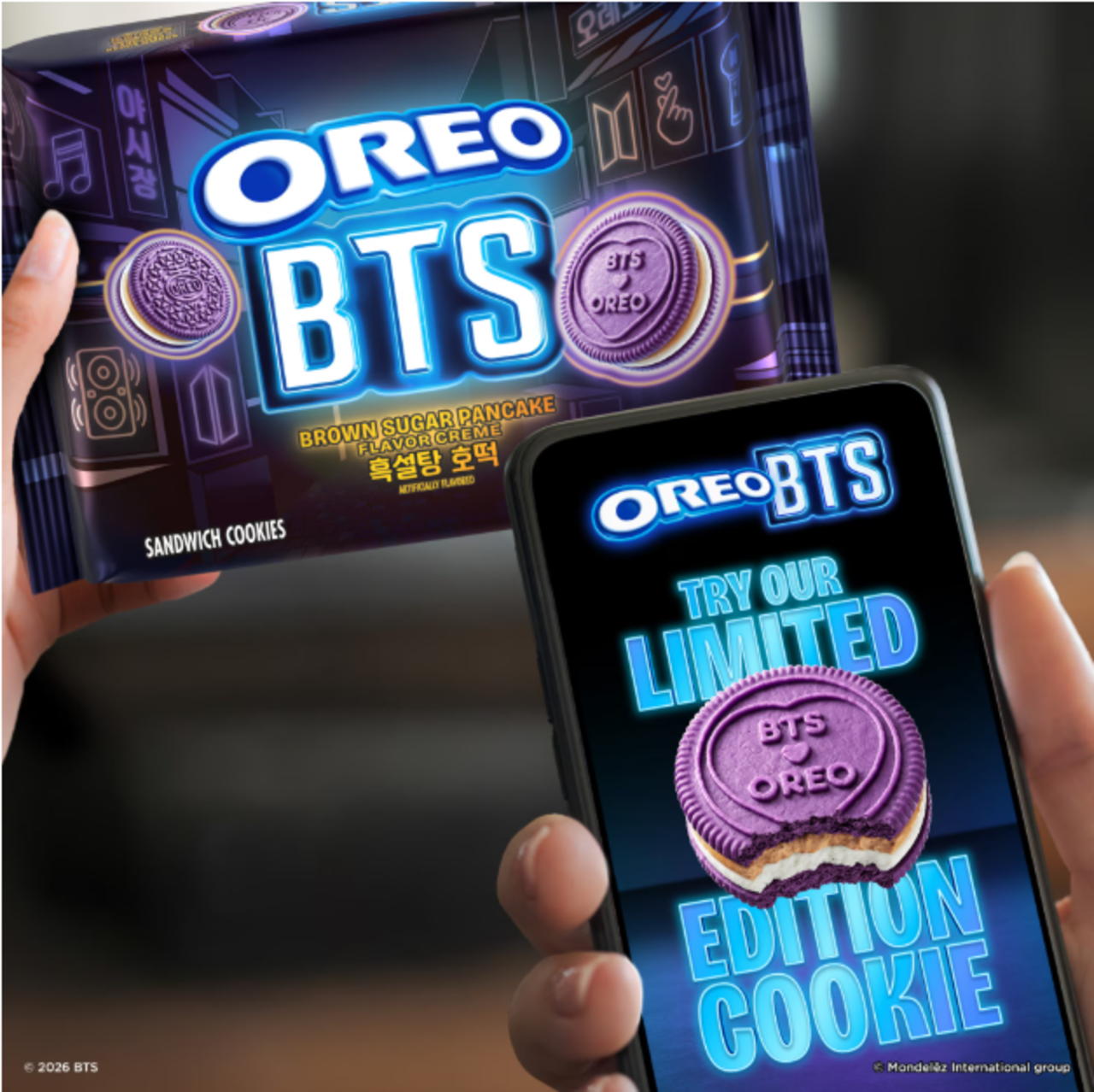
The BTS Oreos were always going to sell emotion before they sold cookies. That much was obvious the moment the presale queue went live.
But hype alone does not make a snack worth chasing. When a fandom-driven food launch asks people to wait online, refresh tabs, and buy before they have even tasted the product, the real question becomes simple: is this a genuinely fun limited-edition Oreo, or just a very smart piece of pop-culture packaging?
Why the BTS Oreo launch felt bigger than a cookie drop
The newest BTS x Oreo collaboration was engineered like a fan event, not a routine grocery rollout. According to the brand’s launch announcement, the limited-edition cookies were made to celebrate BTS’s 13th anniversary and feature 13 unique embossments designed around the group and its fandom, including member names, a BTS light stick, and cookies that combine into a hidden message for fans. The presale began on June 1, 2026, with a broader retail rollout starting June 8, 2026, while supplies last.
That matters, because the queue itself was not a bug in the experience. It was part of the appeal. Oreo leaned into scarcity, collectibility, and fan participation at the same time, turning an ordinary cookie purchase into a mini cultural event. The presale page also signaled that the product had already crossed into “drop” territory with sold-out messaging and a “coming soon to other stores” framing, which instantly pushed the item beyond snack status and into the world of limited merch.
The flavor choice was another reason this launch hit differently. Oreo describes the cookie as a brown sugar pancake flavor creme, a profile that immediately separates it from standard novelty flavors built around blunt sweetness. Brown sugar and pancake suggest warmth, breakfast nostalgia, and a softer, rounder dessert note than the more common candy-bar-style limited editions. Oreo’s own limited-time listing confirms the product is sold as a BTS Brown Sugar Pancake Flavor Creme cookie in multi-pack form.
What turned all of this into a larger moment, though, was BTS’s commercial gravity. Forbes has noted for years that the group’s brand partnerships tend to move product at scale, largely because fans treat launches as participation, not passive consumption. That dynamic helps explain why even a cookie presale can feel like a concert merch line in disguise.
So if the queue felt dramatic, that was by design. The brand was not simply selling a sweet snack. It was selling access, fandom recognition, and the thrill of getting in before the masses.
What the virtual queue experience says about modern snack marketing

Waiting in a virtual queue for cookies sounds faintly absurd until you understand how food brands now borrow tactics from streetwear, gaming, and live entertainment. The objective is no longer just purchase conversion. It is emotional escalation. By the time a customer reaches checkout, the product already feels earned, and that sensation can make the item seem more valuable than it would on a normal store shelf.
The BTS Oreo presale is a sharp example of that strategy. Oreo did not just release a package and hope fandom would do the rest. It built a coordinated campaign around timing, exclusivity, and interactivity. In the official announcement, the company also tied the collaboration to a digital letter-writing initiative, inviting fans starting June 8, 2026 to submit messages through QR-enabled packaging or the campaign site for a chance at exclusive prizes.
That move is more sophisticated than it looks. It extends the product beyond flavor into participation, which is exactly how fandom commerce thrives. Buying the cookie becomes only one part of the ritual. The package, the embossments, the hidden-message concept, and the letter campaign all work together to create what marketers would call a multi-touch experience, though most shoppers would simply describe it as feeling more immersive and more collectible than an ordinary grocery item.
Oreo has used similar playbooks before with other high-profile limited editions, including its 2024 collaboration with Coca-Cola, which paired product innovation with a broader experiential push. Mondelez framed that campaign around cultural conversation and social sharing, not merely taste. The BTS release takes that same formula and applies it to a fandom with even more intense built-in engagement.
From a consumer perspective, the queue creates two very different feelings at once. On one hand, it is inconvenient and faintly manipulative. On the other, it does what great event marketing always does: it makes a purchase feel like a story you can retell. That storytelling value is especially potent for fans, because “I got them during the presale” carries more emotional weight than “I found them near the cereal aisle.”
In other words, the virtual line was not proof that the cookies were inherently extraordinary. It was proof that brands now understand how to make ordinary products feel culturally urgent.
The real test: how the BTS Oreos likely deliver on flavor and design
A limited-edition snack can survive gimmicky packaging if the taste is genuinely memorable. It cannot survive on collectibles alone unless the target buyer never planned to open it. That is where the BTS Oreo becomes more interesting than many celebrity tie-ins, because the concept suggests real effort on both flavor and presentation rather than a simple wrapper swap.
The strongest part of the product, at least on paper, is the brown sugar pancake creme. That flavor idea sounds approachable but not boring. It evokes breakfast sweetness without going full maple syrup bomb, which is important because Oreo novelty flavors often fail when they become too aggressive or too sugary to finish. A brown sugar profile usually brings a toasted, caramelized depth, and the pancake note implies warmth and softness rather than sharp artificiality. Even before tasting it, that is a smarter flavor direction than the kind of loud candy imitation that fades after two bites.
The cookie embossments are the second reason this product lands better than a generic collab. The official announcement says there are 13 unique designs, including BTS member names and symbols tied to the fandom, with some cookies forming a special message when collected across packs. That turns the cookies themselves into the merchandise. Instead of relying entirely on outer packaging, Oreo made the edible part feel collectible too, which is a clever way to blend novelty with the core product experience.
From a food-writer perspective, that matters because it changes how people interact with the snack once the package is open. You are not just eating cookies; you are inspecting them, comparing them, maybe setting a few aside, maybe photographing them first. That kind of pause lengthens the experience and makes the product feel more premium, even if the underlying format is still recognizably Oreo.
My honest take is that these are most likely worth buying once for three reasons. First, the flavor seems distinct enough to justify curiosity. Second, the design work is thoughtful rather than lazy. Third, the launch is tied to a real fan moment, namely BTS’s annual anniversary season, which gives the product context beyond commerce. Forbes also noted that BTS Festa centers on the group’s June 13 debut anniversary, making the timing of the release especially intentional.
Are they likely to be life-changing as a snack? Almost certainly not. But for a limited-edition Oreo, they appear unusually well-conceived.
Who should buy them immediately, and who can safely skip the chase
Not every viral food drop deserves equal urgency from every shopper. The easiest way to judge the BTS Oreos is to separate buyers into three groups: BTS fans, Oreo collectors, and everyday snack shoppers. Once you do that, the verdict becomes much clearer and much less emotional.
If you are ARMY, this is an easy yes. The value is not just in flavor; it is in the symbolism, the timing, and the collectible cookie designs. The collaboration was explicitly built around fan participation, from the letter-writing campaign to the varied embossments, and that means part of what you are purchasing is the experience of taking part in a shared moment with the fandom.
If you are an Oreo collector or a limited-edition snack obsessive, the case is also strong. Oreo has spent years proving it can turn novelty into a category of its own, and limited runs tend to gain attention when they combine a distinct flavor with strong visual identity. This release checks both boxes. It is also a cleaner collectible than collaborations that rely solely on celebrity endorsement without changing the product enough to make it memorable.
If you are just a casual grocery shopper who wants the best possible cookie for the money, the urgency fades fast. You do not need to wait in a queue or scramble through a presale for these. The official rollout began at retailers on June 8, 2026, and for most non-fan buyers, the better move is to watch for them in stores and try a pack if you happen to spot one.
This is also where honesty matters. Scarcity can distort taste expectations. People who battle a presale line often want the product to feel exceptional because the effort has to mean something. In reality, even a very good Oreo remains an Oreo: familiar, sweet, and best understood as a novelty pleasure rather than a culinary revelation.
So the question is not whether the BTS Oreos are universally “worth it.” It is whether they are worth it for you. For fans and collectors, yes. For everyone else, only at normal retail effort and normal retail price.
Final verdict: worth the hype, but not worth losing your mind over
The fairest verdict is that the BTS Oreos are worthy of the buzz, but only within the boundaries of what they actually are. They are not a revolution in snacking. They are a smart, well-timed, well-designed limited edition that understands exactly how fandom, flavor curiosity, and online shopping behavior intersect in 2026.
What Oreo got right was the balance. The collaboration has enough substance to avoid feeling cynical. The brown sugar pancake creme sounds legitimately appealing, the cookie embossments add real collectibility, and the campaign’s fan-letter component gives the drop emotional texture beyond simple retail hype. According to Oreo’s announcement, this was designed as a movement-style celebration tied to BTS’s 13th anniversary, and that framing helps explain why the launch resonated so quickly.
What consumers should resist is the illusion that a queue automatically signals greatness. Sometimes a virtual line is just a traffic jam wearing better branding. The presale buzz says more about BTS’s unmatched fan mobilization and Oreo’s marketing precision than it does about whether this will become the best limited-edition cookie of the decade.
Still, there is a difference between overhyped and undeserving. Plenty of celebrity food tie-ins feel disposable within days of launch. This one appears more carefully built, more culturally aware, and more sensorially interesting than most. That alone makes it stand out in a crowded field of branded snacks chasing virality.
My honest take is simple: if you are excited about BTS, pop-culture food drops, or unusual Oreo flavors, buy a pack and enjoy the moment. If you are considering paying inflated resale prices or treating the queue like a personal test of destiny, step back. Worth trying? Absolutely. Worth obsession? No. Worth the hype? Just enough.