
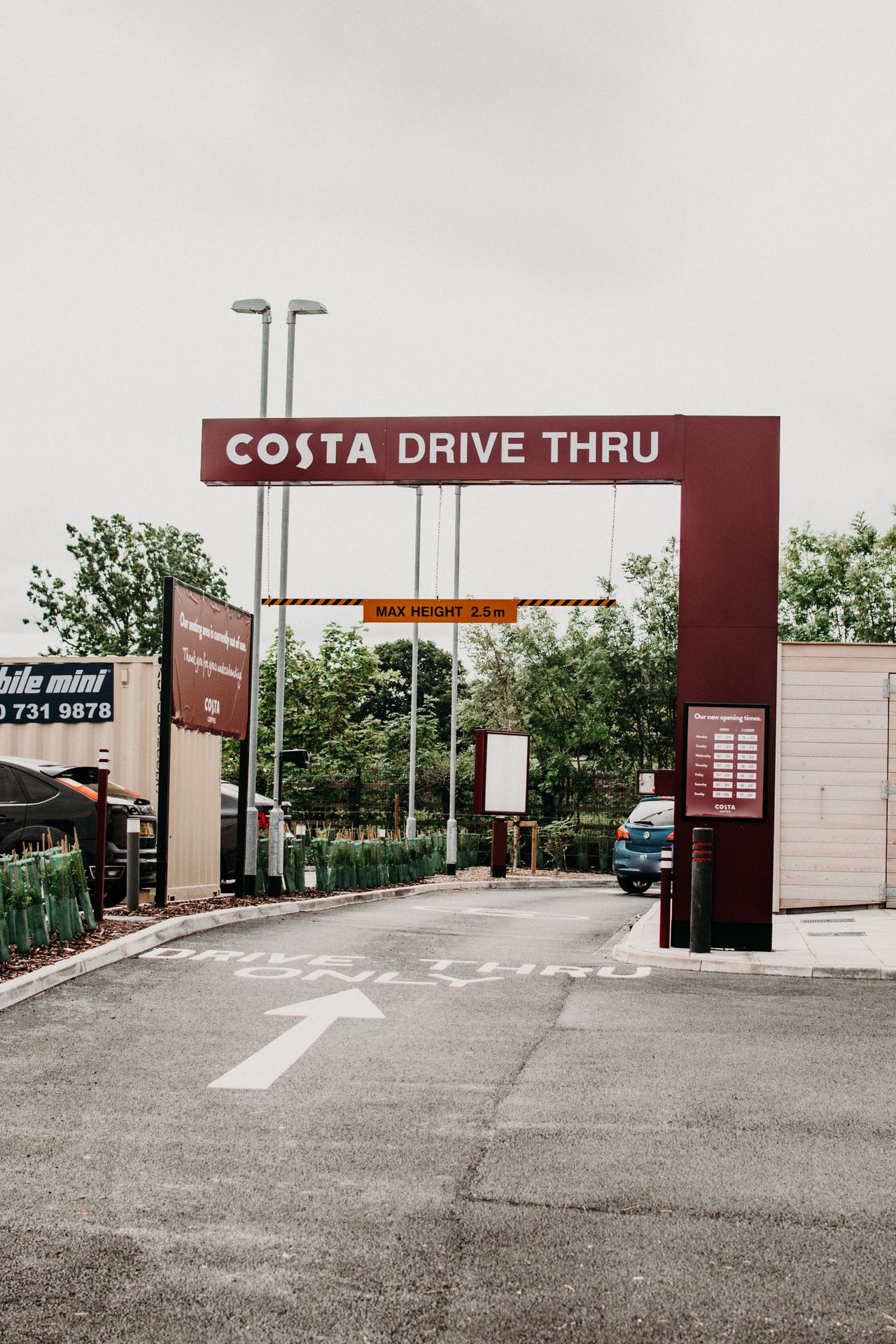
Drinks used to be an add-on. Now they are the main event.
Across coffee, soda, energy drinks, and specialty beverages, brands are adopting the same growth tactics that made fast food chains dominant: drive-thru convenience, app-based loyalty, endless customization, and rapid unit expansion.
The beverage business has become a traffic business
The clearest reason beverage brands are acting more like fast food chains is simple: they want frequency. A burger may be an occasional purchase, but a coffee, energy drink, flavored soda, or refresher can become a daily ritual. That makes beverages uniquely attractive in a slower consumer spending environment, because the ticket is relatively small while the habit can be relentless. The industry is increasingly less about selling a product in isolation and more about building repeat traffic around a routine.
That logic helps explain why beverage chains are expanding with the discipline and urgency once associated mostly with burger and sandwich brands. Dutch Bros reported 151 store openings in 2024 and said it expects to open 160+ new shops in 2025, while its fourth-quarter same-shop sales rose 6.9%. In that same period, the company said Dutch Rewards, innovation, and paid media were helping drive transactions, underscoring how beverage retail is now being managed as a high-velocity operating system rather than a traditional cafe model.
The competitive pressure on Starbucks shows the same shift from another angle. According to AP, Starbucks’ share of spending at U.S. coffee shops fell to 48% in 2024 and 2025, down from 52% in 2023, as fast-growing drive-thru rivals including Dutch Bros, 7 Brew, and Scooter’s gained ground. That matters because those challengers are not winning with a more formal coffeehouse experience. They are winning with speed, convenience, personalization, and, in many cases, lower-friction real estate.
The result is a market where drinks are increasingly treated like quick-service meals: engineered for throughput, impulse, and repeat visits. That is why chains built around beverages now talk about dayparts, transaction growth, store productivity, and market share in language that sounds almost identical to a fast food earnings call. The product may be cold brew, dirty soda, or an energy drink, but the commercial objective is the same one that has long defined quick service: get customers to come back again tomorrow.
The modern drink order is built for customization and speed

Fast food taught the broader restaurant industry that customization can raise perceived value without requiring an entirely new business model. Beverage brands have taken that lesson and pushed it even further, because drinks are naturally modular. Syrups, milks, toppings, cold foam, flavor shots, creamers, functional add-ins, and ice formats allow companies to create a sense of novelty at relatively manageable operational cost. What looks like indulgence to the customer often looks like margin engineering to the operator.
Dirty soda is one of the clearest examples. Chains such as Swig helped popularize the idea that a fountain soda could be remixed into a signature treat with cream, lime, fruit flavors, and other additions. Axios reported in late 2024 that the category was spreading beyond Utah as TikTok and reality TV helped drive national interest. What matters strategically is not just the drink itself, but the format: highly customizable, visually distinctive, easy to market, and ideal for repeat trial because consumers can keep tweaking the formula.
Large incumbents have noticed. McDonald’s experimented with that logic through CosMc’s, a beverage-led concept built around bold flavors, snackable occasions, and coffee-shop-style drinks. Reuters reported in May 2025 that McDonald’s would shut the five standalone CosMc’s locations but test successful beverages from the concept inside McDonald’s restaurants. Even in partial retreat, the lesson was clear: major chains see beverages as a growth engine important enough to justify dedicated experimentation.
The same pattern shows up in mainstream packaged drinks. Keurig Dr Pepper said its 2025 cold beverage pipeline builds on the success of flavor innovation in 2024, highlighting Dr Pepper Creamy Coconut as its most successful limited-time carbonated soft drink launch to date. Reuters also reported that Keurig Dr Pepper’s U.S. performance benefited from demand for ready-to-drink beverages and new flavor variants. That is strikingly similar to the limited-time-offer logic long used by fast food chains: launch fast, create buzz, test demand, and keep refreshing the menu to stay culturally relevant.
In other words, beverage companies are not merely selling refreshment anymore. They are selling a customizable experience that can be processed quickly, promoted constantly, and remixed endlessly. That is a very fast-food-like proposition, even when the item in the cup looks more like a lifestyle accessory than a meal.
Loyalty apps have become the new combo meal

If fast food chains once relied on combo meals to increase check size and lock in habit, beverage brands now rely on loyalty ecosystems to do something even more powerful: capture data, personalize offers, and reduce the friction of repeat ordering. The smartphone has become the beverage industry’s most important piece of restaurant equipment. It remembers the order, nudges the next visit, and turns routine cravings into measurable customer behavior.
Starbucks remains the benchmark. The company reported that U.S. 90-day active Starbucks Rewards members totaled 33.8 million at the end of fiscal 2024, following 34.3 million in the first quarter of that year. Earlier company disclosures said Rewards tender had reached 59% in the U.S., showing how central digital loyalty has become to the brand’s economics. That scale is why Starbucks increasingly behaves less like a simple coffee retailer and more like a restaurant platform with a payments layer, an ordering engine, and a captive audience.
Its rivals are following closely. Dutch Bros said Rewards members accounted for 71% of transactions in the fourth quarter of 2024, and Restaurant Dive reported that members had placed 5.4 million mobile orders by the end of December. The company only launched mobile ordering in 2024, according to its annual report, yet the feature quickly became meaningful. That kind of adoption reveals how beverage chains now think like quick-service brands: digital tools are no longer support functions, but core infrastructure for traffic and retention.
7 Brew offers another variation on the same theme. Restaurant Business reported in 2024 that 92% of transactions at the fast-growing drive-thru coffee chain came from known guests through its loyalty program. Even without a conventional app-centered model, the brand is using customer identification and targeted outreach in a way that mirrors the fast food industry’s increasingly data-driven approach. The point is not just to reward visits. It is to turn anonymous transactions into ongoing relationships.
This is the structural reason beverage brands look more and more like fast food chains. The transaction is small, but the lifetime value can be enormous if the habit sticks. Loyalty lets beverage companies know who buys, when they buy, what they customize, and what might pull them back this afternoon. That is not a side benefit. It is the business model.
Drive-thrus, compact stores, and daypart control are reshaping the category

Another reason beverage brands are acting like fast food chains is that they increasingly use the same physical formats. The classic coffeehouse invited lingering. The new beverage model prioritizes throughput. Drive-thru lanes, walk-up windows, smaller footprints, and simplified kitchen demands make drinks well suited to the real estate logic that quick-service restaurants have refined for decades. For many operators, beverages offer a cleaner path to expansion because the box can be smaller while the frequency can be higher.
That helps explain the rise of chains such as Dutch Bros, 7 Brew, Scooter’s, and Swig. Their appeal is not only product innovation, but format efficiency. AP noted that Starbucks has been pressured by competitors using drive-thru-heavy models, a meaningful distinction in a market where convenience increasingly decides share. Consumers who want a flavored cold brew or energy-style refresher are often less interested in hanging out than in getting in and out quickly, especially during commute and afternoon snack windows.
Starbucks itself has responded by leaning harder into operational simplification. Axios reported in January 2025 that CEO Brian Niccol said Starbucks would trim roughly 30% of its menu by the end of fiscal 2025 and make changes to mobile ordering. That is a classic fast food move: narrow complexity, improve speed, and make the highest-demand items easier to execute. When a coffee giant starts talking this way, it is effectively acknowledging that beverage retail has become a throughput contest.
The drive-thru effect also changes what counts as prime daypart territory. Fast food has long fought over breakfast, lunch, late night, and snacking. Beverage brands now compete across those same windows with surprising flexibility. A chain can sell coffee in the morning, energy drinks at midday, refreshers in the afternoon, and indulgent frozen drinks after school or dinner. Because beverages can map onto multiple moods without the labor intensity of full meals, they can monetize more moments in the day.
That is why beverages have become strategically irresistible. They fit into compact, scalable formats; they perform well in drive-thru; and they can be sold across more occasions than many food items. In short, the beverage business increasingly behaves like fast food because the underlying operating model rewards the same things: speed, consistency, convenience, and ruthless attention to daily traffic patterns.
Big beverage companies now chase cultural relevance the way chains chase menu buzz
Perhaps the most revealing change is cultural. Fast food chains learned long ago that menu buzz drives attention far beyond the restaurant itself. Limited-time offers, celebrity tie-ins, social-media-friendly visuals, and youth-oriented flavor launches create conversation that keeps a brand feeling current. Beverage brands are now pursuing that same playbook because younger consumers increasingly treat drinks as a form of identity, entertainment, and low-cost indulgence.
The growth of energy and functional beverages shows how much this matters. Reuters reported that Celsius agreed to buy Alani Nutrition for $1.8 billion in 2025, a deal designed to deepen its position in sports and energy drinks. Celsius later said that, on a pro forma basis, it captured 16.2% of U.S. energy drink category dollar share in the first quarter of 2025 after closing the Alani Nu acquisition. That is not just consolidation. It reflects a scramble to own a category where brand image, lifestyle alignment, and consumer tribe can matter as much as the liquid itself.
Social virality also accelerates the fast-foodification of beverages. Dirty soda spread nationally not because consumers needed a new way to drink cola, but because the format photographed well, invited experimentation, and felt shareable. Keurig Dr Pepper’s emphasis on flavor innovation, and McDonald’s willingness to test CosMc’s-inspired beverages in core restaurants, both point to the same truth: drinks have become a rapid-response marketing vehicle. They can be refreshed faster than a full food platform and can create just enough novelty to trigger trial.
There is also a pricing advantage. In a cautious economy, a $4 to $7 drink can function as an affordable splurge in the way a fast food value meal once did. Consumers may trade down on larger purchases but still justify a personalized iced drink, a branded energy beverage, or a dessert-like soda creation. For brands, that makes beverages an unusually resilient way to sell emotion, habit, and self-expression at scale.
So why are beverage brands acting more like fast food chains? Because the economics, technology, and consumer behavior now reward the same instincts. Win the routine. Speed up the service. Personalize the order. Build the app. Refresh the menu. Turn a craving into a habit, and a habit into a system. The companies that understand that are no longer just in the beverage business. They are in the traffic business, the data business, and increasingly, the culture business too.