
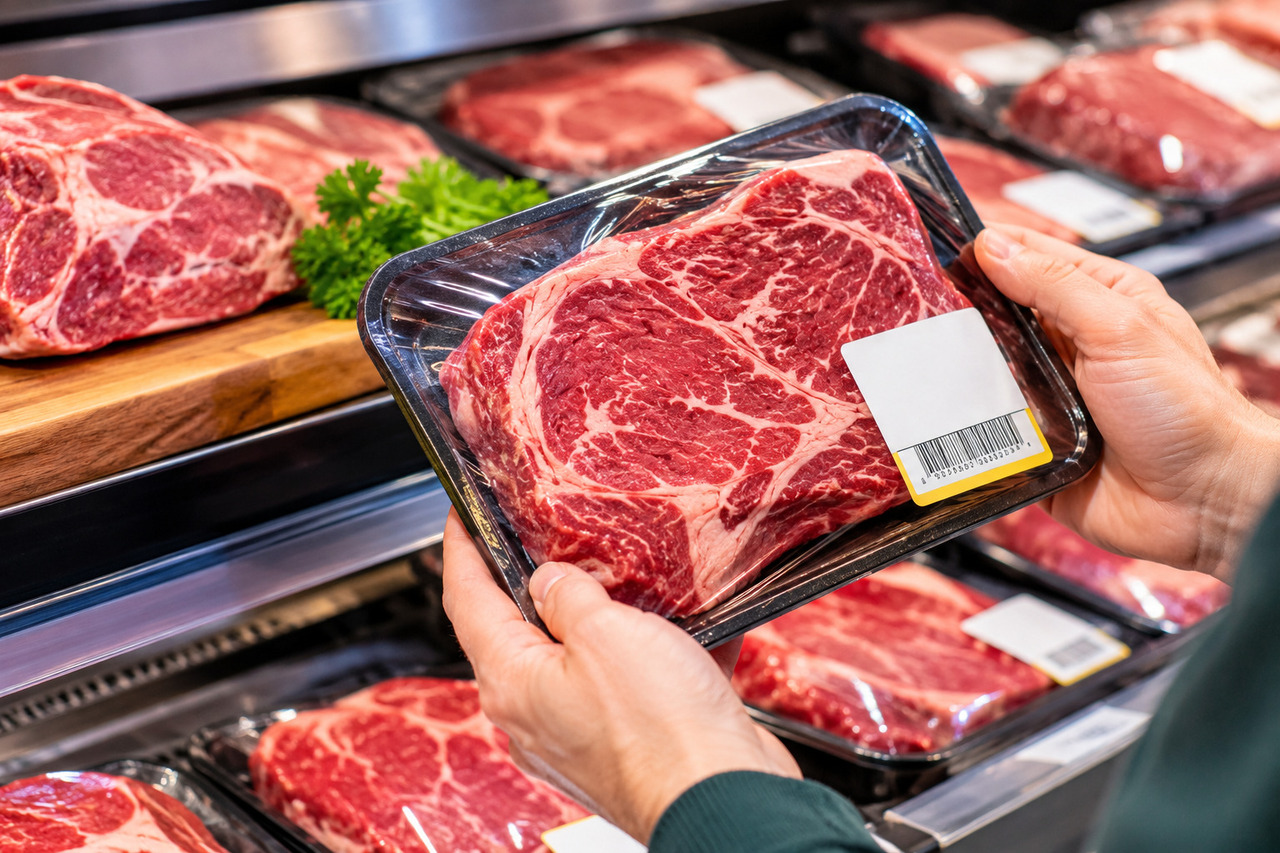
A butcher’s checklist can be more practical than a shopper’s usual routine of comparing price and grabbing the reddest steak in the case. The details that matter most often include USDA grade, the packed-on date, how much liquid is sitting in the tray, and whether a less expensive cut could do the same job.
Start with grade, not just the sticker price
USDA says beef grading is based mainly on marbling and maturity, and marbling is one of the clearest indicators tied to flavor, juiciness, and tenderness. In the USDA quality system, Prime has more marbling than Choice, and Choice has more than Select. USDA also describes Choice as high quality, while Select is typically leaner.
That hierarchy can help explain why two steaks that look similar in the case can cook and eat very differently. A higher grade often means more intramuscular fat, which tends to protect the meat from drying out during cooking. For home cooks, that can matter as much as the cut itself, especially for dry-heat methods like grilling, broiling, or pan searing.
There is also a difference between a USDA grade and a branded beef label. Certified Angus Beef says its brand uses 10 additional specifications tied to factors including marbling, maturity, texture, and carcass measurements. That makes it a separate branded program, not a synonym for USDA Prime and not a guarantee that any Angus-labeled package outranks other beef in the case.
Shoppers should also be careful not to assume they can recreate official USDA grading just by pressing on a steak. USDA carcass standards evaluate characteristics including the ribeye muscle during grading, not a quick retail case touch test. The label remains the most reliable guide if a store provides one.
Color and packaging can reveal more than freshness myths do
Bright cherry-red beef often catches the eye first, and that color can be normal for fresh beef exposed to oxygen. But USDA also says beef in vacuum packaging may appear burgundy or purplish-red before it is opened, because the meat has not been exposed to air. That means color alone is not a definitive freshness or safety test.
A more useful label detail may be the packed-on date. In a recent Food & Wine report, butcher Aaron Sortman of Red Hog in Louisville, Kentucky, recommended checking when the beef was packaged instead of relying only on a sell-by date. He told the outlet that for standard sealed grocery packaging, he looks for beef packed within about four to five days, a practical shopping tip rather than a universal food-safety rule.
Sortman also advised shoppers to watch for excess liquid in tray-packed beef. That liquid is often called purge, and USDA notes that the red fluid in meat packaging is not simply blood. A small amount can be normal, but a heavily flooded tray can raise questions about storage history and how long the package has been sitting.
The bigger takeaway is that packaging clues work best when read together. Grade, date, package condition, and refrigeration all tell part of the story. A bright red package with lots of purge is not automatically the best pick, and a darker vacuum-sealed cut is not automatically a bad one.
Smarter cut choices can stretch a beef budget
Butcher advice can also help shoppers move beyond the usual ribeye, strip, and filet routine. In the same Food & Wine report, Sortman pointed to bavette, Denver steak, and chuck eye as alternatives worth looking for when popular premium cuts are expensive or sold out.
Bavette can stand in for skirt steak in many kitchens, especially for high-heat cooking and slicing against the grain. Denver steak and chuck eye can also offer a more affordable route to a satisfying steak dinner, though availability varies by store and butcher case. These cuts may not appear every day, but asking for them can open up more options.
Ground beef shoppers have a different label to prioritize. Rather than looking for a carcass grade that may not even be displayed, shoppers can focus on the lean-to-fat ratio because fat content affects juiciness, flavor, and how the meat performs in burgers, meatballs, tacos, or sauce.
Lower USDA grades such as Standard and Commercial are often sold without prominent grade labeling or as store-brand beef, according to USDA. Utility, Cutter, and Canner grades are seldom sold at retail. USDA also offers Certified Tender and Very Tender shields for products that qualify through tenderness testing, another label that can be useful when tenderness matters most.