
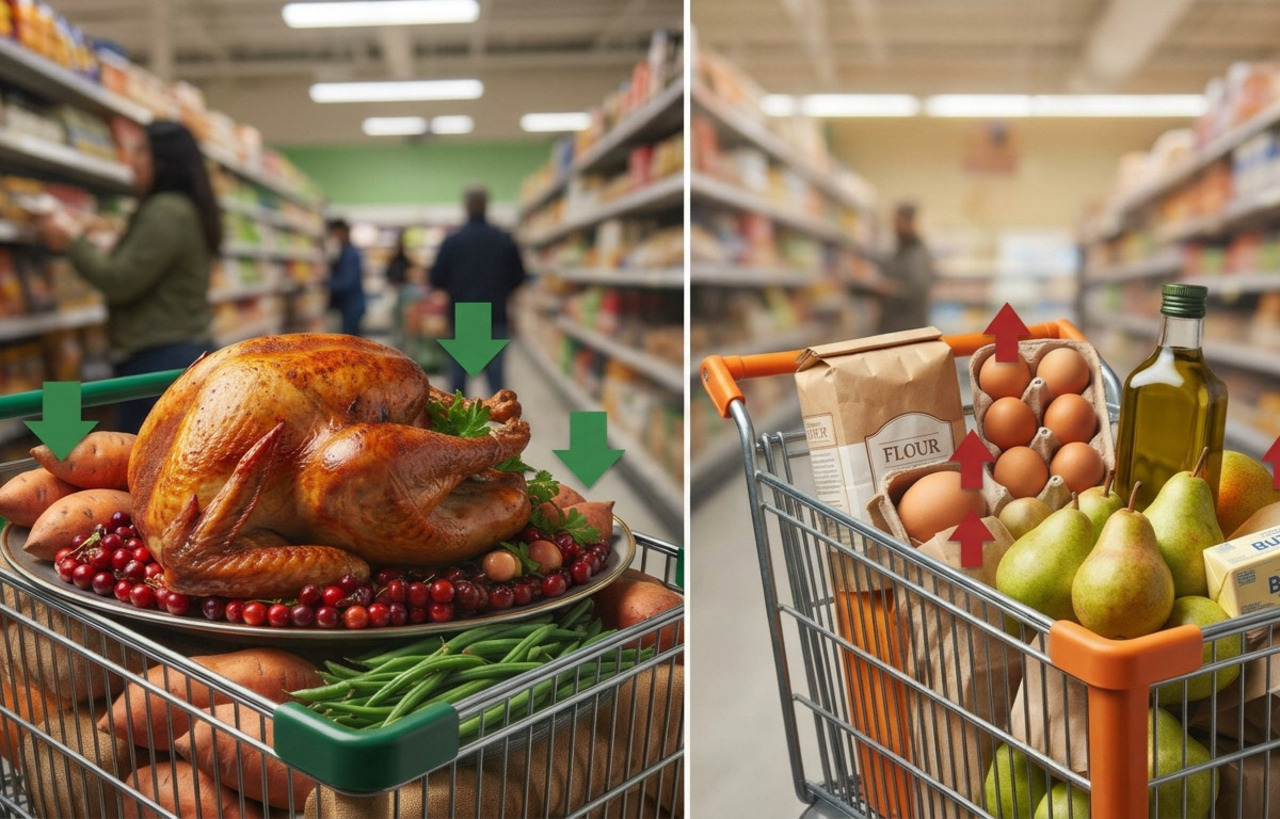
Thanksgiving 2026 is shaping up to be a mixed bag for grocery shoppers. The headline numbers suggest some relief, but the savings are uneven. By the time families move beyond the turkey and into sides, desserts, and pantry basics, the bill can still feel stubbornly high.
Why the holiday meal looks cheaper at first glance
The broadest measure of Thanksgiving costs is pointing lower this year. The American Farm Bureau Federation’s annual survey found a classic holiday meal for 10 costs $55.18 in 2026, down 5% from last year and about $5.52 per person. That is welcome news for households that have spent several years absorbing food inflation, even if Farm Bureau notes the meal still costs nearly 20% more than it did five years ago.
Turkey is a big reason the top-line number looks better. Wells Fargo’s 2026 Thanksgiving food report said six of 10 tracked items cost less than a year earlier, including turkey, cranberries, and frozen vegetables. Retail promotions are doing some of the heavy lifting, too, as grocers use low turkey prices to pull shoppers into stores and encourage bigger holiday baskets.
That does not mean turkey is suddenly cheap across the supply chain. USDA’s Economic Research Service said frozen whole hen turkey prices are expected to remain strong through the rest of 2026 and into 2027, with the annual average projected at 175.5 cents per pound. In other words, shoppers may see good deals at the store, but those bargains are often being sharpened by retail competition rather than a truly low-cost market.
Where shoppers may still get hit with sticker shock
The surprise this year is not necessarily the centerpiece of the meal. It is everything around it. The Bureau of Labor Statistics reported that the food index rose 0.5% in October 2026, while food-at-home prices increased 0.4% in the month. That kind of steady monthly lift may sound modest, but it adds up fast when a cart includes baking ingredients, canned goods, beverages, produce, and snacks for a house full of guests.
Produce is one area to watch closely. USDA retail ad tracking for early November showed Thanksgiving promotions featuring sweet potatoes, green beans, mushrooms, and squash, but it also highlighted notable year-over-year price increases in several fruit items, including Bartlett pears and Honeycrisp apples. Families building charcuterie boards, salads, fruit platters, or dessert spreads may notice less value in those seasonal extras than they expected.
Some of the old inflation pain points also have not fully disappeared. USDA’s food price outlook has shown categories such as poultry and bakery-related products still facing above-average price pressure in 2026. AP reporting on October inflation also underscored that broader price increases are extending beyond gasoline, reinforcing what shoppers already feel: even when one or two staples ease, the rest of the trip can still end up expensive.
How to shop smarter without scaling back the feast
This year’s best strategy is to think in layers. If turkey is on promotion, take the win there and redirect savings toward the items most likely to bust the budget, especially desserts, beverages, and fresh produce. A holiday meal can look affordable in survey data because it tracks a standard menu, but real households often add appetizers, branded ingredients, special drinks, and convenience foods that push spending well above the benchmark.
Shoppers should also remember that advertised specials can be highly localized. USDA’s weekly retail reports capture promotions from major grocery chains, but the strength of those deals varies by region and store format. That means comparison shopping matters more than usual, especially for butter, baking supplies, packaged rolls, and produce items that may not be deeply discounted alongside turkey.
The bottom line for 2026 is simple: Thanksgiving is not uniformly more expensive, but it is not uniformly cheaper either. The meal’s core may look manageable, thanks to aggressive promotions and softer prices in a few headline categories. Yet the full shopping list can still deliver pricey surprises, particularly once families add side dishes, desserts, and the extras that turn dinner into a holiday spread.