
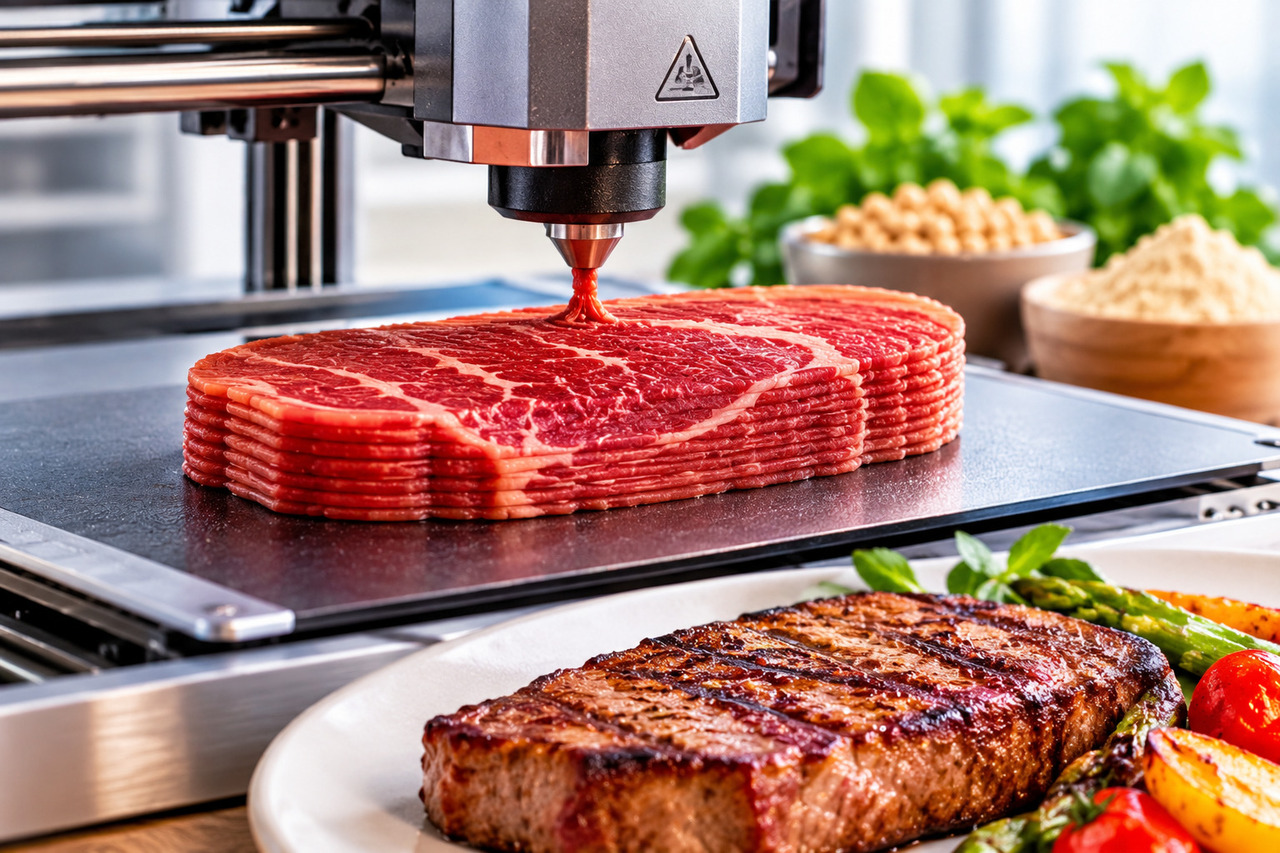
The next phase of plant-based meat is taking shape in layers, not patties. Companies using 3D printing say the technology can help them make steaks, fillets, and fish alternatives with more control over texture and structure than older forming methods.
Why companies are betting on layered production
Steakholder Foods said on September 3, 2026, that it launched Perfecta Premium Plant-Based Meat at retail outlets across the Northeastern U.S., calling it the brand’s first placement on U.S. store shelves. The company had previously said on May 20, 2026, that it was preparing to launch the line in the second half of 2026, with steak and chicken breast-style whole-cut formats positioned as part of a next-generation plant-based protein platform.
That language matters because whole cuts have been one of the hardest formats for plant-based brands to crack. Burgers, nuggets, and ground products are easier to shape, but a steak or fillet has to deliver visible structure as well as bite. Steakholder says its printing system is designed to address taste, texture, and the experience of eating a whole cut, which are barriers that have limited category growth.
The broader idea is simple: instead of pressing a mixture into one uniform shape, a printer deposits ingredients in layers according to a digital model. Steakholder says that process gives manufacturers detailed control over each layer’s composition and structure, which can be used to mimic fibrous meat or flaky fish more closely than conventional forming equipment.
What the technology is designed to change
In a company explainer, Steakholder contrasts 3D printing with traditional forming machines used for patties, sausages, and simple fillets. According to the company, the older systems can struggle with fine internal structure, recipe flexibility, and consistent texture in more complex products. Its pitch for printing is precision, customization, and consistency.
The company says digital modeling guides the product’s shape, texture, and internal structure before plant-based ingredients such as protein gels, fats, and flavorings are loaded into the printer. The machine then deposits those ingredients layer by layer, followed by post-processing steps such as cooking, cooling, and packaging. Steakholder also says printing can create varied textures, from flaky fish fillets to fibrous steaks, without retooling a factory line for each new shape.
That flexibility is part of the appeal for food manufacturers, not just consumers. A system that can swap recipes or formats with software changes could lower some development friction for new products. Steakholder says the approach can support products including marbled beef-style steak, beef fillet, white fish, and future chicken and seafood alternatives.
What comes next for the category
Other companies are trying related approaches. AgFunderNews reported on October 1, 2026, that Austria-based Revo Foods is scaling its patented 3D-printing technology for whole-cut fish and chicken alternatives. The outlet reported that Revo has six 3D printers operating at its production facility and can turn out a product every three seconds, as the company targets profitability by the third quarter of 2027.
That does not mean 3D-printed meat is about to replace the rest of the freezer case. Much of the category is still in an early commercial phase, and some company claims about adoption or future growth remain forward-looking rather than settled fact. Even Steakholder’s own May 2026 announcement included cautionary language that its technologies may require significant additional work before broader commercial sales.
Still, the retail debut of printed plant-based whole cuts in the U.S. gives the category a more concrete test. For shoppers, the real measure will be familiar ones: taste, texture, price, and how easily these products fit into a weeknight meal. For the industry, layer-by-layer production is moving from prototype talk toward actual grocery placement.