
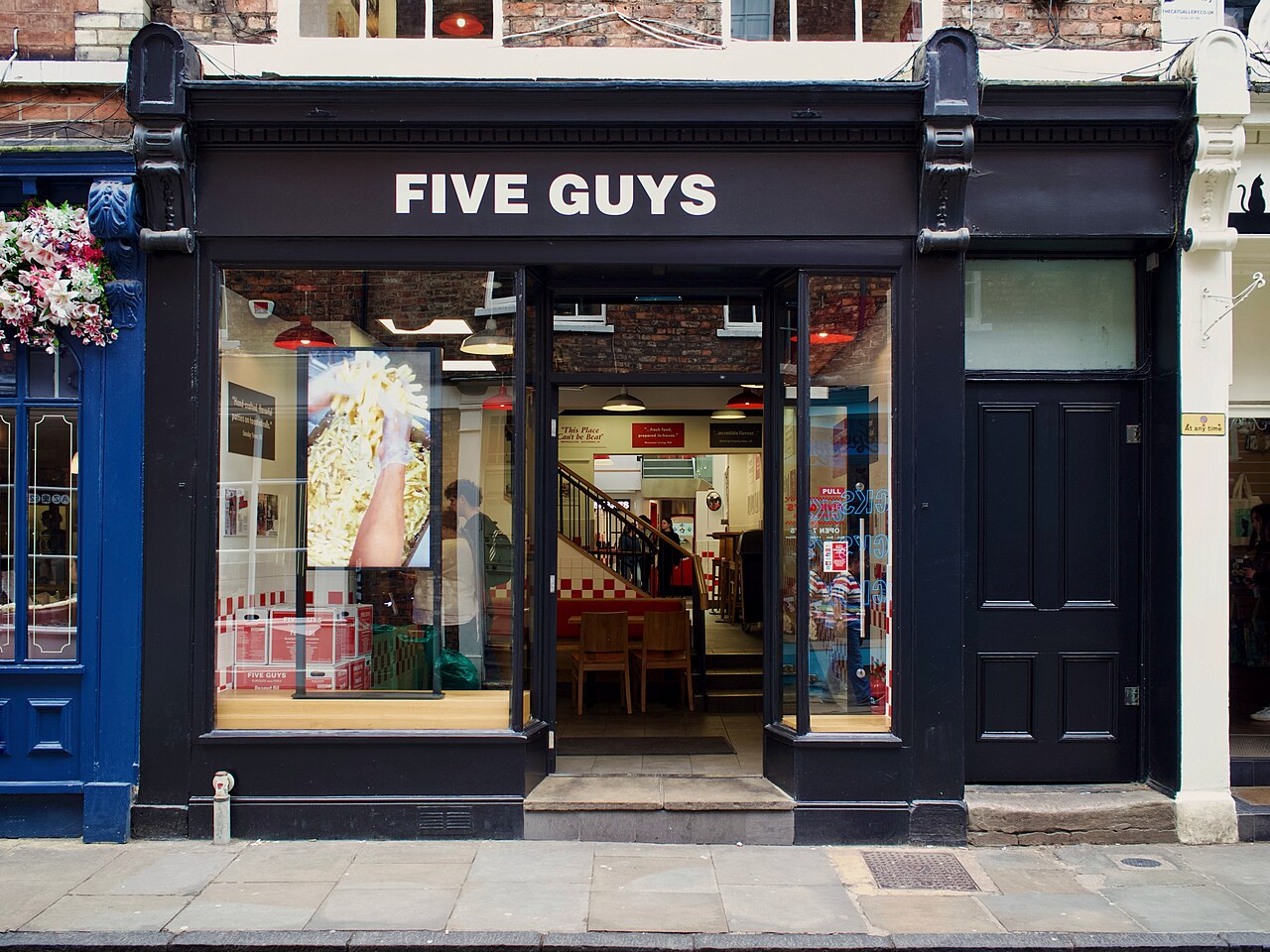
Restaurant operators across the U.S. are continuing to reduce store counts in 2026 as higher operating costs and softer consumer spending pressure margins. Among burger-focused brands, Five Guys and Red Robin are two of the chains with confirmed closures or active restaurant reduction plans spanning multiple states this year.
Five Guys closures are showing up in several states
Five Guys has not announced a nationwide closure program, but confirmed and widely reported shutdowns show the chain has quietly lost locations in several states during 2026. Reference reporting cited closures in Naperville, Illinois; Tampa, Florida; Dubuque, Iowa; Lake Charles, Louisiana; Atlanta, Georgia; and Lincoln, Nebraska, with several of those closures occurring between January and May 2026.
One of the clearest examples is the Five Guys at 2856 S. Route 59 in Naperville. Local reporting published on May 14 and May 15, 2026 identified that restaurant as closed, and third-party restaurant listings now mark the site as shut. Five Guys has not publicly released a comprehensive list of 2026 closures by state, and exact closure dates for several of the reported locations have not been disclosed.
The broader company footprint remains substantial. Five Guys said in its 2026 media fact sheet that it is closing in on 2,000 restaurants worldwide, and third-party location trackers place the U.S. count above 1,500 locations as of June 2026. That means the current pattern appears to be selective market pruning rather than a broad retrenchment, with closures in underperforming trade areas happening alongside continued openings in other markets.
Red Robin and Jack in the Box are also cutting units
Red Robin’s 2026 reductions are more formally documented. In its quarterly filing for the period ended April 19, 2026, the company reported 11 non-operating locations and recorded $1.753 million in asset impairment and restaurant closure costs. The filing does not provide a public list of all affected restaurant addresses, but it does confirm that closures are part of the company’s current operating picture.
The company’s first-quarter results add more context for the scale of the pullback. Red Robin reported on May 19, 2026 that comparable restaurant revenue was under pressure and that closure-related costs rose from the prior year. Earlier company guidance for 2026 followed a broader plan to reduce underperforming restaurants over time, largely through lease expirations and portfolio review, rather than a single-day shutdown announcement.
Jack in the Box has also posted a lower restaurant count this year. In first-quarter 2026 earnings, the company said its total restaurant count fell from 2,136 at the end of the prior quarter to 2,128 after 14 closures and six openings. The company tied part of that decline to its “JACK on Track” closure program, but it did not release a complete public list of cities or states affected in that earnings statement.
Rising costs and weaker traffic are driving the cuts
The common thread across these chains is margin pressure. Jack in the Box said first-quarter results were hurt by commodity cost inflation, lower transactions and a change in restaurant mix, while lower sales also reduced franchise rent revenue and royalties. Those are the same economic pressures analysts and restaurant industry publications have identified across quick-service and fast-casual dining in 2026.
Five Guys has faced a different version of the same problem. The chain’s premium pricing has long set it apart from traditional fast-food competitors, but higher menu prices can become more difficult to sustain when consumers cut back on discretionary spending. The reported closures in Illinois, Florida, Iowa, Louisiana, Georgia and Nebraska point to location-by-location performance reviews rather than a companywide retreat.
For customers, the immediate effect is local rather than national. Residents in cities where closures are confirmed should expect some locations to disappear even as the brands continue operating elsewhere, and in some cases continue opening new restaurants in stronger markets. What remains unclear is the full list of affected stores in several states, because not every chain has published a comprehensive 2026 closure roster.