
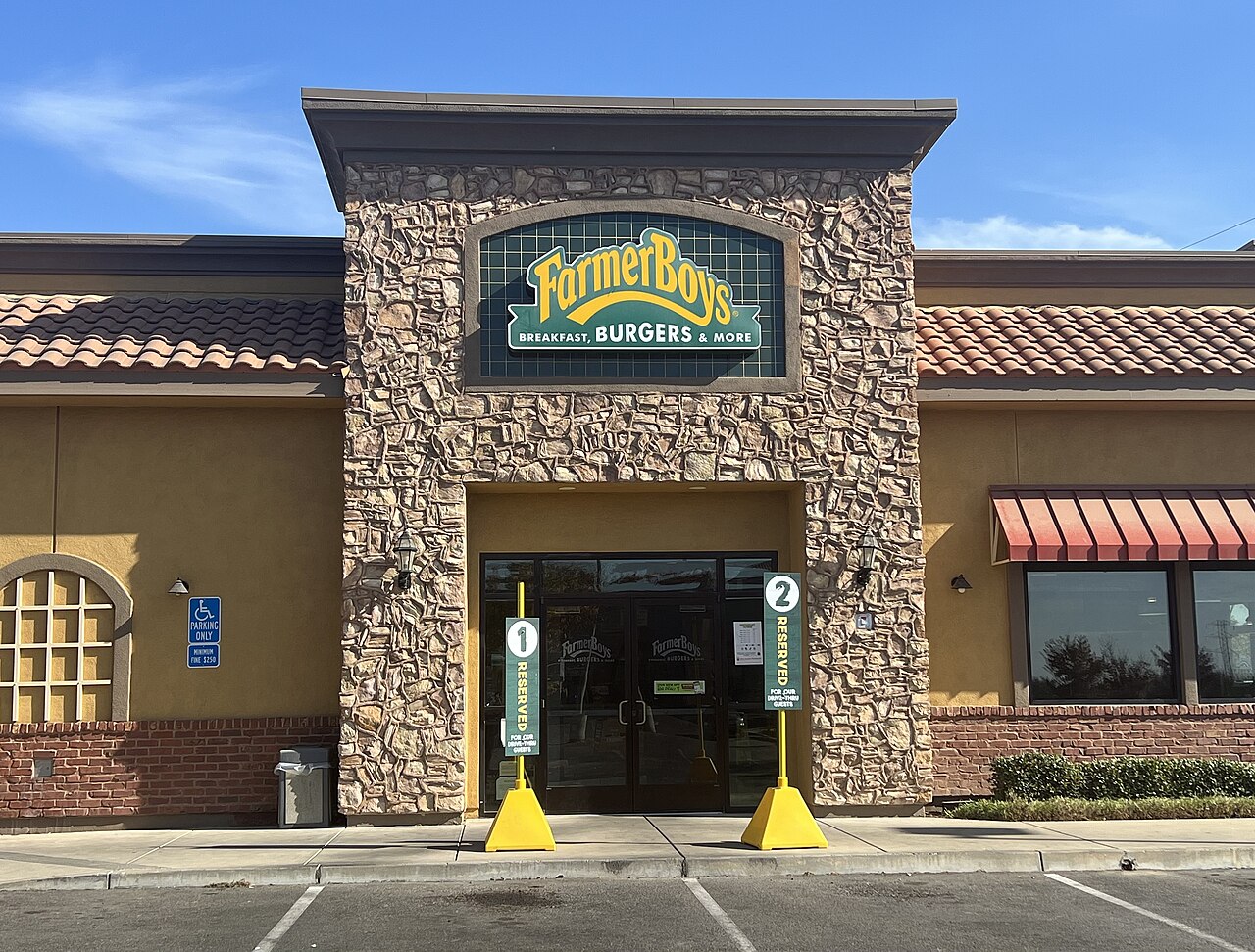
Restaurant operators across the U.S. have spent the past two years navigating higher borrowing costs, elevated labor bills, and more cautious customer spending. In California, those pressures are now showing up at a familiar regional brand after a Farmer Boys franchisee sought bankruptcy protection.
A Farmer Boys franchisee entered Chapter 11 in April
A franchise operator tied to Farmer Boys filed for Chapter 11 bankruptcy protection in April 2026, according to court-related reporting cited by NewsBreak. The report said the franchisee had been dealing with mounting debt and cash-flow strain, putting the filing in line with a broader pattern across restaurant franchising this year.
The operator was not described as the Farmer Boys parent company. Farmer Boys continues to identify itself as a regional fast-casual burger chain with more than 100 restaurants across California, Nevada, and Arizona, according to the company’s franchise and corporate materials. That distinction matters because a franchisee bankruptcy does not automatically mean the chain itself has entered bankruptcy or that all branded locations are affected.
The April filing drew notice because Farmer Boys is one of the better-known California-founded burger chains. The company says its first Farmer Boys restaurant opened in Perris in 1981, and its current support center is based in Riverside. Public reporting on the bankruptcy has so far focused on the franchisee’s debt load and operating pressures rather than on any chainwide insolvency at Farmer Boys itself.
What is confirmed in California, and what is still unclear
For California readers, the confirmed fact is narrow but significant: a franchisee associated with a California-born burger brand has filed for Chapter 11. What remains unclear is the precise number of restaurants operated by that franchisee, which cities those stores serve, and whether any individual California units are closing as a direct result of the filing.
Farmer Boys has not released a comprehensive public list of locations affected by the bankruptcy filing. Its public materials say the brand operates restaurants in California, Nevada, and Arizona, but they do not identify which stores are controlled by the franchisee named in the Chapter 11 case. Without that breakdown, it is too early to state that any specific California city has lost a Farmer Boys location because of the filing.
That leaves customers in a wait-and-see position. In restaurant bankruptcies, Chapter 11 is typically used to reorganize debts while a business seeks to keep operating, rather than to liquidate immediately. Still, individual outcomes can vary by lease obligations, lender negotiations, and each store’s sales performance, and no full California impact list has been publicly confirmed so far.
The filing reflects pressures larger than one burger chain
The immediate reason cited in reporting was financial strain tied to debt and merchant cash advance financing, along with ongoing operating expenses. Restaurant Business has reported separately that merchant cash advances have become a recurring problem in franchise bankruptcies because they can quickly drain daily cash flow, especially for operators already running on thin margins.
The broader backdrop is California’s higher operating-cost environment. California’s fast-food minimum wage rose to $20 an hour on April 1, 2024, for covered chains, according to reporting from the Los Angeles Times and other outlets. At the same time, industry research from S&P Global said restaurant sales have remained positive in 2026 but described momentum as increasingly fragile, with traffic softness weighing on operators.
That combination helps explain why this filing is bigger than a single franchisee’s balance sheet. Regional and multi-unit operators have had to absorb labor, food, utilities, insurance, and financing costs while competing for value-conscious diners. For customers, the practical takeaway is that a bankruptcy filing by a franchisee does not by itself mean a chain disappears, but it does show how vulnerable local restaurant operators remain even when the brand on the sign is still expanding elsewhere.