
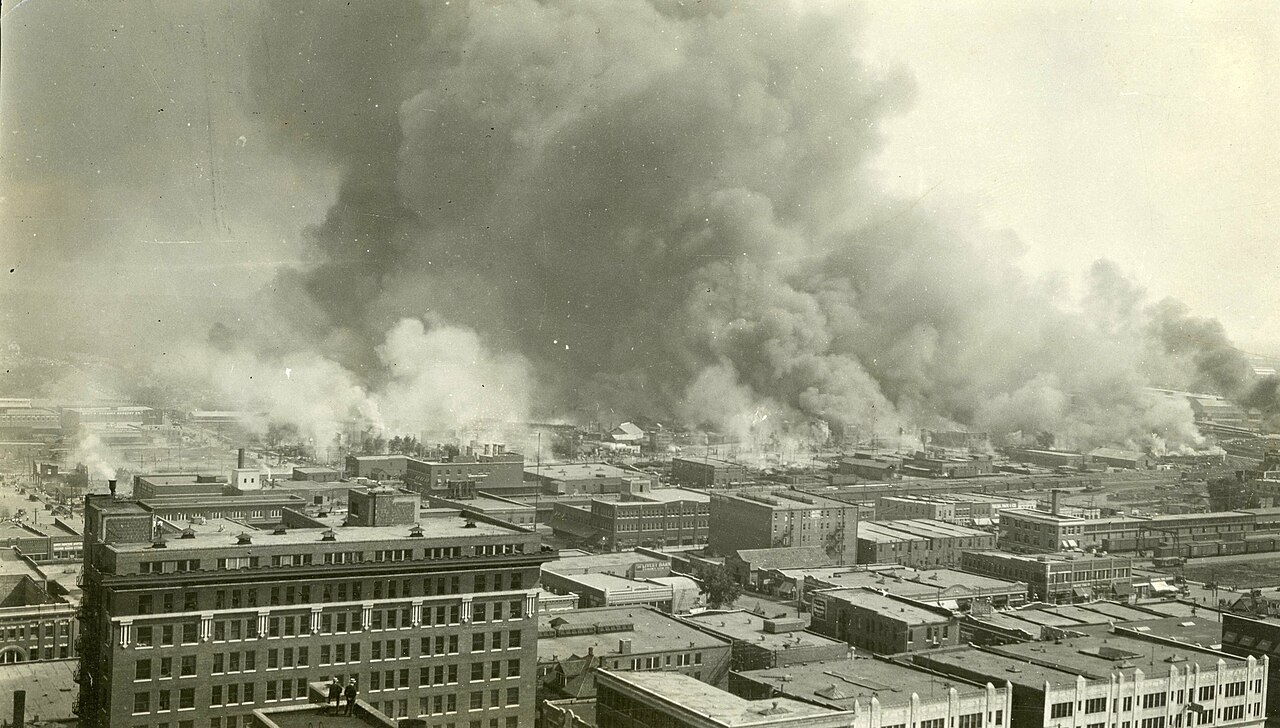
Some chapters of American history are neglected because they are painful. The Tulsa Race Massacre is one of the clearest examples. What happened in Greenwood in 1921 was not just a riot or local disturbance, but a deliberate act of racial terror that reshaped lives, wealth, and memory for generations.
Greenwood Before the Flames

Before the massacre, Tulsa’s Greenwood District stood as one of the most successful Black communities in the United States. Often called Black Wall Street, it was home to Black-owned hotels, doctors’ offices, newspapers, theaters, churches, restaurants, and shops. According to the Oklahoma Historical Society, Greenwood’s population reached roughly 11,000 by 1920, making it a center of Black enterprise and civic life at a time of rigid segregation.
That success did not exist in isolation. It grew in a city marked by oil wealth, rapid expansion, and deep racial hostility. Oklahoma in the early 20th century was also shaped by Jim Crow laws, vigilantism, and Ku Klux Klan activity. Historians have long argued that Greenwood’s prosperity challenged the white racial order, making it both admired within Black America and resented by many white Tulsans.
The immediate spark came on May 30, 1921, after a young Black shoeshiner, Dick Rowland, was accused of assaulting a white elevator operator, Sarah Page. The allegation was never proven, and many historians believe the encounter may have been accidental. Yet inflammatory press coverage and the threat of a lynching created a volatile atmosphere by the evening of May 31.
When armed Black veterans and other Black residents went to the courthouse to help prevent Rowland from being lynched, tensions escalated. A confrontation broke out, shots were fired, and white mobs soon surged toward Greenwood. What followed was not spontaneous chaos alone. It became an organized assault on a Black neighborhood whose success had already made it a target.
How the Massacre Unfolded
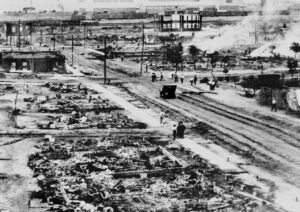
Unknown sourceUnknown source, Public domain, /Wikimedia Commons
Over the night of May 31 and into June 1, white attackers looted and burned Greenwood with staggering speed. The Oklahoma Historical Society says roughly 35 to 40 square blocks were destroyed, while homes, businesses, schools, and churches were reduced to ash. The Library of Congress describes the event as one of the largest single instances of state-sanctioned violence against Black people in American history.
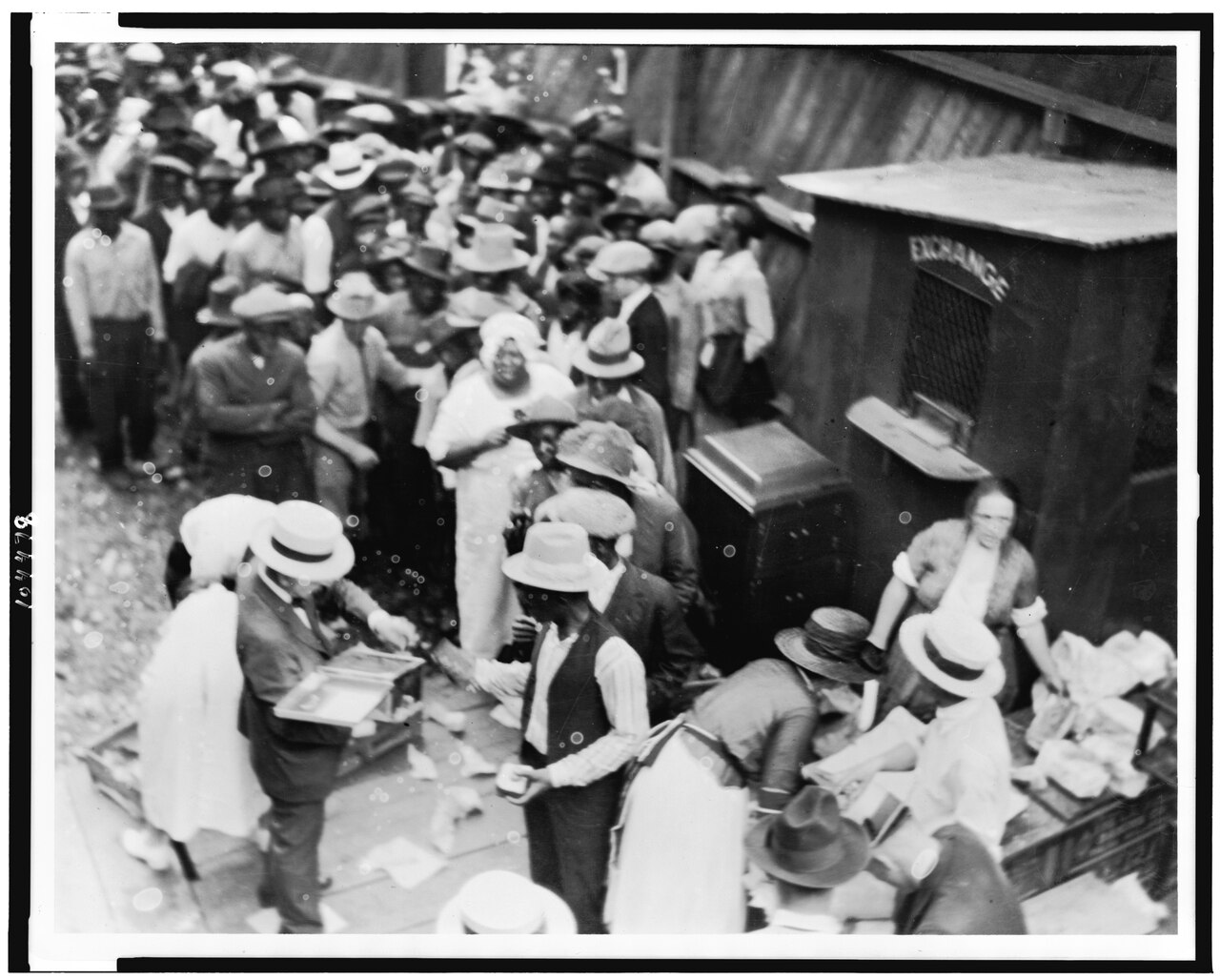
Death estimates have always been contested, in part because the record was distorted almost immediately. Official early counts were far lower, but modern historians and major institutions frequently cite estimates as high as 300 Black men, women, and children killed. Thousands were left homeless, and the Red Cross later documented a humanitarian crisis as displaced residents were forced into tents and makeshift shelter for months.
Eyewitness accounts and later investigations show that public authorities failed catastrophically. Black residents were rounded up and detained, while many white attackers were never prosecuted. Reports over the decades have also examined the role of local law enforcement and National Guard units, as well as long-standing claims that private aircraft were used to surveil or attack Greenwood from above, a detail that has become one of the massacre’s most haunting symbols.
The material destruction was immense, but the financial theft was just as devastating. Insurance claims were denied, land was contested, and generational wealth was erased overnight. In practical terms, the massacre did not only kill people and burn buildings. It interrupted an economic ecosystem that could have transformed family futures for decades.
Why So Many Schools Skipped It
For much of the 20th century, the Tulsa Race Massacre was minimized, misnamed, or omitted altogether from classrooms and public discussion. Many Americans learned the event, if at all, as the “Tulsa Race Riot,” a label that falsely suggested mutual disorder instead of one-sided mass racial violence. Scholars and archivists have shown that local officials, civic leaders, and even textbooks helped bury the story soon after the destruction.
That silence had consequences beyond education. If students never learn that a thriving Black district was destroyed by a white mob, they miss a crucial truth about how racial inequality in America was built. The massacre was not only about hatred in a single moment. It was also about dispossession: homes lost, businesses erased, legal remedies denied, and memory suppressed.
Public recognition has grown in recent years. The 2001 Oklahoma commission report pushed the subject into wider national conversation, and centennial commemorations in 2021 drew renewed attention. More recently, legal and political fights over reparations have kept Tulsa in the headlines. In June 2024, the Oklahoma Supreme Court dismissed a lawsuit brought by the last known survivors seeking reparative relief, while in 2025 Tulsa Mayor Monroe Nichols proposed a $100 million private trust focused on scholarships, housing, and community repair rather than direct cash payments.
Tulsa matters because it exposes how history can be hidden in plain sight. It forces a broader question about what schools choose to emphasize and what they avoid. Teaching the massacre honestly does not weaken the national story. It strengthens it by replacing myth with evidence, silence with memory, and denial with a fuller account of what the United States has been and what it still struggles to become.