
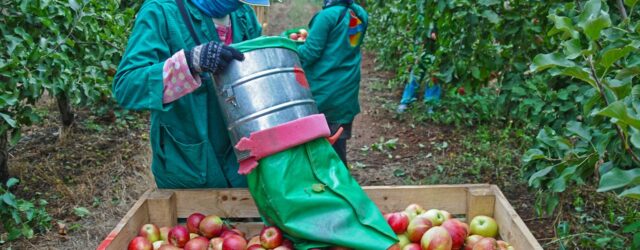
Apple Harvesting Is About to Change Forever

apple harvesting

Apple harvesting is entering a new phase as growers face labor pressure, tighter efficiency demands, and rising expectations around fruit quality across the U.S. supply chain. In Washington state, where the country’s largest apple industry is concentrated, a field trial involving Superfresh Growers and Moses Lake-based Automated Ag is drawing attention to a vacuum-assisted system called the Bandit Cyclone. The demonstration, detailed in Food Safety News on August 24, 2026, points to a possible shift away from the ladder-and-picking-bag method that has defined orchard work for generations.

Washington trial puts Bandit Cyclone in the spotlight

The specific development centers on the Bandit Cyclone, a vacuum-based harvest-aid system developed by Automated Ag and recently showcased in partnership with Superfresh Growers in Yakima, Washington, according to Food Safety News. The system uses a moving platform with four large suction hoses, allowing workers to pick apples from the tree and place them directly into the hoses instead of carrying heavy bags up and down ladders. Automated Ag owner J J Dagorret told the publication the apples move through the hoses at about 15 feet per second for roughly half a second before reaching a padded decelerator and then a bin.

The scale claims tied to the system are significant. Food Safety News reported that the platform has been about 35 percent more efficient than standard handpicking and has cut bruising by half in trial use. Dagorret also said a crew of four pickers can fill large orchard bins in about 10 to 15 minutes, a figure that points to why growers are paying attention during peak harvest.

The company has not announced a broad commercial rollout date, and the technology remains in the trial stage. Still, the public demonstration marked one of the clearest signs yet that orchard mechanization is moving beyond platforms and pruning aids into the harvest process itself.

Why this matters first in Washington orchards

Washington is the clearest place to watch this shift because it remains the dominant apple-producing state in the country. USDA data and industry materials cited by Washington apple groups show the state accounts for roughly 60 percent or more of U.S. apple production, giving any operational change there outsized importance for growers, packers, and retailers nationwide. That scale helps explain why a harvest-aid trial in Yakima has broader significance than a typical equipment test.

What is confirmed is that the current demonstration involves Washington companies and Washington orchards, specifically Superfresh Growers in Yakima and Automated Ag in Moses Lake. What is not yet known is how many orchards will adopt the Bandit Cyclone after trials conclude, how many units may be deployed for the 2026 harvest, or which additional growers in the state may be lined up to test the equipment. Neither company has released a full statewide adoption list.

For local orchard labor, the implications are practical rather than abstract. Dagorret told Food Safety News that the system can widen the available labor pool because the work is less physically demanding than repeated ladder climbing and heavy-bag carrying, a point that could matter in regions where growers continue to face workforce constraints.

Labor, orchard density and fruit handling are driving the shift

The pressure behind this technology is rooted in how modern orchards operate. Dagorret said traditional apple harvesting is physically strenuous and that ladder falls account for a significant share of worker injuries, making safety and ergonomics a central issue in harvest design. By keeping workers on a platform and reducing the need to carry loaded picking bags, the Bandit Cyclone is intended to address those long-standing conditions directly.

The economics also reflect structural changes in apple production. According to Food Safety News, Dagorret said growers once planted about 133 trees per acre, compared with roughly 1,300 to 1,400 trees per acre now. Higher-density orchards can support better yields and more standardized production, but they also increase pressure to move fruit quickly and consistently during a narrow harvest window.

The company said the full unit would cost about $125,000, though Dagorret noted the platform can be used year-round for work such as pruning. He also told Food Safety News that food safety has not emerged as a problem in testing because the fruit is handled less, reaches the bin faster, and the machinery is cleaned regularly. For consumers, the near-term takeaway is straightforward: the apples in stores are still being picked under existing commercial systems, but Washington’s latest field trials suggest the harvesting method behind future crops may look very different.


A 15-State Outbreak Just Got Traced Back to One Sprout Company

Food_and_Drug_Administration

Federal foodborne-illness investigations often begin with scattered cases across states before regulators can identify a common source. In this case, federal investigators narrowed a 15-state outbreak to alfalfa sprouts grown by Minneapolis-based Everything Sprouts, and the company initiated a recall on August 22, 2026. The action follows an FDA outbreak advisory issued a day earlier linking the sprouts to illnesses involving both Shiga toxin-producing E. coli and Salmonella.

Everything Sprouts issued the recall after FDA tied illnesses to its alfalfa sprouts

Everything Sprouts, LLC recalled certain alfalfa sprouts sold under the Everything Sprouts and Calco brands on August 22, 2026, according to the FDA recall notice and the agency’s outbreak investigation page. Federal and state partners had received 55 illness reports tied to the outbreak, including 46 E. coli infections, 7 Salmonella infections, and 2 people infected with both pathogens, the FDA said. The agency also reported four hospitalizations and no deaths as of its August 24 update.

The recalled products include Alfalfa 6/5oz and Alfalfa 12/6/5oz packages in 5-ounce plastic containers with lot numbers 222, 223, 225, 226, and 230. The FDA said the containers bear bar codes 860014523113, 860014523120, and 850079470149. The same alfalfa sprouts were also used in Everything Sprouts Crunchy Protein Sprout Mix 5-ounce cups with lot numbers 222, 223, 226, and 230, and Zesty Garlic Mix 5-ounce cups with lot numbers 222, 223, 225, 226, and 230.

The official company announcement date and FDA publish date were both August 22, 2026, according to the FDA posting. An FDA recall number and hazard classification were not listed in the agency materials reviewed for this article, and the enforcement report system indicates some recalls may remain unclassified while FDA completes its hazard assessment. The stated reason for the recall was potential contamination with Salmonella and Shiga toxin-producing Escherichia coli, or STEC.

The confirmed distribution footprint is narrower than the outbreak’s 15-state illness map

The illness count spans Florida, Indiana, Iowa, Kansas, Michigan, Minnesota, New Hampshire, New York, North Carolina, North Dakota, Pennsylvania, South Carolina, South Dakota, Washington, and Wisconsin, according to the FDA outbreak page. But the confirmed distribution footprint in the recall notice is narrower: the products were distributed from May 27, 2026, through August 21, 2026, to wholesale distributors and grocery stores in Minnesota and Wisconsin. FDA also said traceback shows the sprouts were distributed to restaurants in Minnesota and Wisconsin.

That distinction matters for readers because regulators have confirmed cases in 15 states while only confirming direct product distribution in two states so far. The FDA said it is working to determine whether the recalled product was further distributed to other states. The agency has not released a comprehensive list of affected grocery stores, restaurants, or city-level locations in Minnesota or Wisconsin.

For consumers and businesses, the instructions differ slightly between the recall notice and the outbreak advisory but point in the same direction. The company said consumers should immediately dispose of affected lots and clean and sanitize any surfaces or containers the products may have touched. The FDA advisory said consumers should check refrigerators and freezers, throw the sprouts away or return them to the place of purchase, while retailers, restaurants, and foodservice customers should not eat, sell, or serve them.

The outbreak traceback adds to long-running food-safety scrutiny around raw sprouts

The FDA said epidemiologic and traceback data identified alfalfa sprouts distributed by Everything Sprouts as a source of illness in the outbreak. Illness onset dates ranged from May 31, 2026, to August 8, 2026, and among 34 people interviewed, 26 reported eating alfalfa sprouts in the week before getting sick, according to the agency. FDA also said it initiated an inspection and sample collection at Everything Sprouts on August 19, 2026, and that the investigation remains ongoing.

Sprouts have long been treated as a higher-risk raw produce category because warm, moist growing conditions can allow pathogens to multiply, and FDA guidance for sprout operations includes specific standards for seed treatment, environmental monitoring, and sanitation. That broader context has been part of federal oversight of Everything Sprouts before this outbreak. In a warning letter dated March 28, 2025, the FDA said a 2024 inspection at the company’s Minneapolis sprouting operation found conditions the agency said rendered products adulterated under federal law.

For customers, the immediate meaning is practical rather than speculative: only the identified products and lot codes are part of the recall, but they should no longer be eaten, sold, or served. The FDA said repackaged sprouts from retailers that received the recalled products also should not be sold. Everything Sprouts said it is continuing to work with public health officials and will provide updates as more information becomes available.

NYC’s Government-Run Grocery Plan Could Cost Twice What Officials Promised

Mayor Zohran Mamdani’s administration

New York City’s grocery plan was pitched as a bold affordability fix. It now looks more like a high-cost public experiment.

The promise is simple: cheaper food. The real question is who ultimately pays.

A low-price promise meets the realities of grocery economics

Mayor Zohran Mamdani’s administration has made municipal grocery stores one of its signature affordability ideas, promising five city-owned stores with a core basket of goods priced 30% below prevailing market rates. According to the Mayor’s Office, those discounts would cover all produce, all meat and seafood, plus key pantry staples, with officials projecting average savings of about $90 a month for shoppers. The city says the stores will be publicly owned, privately operated, and phased in through 2029.

That framing helped the idea sound leaner than a traditional government retail operation. The city is not planning to staff and run every aisle directly; instead, NYCEDC is seeking experienced grocery operators to manage the stores day to day. Even so, city documents and public briefings make clear that low-cost real estate, public buildout support and direct operating subsidies are central to the model. NY1 also reported that officials asked prospective operators to estimate what additional operating subsidy they would need to sustain the 30% discount.

That matters because grocery retail is a notoriously thin-margin business. City planning material has argued that municipal stores can work with a lower margin than private operators because they would avoid some real estate and profit pressures. But once the city also promises fixed discounts, quality jobs, predictable pricing and neighborhood access, the savings have to come from somewhere. In practice, that usually means taxpayer support, not just operational efficiency.

Why critics say taxpayers may be paying on two fronts

The political vulnerability of the plan is no longer just the upfront cost. Critics increasingly argue that New Yorkers may end up subsidizing the same food system twice: first through the public investment needed to launch and support city-owned stores, and again through tax breaks, incentives or relief programs designed to keep private neighborhood grocers from being squeezed.

That concern has grown as officials simultaneously defend the municipal model and reassure independent stores that the city is not trying to displace them. Mamdani has said the city-run locations will not sell high-margin items such as cigarettes, alcohol, lottery tickets or hot food, products that many bodegas and neighborhood grocers rely on to stay profitable. The administration has presented that as evidence the public stores will complement rather than directly undercut existing retailers.

But that distinction may not eliminate competitive pressure on basic groceries, especially in lower-income areas where price sensitivity is highest. If municipal outlets use subsidized rent and operating support to underprice produce, meat and staples, nearby independents may demand new help of their own. Reports in late August said city officials were examining grants, incentives and zoning tools for local operators while the public-store rollout moves ahead. At that point, the total public cost can climb well beyond the headline number attached to the original promise.

The bigger test is whether affordability can scale without ballooning costs

There is also a scale problem embedded in the politics. Mamdani himself has acknowledged the city is talking about five stores in a city of roughly 8.5 million people and more than 1,000 grocery stores. That limits the immediate market impact. Even if the first locations succeed, five sites are too few to transform citywide pricing on their own, which raises pressure either to expand the model or defend why a costly program remains so small.

The city has already identified early locations including La Marqueta in East Harlem and The Peninsula in the Bronx, and officials say the first openings are expected before the full network is completed by the end of 2029. Supporters argue those stores could prove a public option can lower food costs, improve access and create a new benchmark for fair pricing. In neighborhoods underserved by full-service supermarkets, that is a serious policy goal, not a symbolic one.

Still, the fiscal test will be brutal. If the stores require recurring subsidies to preserve a 30% discount, and if separate assistance is needed to stabilize surrounding private grocers, the municipal model stops looking like a targeted affordability tool and starts looking like an expensive parallel retail system. For New Yorkers worried about grocery bills, the idea remains appealing. For taxpayers and budget watchdogs, the harder question is whether the city can keep its food promise without quietly doubling the bill.

10 Subtle Signs Your Body Might Be Begging for More Vitamin D

Everyday Fatigue

Low vitamin D rarely announces itself with one dramatic symptom. More often, it shows up as a pattern of small changes that are easy to blame on stress, aging, or a busy schedule.

That is what makes deficiency so easy to miss. According to the NIH Office of Dietary Supplements, adults with low vitamin D can develop osteomalacia, a condition tied to bone pain and muscle weakness, while major health systems like Mayo Clinic and Cleveland Clinic note that fatigue, mood changes, and vague aches are also common.

When “Everyday Fatigue” May Be Telling a Bigger Story

One of the most common subtle signs is lingering fatigue that never seems fully explained. Cleveland Clinic lists fatigue among the hallmark symptoms of vitamin D deficiency, and clinicians often describe it as the kind of low-grade exhaustion people mistake for poor sleep, overwork, or winter sluggishness. If your energy is consistently flat despite decent rest, it may be worth looking deeper.

Muscle weakness is another clue that can be surprisingly mild at first. Mayo Clinic and the NIH both connect inadequate vitamin D with muscle weakness, and some people notice it as reduced stamina on stairs, shakier balance during workouts, or legs that feel unusually heavy after ordinary activity. It may not feel dramatic, but it can change how confidently you move.

Frequent muscle aches, cramps, or diffuse soreness can also fit the picture. Cleveland Clinic notes that adults with deficiency may experience muscle aches or cramps, especially when low vitamin D begins affecting calcium balance. If your body feels persistently tight or tender without a clear training injury, the problem may be nutritional rather than orthopedic.

Bone discomfort can be especially misleading because it often feels dull rather than sharp. The NIH fact sheet says deficiency in teens and adults can lead to osteomalacia, which is associated with bone pain and muscle weakness. People may describe it as an ache in the lower back, hips, ribs, or shins that seems to come and go without a clear cause.

Changes in Mood, Immunity, and Daily Resilience

Mood changes are another underappreciated sign. Cleveland Clinic specifically notes depression-like changes among possible symptoms, and physicians often see patients who report feeling more irritable, low, or emotionally flat during periods of low vitamin D. That does not mean vitamin D is the sole cause of depression, but it can be one contributing factor worth ruling out.

Getting sick more often may raise suspicion too. Cleveland Clinic notes that vitamin D plays a role in helping the body fight illness, and low levels have been associated with a higher risk of respiratory infections. If every seasonal virus seems to hit you harder than it used to, nutrient status may be part of the explanation.

Slow recovery can be another clue hiding in plain sight. You may bounce back more slowly from workouts, minor illnesses, or physically demanding days, even if your habits have not changed much. Experts caution that these symptoms are nonspecific, which is why Cleveland Clinic has emphasized that deficiency can present in a very subtle way, including fatigue, mood shifts, and bone pain.

Taken alone, none of these issues proves a deficiency. But when low mood, low energy, and reduced physical resilience start traveling together, the pattern becomes harder to dismiss. That is often the point where a clinician may recommend a blood test instead of more guesswork.

Who Should Pay Closer Attention and What to Do Next

Some people face higher odds of running low even before symptoms appear. Cleveland Clinic notes that malabsorption issues and weight-loss surgeries can make vitamin D harder to absorb, while the Endocrine Society’s 2024 guidance says healthy adults under 75 generally do not need more than the recommended daily allowance unless they fall into specific higher-need groups. In other words, more is not always better, but risk is not evenly distributed.

Experts also stress that symptoms overlap with many other problems, including thyroid disease, anemia, sleep disorders, and mental health conditions. That is why self-diagnosing based on tiredness alone can be misleading. A blood test for 25-hydroxyvitamin D is the standard way to find out whether low vitamin D is truly part of the picture, according to the NIH Office of Dietary Supplements.

If your level is low, treatment depends on how low it is and why it happened. Food, sunlight exposure, and supplements can all help, but major medical groups caution against megadosing without guidance because too much vitamin D can be harmful. Mayo Clinic notes that excess vitamin D can lead to hypercalcemia, which in turn may cause weakness, vomiting, frequent urination, and kidney problems.

The bottom line is simple: persistent fatigue, muscle weakness, mood shifts, bone discomfort, frequent illness, and slower recovery deserve attention, especially when they cluster together. Vitamin D deficiency is common worldwide, and Mayo Clinic has noted that low levels affect over 1 billion people globally. Subtle does not mean unimportant, and sometimes the smallest signals are the ones most worth checking.

This 2026 Distillery Release Is Turning Heads: Here’s Why

Maker’s Mark

Premium whiskey launches have become one of the clearest battlegrounds in the U.S. spirits business as distilleries compete on age, proof and limited availability. In Kentucky, Maker’s Mark has moved squarely into that conversation with its 2026 Cellar Aged bourbon, a release the company announced on August 18, 2026. The bottling is drawing attention because it pairs mature stocks, a defined launch schedule and a tourism push at the distillery in Loretto.

Maker’s Mark put one of its oldest 2026 blends into the market

Maker’s Mark announced the 2026 release of Maker’s Mark Cellar Aged on August 18, 2026, according to the Kentucky Distillers’ Association, making this the fourth annual edition of the label. The company said the bourbon combines 11-, 12- and 14-year-old Maker’s Mark stocks, placing it among the most mature blends the distillery has released under the brand name. That age range matters in a category where many premium limited releases still cluster closer to standard mature bourbon benchmarks.

The release also arrives with a defined consumer rollout. The Kentucky Distillers’ Association said the Maker’s Mark Distillery will host a launch event for ticketed guests on September 10, ahead of the Kentucky Bourbon Festival. Beginning September 14, visitors will also be able to take a Cellar Aged-focused distillery tour tied directly to the release.

Maker’s Mark has not publicly detailed a bottle count in the material reviewed, so the full production scale is not yet known. What is confirmed is the company’s positioning: Cellar Aged is being presented as an annual super-premium expression built around extended maturation rather than a one-off experiment. That puts the 2026 edition in the center of a bourbon market where age, access and scarcity are still key selling points.

The Kentucky impact is clearest in Loretto, where tourism and premium bourbon meet

For Kentucky readers, the most immediate effect is centered on Loretto, where the distillery is tying the release to on-site experiences rather than only retail distribution. The September 10 launch event and the September 14 start of the exclusive distillery tour give Maker’s Mark another premium draw at its home campus, according to the Kentucky Distillers’ Association. That matters in a state where bourbon tourism continues to be part of the local visitor economy.

What is not yet known is how many bottles Kentucky retailers will receive compared with other states, or whether any city-specific allocations inside Kentucky will be larger than others. Maker’s Mark has not released a market-by-market distribution breakdown in the announcement reviewed. The company also has not published a comprehensive list of Kentucky stores or restaurant buyers tied to the 2026 Cellar Aged release.

Still, the release reinforces Kentucky’s role as both production center and brand stage. By pairing an older bourbon blend with an in-person distillery program in Marion County, Maker’s Mark is using its home state not just for manufacturing, but for premium launch visibility. That makes the Kentucky footprint part of the product strategy itself.

The broader reason this release stands out is age, wheat and brand positioning

The most direct reason this release is getting attention is its age profile. According to the Kentucky Distillers’ Association, the 2026 edition combines 11-, 12- and 14-year-old bourbons, which gives Maker’s Mark a stronger foothold in the upper end of the limited-release bourbon segment. In a market crowded with special editions, older stated components remain one of the easiest signals for consumers and retailers to understand.

There is also a brand identity factor. Maker’s Mark said its bourbon style is built around soft red winter wheat rather than rye, and the company has continued to emphasize wheat-led whiskey as part of its premium portfolio. In a separate March 9, 2026 announcement, Maker’s Mark said its Wood Finishing Series: The Stewards Release would be sold in two proof variations and cited consumer interest in craftsmanship, process and production teams as part of the release strategy.

That context helps explain why Cellar Aged is resonating now. Distilleries are not only selling whiskey; they are increasingly selling maturation stories, production philosophy and destination experiences. For customers, the practical takeaway is straightforward: the 2026 Cellar Aged release is confirmed, the Loretto launch dates are set, and Maker’s Mark has positioned it as one of its most mature annual bourbons to date.

The Migraine Triggers You’ve Been Blaming Wrong, And the Ones You’re Ignoring

stress

Migraine rarely comes down to one obvious villain. What feels like a “bad food” is often just the most convenient thing to blame.

The harder truth is that many attacks build over hours or even days, driven by a stack of smaller factors most people barely notice.

Why the usual suspects are often guilty by association

Chocolate, aged cheese, and red wine have long been treated like classic migraine triggers, but the evidence is much less clear-cut than popular advice suggests. The American Migraine Foundation notes that commonly blamed foods do affect some people, yet they are not universal triggers, and broad elimination can create more stress than clarity. Reviews of migraine diet research have found that self-reported food triggers are common, while prospective diary-based studies often show weaker links than patients expect.

Chocolate is the best example of this mismatch. Research reviews have found that although 2% to 22% of people with migraine report chocolate as a trigger, one electronic diary study found it triggered attacks in fewer than 1.5% of participants. Headache specialists also point out that chocolate craving may be part of the prodrome, the early phase of a migraine attack, meaning the brain may already be on the way to an attack before the chocolate is eaten.

Caffeine is just as misunderstood. According to the American Headache Society, caffeine is widely suspected but may actually reduce migraine risk in some people, while the American Migraine Foundation emphasizes that the larger problem is often inconsistent intake or withdrawal. In other words, the issue may not be coffee itself, but the swing from three cups one day to none the next.

The triggers people overlook because they seem too ordinary

The most powerful migraine triggers are often the least dramatic. Stress is one of the biggest, with the American Migraine Foundation reporting that nearly 70% of people with migraine identify it as a trigger, and studies have shown a strong day-to-day association between stress level and migraine activity. That makes stress less of a vague wellness buzzword and more of a measurable neurologic burden.

Sleep disruption belongs in the same category. Too little sleep, too much sleep, or an irregular schedule can all raise the odds of an attack, and nearly half of migraine attacks occur between 4:00 a.m. and 9:00 a.m., a pattern that suggests circadian instability matters. People often focus on what they ate at dinner and miss the fact that they went to bed two hours late for three nights in a row.

Skipping meals and dehydration are also underestimated because they feel so mundane. The American Migraine Foundation advises that long gaps between meals can worsen attacks through low blood glucose, and regular meal timing is linked with less frequent migraine. Some research has even suggested that late-night snacking may lower short-term headache odds, underscoring a larger point: for many people, the real trigger is not a specific food, but hunger, fluid loss, and physiologic instability.

What actually helps: tracking patterns instead of chasing myths

Migraine is usually a threshold disease, not a single-cause event. A glass of wine may seem responsible, but the real chain might be poor sleep, a stressful workday, dehydration, skipped lunch, and then alcohol tipping an already sensitized brain over the edge. That is why experts increasingly recommend looking for patterns and trigger stacking rather than banning long lists of foods.

Weather is another area where this matters. Many patients are convinced that storms or barometric pressure changes trigger attacks, and weather is commonly reported as a factor, but a 2024 review concluded that the research does not show a simple causal relationship. That does not mean patients are imagining it; it means weather may interact with an already vulnerable system instead of acting as a standalone cause.

The most useful strategy is a detailed diary that tracks meals, sleep, caffeine timing, hydration, stress, menstrual cycle, weather, and early symptoms such as yawning, food cravings, or neck pain. That kind of record helps separate true triggers from prodrome symptoms and coincidence. The goal is not to fear every ingredient on your plate, but to identify the few repeatable patterns that actually move the needle.

This Pizza Chain Just Got Named Best in America, And Almost No One Saw It Coming

National pizza rankings often tilt toward the biggest brands by sales, store count, or visibility. This time, the surprise came from a customer-satisfaction study that elevated two familiar chains rather than the category’s usual headline-grabber. In the American Customer Satisfaction Index Restaurant and Food Delivery Study 2026, released June 24, Papa Johns and Pizza Hut tied for the top score among pizza chains.

A national ranking produced an unexpected tie at the top

The American Customer Satisfaction Index, or ACSI, said in its 2026 Restaurant and Food Delivery Study that Papa Johns and Pizza Hut again shared the lead among pizza chains with scores of 80. The report placed Domino’s just behind the co-leaders, with Little Caesars also close in the category. That made the result notable because the best-known national pizza conversation often centers on Domino’s scale and performance, not a tie between Papa Johns and Pizza Hut.

The June 24, 2026 study was based on 16,464 completed surveys, according to ACSI’s published methodology. In the pizza section, ACSI said customers responded favorably to menu variety at the leading brands, while Little Caesars continued to benefit from its value positioning. The study did not frame the category around sales or unit count, but around customer experience and satisfaction.

That distinction matters. Other industry scorecards, including sales-based restaurant rankings, measure different things and can produce very different winners. In this case, ACSI’s finding was narrower but still significant: on customer satisfaction, Papa Johns and Pizza Hut finished first in the pizza-chain segment in 2026, according to the index.

What the result means across U.S. markets

Because ACSI reports by brand and category rather than by city or state, the study does not identify which local markets pushed Papa Johns or Pizza Hut to the top. The organization has not released a state-by-state or city-level breakout showing whether the strongest scores came from the South, Midwest, Northeast, or West. That means there is no verified public list of the specific metros where the co-leading pizza chains overperformed.

What is confirmed is that this was a national consumer survey, not a regional taste test or a ranking based on one publication’s editors. That gives the result broader weight for chains with large U.S. footprints. It also means customers in major pizza markets, including New York, Chicago, Dallas, Phoenix, Atlanta, and Orlando, were folded into the same national measurement rather than judged as separate competitive fields.

The study also does not provide store-level implications such as remodel plans, menu changes, or expansion tied to the ranking. Neither ACSI’s report nor the publicly available study materials say the result will change pricing, delivery strategy, or franchise development in any one state. For now, the measurable takeaway is the national score itself and the fact that the top spot was shared.

Why these brands rose in a crowded pizza category

ACSI attributed the pizza leaders’ performance in part to menu variety. In the 2026 study, the organization said customers were responding favorably to the variety of options offered by the leading pizza chains. That suggests the category is being judged on more than speed or price alone, especially as national brands compete across carryout, delivery, digital ordering, and limited-time offers.

The same report said the competitive set for pizza has evolved as chicken gains popularity, convenience stores expand their pizza offerings, and food-delivery options continue to grow rapidly. In other words, pizza chains are not only competing with each other. They are also competing with adjacent prepared-food operators and third-party delivery habits that give diners more substitutes than they had a decade ago.

For customers, the practical impact is straightforward. The 2026 study indicates that Papa Johns and Pizza Hut are currently setting the pace in customer satisfaction among major pizza chains, while Domino’s remains close behind in the same category. ACSI’s report stops there: it identifies the leaders, explains some of the competitive pressure shaping the segment, and leaves future brand responses to subsequent earnings reports, customer surveys, and chain performance data.

Meet the Low-ABV Beer That Beat Out Everyone Else This Year

Low- and no-alcohol beer has become one of the most closely watched segments in the global drinks business as major brewers and specialty producers race to win over consumers seeking moderation without leaving beer behind. This year, that competition narrowed to one standout label from Bayreuth, Germany: Maisel’s Weisse Alkoholfrei. On August 12, 2026, the World Beer Awards named it the World’s Best No & Low Alcohol Beer.

Maisel’s Weisse Alkoholfrei took the top no- and low-alcohol title

The specific winner was Maisel’s Weisse Alkoholfrei, a wheat beer from Brauerei Gebr. Maisel in Bayreuth, Germany. The World Beer Awards confirmed on August 12 that the beer won the 2026 title for World’s Best No & Low Alcohol Beer, placing it at the top of the competition’s global final round. In the same awards roundup, the organizers also listed category-wide World’s Best winners across dark beer, IPA, lager, pale beer, sour and wild beer, specialty beer, stout and porter, and wheat beer, underscoring the scale of the judging field.

The awards site separately identified Maisel’s Weisse Alkoholfrei as the 2026 World’s Best No & Low Alcohol Wheat Beer. Company materials describe the beer as an alcohol-free wheat beer made with a proprietary brewing process, and prior World Beer Awards materials listed the product at 0.3% ABV. That places it squarely in the low-ABV and alcohol-free-adjacent segment now crowded with entries from multinational brands and smaller breweries alike.

The result matters because the World Beer Awards do not present this category as a niche side contest. The 2026 winners pages show gold, silver and bronze medalists across multiple no- and low-alcohol style classes, including dark, specialty and wheat beer, with entries from countries including Germany, Belgium, Lithuania and Mexico. In practical terms, Maisel’s Weisse Alkoholfrei did not just win a wheat subcategory; it was elevated above the broader no- and low-alcohol field.

What the result means in the U.S. market

For U.S. readers, the immediate takeaway is product visibility rather than a confirmed nationwide rollout. Maisel’s Weisse is a long-established German wheat beer brand, but the brewery has not published a current, comprehensive U.S. distribution list for Maisel’s Weisse Alkoholfrei. Its consumer tools emphasize retailer lookup rather than a state-by-state public map, and the available official materials reviewed for this story do not confirm a full list of American markets carrying the beer.

That leaves several points unconfirmed. The company has not released confirmed counts of U.S. stores, bars or restaurants currently selling the alcohol-free wheat beer, and it has not publicly identified which American cities are receiving new allocations following the award. There is also no public statement, in the materials reviewed, announcing a U.S.-specific expansion tied directly to the August 12 result.

Still, the award gives importers, specialty bottle shops and beer programs a fresh credential to market. In the U.S., no- and low-alcohol beer has increasingly moved beyond Dry January displays into year-round shelf space, and global awards can influence what buyers choose to stock. For American consumers, the practical near-term impact is that a European label already known in beer circles now carries one of the category’s clearest international endorsements.

Why low-ABV beer is winning more attention now

The broader context is a category that has become more competitive and more technically ambitious. The World Beer Awards’ 2026 style guidelines maintain a dedicated no- and very-low-alcohol track, with formal style breakdowns that include dark, IPA, lager, pale, specialty and wheat beer. That structure reflects a market where low-ABV products are no longer treated as a single catchall format but as beers expected to meet style-specific standards.

Maisel’s own product description points to why some brewers are finding traction: process and style familiarity. The brewery says its alcohol-free wheat beer is made through a specially developed brewing method intended to preserve the fruity, spicy character associated with traditional weissbier. That is important in a segment where quality perceptions have historically lagged full-strength beer and where repeat purchases depend on delivering recognizable beer flavor, not simply lower alcohol.

For customers, the immediate meaning is straightforward. The year’s top no- and low-alcohol beer, as judged by the World Beer Awards, is a wheat beer rather than a pale lager or hop-forward IPA, a result that may broaden expectations about what styles can lead this segment. As of late August 2026, the award stands as an international benchmark for the category, while U.S. availability remains dependent on retailer and importer decisions rather than any announced national launch.

The Gins That Just Won the World’s Toughest Taste Test

Global spirits competitions remain one of the clearest signals of what producers and buyers are watching in premium liquor. This year, the World Gin Awards narrowed that focus to gin, with winners announced in London after months of judging that began with country-level tastings and ended with a global final.

The event: World Gin Awards names its 2026 global winners

The World Gin Awards announced its 2026 “World’s Best” winners on June 2, 2026, at its annual gala dinner in London, according to the awards program’s published medallists and country winners materials. The competition first named country winners on May 4, then advanced those bottles to the final round for the global titles, giving the awards a two-stage structure rather than a single tasting session. That format is one reason the program carries weight in the trade, because entrants must first win within their home markets before competing for the overall title.

The top overall honor, “World’s Best Gin,” went to Hernö Old Tom Gin of Sweden, according to the World Gin Awards winners list. In major style categories, the organization named BotaniskMeir Gin of Norway as World’s Best Classic Gin and Devil’s Grin Gin of the United States as World’s Best Contemporary Style Gin. The awards site also lists Jonomade Dolly’s Mix of England as World’s Best Flavoured Gin.

The published finalists document shows the breadth of the field. Entries advanced from countries including the United States, England, India, Italy, Brazil, Japan, Australia and Sweden, reflecting how far the category has expanded beyond its traditional UK base. The competition’s publicly posted tasting notes also show the judges scoring on aroma, palate balance and finish rather than marketing or packaging.

The state or local impact: The U.S. winner gives American gin a concrete result

For U.S. producers, the clearest confirmed result is Devil’s Grin Gin winning the World’s Best Contemporary Style Gin title after first being named the United States country winner in that category, according to the World Gin Awards results. The same results page lists Gray Whale Gin as a U.S. gold winner in contemporary style, Rainier Mountain Fresh Gin as a silver winner and Koala Bare Gin OLV No. 3 as a bronze winner. That makes the American showing notable not only for one champion bottle, but for a broader medal spread in a competitive style segment.

What is not yet publicly clear from the awards materials is a full state-by-state breakdown of every U.S. entrant or finalist across all gin styles. The organizers’ publicly available pages identify national winners and medalists by product name and country, but they do not publish a comprehensive U.S. map in the material reviewed for this story. In other words, the competition confirms American success, but not a complete geographic distribution of where every awarded U.S. gin is produced.

Still, the U.S. presence extends beyond one bottle. The flavoured gin results page lists 1000 Piers Winter Tide Gin of the United States with a silver medal, while the contemporary page confirms multiple U.S. placements. For American distillers and retailers, those verified results give buyers a current international benchmark tied to a named competition and dated awards cycle.

The cause or context: Why these awards matter in a crowded gin market

The broader context is that gin has become a more international and style-diverse category, and the 2026 winners reflect that shift. The World Gin Awards’ country-winner sheets show bottles from Norway, Sweden, England, India, Taiwan, Wales and the United States earning top placements across different styles, indicating that excellence is no longer concentrated in one legacy producing nation. Forbes, writing this summer about other 2026 gin competitions, similarly described today’s top gin field as geographically broad and driven by stylistic experimentation.

The awards structure also helps explain the attention these results receive. According to the World Gin Awards materials, producers compete within subcategories such as classic, contemporary, flavoured, London dry and limited edition, which allows judges to compare like with like before selecting global champions. That matters in a market where consumers and trade buyers are sorting through a much wider range of botanical profiles, production methods and price points than they were a decade ago.

For customers, the practical takeaway is straightforward: these awards identify bottles that have already cleared a blind-tasting process at both country and world level. Availability will still vary by market, and the awards body does not control U.S. retail distribution, but the June 2 world results and May 4 country results now provide a current reference point for stores, bars and importers deciding which gins to spotlight next.

The Real Reason Alcohol Makes You Crave Snacks

Alcohol remains a major part of dining, nightlife, and at-home entertaining across the U.S., and researchers have spent years studying how it shapes eating behavior as well as drinking behavior. The specific question behind the familiar “drunchies” effect is why people often reach for salty, high-fat snacks after even moderate drinking. A growing body of evidence points to a mix of biology and behavior rather than simple habit alone.

Alcohol changes appetite signals and reward pathways

Researchers have consistently found that alcohol can increase food intake even though it already supplies calories, a paradox documented in clinical and review literature. A review indexed by PubMed reported that people often do not reduce later food intake to compensate for alcohol’s energy content, which is one reason moderate drinking can add to overall calorie intake. More recent nutrition reviews have reached a similar conclusion, stating that alcohol can increase appetite, snack urge, and intake of energy-dense foods, especially savory high-fat foods.

One reason is the hormone ghrelin, which is closely tied to hunger and reward. Reviews in Physiology & Behavior and International Review of Neurobiology describe ghrelin as an appetite-stimulating signal that also appears to be involved in alcohol craving and alcohol-related reward. Human and animal studies summarized in those reviews suggest alcohol and ghrelin interact in brain regions linked to motivation, including the hypothalamus and mesolimbic dopamine system.

That means the body is not just processing a drink; it may also be shifting toward a state that makes rewarding foods look more appealing. A 2024 Neuropsychopharmacology study described ghrelin as a hormone that stimulates appetite and food intake while also affecting decision-making and sensitivity to feedback. Taken together, the evidence suggests alcohol can amplify both hunger signaling and the perceived reward value of snack foods.

The effect shows up in behavior, not just in lab chemistry

The food choices tied to alcohol are not random. Nutrition researchers reported that alcohol primers increased explicit liking of high-fat savory foods and increased ad libitum snack intake in experimental settings. The same review also found that poorer inhibitory control was associated with greater cookie consumption after alcohol exposure, suggesting the issue is partly about reduced restraint as well as stronger appetite.

That behavioral effect matters in real life because alcohol is often consumed in settings where calorie-dense snacks are easy to access. A meta-analysis in The American Journal of Clinical Nutrition said lifestyle factors including alcohol appear to increase food intake partly by enhancing food reward value, while also decreasing inhibitory control. In other words, the drink can make the snack more tempting at the same time it makes it harder to stop at a small portion.

Animal research has supplied a possible brain mechanism for that pattern. A 2017 Nature Communications study found that activity in AgRP neurons was required for alcohol-induced overeating in mice, offering evidence that alcohol can activate circuits associated with feeding despite adequate energy intake. Mouse findings do not translate directly into human eating habits, but they support the broader conclusion from human studies that alcohol can push the brain toward eating more, not less.

What it means for everyday eating and drinking

For consumers, the practical takeaway is that post-drink snacking is not just a matter of poor planning or lack of willpower. The research indicates that alcohol may increase appetite signals, raise the reward value of certain foods, and reduce the mental braking system that helps people moderate portions. That combination helps explain why foods like pizza, fries, chips, and other salty snacks often become more appealing after drinks.

What is less clear is whether the response is identical across all people or all drinking patterns. Reviews note that findings on hormones such as ghrelin can be mixed depending on study design, dose, and whether researchers are looking at social drinkers or people with alcohol use disorder. The strongest conclusion supported across sources is narrower: alcohol frequently promotes extra eating, particularly of energy-dense foods, and people often do not offset those calories elsewhere.

Federal health agencies already recognize that alcohol affects multiple body systems, including endocrine and brain processes. The research base does not point to one single switch behind snack cravings, but it does show a repeatable pattern in which alcohol alters both physiology and behavior in ways that make overeating more likely.