
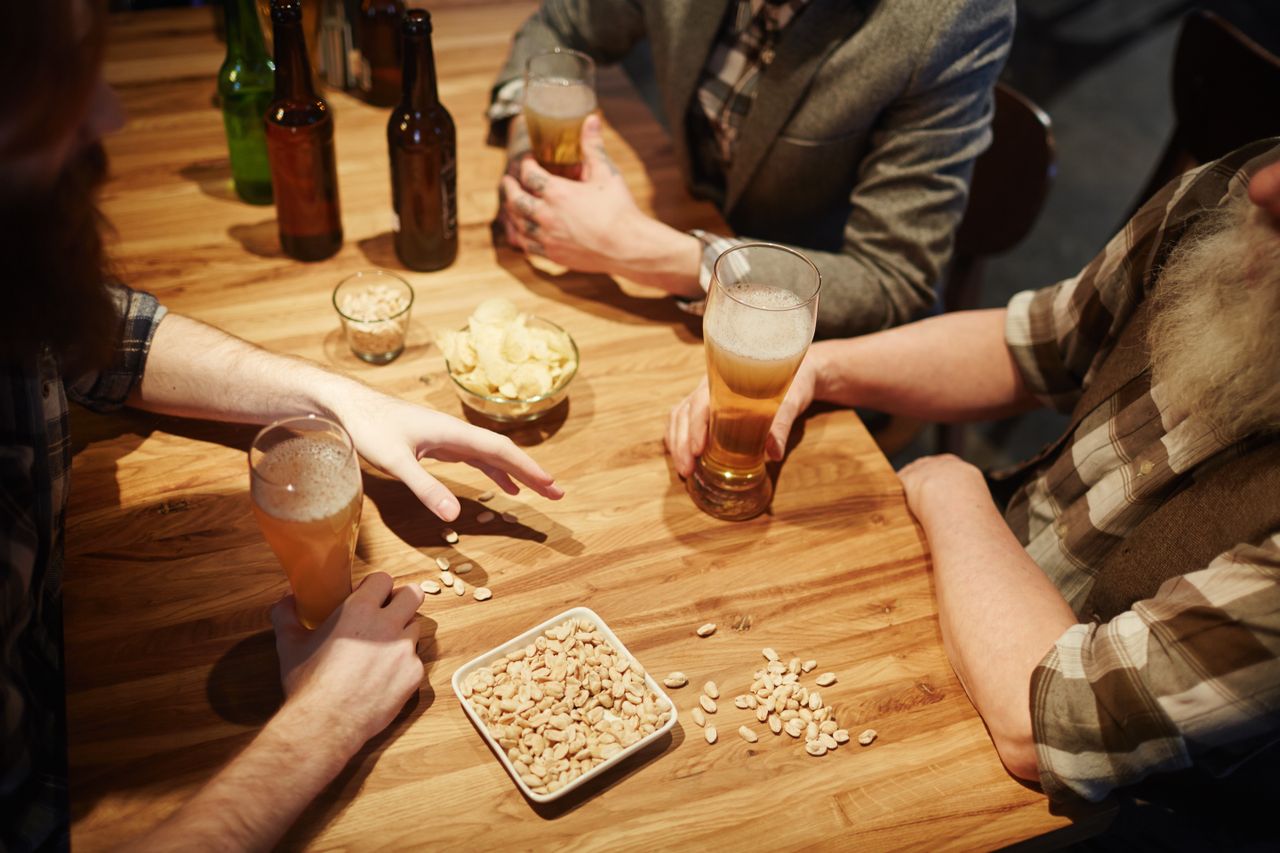
Alcohol remains a major part of dining, nightlife, and at-home entertaining across the U.S., and researchers have spent years studying how it shapes eating behavior as well as drinking behavior. The specific question behind the familiar “drunchies” effect is why people often reach for salty, high-fat snacks after even moderate drinking. A growing body of evidence points to a mix of biology and behavior rather than simple habit alone.
Alcohol changes appetite signals and reward pathways
Researchers have consistently found that alcohol can increase food intake even though it already supplies calories, a paradox documented in clinical and review literature. A review indexed by PubMed reported that people often do not reduce later food intake to compensate for alcohol’s energy content, which is one reason moderate drinking can add to overall calorie intake. More recent nutrition reviews have reached a similar conclusion, stating that alcohol can increase appetite, snack urge, and intake of energy-dense foods, especially savory high-fat foods.
One reason is the hormone ghrelin, which is closely tied to hunger and reward. Reviews in Physiology & Behavior and International Review of Neurobiology describe ghrelin as an appetite-stimulating signal that also appears to be involved in alcohol craving and alcohol-related reward. Human and animal studies summarized in those reviews suggest alcohol and ghrelin interact in brain regions linked to motivation, including the hypothalamus and mesolimbic dopamine system.
That means the body is not just processing a drink; it may also be shifting toward a state that makes rewarding foods look more appealing. A 2024 Neuropsychopharmacology study described ghrelin as a hormone that stimulates appetite and food intake while also affecting decision-making and sensitivity to feedback. Taken together, the evidence suggests alcohol can amplify both hunger signaling and the perceived reward value of snack foods.
The effect shows up in behavior, not just in lab chemistry
The food choices tied to alcohol are not random. Nutrition researchers reported that alcohol primers increased explicit liking of high-fat savory foods and increased ad libitum snack intake in experimental settings. The same review also found that poorer inhibitory control was associated with greater cookie consumption after alcohol exposure, suggesting the issue is partly about reduced restraint as well as stronger appetite.
That behavioral effect matters in real life because alcohol is often consumed in settings where calorie-dense snacks are easy to access. A meta-analysis in The American Journal of Clinical Nutrition said lifestyle factors including alcohol appear to increase food intake partly by enhancing food reward value, while also decreasing inhibitory control. In other words, the drink can make the snack more tempting at the same time it makes it harder to stop at a small portion.
Animal research has supplied a possible brain mechanism for that pattern. A 2017 Nature Communications study found that activity in AgRP neurons was required for alcohol-induced overeating in mice, offering evidence that alcohol can activate circuits associated with feeding despite adequate energy intake. Mouse findings do not translate directly into human eating habits, but they support the broader conclusion from human studies that alcohol can push the brain toward eating more, not less.
What it means for everyday eating and drinking
For consumers, the practical takeaway is that post-drink snacking is not just a matter of poor planning or lack of willpower. The research indicates that alcohol may increase appetite signals, raise the reward value of certain foods, and reduce the mental braking system that helps people moderate portions. That combination helps explain why foods like pizza, fries, chips, and other salty snacks often become more appealing after drinks.
What is less clear is whether the response is identical across all people or all drinking patterns. Reviews note that findings on hormones such as ghrelin can be mixed depending on study design, dose, and whether researchers are looking at social drinkers or people with alcohol use disorder. The strongest conclusion supported across sources is narrower: alcohol frequently promotes extra eating, particularly of energy-dense foods, and people often do not offset those calories elsewhere.
Federal health agencies already recognize that alcohol affects multiple body systems, including endocrine and brain processes. The research base does not point to one single switch behind snack cravings, but it does show a repeatable pattern in which alcohol alters both physiology and behavior in ways that make overeating more likely.
Really impressed with the variety of games here. Everything loads quickly and the customer support is actually helpful. Definitely recommend 25sbet for anyone starting out.
I’ve tried a few sites but this one is definitely the smoothest. The payouts are fast and the games are top notch. Highly recommend bk8ph to anyone looking for a reliable spot.