
This Small Daily Snack Habit May Be Doing More for Your Body Than You Realize

In the U.S., snacking is no longer a side habit but a routine part of how many people eat between meals. The specific habit drawing the most support from public health and clinical nutrition guidance is not simply snacking more often, but choosing a small, nutrient-dense snack each day such as nuts, fruit, yogurt, or vegetables with protein or healthy fat. Federal guidance and major medical centers have stated that this kind of daily snack can do more for appetite control, heart health, and overall diet quality than many people may realize.

What the habit is, and what experts have actually confirmed

Harvard Health reported that snack quality matters more than snack frequency, citing research that followed more than 200 adults for about two and a half years. In that coverage, Harvard-affiliated dietitian Kathy McManus said people who chose fruits and vegetables for snacks had a lower average body mass index than people who chose desserts and sweets. That finding does not mean every snack improves health, but it does establish that the food itself is the key variable, not the mere act of eating between meals.

The snack habit most consistently backed by mainstream guidance is a small portion of nutrient-dense foods eaten to bridge the gap between meals. CDC guidance updated in 2026 lists nuts, seeds, fruit, and yogurt without added sugars among examples that fit a healthier meal-and-snack pattern. USDA’s MyPlate snack guidance similarly recommends combinations such as yogurt and berries, apple with nut butter, or homemade trail mix with unsalted nuts and seeds.

Mayo Clinic says choosing nuts instead of a less healthy snack may help people stick to a heart-healthy diet. Harvard’s Nutrition Source goes further, noting that the FDA allows a qualified health claim that eating one ounce of nuts daily may reduce heart disease risk when included in an otherwise healthy diet. The scale here is modest but concrete: a single ounce, roughly a handful, is the serving size most often tied to that benefit in public-facing guidance.

What this means in day-to-day life for people trying to eat better

What is confirmed is that a small daily snack can help manage hunger and improve food choices later in the day when the snack is built from protein, fiber, or unsaturated fat. Harvard Health said an afternoon snack can curb appetite before dinner, reducing the chance that someone arrives at a meal overly hungry. Mayo Clinic Health System has also advised portioning snacks into a bowl or small container rather than eating directly from the package, because packaging can lead people to eat more than intended.

What is not confirmed is any universal benefit from all snack habits. The 2025 Dietary Guidelines Advisory Committee scientific report said snacks contribute meaningful nutrients for some Americans, but they also account for large shares of added sugars, saturated fat, and sodium, especially when snacks are sweets or heavily processed packaged foods. In other words, the evidence supports strategic snacking, not mindless snacking.

That distinction matters because snacking is widespread. The International Food Information Council’s 2025 Food and Health Survey found that daily snacking is common, with many adults reporting one or two snacks per day. For readers, the practical takeaway is straightforward: a daily snack appears most useful when it prevents overeating, adds nutrients, and replaces less nutritious options rather than adding extra empty calories.

Why this habit can help the body more than people expect

The reason small daily snacks can matter is tied to nutrient density and satiety. The American Heart Association says nutrient-dense foods deliver vitamins, minerals, and other beneficial nutrients without excessive calories, and it recommends plant-forward protein sources including legumes and nuts. Cleveland Clinic materials on nut intake also describe nuts as a filling source of plant protein and healthy fats, which helps explain why a relatively small serving can be satisfying.

There is also strong context around heart health. Harvard’s Nutrition Source says people who regularly eat nuts are less likely to have heart attacks or die from heart disease than those who rarely eat them, while acknowledging that observational research cannot prove cause and effect by itself. Harvard Health has separately summarized large observational studies linking nut intake several times a week with lower cardiovascular risk, and Mayo Clinic points to unsaturated fats, fiber, and other nutrients as likely contributors.

For customers and residents, that means the benefit is less about “snack time” and more about substitution. Replacing chips, candy, or pastries with a measured portion of nuts, plain yogurt, fruit, or vegetables with dip is the pattern most consistently supported by public guidance. The current consensus from CDC, USDA, Harvard, and Mayo is that a small daily snack can support health when it improves the overall quality of what a person eats across the day, not just between meals.


What You Thought You Knew About Hydration and Your Kidneys Might Be Backwards

Hydration advice has long been treated as a one-size-fits-all health rule in the United States, with “drink more water” often presented as a universal answer for wellness. Kidney guidance is more nuanced than that, and national kidney organizations and federal agencies have increasingly emphasized that the right amount of fluid depends on a person’s health status, especially whether they have kidney stones, chronic kidney disease, or kidney failure. That shift means some of what many people thought they knew about hydration and kidney protection does not fully match current evidence.

More water is not a universal kidney fix

The National Kidney Foundation updated its public guidance on January 15, 2024, to stress that healthy hydration means having the right amount of water in the body, not simply the highest amount, and it states plainly that there is no rule requiring every person to drink eight cups a day. That guidance marks a clear break from the popular idea that more water is always better for kidney health. The organization also notes that fluid needs vary based on health, medications, activity, and climate.

Clinical research has also narrowed where “drink more” appears to help. In a randomized clinical trial published by JAMA, researchers followed 631 adults with chronic kidney disease and found that coaching patients to increase water intake did not significantly slow the 1-year decline in kidney function compared with usual intake. A 2025 systematic review of 18 randomized trials similarly found that evidence supporting increased water intake is mixed overall, with clearer benefits in some conditions than in others.

That distinction matters because the kidneys regulate both waste and water balance. According to the National Institute of Diabetes and Digestive and Kidney Diseases, drinking enough liquid, mainly water, remains the most important preventive step for many people with kidney stones. In other words, hydration is strongly supported for stone prevention, but not as a blanket prescription for slowing all chronic kidney disease.

The advice changes depending on the kidney problem

For people with chronic kidney disease, the major takeaway is that hydration guidance is individualized, not generic. NIDDK says some people with CKD may need to limit how much liquid they consume because damaged kidneys may not remove extra fluid effectively. The National Kidney Foundation makes the same point for people with advanced CKD or kidney failure, stating that fluid can build up in the body when urine output falls.

What is confirmed is that too little water can be harmful, but too much can also create medical problems in the wrong setting. Mayo Clinic says drinking too much water can lower sodium levels in the blood, a condition called hyponatremia, because the kidneys cannot always get rid of excess water fast enough. Cleveland Clinic likewise states that water intoxication is uncommon in healthy adults but can happen when fluid intake overwhelms the body’s ability to maintain electrolyte balance.

That means common hydration advice often leaves out the most important part: who the advice is for. Someone with a history of kidney stones may be told to raise fluid intake, while someone with kidney failure or significant fluid retention may be told to restrict it. The company-style certainty often seen in wellness marketing is not how kidney medicine currently describes hydration.

What this means for readers now

For the general public, the practical message is not that hydration no longer matters. It is that kidney health recommendations now place more weight on context, including diagnosis, temperature, exercise, medications, and whether a person’s kidneys are still able to regulate fluid normally. Mayo Clinic notes that food also contributes to total daily fluid intake, which is another reason a fixed “eight glasses” rule does not fit everyone.

For people without kidney disease, standard advice still supports regular hydration and watching for signs such as thirst or darker urine. For people with kidney stone risk, NIDDK continues to say adequate fluid intake is the most important preventive step. For people with advanced CKD, dialysis, or swelling related to fluid retention, the safer standard is to follow individualized limits from a care team rather than generalized hydration trends.

The broader context is that kidney health guidance has become more evidence-based and less slogan-driven. The National Kidney Foundation’s current public guidance does not frame maximum water intake as a universal goal; it frames healthy hydration as balance. That is the part many readers may have missed when older wellness advice suggested that more water automatically meant better kidneys.

Walmart’s Delivery Empire Just Got a Familiar New Player, and It’s Not Who You’d Guess

Walmart

As major retailers and restaurant chains keep expanding same-day delivery, Walmart is pushing further into meal ordering alongside groceries and household essentials. The latest move adds Papa Johns to Walmart’s restaurant delivery lineup and gives the retailer its first national restaurant partner fulfilled entirely from locations outside Walmart stores. The announcement adds to a broader shift in how chains are trying to capture convenience-focused orders in a more crowded delivery market.

Walmart adds Papa Johns, with a national rollout planned

Walmart and Papa Johns announced on September 10 that customers in eligible areas will be able to order Papa Johns through Walmart Express Delivery, according to company statements released that day. The companies said the service will begin in select markets this fall and later expand to thousands of participating Papa Johns locations nationwide. Papa Johns said the partnership covers pizzas, wings, sandwiches, sides and desserts, and Walmart said those orders can be placed either on their own or bundled with a regular Walmart order.

The scale is significant because Walmart said Papa Johns will be the first national restaurant brand on Walmart Express Delivery that is fulfilled entirely from restaurant locations outside Walmart stores. That distinguishes the deal from Walmart’s earlier restaurant delivery efforts tied to in-store tenants. Nation’s Restaurant News reported that Walmart had already begun delivering from Subway outlets inside Walmart stores earlier this summer and had also announced delivery from Dunkin’ locations inside its stores, with plans to broaden that service later.

Walmart has framed the expansion as part of its convenience strategy. In a May 28 corporate update, the company said it had expanded 30-minute-or-less delivery to 33 U.S. markets and completed millions of deliveries in that time frame during the first quarter of 2026. Walmart also said 26% of its Express Deliveries were already arriving in 30 minutes or less, showing how much the company is leaning on speed as it adds more restaurant options.

What the rollout means in local markets

For shoppers, the immediate local impact is availability that will depend on address, participating restaurants and market-by-market rollout. Walmart and Papa Johns have confirmed that the service starts in select markets this fall, but neither company has released a full public list of cities, metro areas or states included in the first wave. Customers will instead see whether Papa Johns delivery is offered in their area through the Walmart app or website based on the delivery address tied to their account, according to Papa Johns.

That means there is no confirmed state-by-state map yet for readers trying to determine whether their local Papa Johns is participating. The companies also have not publicly identified how many restaurants will be active at launch in any specific state or city. What is confirmed is the broader footprint behind the effort: Walmart operates more than 4,000 U.S. stores, and Nation’s Restaurant News reported the retailer has said 90% of the U.S. population lives within 10 miles of a Walmart.

Papa Johns also brings national scale to the arrangement. Nation’s Restaurant News identified the chain as the fourth-largest U.S. pizza brand, with more than 3,000 locations nationwide, while Papa Johns’ own corporate materials describe the company as having about 6,000 restaurants globally. Until a market list is released, customers should expect a phased launch rather than a same-day nationwide switch.

Why Walmart and Papa Johns are making this move now

The timing reflects pressure and opportunity on both sides of the partnership. Walmart has said restaurant delivery gives shoppers another reason to use its digital platform, and the company has been building that pitch around fast fulfillment. Greg Cathey, Walmart’s senior vice president of eCommerce fulfillment innovation, said in the company announcement that adding Papa Johns gives customers more variety and convenience alongside the everyday items they already buy from Walmart.

For Papa Johns, the partnership comes during a more difficult stretch for chain pizza. Nation’s Restaurant News reported that the company’s same-store sales fell 8.3% in its most recent quarter, with executives pointing to a softer consumer environment and a promotion-heavy fast-food market. Restaurant Dive also reported that Papa Johns has been trying to improve the performance of third-party delivery channels as the broader delivery marketplace becomes more crowded and competitive.

The practical takeaway for customers is straightforward: in markets where the service is live, Papa Johns orders can become part of the same digital trip as groceries, household goods or a stand-alone express order. Walmart said the offering will be available through its Restaurants tab, and the companies said the expansion will continue to thousands of participating locations nationwide. For now, the pace and exact local reach of the rollout remain tied to the fall launch schedule the companies announced on September 10.

Consumer Reports Just Ranked the Frozen Meals Worth Keeping in Your Freezer

Frozen meals remain a major part of the U.S. grocery business as shoppers look for quick meals that balance convenience, price, and nutrition. Consumer Reports narrowed that broad category on August 13, 2026, when it published a new ranking of frozen meals it said were worth freezer space after testing 30 products. For shoppers in the United States, the report offers a current snapshot of which nationally distributed meals scored best on Consumer Reports’ measures for taste, fiber, protein, sodium, and ingredient quality.

Consumer Reports tested 30 frozen meals and identified its top picks

Consumer Reports said its latest review covered 30 frozen meals from major brands commonly sold in U.S. supermarkets and mass retailers. According to the nonprofit’s August 13 report, its nutrition experts and tasters evaluated the meals on several factors, including calories, saturated fat, sodium, fiber, protein, and the presence of additives, while also considering taste. The organization said two-thirds of the meals it tested contained at least 6 grams of fiber, a threshold it uses as one sign of a stronger nutritional profile.

The highest-rated brands in the new roundup included Healthy Choice Power Bowls, Lean Cuisine, and Deep Indian Kitchen, according to summaries of the Consumer Reports ranking. The report emphasized that better-performing meals generally paired vegetables, grains, or legumes with moderate sodium and solid fiber content rather than relying mainly on refined starches or heavy sauces. Consumer Reports nutritionist Amy Keating said in the report that front-of-package claims can make a meal seem healthier than it is if shoppers do not look at the full nutrition picture.

Consumer Reports also framed the ranking as a practical shopping guide rather than a blanket endorsement of the category. The organization noted that even the better frozen entrées may not compare with a home-cooked meal, but it said some current options perform well enough on both taste and nutrition to merit a place in the freezer. That distinction matters in a category where convenience often competes directly with health messaging on the box.

The ranking applies nationally, but store selection will vary by retailer and region

Because Consumer Reports reviewed nationally distributed frozen meals rather than products tied to a single chain or city, the immediate effect is broad rather than local. Shoppers across the United States are the target audience for the list, but actual availability will differ by retailer, store format, and region. Consumer Reports did not publish a state-by-state or city-by-city inventory map with the ranking, so there is no comprehensive public list showing which of its top-rated meals are stocked in each market.

That means customers may find some recommended meals at large supermarket chains, warehouse clubs, mass merchants, or specialty grocers, while other products may be missing from nearby stores. Walmart, for example, said this year that it is redesigning packaging across its Great Value line to help shoppers spot attributes such as gluten-free status and protein content more quickly, a sign that frozen aisle competition is increasingly tied to nutrition messaging and shelf visibility. But Walmart’s announcement was about packaging and private-label presentation, not Consumer Reports’ ranking itself.

There is also no indication in the report that the ranked meals are subject to a new recall tied to the review. FDA recall pages remain the authoritative source for active food safety actions, and recent agency postings show that recalls in frozen and prepared food categories are handled separately from product rankings or nutrition reviews. For consumers, the ranking functions as a buying guide, not a safety alert.

The new ranking reflects larger shifts in convenience, nutrition, and value

Consumer Reports’ criteria reflect a broader debate over how processed convenience foods should be judged. The report gave weight to fiber, sodium, saturated fat, and additives, mirroring larger public health discussions about ultraprocessed foods and whether shoppers can still make better choices within that category. Associated Press reporting this year noted that frozen meals remain part of the processed-food debate even as manufacturers increasingly market them with nutrition-forward claims aimed at protein seekers, GLP-1 users, and time-pressed shoppers.

Market data also helps explain why rankings like this draw attention. Mintel said in its 2026 U.S. prepared meals report that frozen meal sales have lagged refrigerated prepared foods in some areas, while Conagra said frozen food continues to appeal to consumers looking for a lower-cost alternative to restaurant spending. Those pressures help explain why brands are competing on both value and health positioning at once.

For shoppers, the practical takeaway is straightforward: the strongest frozen meals in Consumer Reports’ test were the ones that delivered convenience without leaning too heavily on sodium, saturated fat, or weak fiber content. The organization’s August 13 ranking does not settle the broader nutrition debate around frozen entrées, but it does give consumers a current, tested reference point as brands continue to crowd the freezer case with health-focused claims.

The Foods Nutritionists Keep Coming Back to When Someone Asks About Aging Well

Dietician

Aging well is not built on a miracle ingredient. It is usually built on a repeatable pattern of foods that do many small things right, day after day.

Ask dietitians what they recommend most often, and the answers tend to sound familiar. That consistency is the point: the best foods for healthy aging are supported by decades of evidence and practical success in real kitchens.

Colorful plants still do the heaviest lifting

Nutritionists consistently return to vegetables, fruit, beans, and whole grains because they address several aging-related concerns at once. The World Health Organization advises a diet centered on a wide variety of nutrient-dense foods, including fruits, vegetables, legumes, nuts, seeds, and whole grains, and recommends at least 400 grams of fruits and vegetables per day for adults. That advice aligns with what clinicians see in practice: people who eat more plants generally get more fiber, potassium, folate, and protective compounds with every meal.

Leafy greens and deeply colored produce come up especially often. Spinach, kale, broccoli, berries, tomatoes, and citrus deliver vitamins, minerals, and plant compounds linked with healthier blood vessels and lower chronic disease risk. Nutritionists favor them not because they are trendy, but because they help make meals more nutrient-dense without requiring extreme dieting. They also fit naturally into soups, grain bowls, omelets, smoothies, and simple side dishes.

Beans, lentils, oats, and other whole grains earn similar praise for their staying power. The National Institute on Aging and NIDDK both emphasize whole grains and fiber-rich foods for older adults. In real life, that means oatmeal at breakfast, lentil soup for lunch, or brown rice with dinner can do more for long-term health than expensive powders ever will. These foods support digestive health, help with cholesterol control, and make balanced eating easier to sustain.

Protein-rich staples matter more with age

One reason nutritionists keep steering people toward yogurt, fish, eggs, tofu, beans, and lean poultry is that aging changes the body’s relationship with muscle. The Academy of Nutrition and Dietetics notes that sarcopenia, the age-related loss of muscle mass and strength, becomes a real concern over time, and some older adults may need to pay closer attention to protein intake. That is why recommendations about aging well often sound more food-first than supplement-first.

Greek yogurt is a favorite because it combines convenience, protein, and versatility. It can work at breakfast with berries and nuts, as a savory sauce, or as a snack that is easier to prepare than a full meal. Eggs remain a reliable option for similar reasons: affordable, protein-rich, and easy to pair with vegetables and whole-grain toast. Nutritionists often recommend these foods to people who say they want to eat better but do not want complicated routines.

Fish is another repeat recommendation, especially salmon, sardines, and trout. WHO guidance favors unsaturated fats over saturated fats, and fish, nuts, avocado, and olive oil are common examples. For aging adults, that matters because foods rich in omega-3 fats and unsaturated fats support heart health and may also play a role in preserving physical function. Even when people do not eat fish often, nutritionists tend to encourage adding it consistently rather than chasing niche “longevity” products.

The pattern that keeps winning is Mediterranean-style

What ties these favorite foods together is not a rigid meal plan but a recognizable eating pattern. NIH-supported research has linked healthier dietary patterns in midlife with better odds of healthy aging later, and separate NIH reporting has noted that the MIND diet, which blends Mediterranean and DASH principles, may help lower the risk of cognitive decline. Nutritionists keep returning to olive oil, nuts, beans, fish, vegetables, berries, and whole grains because those foods are the backbone of the patterns that perform best in long-term studies.

Olive oil is a perfect example of why simple foods endure. It is easy to use, rich in unsaturated fat, and helps people cook vegetables, beans, and grains in ways they actually enjoy. A handful of nuts can do the same kind of work: adding texture, satisfaction, and useful fats to snacks or meals. These are not glamorous recommendations, but they are realistic, and realistic is often what produces lasting health benefits.

The best nutrition advice for aging well is usually reassuringly unflashy. Build meals around plants, make protein a regular presence, and use healthy fats in place of heavier saturated ones. That is why nutritionists keep coming back to the same foods: not because they are fashionable, but because they continue to prove their value over a long life.

Only a Few Steakhouse Chains Actually Nail This Classic Combo, Here’s Who Made the Cut

The Capital Grill Rerestaurant

Surf and turf should be easy to pull off. In practice, it is one of the toughest tests on any steakhouse menu.

A chain has to master timing, sourcing, texture, and restraint all at once. Only a handful still do.

What separates great surf and turf from a forgettable plate

The classic pairing works only when both halves are treated as stars. A beautifully seared filet loses its appeal if the lobster is rubbery, bland, or drowned in butter, while excellent seafood cannot save an underseasoned steak. In chain steakhouses, that balance is even harder because consistency has to travel across dozens of locations, not just one flagship dining room.

That is why the strongest contenders tend to be the upscale national names that already build their reputations on premium beef programs and disciplined kitchen execution. Consumer preference data has long favored chains like Ruth’s Chris, Morton’s, The Capital Grille, and Fleming’s for food quality and reputation, which matters when evaluating a combo built on two expensive center-of-the-plate proteins. According to Technomic consumer research, those brands have historically ranked well on the attributes diners care about most in steakhouses.

Menu design also reveals intent. At the best chains, surf and turf is not a gimmick buried under cheese, sauces, and oversized portions. It is usually built around a tenderloin or filet, because that cut pairs cleanly with lobster without competing for richness. When chains start forcing heavier ribeyes, fried seafood, or overloaded platters into the equation, the meal often becomes more indulgent than elegant.

The chains that actually made the cut

The Capital Grille belongs on this list because it serves one of the clearest examples of a composed surf-and-turf entrée: seared tenderloin with butter-poached lobster tails. Company menu and nutrition materials show the dish has remained a defined part of its dinner lineup, which signals confidence rather than seasonal experimentation. That matters because great surf and turf is usually a house specialty, not a limited-time stunt.

Morton’s makes the cut for a similar reason. Its menu continues to spotlight filet mignon and cold-water lobster tail, and the brand also promotes a lobster-focused menu built around center-cut filet pairings. Morton’s strength has always been classic steakhouse structure, so the surf-and-turf experience feels true to the brand rather than added to chase trends.

Fleming’s earns its spot by leaning into accessibility without watering down the formula. Its current promotions include a 2-course Filet & Lobster experience starting at $79, with upgrade paths that let guests scale up to a larger filet or jumbo lobster tail. That approach keeps the pairing recognizable and premium while giving diners more control over value and portion size.

Why these brands work when others don’t

The common thread is discipline. These chains understand that lobster is a luxury accent, not a distraction, and they pair it with cuts that deliver tenderness rather than brute-force heaviness. The result is a plate that feels balanced, especially when the seafood is butter-poached, steamed, or simply broiled instead of aggressively sauced.

Fogo de Chão deserves an honorable mention for a more modern interpretation. It is not a traditional plated surf-and-turf house, but the chain offers seafood enhancements including a Butter-Bathed lobster tail alongside its Full Churrasco Experience. That gives diners a credible land-and-sea pairing, even if the format is less classic than the filet-and-lobster template used by old-school steakhouses.

In the end, the chains that made the cut did so because they respect the original idea. They serve strong beef, quality lobster, and combinations that feel deliberate, not showy. In a category where excess often masquerades as excellence, that kind of restraint is exactly what makes a surf-and-turf dinner memorable.

Everyone’s Suddenly Stitching Sprinkles Onto Everything, and No One Can Explain Why

Sprinkles

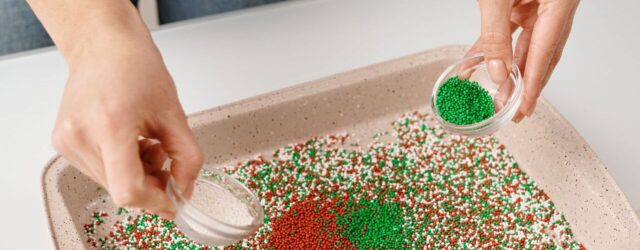
Across the food business, social-media aesthetics continue to shape what bakeries make, how products are photographed, and which desserts gain traction first. In recent months, that pressure has narrowed onto a very specific visual: sprinkle patterns that look stitched, embroidered, or carefully placed by hand onto cakes and food-adjacent craft items. The result is a fast-moving trend with visible momentum, but no single verified explanation for why it arrived all at once.

A highly specific sprinkle look is moving from cakes to craft-style food design

The most concrete sign of the trend is its appearance across multiple published outlets and creator communities within a short period. AOL published a food-decorating piece on September 12, 2026 describing an “embroidery” effect made with sprinkles, while ABC News, Delish, Vogue, and USA Today all documented the wider dot-cake and sprinkle-surface craze earlier this summer. Those reports confirmed that bakers, national brands, and home creators were all producing desserts defined by dense sprinkle placement, precise decoration, and texture-led presentation.

That spread is not limited to one format. Vogue reported that brands including Fage, Shake Shack, and Carbone had created their own spin on the dot-cake concept, indicating the style had moved beyond independent bakery experimentation and into larger consumer-facing food marketing. The Philadelphia Inquirer separately reported that bakeries in the region began receiving custom requests in late May, with operators saying they already had the ingredients needed to execute the look.

The stitched version appears to be an extension of that same visual logic. Rather than treating sprinkles as a finishing garnish, creators are placing them in deliberate lines, shapes, and filled-in designs that resemble embroidery or beadwork. Public discussion threads on Reddit also show makers asking for methods to “sew” sprinkles onto crochet or textile dessert projects, suggesting the look has crossed from edible presentation into food-themed crafts, although those posts do not establish the trend’s origin.

The impact is clearest in bakery cases, social feeds, and food-themed merchandise

For local readers, the effect is showing up less as a single recall-style event or chain action and more as a visible shift in what bakeries and creators are making. Published reporting from Philadelphia and Boston documented bakeries responding to direct customer demand for sprinkle-heavy cakes, and Parade reported that Publix introduced a bakery product tied to the dot-cake aesthetic. That confirms the style is affecting both independent operators and mainstream grocery bakery programs.

What is not yet known is the full geographic footprint of the stitched-sprinkle variant specifically. No national trade group or major bakery chain has released a comprehensive list of locations offering embroidery-style sprinkle cakes, and there is no central dataset showing how many shops have added them. In that sense, the trend is verified through multiple examples, but not yet through a single industry count.

The merchandise side is also relevant. The Washington Post reported in late August that food brands are continuing to pursue fashion and lifestyle collaborations aimed at Gen Z, reinforcing the idea that food visuals now travel easily into apparel, accessories, and decor. That broader crossover helps explain why a sprinkle motif might appear stitched onto non-edible items at the same time it is trending in bakery content.

Social-media texture, low production barriers, and nostalgia are the strongest documented explanations

The most evidence-backed explanation is not mystery so much as convergence. Multiple outlets tied the popularity of these desserts to visual texture, nostalgia, and strong performance on short-form video. The Boston Globe reported that bakers are seeing consumer interest in foods that show texture clearly on camera, while Delish and ABC News both described the appeal of the thick frosting-and-sprinkle finish as central to the trend’s online spread.

There is also a practical reason bakeries can move quickly. The Philadelphia Inquirer reported that one bakery did not need new ingredients or equipment to make dot cakes, because cake, frosting, and nonpareil sprinkles were already on hand. That lowers the barrier for adoption: operators can respond to viral demand without reworking production systems or investing in new inventory.

For customers, that means the stitched-sprinkle look is likely to keep appearing in limited bakery runs, custom orders, and food-themed craft goods so long as it remains effective online. What remains unconfirmed is a single origin point or a definitive reason this exact presentation broke through in 2026 instead of earlier. The documented facts point instead to a familiar pattern in food media: a simple, low-cost format, amplified by video, adopted quickly because it is easy to reproduce and easy to recognize.

This Minnesota Pub Just Shut Its Doors for Good, and the Timing Couldn’t Be Stranger

Restaurant closures have continued to reshape local dining markets across the country as operators contend with aging buildings, repair costs, crime concerns, and uneven post-pandemic business conditions. In St. Paul, that pressure has now claimed The Gnome Craft Pub, a Cathedral Hill restaurant that had become a recognizable part of Selby Avenue’s dining corridor. The timing drew immediate attention because the permanent closure was announced less than a week after the business was burglarized.

The closure was immediate, and the business says building problems forced the decision

The Gnome Craft Pub, at 498 Selby Ave. in St. Paul, closed permanently on August 21, 2026, after six years in business, according to the restaurant’s public announcement and reporting from Bring Me The News and the Minnesota Star Tribune. The pub operated under Brian and Sarah Ingram’s Purpose Restaurants group and had opened in August 2020 in the former Happy Gnome space. Star Tribune reported that the restaurant had already been closed earlier that week for roof repairs before the permanent shutdown was announced.

Brian Ingram said the closure followed the discovery of significant building issues inside the historic property. Ingram stated that The Gnome leased the former firehouse rather than owning it, and said the problems were beyond what the tenants could realistically address. Bring Me The News reported that Ingram described the structure as roughly 140 years old.

The scale of the closure is one location, but it ends a six-year run for a restaurant that had become a high-profile Cathedral Hill gathering place. Before shutting down, the business said it planned to donate its remaining food, supplies, and beverages to restaurants and nonprofits in need. The company also stated that its broader work in St. Paul would continue through its other businesses.

The confirmed impact is centered in St. Paul, with no wider Minnesota closure list attached

The confirmed Minnesota impact is limited to one address in one city: The Gnome’s Selby Avenue location in St. Paul. No broader statewide shutdown was announced alongside the closure, and available reporting identifies this as a single-location restaurant closure rather than a chainwide retrenchment. That matters because Purpose Restaurants continues to operate other concepts in the Twin Cities, including Hope Breakfast Bar locations in multiple suburbs, according to Bring Me The News.

What is publicly confirmed is that Cathedral Hill lost one of its established pub destinations on August 21. What is not yet known is whether another restaurant tenant will take over the space, how many workers were directly affected, or whether any reopening under another concept is being considered. The company has not released a full public breakdown of staffing impacts tied to this location.

The timing also focused attention on nearby restaurant security in St. Paul. Bring Me The News reported that burglars entered The Gnome early on August 16, and Star Tribune reported the incident involved about $1,300 in stolen cash and roughly $15,000 in damage. A 29-year-old St. Paul man was later charged in connection with the Gnome burglary and an attempted break-in at The Lexington, another nearby restaurant, according to court-document reporting from Bring Me The News.

The company says the burglary was not the cause, pointing instead to structural and operating realities

Ingram said directly that the burglary did not cause the closure. In his public statement, cited by Bring Me The News, he said the decision had “nothing to do” with the recent break-in and instead followed the discovery of building problems the restaurant could not overcome as a tenant. Star Tribune separately reported that a roof leak inspection revealed more damage than was previously known.

That explanation places the closure within a broader pattern affecting older restaurant properties, especially leased spaces where operators may have limited control over major capital repairs. In this case, the building’s age and the newly identified damage appear to have been the decisive factors described by the owner. The available reporting does not indicate that the company has disclosed estimated repair costs or a full engineering assessment.

For customers and neighborhood residents, the practical takeaway is straightforward: The Gnome is permanently closed, and the company said the remaining inventory would be redirected to other restaurants and nonprofits rather than used for a phased wind-down. Purpose Restaurants also said it intends to remain based in St. Paul and continue operating its other local businesses, leaving the closure as a one-location exit rather than a broader withdrawal from the city.

The Costco Membership Trick Most Shoppers Never Bother to Use

Costco

Costco memberships remain a regular household expense as shoppers weigh annual fees, warehouse savings, and added perks across the retail club sector. One of the least-used features is Costco’s free Household Card, which the company says is included with standard memberships but is often overlooked by members who focus only on the primary cardholder. For families trying to stretch a $65 or $130 annual fee, the policy effectively allows a second person in the same home to shop under the same account without paying for a separate basic membership.

Costco’s membership policy includes a free second card for one household member

Costco states in its customer service materials that Primary Members receive one free Household Card that can be assigned to someone age 16 or older who lives at the same address. The company’s Household Card policy, published March 3, 2026, says that applies in addition to the primary member’s own card and that the designated household member must have a photo taken when receiving the card.

The benefit is not limited to one premium tier. Costco’s membership comparison materials say Gold Star Membership, Business Membership, and Executive Membership all include one free Household Card. Costco currently lists Gold Star and Business memberships at $65 a year, while Executive membership costs $130 annually, including the additional upgrade fee.

Costco also says a Gold Star membership can cover a total of two people: one Primary Member and one free household member. That means the “trick” is not a workaround or loophole, but a built-in membership feature that many shoppers appear to miss because Costco’s main value messaging often centers on fuel, bulk groceries, and the Executive 2% reward rather than the second card itself.

The benefit applies nationwide, but Costco has not said how often members use it

Because Costco’s membership rules are set at the company level, the Household Card benefit applies across its U.S. warehouse network, not in just one region. Costco says the card is valid at all Costco locations worldwide, which means an eligible second household member can use it at U.S. stores and other Costco warehouses where memberships are accepted.

What is not publicly known is how many members actually activate the second card. Costco has not released a public figure showing Household Card usage rates by state, city, or membership tier. The company also has not published a state-by-state list showing whether some warehouses process significantly more Household Card additions than others.

Costco does, however, spell out who can use the benefit and who cannot. Its customer service guidance says membership cards are non-transferable, meaning friends or relatives outside the household cannot simply use the primary member’s card. The company separately says members may bring up to two guests into the warehouse, but purchasing is reserved for members, which makes the Household Card the more practical option for two adults in one home who both shop.

The policy matters more as membership fees and shopping habits stay under pressure

The value of the free Household Card stands out more now because Costco’s standard fees remain a visible part of household budgets. Costco’s customer service pages updated in 2026 say Gold Star and Business memberships are $65 per year, while Executive is $130 per year. In that context, a household that would otherwise consider two memberships may be able to cover two eligible shoppers under one account, depending on living arrangement and membership type.

The same Costco materials also show why the company promotes membership structure carefully. Executive members can earn an annual 2% reward on qualified Costco, Costco.com, and Costco Travel purchases, according to Costco’s March 16, 2026 guidance, while all membership tiers carry the company’s satisfaction guarantee. But the free Household Card is separate from those reward features and does not require paying for Executive status.

For customers, the practical takeaway is straightforward. If two people live at the same address and only one is using the membership, Costco says the second eligible person can be added as a Household Cardholder either through a verified Costco.com account or at the membership counter in a local warehouse. Costco’s current guidance says that arrangement can also be changed later through account details or in person, leaving the policy in place as an official part of the membership structure rather than a temporary promotion.

Scientists Just Discovered Something Odd About Why Spicy Food Hurts So Good

spicy food

Spicy food has long occupied an unusual place in the American diet because it activates pain pathways even as demand for hotter sauces, snacks, and restaurant dishes keeps growing. New research is sharpening that paradox, showing that capsaicin, the compound that gives chili peppers their burn, may dampen certain kinds of pain while pleasure responses vary depending on experience and brain processing. The latest peer-reviewed findings, published June 1, 2026, help explain why the burn can hurt and still feel rewarding.

New research adds a measurable clue

A study published June 1, 2026 in Physiology & Behavior found that acute spicy stimulation reduced heat-pain perception in a controlled lab setting, according to the paper indexed by PubMed. The research involved 48 healthy adults who completed two sessions, one with a chili-based gelatin cube and one with a non-spicy control, before receiving 40 laser stimuli to the hand in each session. Participants rated both pain intensity and unpleasantness, giving researchers a direct measure of how oral spice exposure changed pain perception.

The authors reported that capsaicin’s oral burn did not simply add discomfort. Instead, the spicy condition reduced responses to later laser-induced heat pain, a finding that supports the idea that one pain signal can alter how another is processed. The paper also examined spicy-food preference, frequency of consumption, and preferred spice level to connect sensation with eating behavior.

That result matters because capsaicin is already known to activate TRPV1, the receptor strongly associated with heat and pain signaling. The new work narrows the question from “why does chili burn” to “why can that burn also blunt other pain,” giving scientists a more specific mechanism to test in future human studies.

What the findings suggest for everyday eaters

For consumers, the most immediate takeaway is that spicy food may feel different not only because of heat level, but because repeat exposure changes the experience. A 2025 NeuroImage study, also indexed by PubMed, found different neural correlates of capsaicin pleasantness in habitual versus non-habitual spicy eaters, indicating that regular chili consumption may shape how the brain codes the sensation. That helps explain why one person reaches for extra hot sauce while another experiences the same food as purely aversive.

Other recent research has pointed in a similar direction. A study available through PubMed Central reported an analgesic effect from spicy food intake and explored neural mechanisms tied to pain perception, while earlier work found that expectations can shape how people rate intensity, pleasure, and pain from hot sauce exposure. Together, those findings suggest the “hurts so good” response is not only about the pepper itself.

What remains unclear is how broadly those lab findings apply to meals in real-world settings. Researchers have not established that eating spicy restaurant food produces the same effect across all people, cuisines, or dose levels, and the studies do not show that more heat always means more pleasure.

Why pain and pleasure can coexist

The broader context comes from decades of sensory research on capsaicin and TRPV1. NIH has described TRPV1 as a key ion channel involved in sensing heat and pain, and earlier reviews in the pain literature have noted that capsaicin can both provoke burning and, under some conditions, produce analgesic effects. That makes spicy eating less of a contradiction than it first appears: the same system that signals threat can also be modulated, desensitized, or reframed by the brain.

Researchers have also argued that context matters. Prior neuroscience work has suggested that pain and pleasure are not strict opposites, and that relative relief, expectation, and learned preference can shift a noxious sensation into one that some people seek out. In spicy food, that may mean the initial burn is real, but the brain’s interpretation of it changes with familiarity and competing sensory signals.

For diners, the practical meaning is straightforward. The burn from chili peppers is still a pain response, but newer studies indicate that habit, expectation, and short-term analgesic effects may help explain why the experience remains appealing for many people, even when it stings.