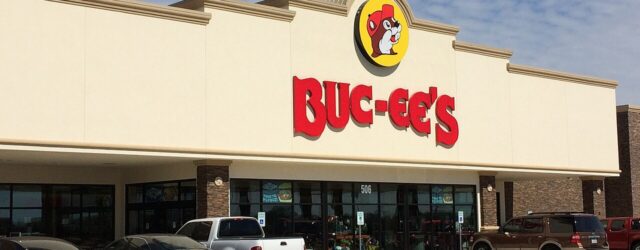
Could Hawaii Finally Get Its Own Buc-ee’s? Here’s What’s Standing In The Way

Buc-ee’s has continued its national expansion in 2025 and 2026, including a new Arizona opening that pushed the Texas chain farther west. In Hawaii, though, there is still no confirmed Buc-ee’s project, and the barriers are more structural than promotional.

Buc-ee’s is growing, but Hawaii is not on the announced map

Buc-ee’s has added new stores and future projects across several states, but Hawaii is not among the locations the company has publicly announced. Recent company and city announcements tied to Buc-ee’s openings and groundbreakings have focused on places such as Goodyear, Arizona, San Marcos, Texas, and Mebane, North Carolina, not Honolulu or any other Hawaii market.

That matters because Buc-ee’s current expansion pattern still follows the same core formula: large roadside travel centers positioned along major mainland highways. The City of Goodyear said Buc-ee’s officially opened its first Arizona location in late June 2026 at Interstate 10 and Bullard Avenue, marking the chain’s westernmost operating site so far. Company expansion releases have also continued to highlight highway-adjacent projects in states on the mainland.

The scale of those projects helps explain why Hawaii is a difficult fit. In North Carolina, a 2026 project announcement said the planned Mebane Buc-ee’s would span 74,000 square feet and include 120 fueling positions. A format that large depends on heavy vehicle throughput, large parcels and access patterns built around long-distance highway travel.

For Hawaii, none of that has been confirmed. Buc-ee’s has not announced a Hawaii store, identified a development partner there, or released an opening timeline. As of July 13, 2026, any discussion of a Hawaii location remains speculative rather than a documented company plan.

Oahu would be the most realistic option, but major site hurdles remain

If Buc-ee’s ever entered Hawaii, Oahu would likely be the clearest starting point because it has the state’s largest population, its busiest road network and the main visitor gateway through Daniel K. Inouye International Airport. Federal and state transportation documents show Hawaii’s Interstate routes are all on Oahu, including H-1, H-2, H-3 and H-201.

Those roads are real Interstates, but they do not function like mainland cross-country corridors. Federal Highway Administration history documents note that Hawaii’s Interstate system exists entirely within the state, and Hawaii transportation materials show the network is concentrated on Oahu. That means a Hawaii Buc-ee’s would rely much more on local drivers, military households and tourists than on the steady multi-state road-trip traffic that supports many mainland locations.

Even on Oahu, the land requirement would be significant. A Buc-ee’s built to the chain’s newer large-format model would need enough room not only for a store of roughly 74,000 square feet, but also for dozens upon dozens of fuel positions, internal traffic circulation and large parking fields. In dense urban Honolulu, that is difficult. In West Oahu areas such as Kapolei or Ewa, it may be more physically plausible, but no site has been publicly identified.

Just as important, the company has not released a list of potential Hawaii parcels, and no state or city agency has announced a Buc-ee’s permit application. Until a filing, land deal or public hearing surfaces, the local impact is best understood as hypothetical rather than pending.

Shipping costs, energy policy and the chain’s model are the main barriers

The biggest obstacles are logistical and economic. Hawaii depends heavily on ocean freight for consumer goods and fuel, and federal analyses from the U.S. Government Accountability Office note that noncontiguous U.S. jurisdictions such as Hawaii rely on maritime transportation for vital goods from the mainland. For a retailer built around high-volume packaged food, branded merchandise, equipment and fuel operations, that raises costs before a single transaction happens.

Shipping rules add another layer. Debate over the Jones Act has long centered on whether it increases transportation costs to Hawaii, and federal and congressional materials regularly describe concerns that the law contributes to higher shipping expenses for the islands. Even without assigning a precise cost to a hypothetical Buc-ee’s store, the practical issue is clear: stocking a giant mainland-style travel center in Hawaii would be more expensive and more operationally complex than supplying one in Arizona, Texas or Florida.

Energy policy also shapes the picture. Hawaii’s Public Utilities Commission states that Hawaii law requires 100% of net electricity generation to come from renewable sources by December 31, 2045. A large new gas-focused roadside destination would face closer scrutiny in a state that is simultaneously pushing clean transportation and broader decarbonization goals.

For residents, that means a Hawaii Buc-ee’s is still a long-shot concept, not an active development story. What is confirmed today is narrower: Buc-ee’s is expanding, Oahu is the only plausible island entry point, and Hawaii’s land, shipping and policy realities would likely require the company to alter the model it uses elsewhere.

California’s Restaurant Scene Is Quietly Shrinking, And Major Chains Are Behind It

Restaurant chains across the U.S. have been cutting weaker stores as traffic softens and operating costs stay high. In California, that broader pullback is showing up in a concentrated way, with several well-known brands reducing their footprints or closing large blocks of locations.

Major chains have cut dozens of restaurants, and some exits were swift

Rubio’s Coastal Grill made one of the clearest recent cuts. The San Diego-based chain said in a June 5, 2024 bankruptcy announcement that it had filed for Chapter 11 after closing 48 underperforming California restaurants on June 1, including 13 in the San Diego area, 24 in the Los Angeles area and 11 in Northern California. According to the company, those closures were part of an effort to facilitate a sale process while reducing exposure to weaker stores.

On The Border added another national example with direct consequences for California. Restaurant Dive and Nation’s Restaurant News reported that all company-owned On The Border restaurants shut down by the end of day on June 12, 2026, leaving only five franchised U.S. restaurants operating. Those remaining locations are spread across South Dakota, Florida, Nevada and California, according to the chain’s website and trade coverage.

Denny’s, another California-founded chain, announced on October 22, 2024 that it would close about 150 underperforming restaurants, with roughly 50 closures slated for 2024 and about 100 more in 2025, according to its earnings update and reports on the announcement. The company did not publish a state-by-state closure list at that time, but executives said the plan was aimed at lower-volume units that were dragging on performance.

El Torito’s contraction has been less centralized around a single filing, but it fits the same pattern. The California-founded brand’s location count is now far below its historical peak, and recent reporting tied the closure of its Irvine restaurant to that longer decline. The company has continued operating other California locations, but its statewide footprint is materially smaller than it once was.

California is feeling the impact, but full location lists remain incomplete

The Rubio’s cuts are the most specifically documented inside California. The company confirmed regional counts for San Diego, Los Angeles and Northern California, and trade coverage said the closures erased Rubio’s presence in several markets, including Sacramento, Stockton, Fresno, Ventura County and much of the Bay Area. Even so, the company did not publish a comprehensive store-by-store statewide list in its bankruptcy announcement.

For On The Border, the confirmed California impact is narrower but still notable. Reporting after the June 12, 2026 shutdown said the brand’s remaining U.S. restaurants are franchised locations, with California among the states where those franchise stores continue to operate. The company has not released a full list of affected California sites tied to the latest company-owned shutdown because the surviving units were described as franchise-operated rather than part of the corporate closure.

Denny’s has a large California presence, which makes its national closure plan especially relevant in the state. A 2025 annual report filed with the SEC showed 55 Denny’s restaurants in California as of December 28, 2025. But the company has not released a California-specific list of the restaurants included in its 150-store closure plan, so the exact number of affected locations in the state has not been publicly confirmed.

El Torito presents a similar visibility gap. Individual closures have been reported, including Irvine, but the company has not released a current statewide reduction tally tied to one announced restructuring event. What is confirmed is that several legacy California chains now operate with smaller footprints than they did in earlier growth years.

Rising labor, weaker traffic and debt pressure are driving the pullback

Rubio’s gave one of the most direct explanations. In its June 2024 restructuring announcement, the company cited “the rising cost of doing business in California” as it moved into Chapter 11. Trade coverage connected that decision to higher labor costs after the state’s fast-food wage law took effect, along with broader restaurant margin pressure.

Denny’s pointed to a different but related mix of pressures. When it announced the 150 closures, executives said the target was underperforming restaurants, and they also described reduced late-night traffic as one reason some stores no longer made sense under traditional 24-hour operating models. That aligns with the company’s broader effort to improve brand health by closing lower-volume units.

On The Border’s recent shutdown followed a longer deterioration. Trade reports said the chain had already filed for Chapter 11 in 2025, and later statements described the June 2026 closure of company-owned restaurants as the result of a thorough evaluation of the business. Coverage of the brand’s bankruptcy and wind-down also cited declining traffic, lease burdens, inflation and labor costs.

For California diners, the immediate effect is less about one chain disappearing overnight and more about fewer backup options across suburban shopping centers, freeway corridors and older casual-dining trade areas. Companies that remain in the state are signaling a tighter focus on stronger stores and franchise markets, meaning California residents should expect a restaurant landscape shaped more by consolidation than broad chain expansion for now.

4 Beloved Iowa Restaurants Are Shutting Down This Month, And Nobody Saw It Coming

Restaurant closures have continued to hit independent operators across the country as owners confront lease decisions, softer traffic, and the high cost of staying open. In Iowa, that pressure became visible in June 2026, when four well-known restaurants in Des Moines, West Des Moines, and Sioux City confirmed they were shutting down.

Four Iowa restaurants confirmed their closures in June

At least four named Iowa restaurants closed during June 2026: Clyde’s Fine Diner in Des Moines, HiFi Brew Lounge in West Des Moines, Minervas in Sioux City, and Panka Peruvian Restaurant in Des Moines. The closures were confirmed through local reporting and public statements from the businesses, with dates tied to late June for three of the four locations.

Clyde’s Fine Diner, at 111 East Grand Avenue in Des Moines’ East Village, said it would close on June 27 after chef-owner Chris Hoffman decided not to renew the lease, according to local television reporting republished by AOL. The restaurant had operated since 2019 and had become one of the city’s higher-profile dining rooms, especially after Hoffman was recognized as a 2024 James Beard Award semifinalist.

HiFi Brew Lounge, located at 103 South 11th Street in Valley Junction, also set June 27 as its closing date, according to KCCI. In Sioux City, Minervas at 2945 Hamilton Boulevard closed on June 20, ending a run that local station KTIV reported stretched back to the 1990s. Panka Peruvian Restaurant, at 2708 Ingersoll Avenue in Des Moines, said in a June message reported by the Des Moines Register and syndicated elsewhere that it would close at the end of June despite earlier efforts to keep the business open.

The impact was concentrated in Des Moines, West Des Moines, and Sioux City

The confirmed Iowa cities affected were Des Moines, West Des Moines, and Sioux City. Two of the four closures were in Des Moines, one was in neighboring West Des Moines, and one was in Sioux City, showing that the losses were not isolated to a single corridor or one type of restaurant.

The Des Moines-area closures were especially broad in category. Clyde’s Fine Diner represented a chef-driven restaurant with statewide recognition, while Panka served a more specialized niche as a Peruvian restaurant on Ingersoll Avenue. HiFi Brew Lounge added a different kind of loss in West Des Moines because it functioned as both a food-and-drink business and a neighborhood gathering place built around music and lounge programming.

What is not publicly confirmed is any wider statewide list beyond these four specific businesses. There is no comprehensive state-issued closure report for Iowa restaurants this month, and no single company announcement ties the four locations together. The confirmed facts are limited to the individual businesses and the dates or end-of-month timeframes they publicly announced through local media and business statements.

Lease decisions, operating pressure, and failed rescue efforts shaped the closures

The clearest stated reason came from Clyde’s Fine Diner, where Hoffman said he chose not to renew the lease, according to local reporting. That makes the closure less about a sudden shutdown and more about an operator deciding not to continue under existing business conditions.

For Panka, the context was more complicated. Reporting by the Des Moines Register and dsm magazine showed the restaurant had faced an earlier planned closure, then a rescue effort, before ultimately announcing that it would still close by the end of June. That sequence suggests the owners explored ways to continue but were unable to make the arrangement hold.

HiFi Brew Lounge and Minervas publicly confirmed their closures, but detailed financial explanations were not broadly released in the source material reviewed. For customers, the immediate meaning is straightforward: these four locations have stopped or were scheduled to stop service by the end of June 2026. More broadly, the closures underscore how Iowa’s restaurant losses are affecting multiple formats at once, from established city destinations to long-running community dining rooms.

These 5 Oregon Restaurants Are So Strange, Locals Can’t Explain Why They Keep Going Back

Across the country, restaurants are leaning harder on immersive dining and destination experiences as operators look for ways to stand out. In Oregon, that approach is not a new strategy but a long-running local habit, visible in five restaurants and bars whose unusual formats have kept customers returning for years.

Five distinct concepts, from Portland coffeehouse tricks to a Silver Lake steak dinner

The five restaurants highlighted here are Rimsky-Korsakoffee House, Raven’s Manor, Huber’s Cafe, Cowboy Dinner Tree and McMenamins Kennedy School. Together, they span two Oregon markets — Portland and Silver Lake — and each has a specific, verifiable hook tied to the guest experience, according to business websites, published histories and the source material provided for this article.

Rimsky-Korsakoffee House in Portland has operated since 1980, according to widely cited business histories, and is known for mechanically animated tables that can rotate, rise or shake during dessert service. The Buckman coffeehouse built its reputation around late-night sweets, coffee and a deliberately offbeat interior rather than a conventional restaurant format.

Huber’s Cafe, also in Portland, traces its history to 1879 and describes itself as Portland’s oldest restaurant. Its Spanish coffee remains the signature spectacle: the drink is prepared tableside with a flaming presentation that has become central to the restaurant’s identity. Cowboy Dinner Tree, by contrast, strips service down to a narrow menu in Silver Lake, where the restaurant advertises a 26- to 30-ounce top sirloin steak or one whole chicken and requires advance reservations.

Why these places matter in Oregon, and what is confirmed about their local draw

Three of the five destinations are in Portland, reinforcing how much of Oregon’s best-known restaurant eccentricity is concentrated in the state’s largest city. Kennedy School, operated by McMenamins at 5736 NE 33rd Ave., is a former elementary school that the company says now includes 57 guestrooms, a restaurant, multiple small bars, a movie theater, a soaking pool and a brewery.

That schoolhouse conversion is not a temporary promotion or limited event. McMenamins states the building opened in 1915 as an elementary school, and the current property preserves classroom details including original chalkboards and cloakrooms in some rooms. The business also markets detention-themed and theater-adjacent drinking spaces, making the building’s former use part of the customer experience rather than background architecture.

Raven’s Manor adds a different Portland variation on the same theme. The concept uses a fictional haunted-manor storyline, laboratory-style decor and theatrical cocktails, including interactive elixir-making experiences. What is less clear is comparative foot traffic or annual customer counts for any of the five restaurants, because the operators have not publicly released a comprehensive set of attendance figures that would allow a direct ranking of their popularity.

The broader context: Oregon’s independent streak favors restaurants that double as destinations

The common thread across all five restaurants is that their unusual features are paired with durable business identities, not one-off gimmicks. Huber’s has stayed relevant by tying a historic downtown dining room to a repeatable ritual in Spanish coffee service, while Rimsky-Korsakoffee House has kept its odd mechanical surprises in place for decades instead of rebranding around short-term novelty.

Cowboy Dinner Tree shows the same pattern in a rural setting. The restaurant’s own materials emphasize an intentionally limited dinner format, cash-only payment and a remote Oregon Outback location with advance reservations, all of which turn a meal into a planned trip. That kind of friction would be a drawback for many operators, but here it functions as part of the appeal.

For customers, the practical takeaway is straightforward: these restaurants are unusual in clearly documented ways, but they remain established businesses with defined service models. Expect reservations or planning in Silver Lake, expect theater with drinks or dessert in Portland, and expect the settings themselves — a haunted-style manor, a century-old cafe or a converted school — to be part of what is being sold along with the food.

This California Restaurant Lasted Just Six Months Before a Health Scare Shut It Down

Restaurant closures have continued to reshape local dining corridors across California, where operators are contending with soft traffic, high costs, and intense public scrutiny when food-safety concerns surface. In San Francisco, Hamburger Project’s Mission District location at 598 Guerrero Street closed on April 19, 2026, after about six months in business and only weeks after a viral image of raw ground beef left outside the restaurant drew backlash.

The closure came after a viral sidewalk delivery photo

Hamburger Project permanently closed its Mission District restaurant at 598 Guerrero Street on April 19, 2026, according to Eater San Francisco, which cited co-owner Tan Truong. The location had opened in October 2025 as a second outpost for the brand, giving the smashburger concept a presence beyond its original Divisadero Street restaurant. That means the Mission location lasted roughly six months before shutting down.

The closure followed a widely shared March social-media post showing four packages of raw ground beef and a large container of mayonnaise sitting on the sidewalk outside the business during unusually warm weather, according to Eater San Francisco and follow-up local coverage from SFist. The image circulated on Reddit and raised questions about whether the food might later be used in service. A Reddit user said the products appeared to remain outside for about an hour, though that timing was not independently confirmed in the reporting.

Truong told Eater San Francisco that the restaurant discarded the delivery immediately and had internal procedures that prohibited staff from using food handled under those conditions. He also said the delivery driver left the items outside because no employees were available to receive them at the time. The company said it updated delivery procedures after the incident.

What the shutdown means in San Francisco

The confirmed closure affects one specific California location: Hamburger Project’s Mission District restaurant in San Francisco. Reporting from Eater San Francisco, Patch, and the San Francisco Standard all identified the closed site as the Guerrero Street outpost near 18th Street. The company has not released any broader California closure list, and there is no public indication in the available reporting that additional Hamburger Project locations in the state were shut down at the same time.

The brand’s original restaurant at 808 Divisadero Street remains open, according to the company’s website and local coverage published after the Mission closure. That distinction matters for customers because the business itself did not cease operations statewide; only the Mission District location was confirmed closed. For San Francisco diners, the change is therefore limited to one neighborhood storefront rather than a full brand exit from the market.

The Guerrero Street address has also seen repeated restaurant turnover. Before Hamburger Project, the site housed Handroll Project, another concept from the same ownership group, and earlier tenants included other well-known San Francisco restaurants, according to local reports. The Mission closure adds another short run to a corner that has struggled to maintain a lasting food business.

Weak traction, not a recall, was the stated reason

No FDA recall, state recall notice, or health department closure order was identified in the available source material tied to this incident. The reported issue was a single unattended delivery that triggered a public backlash, not a published product recall with a recall number, lot code list, or multistate distribution notice. The available reporting also does not identify any confirmed illnesses connected to the March incident.

Instead, Truong told Eater San Francisco that the underlying reason for the closure was lack of business at the Mission location. His statement was direct: the restaurant was not getting the traction needed there. That explanation places the shutdown in a broader restaurant industry context, where operators often face a difficult mix of high occupancy costs, neighborhood-specific demand challenges, and thin margins even before a reputational issue emerges.

For customers, the practical takeaway is narrow and specific. The Mission District Hamburger Project is closed, while the Divisadero Street location continues to operate based on the latest published reports. The company has publicly tied the closure to poor sales at that address, and the available coverage does not show a wider shutdown of the brand in California.

Waffle House Regulars Are Losing Patience: Here’s What Changed

Breakfast chains across the U.S. spent much of 2025 adjusting prices as avian flu disrupted egg supplies and pushed food costs higher. At Waffle House, that pressure landed in a highly visible way when the company added a temporary 50-cent surcharge per egg, a move that gave regular customers a clear marker for how much the economics of a cheap breakfast had changed.

Waffle House put a number on rising costs

Waffle House confirmed on February 4, 2025, that it had added a temporary surcharge of 50 cents for every egg ordered, tying the increase to the national egg shortage and higher prices linked to bird flu. Reuters, ABC News and other outlets reported that the fee applied across the chain’s restaurants, making it one of the clearest menu-price signals customers would see at the table. The company also said it would continue monitoring egg markets and adjust the surcharge as conditions changed.

The scale was significant because Waffle House operates more than 2,000 restaurants across 25 states, according to the company’s own corporate history page. That meant even a modest per-egg charge was likely to be noticed quickly by the chain’s core customers, many of whom order traditional breakfast plates built around two or three eggs. For a chain long associated with low-cost, always-open dining, the surcharge stood out more than a standard menu increase might have.

The company later removed the surcharge after egg prices eased. Georgia Public Broadcasting and other outlets reported in early July 2025 that Waffle House had dropped the fee after nearly five months, saying improved supply conditions and fewer new bird flu cases had helped stabilize the market. Even after the surcharge ended, it had already become part of a wider debate about whether the brand’s value proposition had shifted.

What customers noticed — and what is not officially tracked

What is confirmed is the pricing change itself and the timing around it. What is not officially tracked by Waffle House in public reporting is a national count of customer complaints tied to the surcharge, dining-room cleanliness, or service experience by state or city. The company has not released a public breakdown showing whether any specific markets saw more complaints or traffic pressure after the fee was introduced.

Still, anecdotal criticism became easier to find online as the surcharge drew attention back to the overall in-store experience. In the reference material provided for this story, a NewsBreak article summarized Reddit posts from diners describing sticky tables, flies, loud staff and meals they said did not justify the cost. Those accounts are not the same as audited customer data, but they help explain why the surcharge resonated beyond the extra cents on a receipt.

That distinction matters because Waffle House’s brand has long depended on customers accepting a stripped-down environment in exchange for speed, familiarity and price. When the price side changes, even temporarily, more diners appear willing to re-evaluate the rest of the experience. The company has not released a comprehensive list of affected cities, stores or customer feedback patterns tied to the fee, so the local impact remains partly visible only through scattered public reactions rather than official location-by-location data.

Why a small fee carried outsized meaning for regulars

The underlying cause was broader than one chain. Reuters and other reports tied Waffle House’s surcharge directly to the avian flu outbreak that forced the culling of millions of egg-laying hens and pushed egg prices to record highs in early 2025. In that context, the fee was a supply-cost response, not a standalone brand decision disconnected from the market.

But the customer reaction reflected a second issue: value sensitivity. Waffle House’s identity is built around affordable breakfast staples, and a per-egg surcharge called attention to the cost of an item that customers tend to think of as basic, not premium. That made the increase more visible than a quieter menu rewrite would have been, especially for repeat customers who know their usual order totals.

For customers, the practical takeaway is straightforward. The temporary egg surcharge that began on February 4, 2025, was later removed in July 2025 as market conditions improved, so diners should not expect that specific fee to remain in place. What the episode did show is that even at a chain built on consistency, food inflation can quickly change the math of a routine meal, and customers may judge the full restaurant experience more critically when the bill rises.

Maine’s Weirdest Restaurants Are Still Standing: Here’s Where to Find Them

Across the U.S., diners continue seeking restaurant experiences that offer more than a standard dining room and menu. In Maine, that demand still points to a small group of unusual restaurants that remain in operation in Portland, Biddeford, Freedom, South Thomaston, Brunswick, and Scarborough.

Five unusual Maine restaurants are still operating in 2026

Five restaurants identified in recent NewsBreak reporting remain open in Maine as of July 11, 2026: DiMillo’s On the Water in Portland, Palace Diner in Biddeford, The Lost Kitchen in Freedom, The Holy Donut with four Maine locations, and McLoons Lobster Shack on Spruce Head Island. The restaurants differ widely in format, but each is tied to a physical setup or reservation model that is uncommon even in a state known for destination dining.

DiMillo’s continues to operate at 25 Long Wharf in Portland, according to the restaurant’s website. The business describes itself as a waterfront restaurant and lounge and maintains regular dining hours, with its long-running identity tied to a permanently docked vessel rather than a land-based storefront.

Palace Diner also remains in service at 18 Franklin Street in Biddeford. On its history page, the diner states that the structure was built in Lowell, Massachusetts, in 1927 by the Pollard Company, has spent its full life in Biddeford, and is one of two Pollard cars remaining in America.

The Lost Kitchen has also confirmed that its reservation system remains postcard-based for the 2026 season. Its current dinner FAQ says postcards are randomly selected, chosen guests are called in April, dinners are held on Saturdays from May through October, and the 2026 price is $295 per person before tax, gratuity, and beverages.

Where they are located, and what is confirmed about each one

The five restaurants are spread across several parts of Maine rather than concentrated in one tourism corridor. Portland is home to DiMillo’s and two Holy Donut shops, while The Holy Donut also lists locations in Brunswick and Scarborough. Biddeford has Palace Diner, Freedom has The Lost Kitchen, and South Thomaston is home to McLoons Lobster Shack on Spruce Head Island.

Some of the unusual features are confirmed directly by the operators. DiMillo’s history materials tie the restaurant’s public identity to the Portland waterfront and its floating setting, while Palace Diner confirms the car’s 1927 construction date and rare surviving status. McLoons says it operates across from the area’s oldest working lobster wharf and markets the chance to watch lobstermen unload the day’s catch.

For The Holy Donut, the unusual element is ingredient-based rather than architectural. The company describes itself as a maker of Maine potato donuts and currently lists four operating Maine locations: Brunswick, Portland on Commercial Street, Portland on Park Avenue, and Scarborough.

Not every detail in broader coverage is independently confirmed on current official pages. For example, The Lost Kitchen confirms its postcard process, season, address, and pricing, but it does not publish a live public seat count on its current FAQ. Where outside reports describe annual postcard volume or total seats, those figures are not fully detailed on the restaurant’s present reservation page.

Why these restaurants keep drawing attention in Maine

What links these restaurants is not a shared menu category but a business model built around scarcity, setting, or preservation. The Lost Kitchen explicitly says it stayed offline because internet booking was not going to solve its reservation problems and because the restaurant is intentionally small. That explains why the postcard system remains central to its identity in 2026.

Palace Diner’s appeal is rooted in preservation rather than novelty branding. Its operators say the 2021 renovation was intended to give the building strength and vitality for years to come, underscoring that the diner’s draw is inseparable from the survival of a nearly century-old structure still serving daily meals in downtown Biddeford.

At DiMillo’s and McLoons, location does much of the work. One places diners aboard a floating restaurant on Portland’s Long Wharf, while the other places them beside a working lobster harbor in South Thomaston. Those are settings that cannot be easily replicated by chains or new-build concepts.

For customers, the practical takeaway is straightforward: these restaurants are still findable, still operating, and still defined by the same unusual features that made them destinations in the first place. In 2026, Maine’s oddest restaurant experiences remain less about gimmicks than about places that have kept distinctive formats in regular service.

This Sold-Out Grocery Favorite Just Got Recalled: Here’s What Went Wrong

Frozen convenience foods have become one of grocery’s fastest-moving categories, especially as shoppers snap up globally inspired meals with limited shelf time. That trend now includes a recall at ALDI, where a sold-out favorite has been pulled over an undeclared allergen issue.

ALDI recalls a popular Fusia kimbap item over undeclared tuna

Gellert Global Group announced on July 2, 2026 that it was recalling 8.1-ounce packages of ALDI Brand Fusia Asian Inspirations Kimchi & Tofu Kimbap after the product was found to potentially contain undeclared tuna, according to the U.S. Food and Drug Administration. The FDA listed the recall under food and beverage allergens and said the item was sold in a sealed, microwave-safe plastic wrapper marked with a Best If Used By date of OCT.08.2027. The company said no illnesses had been reported as of the announcement date.

The specific product named in the recall is ALDI Brand Fusia Asian Inspirations Kimchi & Tofu Kimbap, net weight 8.1 ounces. The FDA notice publicly lists the reason as undeclared fish, specifically tuna, which is one of the major food allergens that must be declared on packaging. The company said the recall began after a consumer found that a fish-containing product had been distributed in packaging that did not disclose the presence of fish.

The official FDA recall posting identifies the company as Gellert Global Group of Elizabeth, New Jersey. The agency’s public recall page shows the event as active or completed but not marked terminated as of the most recent FDA listing available through July 7, 2026. An FDA enforcement recall number and a hazard classification such as Class I, Class II, or Class III were not listed in the public recall materials reviewed for this article.

The recall reaches 20 jurisdictions, but store-level lists have not been released

The recalled kimbap was distributed to select ALDI retail stores in Connecticut, Washington, D.C., Delaware, Louisiana, Maryland, Maine, Massachusetts, North Carolina, New Hampshire, New York, Ohio, Oklahoma, Pennsylvania, Rhode Island, South Carolina, Tennessee, Texas, Virginia, Vermont, and West Virginia, according to the FDA notice. That means the recall spans the Northeast, Mid-Atlantic, South, and parts of the Midwest, with no public indication that stores outside those jurisdictions received the affected product.

What remains unconfirmed is which individual stores within those states and the District were sent the item. ALDI has not released a comprehensive store-by-store list of affected locations in the public materials reviewed, and the FDA notice identifies only “select ALDI retail stores.” That leaves customers to identify the product by name, size, packaging format, and Best If Used By date rather than by a published local store roster.

The notice also does not provide a UPC code or lot code in the public recall posting reviewed for this article. Instead, the identifying details center on the 8.1-ounce package, the Fusia Asian Inspirations branding, and the OCT.08.2027 date mark. Consumers who bought that specific item were told to return it to the place of purchase for a full refund, and the company also provided a customer contact line for questions.

A packaging breakdown caused the problem, and shoppers should expect refunds

The company said a temporary breakdown in production and packaging procedures caused the recall and that the issue has since been corrected. That explanation, published in the FDA-posted company announcement, points to a labeling and packaging failure rather than a contamination event. In practical terms, the problem was that tuna ended up in product packaging marketed as kimchi and tofu without fish being declared on the label.

That distinction matters for shoppers with fish allergies or severe sensitivities. The FDA notice said people with an allergy or severe sensitivity to fish could face a serious or life-threatening allergic reaction if they consume the product. As of July 2, 2026, however, the company said no adverse reactions or illnesses had been reported in connection with this recall.

For customers, the immediate guidance is narrow and specific: return the recalled 8.1-ounce ALDI Brand Fusia Asian Inspirations Kimchi & Tofu Kimbap to the place of purchase for a full refund. Gellert Global Group said consumers with questions can contact the company during weekday business hours, while ALDI’s separate public notice has also advised shoppers not to consume the affected item. The recall remains one more example of how a single packaging error can quickly affect a high-demand grocery item across multiple states.

Two Nebraska Restaurant Icons Are Closing Their Doors This Month

Restaurant closures have continued to reshape dining districts across the country as operators confront lease decisions, uneven traffic and higher operating costs. In Nebraska, that pressure is now hitting two familiar names tied to Omaha and Lincoln, with one confirmed closure in Aksarben Village and one Lincoln closure report that remains unresolved.

Oklahoma Joe’s in Omaha is set to close its last Nebraska restaurant

Oklahoma Joe’s BBQ is expected to close its restaurant at 1912 South 67th Street in Omaha’s Aksarben Village when its lease expires in July, according to reporting published by NewsBreak and attributed to local business details about the property and operator. The restaurant chose not to renew the lease, and the building owner, Noddle Companies, has already begun looking for another restaurant tenant for the space.

The Omaha location opened in November 2018 in one of the city’s busiest mixed-use dining and entertainment districts. Its closure is significant because it is the last Oklahoma Joe’s location in Nebraska after the chain’s west Omaha restaurant at 1405 South 204th Street in Elkhorn closed permanently on December 31, 2024, according to the same report. That leaves the Aksarben restaurant as the final Nebraska outpost until the lease expiration takes effect.

The restaurant name has also caused confusion for some diners. This Omaha operation is not affiliated with Joe’s Kansas City Bar-B-Que, the Kansas City restaurant group that used the Oklahoma Joe’s name before rebranding in 2014. The Nebraska restaurant is tied instead to Tulsa-based pitmaster Joe Davidson’s Oklahoma Joe’s brand, a separate operation described in the NewsBreak report.

Lincoln’s reported China Garden closure remains unclear

In Lincoln, reports surfaced in early July that a China Garden location had closed, but the exact location and status have not been fully confirmed. NewsBreak reported the closure as part of a broader roundup of Nebraska restaurant changes, while also noting that Lincoln has more than one restaurant operating under the China Garden name.

That uncertainty matters because the best-known China Garden at 2901 S. 84th Street in Lincoln appeared to remain open with current business hours at the time of the report. No official closure notice, company statement or comprehensive public list identifying a specific closed Lincoln address was cited in the source material provided for this story. As a result, it is confirmed only that a closure report exists, not that all China Garden restaurants in Lincoln have shut down.

The lack of a verified location list limits what can be said about citywide impact. No statewide location count for China Garden was provided in the source material, and no public filing or landlord announcement was identified there to clarify whether the reported closure involved a permanent shutdown, relocation or temporary interruption.

Lease decisions and local restaurant churn are driving the immediate picture

For Oklahoma Joe’s in Omaha, the clearest stated reason is the lease decision. The restaurant did not renew its lease at Aksarben Village, according to the NewsBreak report, and Noddle Companies is already marketing or seeking a replacement restaurant for the site. No separate public statement in the provided materials gave a more detailed explanation tied to labor, food costs or sales.

The broader context is that restaurant turnover has remained a regular feature in Nebraska markets, even when the state has not seen the same volume of closures reported elsewhere. A prior Lincoln Journal Star business feature noted that Lincoln recorded a net loss of restaurants in one recent year, with 29 openings and 31 closings, underscoring the narrow margins many operators face. That city data does not explain either July closure by itself, but it does show the broader climate in which restaurants are making renewal and operating decisions.

For customers, the immediate takeaway is practical. Omaha diners should expect the Aksarben Oklahoma Joe’s to leave the market this month when its lease ends, removing the chain’s final Nebraska location. Lincoln diners interested in China Garden should expect continued uncertainty until a specific address or operator statement confirms which location, if any, has permanently closed.

5 Grocery Items Where the Name Brand Might Not Be Worth It

You do not always need the familiar logo to get a good grocery product. In many aisles, the real difference is less about quality and more about packaging, marketing, and habit.

Private label has evolved well beyond the bargain-bin stereotype. NielsenIQ reported in 2025 that U.S. private label sales were still growing year over year, showing how comfortable shoppers have become with store-brand basics.

Breakfast cereal and basic oats

Breakfast cereal is one of the clearest examples of a category where branding can outweigh substance. For plain toasted oats, corn flakes, rice squares, and shredded wheat, ingredient panels are often remarkably similar, even when the shelf price is not. That matters because cereal is one of the easiest products to compare side by side: whole grain, sugar, sodium, and serving size are all plainly listed.

Consumer Reports has repeatedly found that store brands can hold their own in blind taste tests, and the organization has also noted that store-brand groceries often cost at least 20% to 25% less than comparable name brands. In a high-volume category like cereal, that gap adds up fast over a month. For families buying multiple boxes a week, the premium for a mascot and a national ad campaign can be hard to justify.

The exception is highly specific texture-driven cereals, where some shoppers do notice differences in crunch or sweetness. But for oatmeal, toasted oat rings, bran flakes, and basic granola, the better play is usually to compare nutrition labels and unit prices instead of assuming the biggest brand is best. If the ingredient list and nutrition panel are close, the cheaper box usually wins.

Canned tomatoes and frozen vegetables

Canned tomatoes are another smart place to challenge brand loyalty. USDA maintains grade standards for canned tomato products, and basic versions across brands often rely on the same simple building blocks: tomatoes, salt, citric acid, and sometimes calcium chloride to help diced tomatoes keep their shape. In practice, that means many everyday uses such as soup, chili, pasta sauce, and braises do not require the most expensive national label.

Where the name brand may matter more is in specialty styles, especially premium whole peeled tomatoes or varieties prized for sweetness and low seed count. But for crushed tomatoes, sauce, puree, and standard diced cans going into cooked dishes, store brands are often perfectly adequate. The cooking process itself tends to narrow any subtle flavor gap.

Frozen vegetables follow a similar logic. Consumer Reports has praised some store-brand frozen vegetables for delivering quality comparable to national competitors at lower prices. Since these products are typically processed quickly after harvest, the deciding factors are usually cut size, sauce or seasoning, and whether the bag contains unnecessary extras, not whether the logo is famous.

Yogurt, spices, and pantry seasonings

Yogurt can also be a value trap when shoppers buy reputation instead of reading the label. The FDA’s yogurt standard allows a wide range of safe, suitable ingredients, including sweeteners and stabilizers, so a premium-looking cup is not automatically simpler or better. For plain Greek yogurt, vanilla yogurt, and large tubs used for breakfasts, dips, or baking, store brands can be excellent if protein, sugar, and ingredient lists line up well.

The same principle applies to many dried spices, though with one important twist: cheaper is not the only consideration. Consumer Reports found concerning levels of heavy metals in some herbs and spices across multiple brands, while the FDA has also posted recalls and public health alerts involving ground cinnamon with elevated lead levels in recent years. In other words, a famous brand name is not a guarantee of superiority, but shoppers should still read recall news and buy from retailers with strong quality control.

For garlic powder, oregano, paprika, and cinnamon used in ordinary home cooking, the best strategy is not blind loyalty to either national or store labels. Compare freshness dates, inspect packaging, and buy quantities you will actually finish. In these categories, value comes from smart label reading and turnover, not from paying extra just because a brand is more recognizable.