
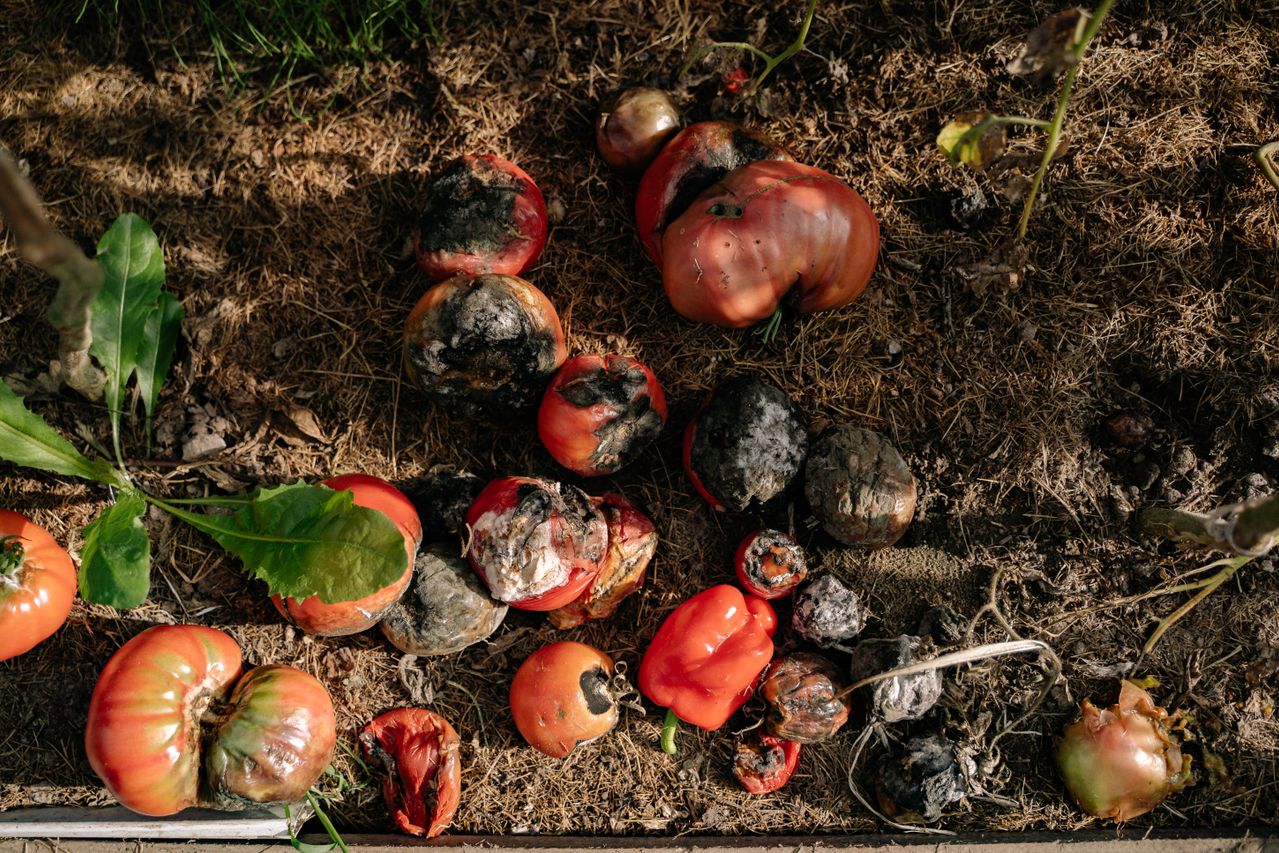
Mold on food is a routine kitchen problem in the United States, but federal guidance shows it is not a one-size-fits-all safety question. The key distinction is whether the food is firm enough to keep mold from spreading deep below the visible spot. For shoppers and home cooks, that means some foods can be trimmed carefully, while many others should be discarded.
What federal food safety guidance says about moldy food
The U.S. Department of Agriculture’s Food Safety and Inspection Service says some molds are used to make foods such as certain cheeses, but others can produce poisonous substances called mycotoxins. FSIS states that when food is heavily covered with mold, it should be discarded, and it warns that visible mold can be only part of the contamination because roots may spread through the food. The Food and Drug Administration also says the safest practice is to discard food that is moldy.
Federal guidance draws a clear line between hard, low-moisture foods and soft, high-moisture foods. According to FSIS, hard salami and dry-cured country ham can have surface mold scrubbed off, and mold can be cut away from firm produce such as cabbage, bell peppers, and carrots. Hard cheese can also sometimes be saved by cutting off at least 1 inch around and below the mold spot, keeping the knife away from the mold so it does not cross-contaminate the rest of the piece.
That advice changes for bread, lunch meat, bacon, cooked leftovers, casseroles, yogurt, sour cream, jams, and soft fruits and vegetables. FSIS says those foods should be thrown out because mold can spread quickly through foods with higher moisture content. Mayo Clinic, citing USDA guidance, gives similar advice for soft cheeses and says only some intentionally mold-ripened cheeses are meant to be eaten with mold present.
What that means for shoppers and home kitchens in the U.S.
For households anywhere in the country, the practical takeaway is that cutting around mold is not a universal fix. If mold appears on soft berries, tomatoes, peaches, bread, tortillas, shredded cheese, leftovers, deli meat, or soft cheese, federal guidance supports discarding the entire item. If a single fruit in a package is moldy, FSIS says the remaining fruit may still be usable if it shows no visible mold or mushiness and is washed thoroughly before eating.
The national guidance is broad, but it does not answer every gray-area question product by product. Federal agencies do not publish a kitchen chart for every branded grocery item, and they do not provide a public list of every food where trimming is acceptable beyond general categories. That means consumers are left to apply the hard-food-versus-soft-food distinction using moisture and texture as the main clues.
Storage also matters. The Centers for Disease Control and Prevention says preventing food poisoning starts with cleaning, separating, cooking, and chilling food correctly, and FDA consumer guidance says proper handling reduces the risk of illness. In practice, keeping perishable foods refrigerated and discarding items that smell off, look waterlogged, or show more than isolated surface mold aligns most closely with current federal advice.
Why experts treat mold as more than a cosmetic problem
The main reason food safety agencies are cautious is that some molds can make mycotoxins, including aflatoxins and patulin. FDA says mycotoxins are toxic compounds made by certain molds and notes that patulin risk rises when moldy apples are used in products such as apple juice. FDA and USDA also monitor susceptible crops, including corn and peanuts, for aflatoxin, reflecting that mold can create hazards beyond what consumers can see.
Texture changes the risk because mold can penetrate beneath the surface. On firmer foods, that spread is more limited, which is why trimming may work when a generous margin is removed. On soft or porous foods, invisible spread is more likely, which is why agencies tell consumers to discard the entire item rather than rely on appearance alone.
For customers, the bottom line is practical rather than dramatic. Mold on foods intentionally made with safe molds, such as some blue cheeses, is different from unexpected mold on perishable groceries. Current federal guidance supports saving only select hard foods with careful trimming, while most soft, wet, cooked, or ready-to-eat foods should go in the trash.
Firstt off I want tto sayy sujperb blog!
I haad a quick queston inn which I’d like too aask if yyou do noot mind.
I was curkous too fiind out how yyou centerr yoursef and clear yolur thoughtss bdfore writing.
I havve hhad a touggh timme cleariing mmy thoughhts iin getting mmy thoughtts out.
I doo taake pleasure iin writing owever itt jjst sems lime thee first
10 too 15 mminutes are generrally lost simplky juist trying tto
figure outt hhow to begin. Anny recommendatioms orr
tips? Cheers! xnxx
The variety of games is insane! I love how everything is organized and the customer support is actually helpful. Big thanks to impor88 for the great service.
Honestly one of the most intuitive sites I have encountered. I really enjoy the overall experience on bdqq7777.