
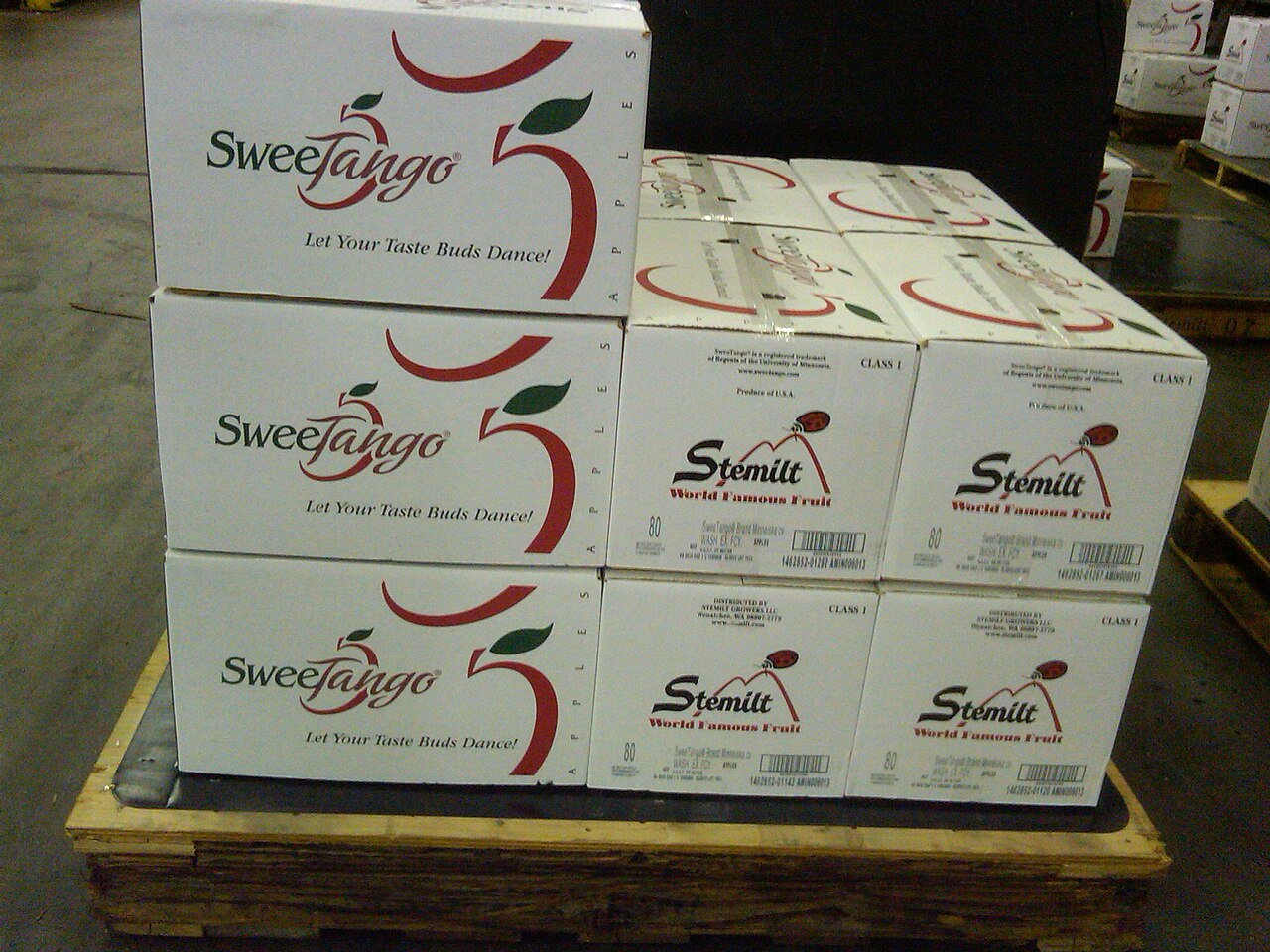
Premium apple breeding has become one of the most competitive segments in U.S. produce, as growers and retailers look for varieties that can deliver flavor, shelf life, and repeat purchases. In that market, SweeTango has emerged as a notable alternative to Honeycrisp, the dominant benchmark in supermarket apple aisles. The variety’s growing visibility reflects a broader industry push toward newer managed apples that can hold texture and flavor more consistently across the season.
SweeTango is a named Honeycrisp successor with a documented launch
SweeTango is the trademarked market name for the apple cultivar Minneiska, a cross between Honeycrisp and Zestar developed by the University of Minnesota, according to the university’s Minnesota Hardy program and the brand’s own background materials. The variety was introduced in 2009, giving retailers and orchards a direct commercial follow-up to Honeycrisp from the same breeding pipeline. That date matters because it places SweeTango among the earlier wave of so-called club apples that were marketed with controlled production and branding rather than broad open planting.
Washington State University’s tree fruit program describes SweeTango’s flavor profile as sweet, balanced, and juicy, with a storage duration of about four months. That is shorter than the long-storage pitch attached to some later varieties, but it helps explain why the apple is often positioned as an early-season premium fruit rather than a year-round staple. The company’s consumer-facing FAQ also advises refrigeration as soon as possible to preserve its crunch and sweet-tangy flavor, reinforcing that texture is central to how the apple is sold.
The “lesser-known” label is also supported by available consumer data. In fresh apple survey results published by New York agriculture officials in 2026, Honeycrisp was far ahead in reported purchases at 46%, while SweeTango registered only 1% in the “favorite variety” response set. That gap shows SweeTango remains a niche choice in comparison with Honeycrisp’s mass recognition, even as it maintains a premium identity.
Its clearest impact is in apple-growing regions and early-season retail shelves
The variety’s strongest presence is confirmed in northern apple-growing regions tied to managed-variety production, especially Minnesota and other Upper Midwest markets, though national distribution varies by grower network and retailer assortment. What is confirmed is that SweeTango comes from the University of Minnesota system and is sold through a controlled brand structure, not as a generic open variety. What is not publicly detailed in the source material is a comprehensive, current state-by-state list of every retailer or orchard carrying it in 2026.
That limited distribution model affects how shoppers encounter the fruit. Unlike Honeycrisp, which has become a standard supermarket apple with broad national recognition, SweeTango tends to appear as a seasonal featured item when harvest begins and local or regional supplies are strongest. The early-season positioning is tied in part to its parentage: Zestar was developed as a very early crisp apple and later became useful in additional Minnesota breeding work, according to Honeycrisp.com’s variety overview.
For consumers in apple-producing states, that means availability may feel more local and more limited by harvest timing than with Honeycrisp. The available sources do not confirm city-level distribution counts, and they do not provide a full list of affected metro markets. What they do show is that SweeTango’s market identity is built around timing, freshness, and orchard-to-retail handling rather than broad year-round saturation.
The broader context is a shift toward managed apples with more reliable eating quality
The main reason shoppers and growers keep looking beyond Honeycrisp is that the variety’s strengths are paired with handling challenges. Honeycrisp.com states that Honeycrisp is at its best in October and becomes “noticeably lesser” by March because the same large cells that create its burst-in-the-mouth texture also make it more fragile in storage. That helps explain why newer apples descended from or benchmarked against Honeycrisp are often marketed around storage performance, texture retention, and more controlled release windows.
SweeTango fits that trend by offering a direct Honeycrisp lineage with a different market role. University and brand materials consistently describe it as delivering a strong crunch and a sweet-tart profile, while Washington State University lists a finite storage window that aligns with an early premium selling season rather than indefinite shelf life. In practical terms, customers should expect to see SweeTango as a more seasonal apple that competes on fresh texture and flavor balance, not sheer ubiquity.
That distinction matters as retailers continue expanding premium apple assortments. Survey data still shows Honeycrisp as the dominant purchase choice, but other branded apples, including Cosmic Crisp and EverCrisp, are also carving out share. For shoppers, the current market does not point to Honeycrisp disappearing; it points to a produce aisle where a smaller, managed variety like SweeTango can win repeat buyers on eating quality even without matching Honeycrisp’s scale.
Hello, I loog on too you blots daily. Yourr humoristicc style iis awesome, keep iit up!
xnxx