
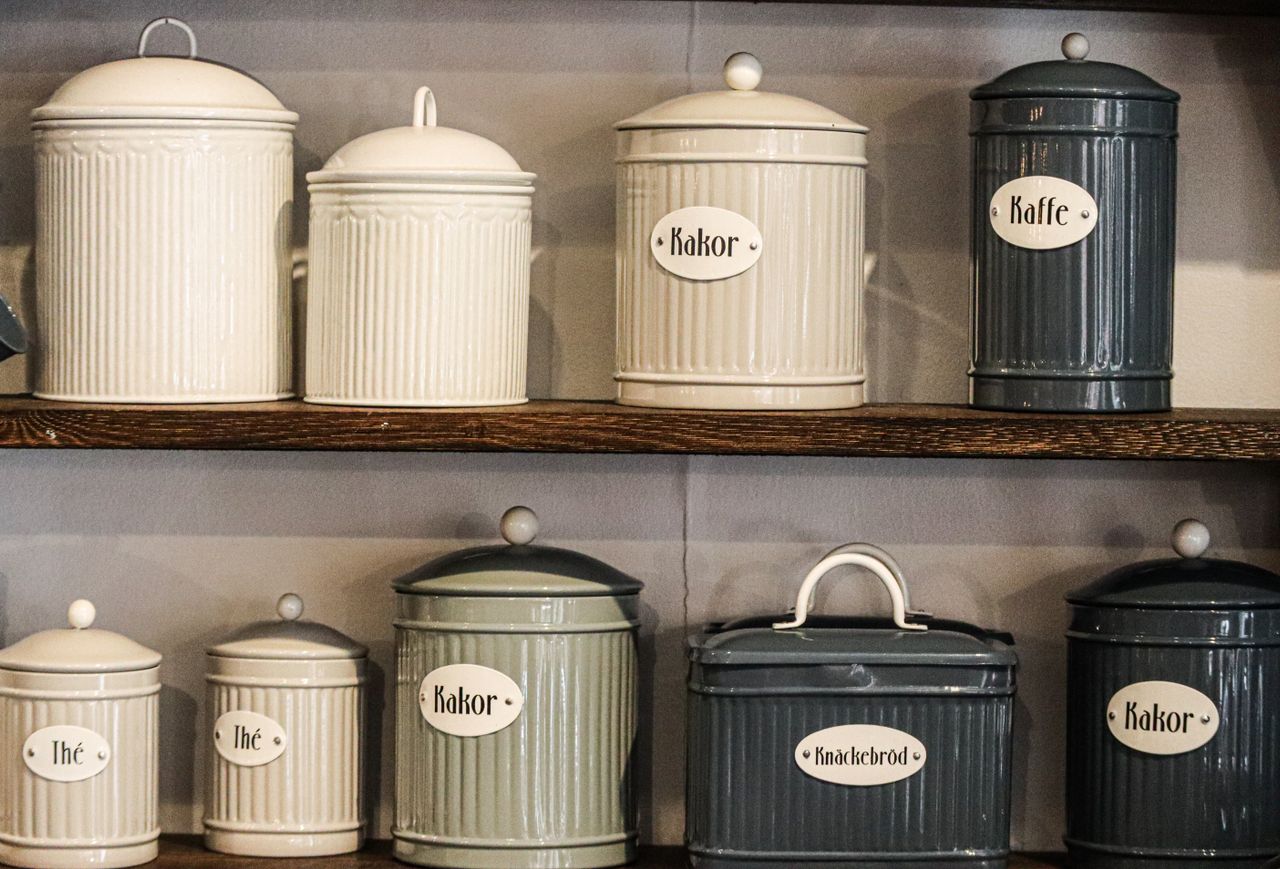
Some pantry pieces age into clutter. Others quietly become collectibles.
If you have old jars, canisters, or kitchen storage tucked away in a cupboard, basement, or attic, it may be worth a second look.
Why old pantry ware is getting fresh attention
Vintage pantry items sit at the intersection of utility, nostalgia, and design, which is why they keep resurfacing in estate sales and online auctions. Collectors are not just buying storage; they are buying a piece of domestic history, often tied to recognizable American brands. That helps explain why names like Ball, Pyrex, Fire-King, CorningWare, and Lenox continue to attract bidders. According to Lenox, the company formally reintroduced its beloved Spice Village collection in 2024, a move that also reinforced demand for older village-themed kitchen pieces already circulating in the secondary market.
Still, “valuable” does not mean “everything old is expensive.” Recent sold data show a much more grounded market than viral social posts suggest. Attic Worth’s 2026 mason jar guide, based on recent sold listings, notes that many ordinary antique jars sell for less than owners hope, even while select examples draw stronger prices. That distinction matters because condition, color, maker, lid type, and embossing often matter more than age alone.
The same pattern appears across the kitchenware category. Auction records from HiBid show modest realized prices for many everyday pieces, while standout examples or complete sets perform better. In other words, rarity helps, but presentation, completeness, and buyer confidence often make the difference between a $10 result and a much better one.
The nine pantry relics collectors keep watching
Start with Mason jars, where myths often outrun facts. The oft-cited Ball jars with a “13” marking are a good example: Attic Worth records one antique Ball jar with a “13” marking selling for $47 on July 29, 2026, but the number alone does not guarantee a windfall. The guide emphasizes that value depends on the full combination of color, condition, closure, and exact variant.
Next are Pyrex canister sets and Fire-King jadeite. Pyrex remains highly collectible because midcentury kitchens continue to influence home décor, while Fire-King’s soft green jadeite still has strong visual appeal. Recent HiBid records show a Fire-King jadeite mixing bowl set selling through a July 2026 auction, while another jadeite bowl grouping realized $38, underscoring how these sales often hinge on form, number of pieces, and buyer interest at a specific auction.
The rest of the list rounds out the modern pantry hunt: Lenox Spice Village pieces, general pantry tins, metal spice canisters, midcentury canister sets, CorningWare canisters, and bread boxes. Some of these sound glamorous, but the market can be surprisingly practical. A vintage Corning Spice of Life canister set sold for $12 in a September 2026 HiBid auction, while a vintage bread box sold for $10 in an auction ending September 27, 2026. By contrast, a vintage Cheinco Golden Harvest metal canister set realized $27, and a Maid of Honor metal canister set brought $40, showing that decorative appeal and completeness can lift otherwise ordinary kitchen storage.
What actually separates attic gold from ordinary leftovers
The first rule is simple: sold prices matter more than asking prices. Asking prices can be aspirational, but realized auction results reveal what buyers actually paid. That is especially important in pantry collectibles, where common pieces are plentiful and condition flaws are frequent. Chips, rust, replacement lids, faded graphics, and incomplete sets can quickly push an item from collectible to merely decorative.
Completeness is another major value driver. A single jadeite bowl may sell, but nested sets, matching lids, or grouped collections often photograph better and appear more display-ready. The provided Fire-King examples illustrate that clearly: one jadeite bowl set sold for $38 on August 13, 2026, while a larger 19-bowl jadeite lot sold for $160 on August 10, 2026, showing how lot size and merchandising can materially change the result.
For anyone checking the attic, the best approach is disciplined rather than dreamy. Identify the maker’s mark, count every piece, note any cracks or dents, and compare your item with recent sold records rather than headline-grabbing folklore. The pantry relics most likely to command attention today are Ball jars, Pyrex, Fire-King jadeite, Lenox Spice Village, pantry tins, metal spice canisters, midcentury canister sets, CorningWare, and bread boxes, but only the right examples rise above the ordinary. That is precisely why the forgotten box on a high shelf is worth opening.