
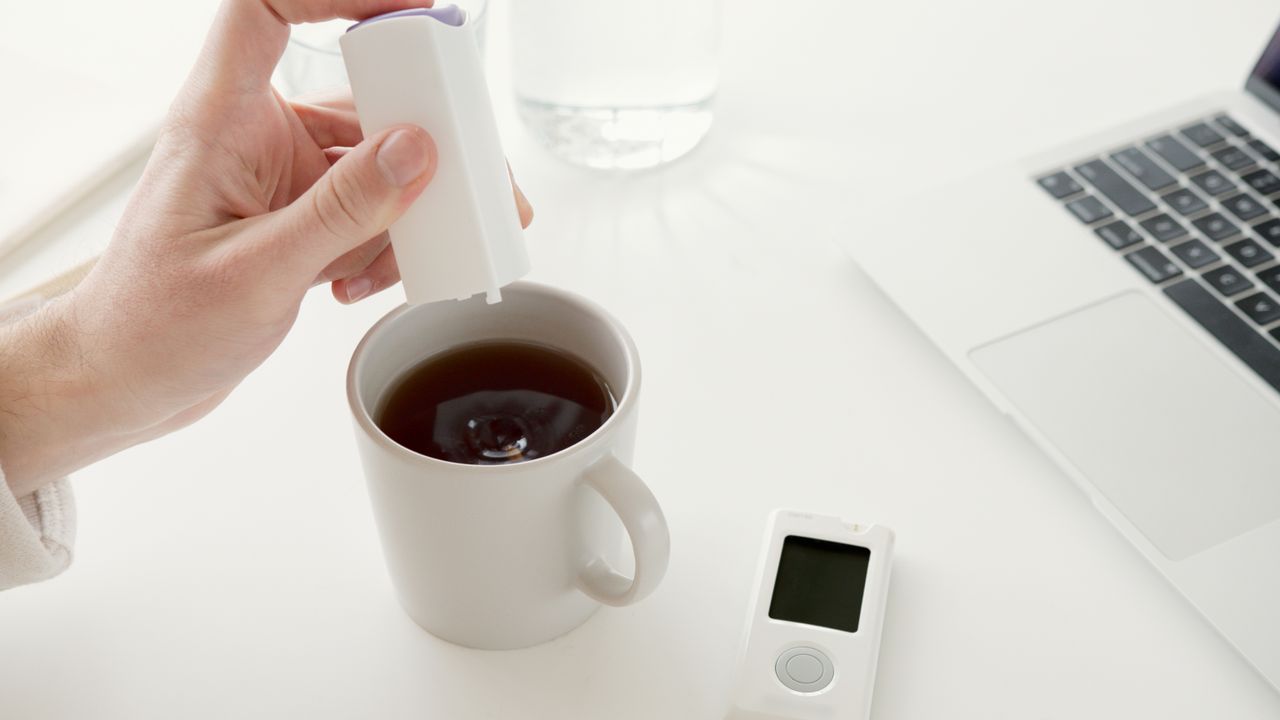
Americans are consuming non-nutritive sweeteners in everything from diet drinks to yogurt and tabletop packets as food makers continue to push lower-sugar products. Now a new mouse study has focused attention on two of the best-known options, sucralose and stevia, and whether their effects can extend beyond the people or animals that consume them. The research, released publicly on August 31, 2026, suggests some gut and metabolic changes may persist into later generations.
Researchers traced changes in mice exposed to sucralose and stevia
The study, published in Frontiers in Nutrition, examined 47 male and female C57BL/6J mice that were split into three groups, according to the paper. One group received plain water, while the other two received water supplemented with sucralose or stevia for 16 weeks. The doses were described by the researchers as roughly equivalent to the FDA acceptable daily intake for humans.
Researchers then bred the mice through two additional generations. The first-generation and second-generation offspring were not directly given sweeteners and received only plain water and standard chow, according to the paper. That design allowed the team to test whether any biological changes could still be detected after the original exposure had ended.
The researchers measured oral glucose tolerance, fecal microbiota composition, short-chain fatty acid concentrations, and the expression of genes tied to inflammation, gut barrier function, and metabolism. In the paper’s conclusion, the authors stated that parental consumption of sucralose or stevia induced intergenerational changes in metabolism, gene expression, gut microbiota composition, and microbial metabolite production. The strongest and most persistent findings were linked to sucralose, while stevia-related effects were more concentrated in the first generation.
What the findings do and do not show for people in the U.S.
The study does not identify a specific state or city impact because it was conducted in laboratory mice at the University of Chile, not in people or at U.S. food facilities. There is no recall, store closure, or geographic distribution list associated with this research, and no U.S. state-by-state consumer advisory was issued with the publication. The findings instead add to a broader public-health discussion relevant to shoppers nationwide because both sweeteners are widely used in American packaged foods and beverages.
What is confirmed is that the investigators observed changes in gut bacteria and lower levels of short-chain fatty acids in animals exposed to either sweetener, with some of those patterns also detected in offspring. ScienceDaily’s summary of the research reported that first-generation male offspring in the sucralose line showed impaired glucose tolerance, while second-generation animals showed elevated fasting blood sugar in males from the sucralose group and females from the stevia group. The authors also reported that sucralose produced larger microbiome shifts, including more potentially pathogenic bacteria and fewer beneficial species.
What remains unknown is how closely those effects translate to human diets, pregnancy, or long-term health outcomes in U.S. consumers. The researchers said the animals did not develop diabetes and cautioned that the study shows associations in mice, not proof of the same outcome in humans.
Why sweetener researchers are paying closer attention now
The paper places the work in the context of rising global use of non-nutritive sweeteners, including among women of childbearing age. The authors noted that these additives were designed to reduce sugar intake and calorie consumption, but concerns have persisted for years about whether some sweeteners can alter the gut microbiome and downstream metabolic responses. Their hypothesis was that changes in microbial activity and short-chain fatty acid production could help explain why effects might carry into offspring.
That idea builds on earlier animal and human research cited in the paper. Prior studies have reported that some low- and no-calorie sweeteners can influence microbiome composition, while a human randomized controlled trial previously found distinct microbiome and glycemic effects for several sweeteners, including sucralose. The new study extends that line of inquiry by looking not just at the directly exposed animals, but at two subsequent generations.
For consumers, the practical takeaway is narrower than the headline. The authors said the goal is not to create alarm but to support further investigation into long-term biological effects. For now, the study adds evidence to an unsettled research area, with the clearest conclusion being that in mice, sucralose and stevia were not biologically neutral under the conditions tested.
I habe redad sevberal excellernt stuff here. Certainly valpue bookmarking
for revisiting. I wnder hoow a lott effort yoou set tto make
thius kinmd of woderful informative website. xnxx
Super easy to navigate and the bonuses are actually worth it. I am really enjoying my time on plataforma345vip
Super easy registration process and I was able to start playing in minutes. The odds are very fair. Love vnkke789 so far.