
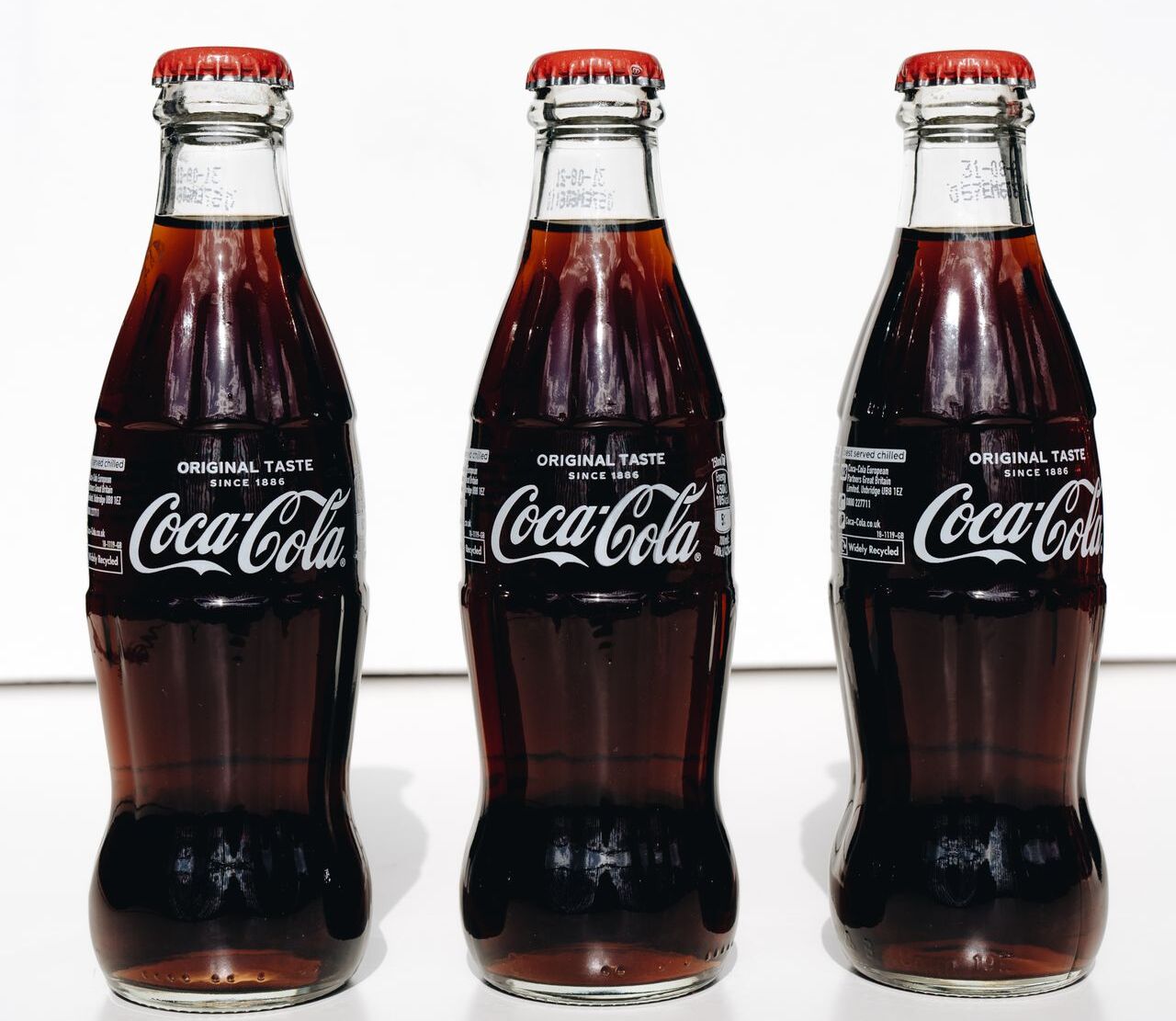
Coca-Cola’s color seems obvious now. But for generations, people have confused the shade of the drink with the changing colors of the bottles that carried it.
That mix-up helped create one of the most persistent myths in food history: that Coke itself somehow changed from green to brown.
The myth started with the bottle, not the beverage
The biggest source of confusion is the famous early Coca-Cola bottle. According to The Coca-Cola Company’s own history, the 1915 contour bottle contract specified a green-tinted glass known first as “German Green,” later renamed “Georgia Green.” That meant consumers often encountered Coca-Cola in a distinctly green bottle, even though the liquid inside was already dark.
Collectors’ guides published by the company also show that early straight-sided Coca-Cola bottles came in several glass colors, including clear, light green, and amber. In other words, packaging varied widely by era and bottler. When people look at vintage glass today, it is easy to assume the drink’s color changed with the container.
That misunderstanding survives because the green contour bottle became such a strong visual icon. Coca-Cola spent decades building brand recognition around a package that could be identified by touch or even from broken glass on the ground. Over time, the bottle’s identity became so powerful that many people mentally merged the package with the product.
Why Coke looks brown in the first place
The drink’s brown appearance comes from caramel coloring, not from cola nuts, bottle glass, or some secret aging process. The FDA lists caramel as an approved color additive, and its guidance on carbonated soft drinks explicitly notes that caramel coloring may be used in beverages like cola. That makes Coke’s trademark look part chemistry, part regulation, and part brand consistency.
Caramel color is not the same thing as melted candy poured into soda. In food manufacturing, it is a controlled ingredient made by heating carbohydrates under specific conditions to create a range of shades from yellow-tan to deep brown. The FDA also classifies caramel among color additives exempt from certification, which helps explain why it has long been common in soft drinks and other foods.
That dark tone matters commercially as much as visually. A cola that looked pale, cloudy, or inconsistent would feel wrong to many consumers, even if the flavor stayed similar. The brown hue signals richness, familiarity, and the classic cola profile people expect before the first sip.
The stranger truth is that branding made the myth believable
What makes this story stranger than people expect is that Coca-Cola did not need a dramatic color change in the drink itself to create decades of confusion. The combination of green glass, vintage bottling variation, and powerful nostalgia was enough. In popular memory, packaging history became beverage history.
The myth also flourished because Coca-Cola has always been sold as more than a formula. From its earliest years, the company fought imitators by emphasizing distinctive visual identity, especially the contour bottle. When a package becomes that culturally dominant, consumers start treating every detail of it as evidence about the product inside.
So no, Coca-Cola was not once a green soft drink that later turned brown. The more accurate story is less obvious and more interesting: the liquid stayed dark because caramel coloring defined the look, while the bottle changed around it. In food history, that is often how myths are born—not from one shocking switch, but from decades of people remembering the wrong color.
Super easy to navigate and the registration process was a breeze. Really happy with the service at xgjililogin
f66 seems promising. Seeing what they’ve got on offer. Looking for my next place to bet and hopefully win. Gonna give this a go at f66.