
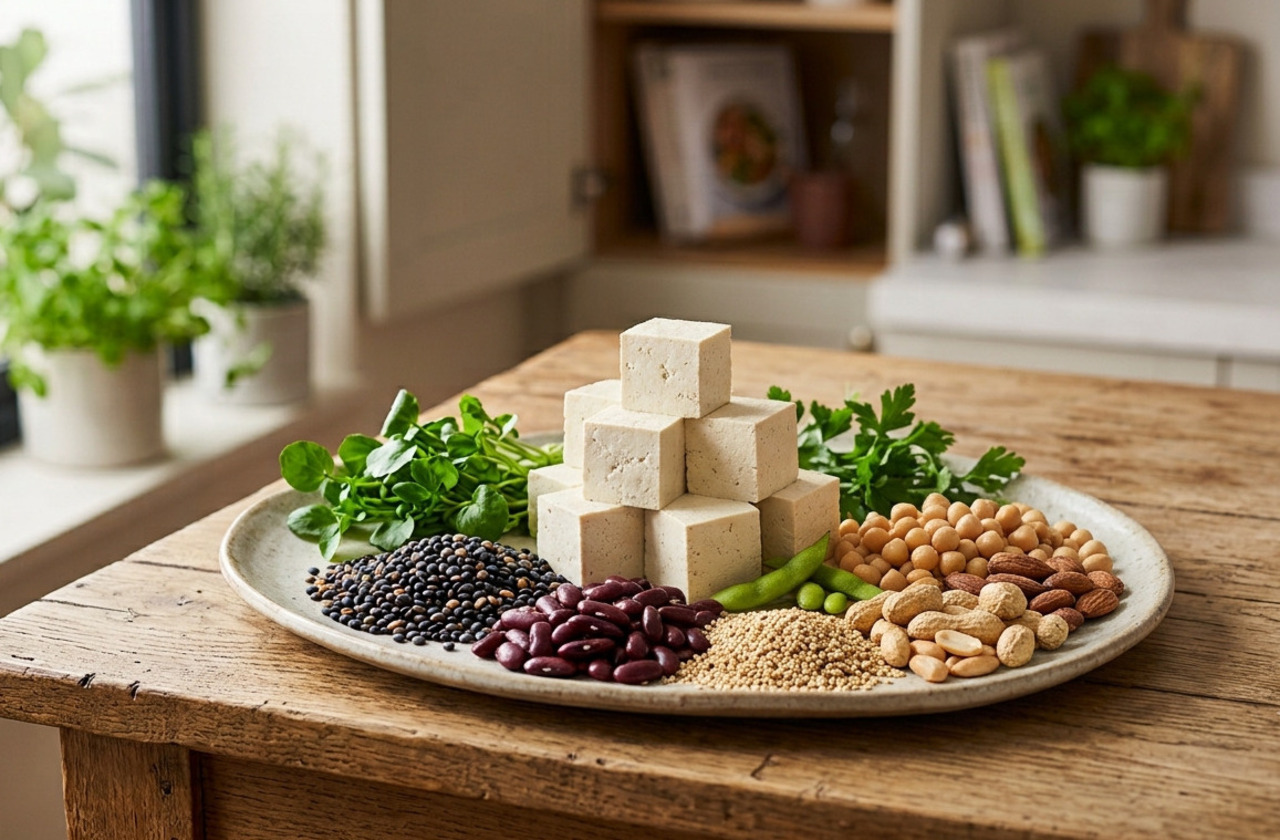
A new University of Cambridge paper is stirring fresh debate about what counts as a “best” protein. In the ranking, tofu finished first across a 20-food list, ahead of beans, lentils, chicken, eggs, beef, and cheese, after one researcher combined nutrition, environmental impact, affordability, and availability into a single score.
What the Cambridge paper actually measured
The paper, “What are the best sources of protein? Introducing the BPI Score,” was published July 29, 2026, in Frontiers in Sustainable Food Systems. It was written by Chris Macdonald of the University of Cambridge, who also founded the Better Protein Institute, according to the journal article and a Cambridge-linked news release. The paper presents the BPI Score as a multidimensional framework, not a government dietary guideline or a clinical trial.
Macdonald’s model looks at both “People” and “Planet” factors. According to coverage from BBC Science Focus summarizing the paper, the environmental side considered greenhouse gas emissions, water pollution, land use, and water use per 100 grams of protein. The human-focused side considered nutritional completeness, along with salt and saturated fat, and also included affordability and availability.
That mix is what makes the ranking stand out. Many food labels focus on one issue at a time, such as calories or carbon footprint. Macdonald argued in the paper that single-focus labels can hide tradeoffs, and the goal of the BPI Score is to offer a broader way to compare protein foods that shoppers actually buy.
The result that stood out was tofu at the top
BBC Science Focus reported that tofu ranked first overall, with chia seeds, beans, quinoa, and sunflower seeds rounding out the top five. Lentils placed sixth. Chicken breast came in seventh, tuna eighth, and eggs fourteenth. At the bottom were beef steak, lamb chops, mozzarella cheese, and cheddar cheese, with cheddar last overall.
Macdonald told BBC Science Focus that plant-based sources tended to score better in large part because they usually produce lower emissions. The outlet also reported that tofu led the environmental ranking, followed by chia seeds, quinoa, beans, and sunflower seeds. On the nutrition-focused side, the split between plant and animal foods was less sharp, with chicken breast and tuna still placing relatively high.
For home cooks, the practical takeaway is not that every animal protein scored poorly. It is that this ranking favored foods that perform reasonably well across several categories at once. That helps explain why tofu, which is widely sold, relatively affordable, and lower-impact than many animal proteins, rose to the top instead of a more expensive or more niche food.
What this means for shoppers and weeknight meals
This was one perspective paper built around a new scoring system, and some coverage has noted its limits. Fox News, for example, reported that the score is an early framework developed by one researcher and relies on U.K. grocery data, not a controlled feeding study or official nutrition standard. That matters because pricing, product access, and common brands can vary by country and by store.
Still, the list lands at a moment when many shoppers are already mixing protein sources instead of sticking with one lane. If you are planning meals for cost, convenience, and flexibility, the study gives extra weight to familiar pantry and refrigerator staples such as tofu, beans, lentils, peanuts, and chickpeas, all of which can work in soups, grain bowls, tacos, pasta, and stir-fries.
It also puts cheese in a different light than many protein-forward marketing messages do. In this ranking, cheddar and mozzarella scored poorly overall because of the way the system weighed saturated fat and environmental impact alongside protein. For shoppers, that does not mean cheese is off the menu. It means a food marketed as high-protein may look different when judged on several measures at once, especially if dinner decisions include cost and environmental tradeoffs as well as grams of protein.
Çok yararlı bi yazı olmuş hocam teşekkür ederim .Sizin yazılarınızı beğenerek okuyorum elinize sağlık.
very informative articles or reviews at this time.