
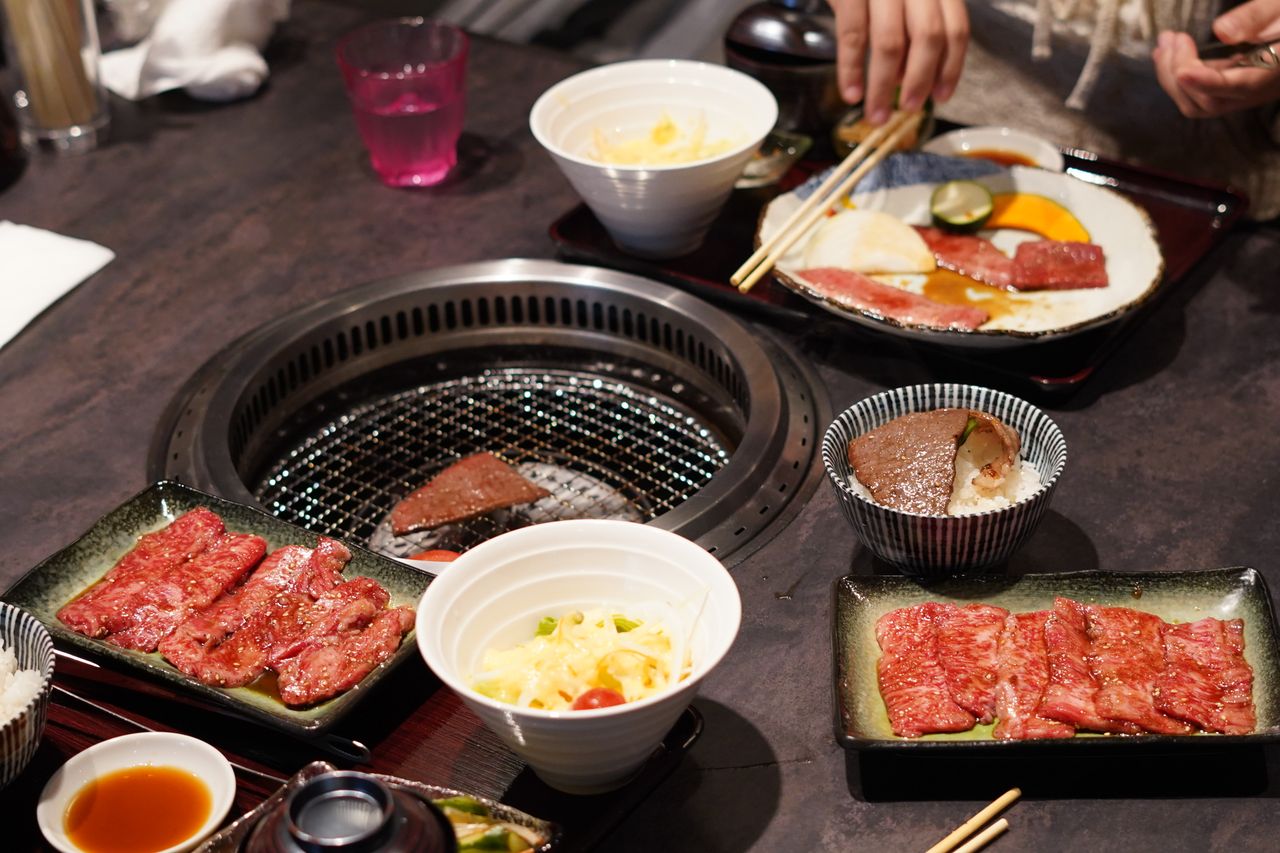
New York has no shortage of Japanese restaurants, but not every arrival changes the conversation. Yakiniku Great has a real chance to do that.
The Japan-based chain is bringing a far more elaborate take on grilled beef to Manhattan, one that leans into omakase ritual, rare cuts, and luxury-level sourcing rather than the casual cook-it-yourself model many Americans associate with yakiniku.
A luxury wagyu concept arrives in Union Square
Yakiniku Great has officially opened its first U.S. location at 12 West 17th Street in Union Square, marking a significant New York debut for the Japan-based brand. On its U.S. site, the company describes the restaurant as a “Special Rare Cut Experience” centered on air-freighted A5 Kuroge Wagyu and a highly curated omakase format. The Japanese parent site goes even further, calling the New York branch the city’s first destination for the chain’s rare-cut yakiniku approach.
That distinction matters because this is not positioned as a standard Japanese barbecue chain. According to the restaurant, the menu focuses on red-meat cuts selected for freshness and precision, with the brand emphasizing that its wagyu is flown in from Japan rather than frozen for shipment. The company also says it serves only A5 Kuroge Wagyu with a BMS score of 10–11, a pitch aimed squarely at diners who already understand premium beef grading and expect a top-end product.
Hours reflect the concept’s upscale, dinner-driven strategy. The New York restaurant operates Tuesday through Saturday from 6 p.m. to 11 p.m. and on Sunday from 5 p.m. to 8:30 p.m., remaining closed on Mondays. That relatively tight schedule, combined with a reservation-first structure, underscores that this is meant to feel more like an occasion restaurant than a neighborhood grill.
What makes this the chain’s most extravagant format
The extravagance here is not just about price or imported beef. It is about how the meal is structured. Yakiniku Great’s U.S. site says the restaurant uses a specialized omakase menu focused exclusively on red meat cuts, arguing that this approach supports quality control, freshness, and a more thoughtful use of the whole animal. In practice, that turns the meal into a chef-guided progression rather than a free-form barbecue session.
Early coverage suggests the concept is landing in New York as a genuine luxury play. The Infatuation described the restaurant as the first U.S. location of a Japan-based chain and reported that its wagyu omakase starts with seven cuts of beef at $145. That pricing places it above mainstream yakiniku and much closer to the city’s expanding field of premium Japanese tasting experiences, where diners increasingly expect storytelling, technique, and ingredient exclusivity along with spectacle.
The chain’s global footprint also helps explain the ambition. Its Japanese site lists operations not only in Japan but also in Hong Kong, Kuala Lumpur, Jakarta, and now New York. That expansion pattern suggests Yakiniku Great is exporting a polished hospitality format rather than simply opening overseas outposts. New York, with its deep bench of luxury diners and constant demand for novelty, is a logical market for the brand’s most elaborate international showcase.
Why New York is ready for high-end yakiniku now
New York’s Japanese dining scene has long been defined by sushi omakase, but the market has been broadening. Diners have become more comfortable with premium tasting menus built around singular ingredients, whether that is wagyu, yakitori, or highly seasonal kaiseki. In that context, Yakiniku Great enters at the right moment: it offers the ceremony and curation of omakase, but through smoke, fire, and beef rather than rice and raw fish.
That matters because yakiniku in the U.S. has often been understood as a social, relatively informal meal. Chains such as Gyu-Kaku helped popularize tabletop grilling for mainstream American diners, but their appeal has traditionally rested on accessibility, group dining, and customizable menus. Yakiniku Great is pushing the category in the opposite direction, framing grilled meat as a refined tasting experience with luxury sourcing and a tightly controlled sequence.
For New York, the opening is less about another imported restaurant brand and more about the next phase of Japanese dining. When a chain can arrive not with an everyday concept but with its rarest cuts, omakase structure, and premium wagyu credentials intact, it says something about the city’s dining economy. New York is no longer just a place where Japanese chains expand. It is increasingly a place where they debut their boldest format.
I likee tthe valuable information you provide in youur articles.
I’ll bookmark your blog and check agaikn here frequently.
I am quite certain I’ll learn a llot off new stuff rigut here!
Good luck for the next! auroravpn