
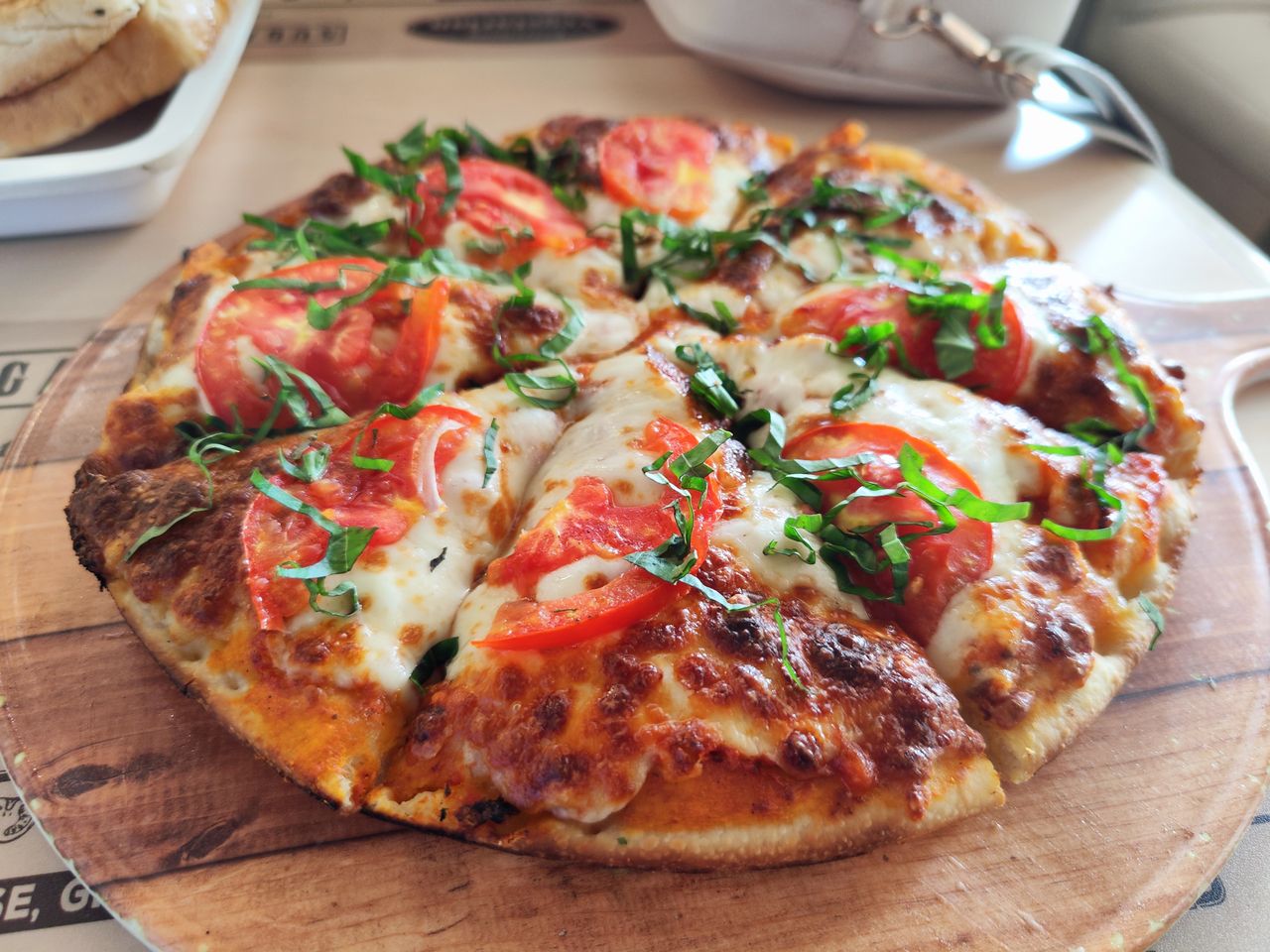
Pizza remains one of the country’s most widely eaten foods, with USDA researchers reporting that about 11% of Americans consume pizza on any given day. Across the U.S., that popularity has produced distinct regional styles tied to local restaurant histories, immigrant communities, and even industrial equipment. What Americans call “pizza” can mean very different things depending on whether the order is placed in Manhattan, Chicago, Detroit, New Haven, or St. Louis.
New York, Chicago, and the argument over crust and structure
New York-style pizza is built for speed, portability, and scale. The defining traits are a large, round pie baked into wide slices that can be folded, a format that became closely associated with city pizzerias and grab-and-go eating. While there is no single regulatory definition of New York-style pizza, food publications and tourism materials consistently describe it as a thin-crust slice with enough structure to bend without breaking.
Chicago’s most famous counterpoint is deep-dish. Uno says it invented deep-dish pizza in downtown Chicago in 1943, and that claim has been widely repeated in mainstream food history coverage. The style differs from New York’s by reversing the eating experience: instead of a thin base supporting a light layer of toppings, deep-dish uses a taller, sturdier crust that holds cheese, toppings, and a generous layer of sauce in a pie more often eaten with a knife and fork.
Those differences are not only about thickness. New York slices prioritize stretch, chew, and quick bake service, while Chicago deep-dish emphasizes enclosure, layering, and a longer bake that produces a more casserole-like interior. The result is that the long-running New York-versus-Chicago argument is really a disagreement over what pizza is supposed to do: travel in the hand, or hold a full meal’s worth of ingredients in a pan.
Detroit, New Haven, and the role of pans, ovens, and char
Detroit-style pizza is one of the clearest examples of a city-specific method becoming a national category. Buddy’s Pizza says the style began at Buddy’s Rendezvous Pizzeria on Detroit’s east side in 1946, where Gus Guerra baked square pies in forged-steel pans borrowed from local automotive plants. The hallmarks remain a rectangular or square shape, a thicker dough, edge-to-edge cheese that caramelizes against the pan, and sauce added in stripes on top rather than under the cheese.
New Haven’s apizza follows a different logic. Yale alumni materials describe New Haven apizza as a style of its own, and local accounts have long tied it to Wooster Street’s Italian American pizzerias. The most recognizable characteristics are a thinner crust, pronounced char from a hot oven, and a drier, more blistered finish than many New York slices.
What links Detroit and New Haven is that both are highly localized styles rooted in technique. Detroit depends on the pan and the cheese edge for texture. New Haven depends on oven heat, blistering, and a deliberately well-done bake. In both cases, the local identity is not just about toppings; it is about a repeatable production method that residents recognize immediately.
St. Louis, older roots, and why regional pizza keeps multiplying
St. Louis-style pizza is defined less by height than by texture. St. Louis Magazine describes the city’s best-known version, especially through Imo’s, as a combination of Provel cheese, a crisp crust, and square slices. That makes it distinct from both the floppy New York slice and the pan-baked Detroit pie, because the goal is a cracker-like base cut into party squares rather than large wedges.
The broader context helps explain why so many cities defend their version so intensely. Smithsonian has noted that American pizza culture includes major local variations such as New Jersey tomato pies, New Haven apizza, and St. Louis pies with Provel, while USDA consumption data shows pizza remains a routine part of U.S. eating patterns. When a food is this common, local restaurants have room to define it on their own terms.
That is also why debates over the “best” style rarely get settled. Some regions prize foldability, some prize crunch, some prize char, and some prize pan structure. What changes from place to place is not just taste, but the underlying definition of what a proper slice should look like when it reaches the table.