
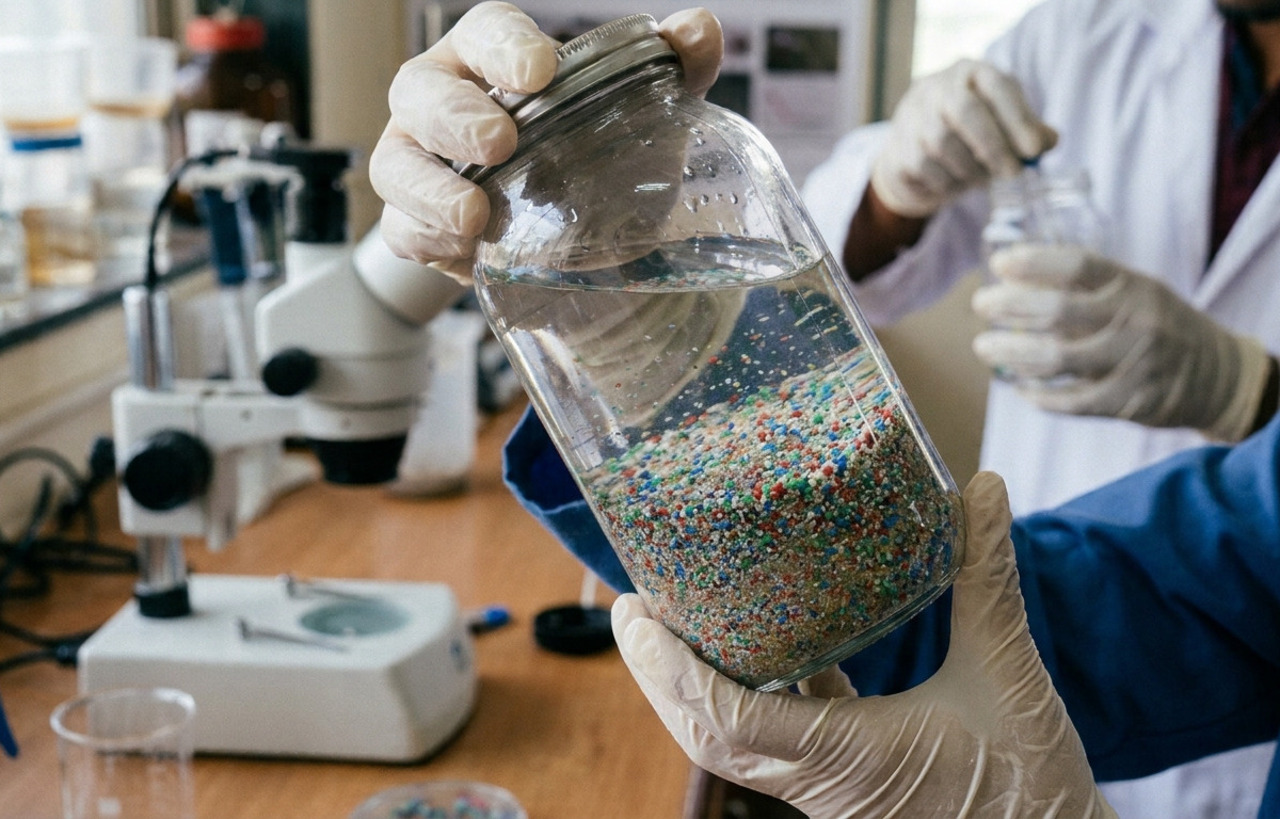
Microplastics are turning into a bigger kitchen concern, not because regulators have settled the science, but because new studies are widening the list of unanswered questions. For people filling a pot, rinsing produce, or opening bottled water, the latest shift is this: researchers are now looking harder at what those particles may do when they sit in water, not just how many are there.
A new study changed the conversation
A Nature paper published on October 14, 2026, found that microplastic and nanoplastic surfaces can be chemically active at the point where plastic meets water. The work came from researchers at Columbia University and the University of California, Berkeley, and it challenges the older assumption that these particles are mostly inert once they break off from larger plastic products.
According to the paper, the interface between water and several common plastics can generate reactive oxygen species. Those are highly reactive molecules that scientists often study because they can alter other compounds and stress cells in laboratory settings. Coverage from Columbia and other science outlets framed the finding as a possible mechanism that could help explain some of the biological damage seen in prior microplastics research.
That does not mean the study proved everyday drinking water is causing disease. It was a mechanistic finding, and that distinction matters. Still, for a food and drink audience, it is notable because plastics that contact food and beverages often spend long periods in water, from bottled water packaging to storage and processing equipment.
What agencies and treatment studies actually say
Federal agencies are moving, but cautiously. On April 2, 2026, EPA released its draft Sixth Contaminant Candidate List, known as CCL 6, and included microplastics for the first time. EPA says the draft list is a research and regulatory-prioritization tool under the Safe Drinking Water Act, not a drinking-water standard, and its public comment period closed June 5. As of November 5, 2026, EPA still describes CCL 6 as a draft and says the final list is expected to be signed for publication by November 17, 2026.
The FDA’s public position is also careful. The agency says studies have found microplastics and nanoplastics in both tap and bottled water, but current scientific evidence does not show that the detected levels pose a risk to human health. FDA also says there are no regulatory levels for microplastics or nanoplastics in drinking water right now, and it notes that inconsistent testing methods make studies hard to compare.
Treatment research helps explain why readers may see mixed headlines. A July 9, 2026 ACS ES&T Water paper looking at four conventional Lake Erie treatment plants reported raw water concentrations of about 2 million to 12 million particles per liter, average removal of 54% by particle count and 75% by mass, and treated water averaging about 2 million particles per liter. A separate npj Clean Water study published November 23, 2025, reported removal above 97.5% for microplastics larger than 2 micrometers across ten drinking-water treatment facilities, showing that results depend heavily on particle size and measurement methods.
What it means in a home kitchen right now
For home cooks, the clearest takeaway is not panic, and not false reassurance either. Microplastics have been detected in bottled water and tap water, and a 2024 NIH-highlighted study drew attention because improved tools could detect many more, especially nanoplastics, than older methods could see. That finding reflected better detection, not proof that contamination suddenly increased.
There is also new federal money going into the question. On April 2, 2026, HHS announced ARPA-H’s STOMP program, a $144 million effort to build tools to measure, study, and potentially remove microplastics and nanoplastics from the human body. The program is a research initiative, not an available treatment, and it underlines how unsettled the science still is.
In practical kitchen terms, this is a story to watch because water touches nearly every part of cooking. It affects coffee, pasta, ice, soup, baby formula, and the bottled drinks many families keep in the fridge. The evidence does not yet justify declaring ordinary drinking water unsafe because of microplastics, but the newer research does suggest that the question may be more complicated than simple particle counts alone.