
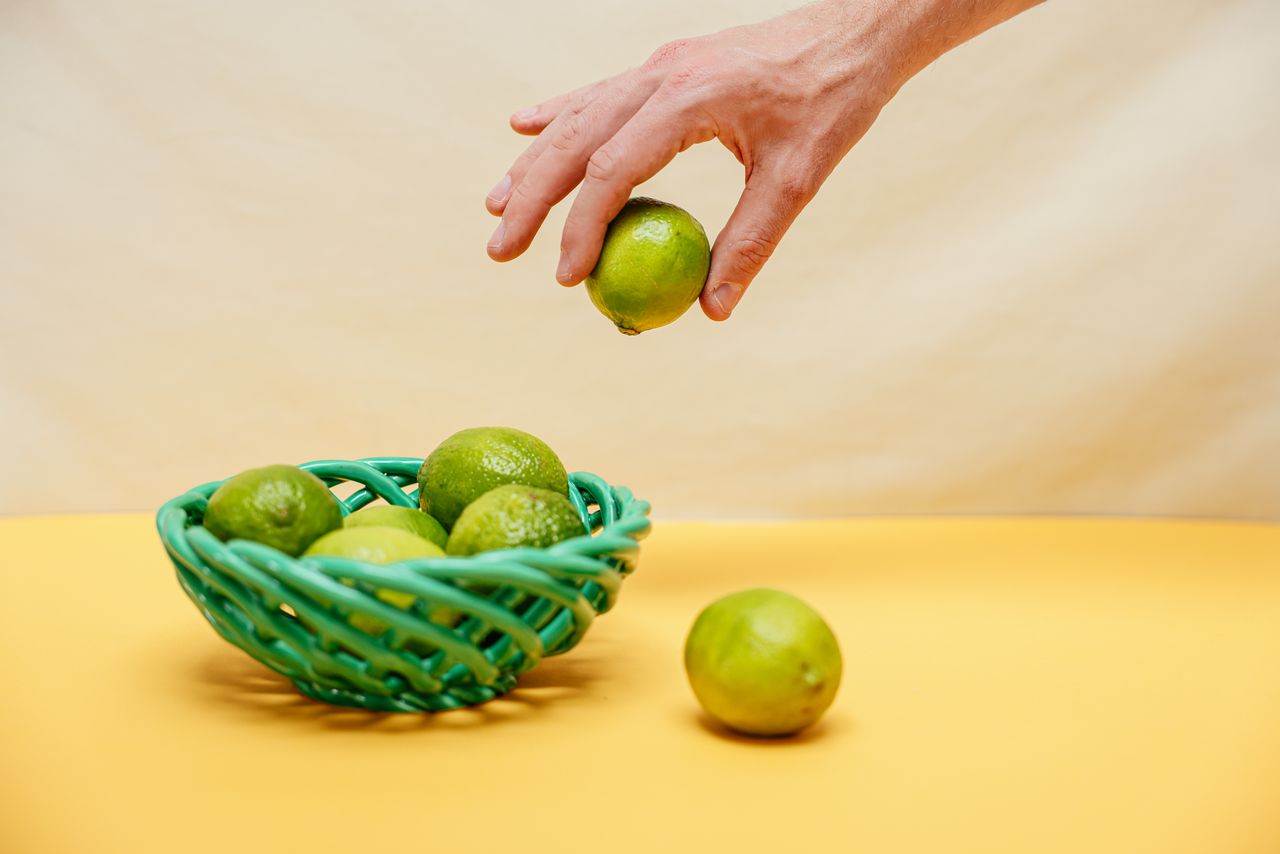
A great lime can transform a dish. A dry one can ruin a dressing, flatten a taco, or leave your cocktail tasting dull.
The one trick chefs trust at the store
If you want the juiciest lime, ignore shine and focus on weight. The best lime should feel heavy for its size, a classic citrus cue that usually signals a higher juice content and a less dehydrated interior. Food Network gives the same advice for citrus more broadly, and produce standards from the USDA emphasize firmness and freedom from dryness as signs of quality.
That simple lift test matters because limes lose moisture over time. A fruit that feels unexpectedly light may still look attractive, but it is more likely to have dried out inside. Heaviness, by contrast, suggests the segments are still holding plenty of liquid, which is exactly what you want for vinaigrettes, marinades, ceviche, and drinks.
Professional cooks also pair that weight test with a quick touch check. A good lime should feel firm, but not rock hard, and the skin should have a smoother, tighter appearance rather than a shriveled or leathery one. USDA grade language for Persian limes specifically calls out firmness, fairly smooth texture, and the absence of hard or dry skins as quality markers.
In practice, that means the juiciest lime is often the one that feels dense, looks vibrant, and has skin that is not drying out. You are not shopping for the most beautiful specimen in a decorative sense. You are shopping for water content, freshness, and usable yield.
What to look for beyond color alone
Many shoppers assume the greenest lime must be the best, but color can mislead. USDA standards for Persian limes do value good green color, yet color alone does not guarantee juiciness. A lime can be vividly green and still be older, lighter, or less useful than a slightly less saturated fruit sitting right beside it.
Texture tells you more. Smooth skin often points to a lime that is fresh and full, while wrinkling can indicate moisture loss. That does not mean every slightly bumpy lime is bad, but deep shriveling is a warning sign. If the fruit has soft collapsed spots, broken skin, or obvious blemishes, move on.
Size can be deceptive too. A giant lime is not automatically a juicy one, and a smaller lime can outperform it if it feels denser in your hand. That is why chefs rely on comparison shopping: pick up two or three limes of similar size and choose the one with the most heft.
This matters in home kitchens because limes are rarely used decoratively. They are bought to be squeezed, zested, or both. For that job, density beats appearance almost every time.
How to keep limes juicy once you get them home
Choosing well is only half the battle. Once home, storage affects how long that juiciness lasts. USDA SNAP-Ed guidance says limes can be kept at room temperature out of sunlight for up to one week or refrigerated for up to four weeks, making refrigeration the better choice if you are not using them quickly.
Temperature control matters because produce gradually loses quality as moisture escapes. The USDA’s food storage guidance notes that refrigerators should stay at 41 °F or below for safe cold holding, though produce quality can vary depending on placement. For everyday use, the crisper drawer or a less cold produce zone works better than letting limes rattle around on a hot counter.
When you are ready to use one, let a chilled lime sit out briefly, then roll it firmly on the counter before cutting. That does not create more juice, but it helps release what is already inside. In a restaurant kitchen, that small prep step is standard because it improves extraction and reduces waste.
The smartest approach is simple: buy limes that feel heavy, store them well, and use them before the skin starts to toughen. It is a chef’s trick because it works, and once you start using it, you will notice the difference immediately.