
A decade ago, hot honey still felt like an insider ingredient. Today, it is everywhere, from chicken sandwiches to snack mixes to freezer-aisle launches.
Few food companies have done more to shape that transformation than Mike’s Hot Honey. The brand took a once-niche “sweet heat” idea and turned it into one of the most visible, widely copied flavor cues in American food culture.
The company that made hot honey impossible to ignore
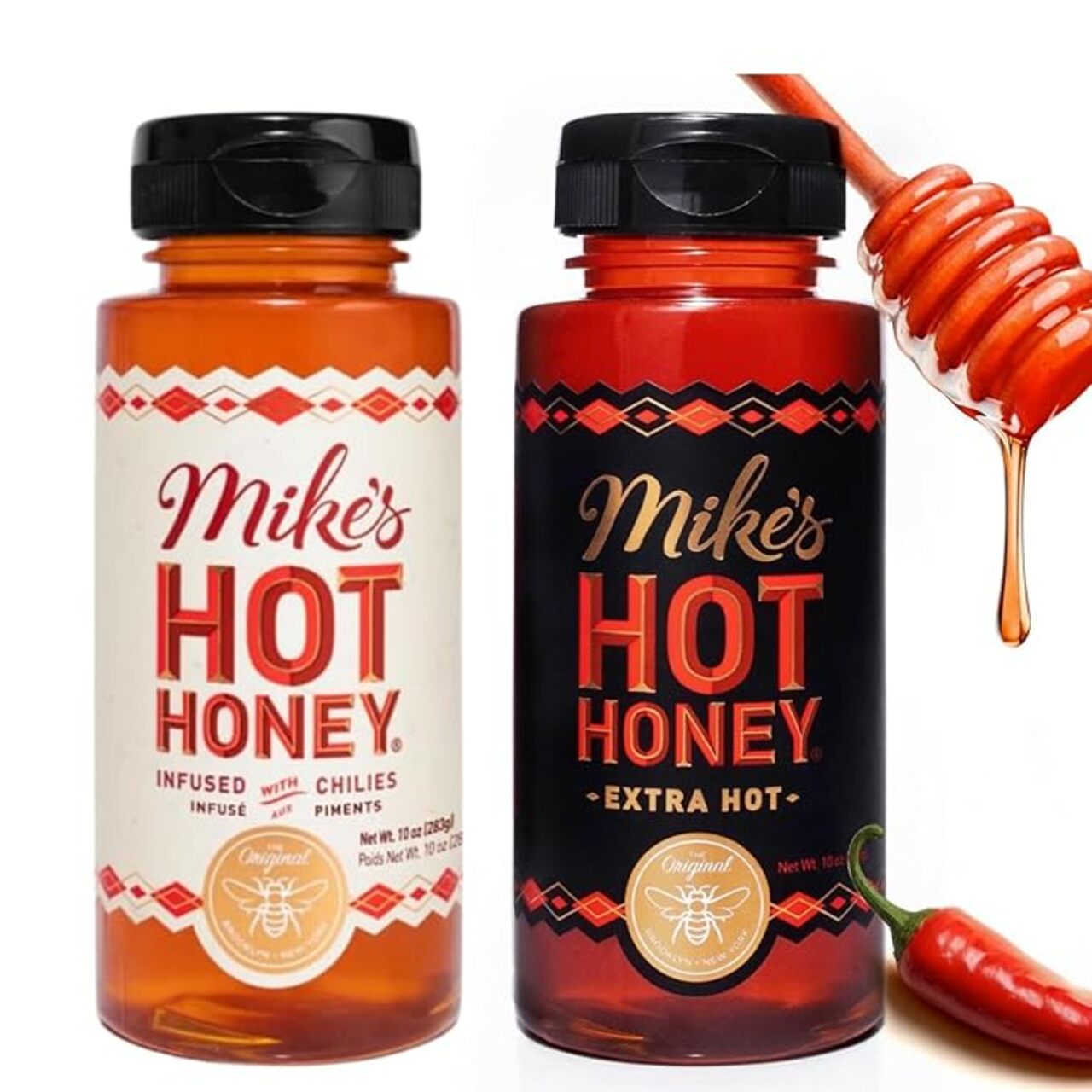
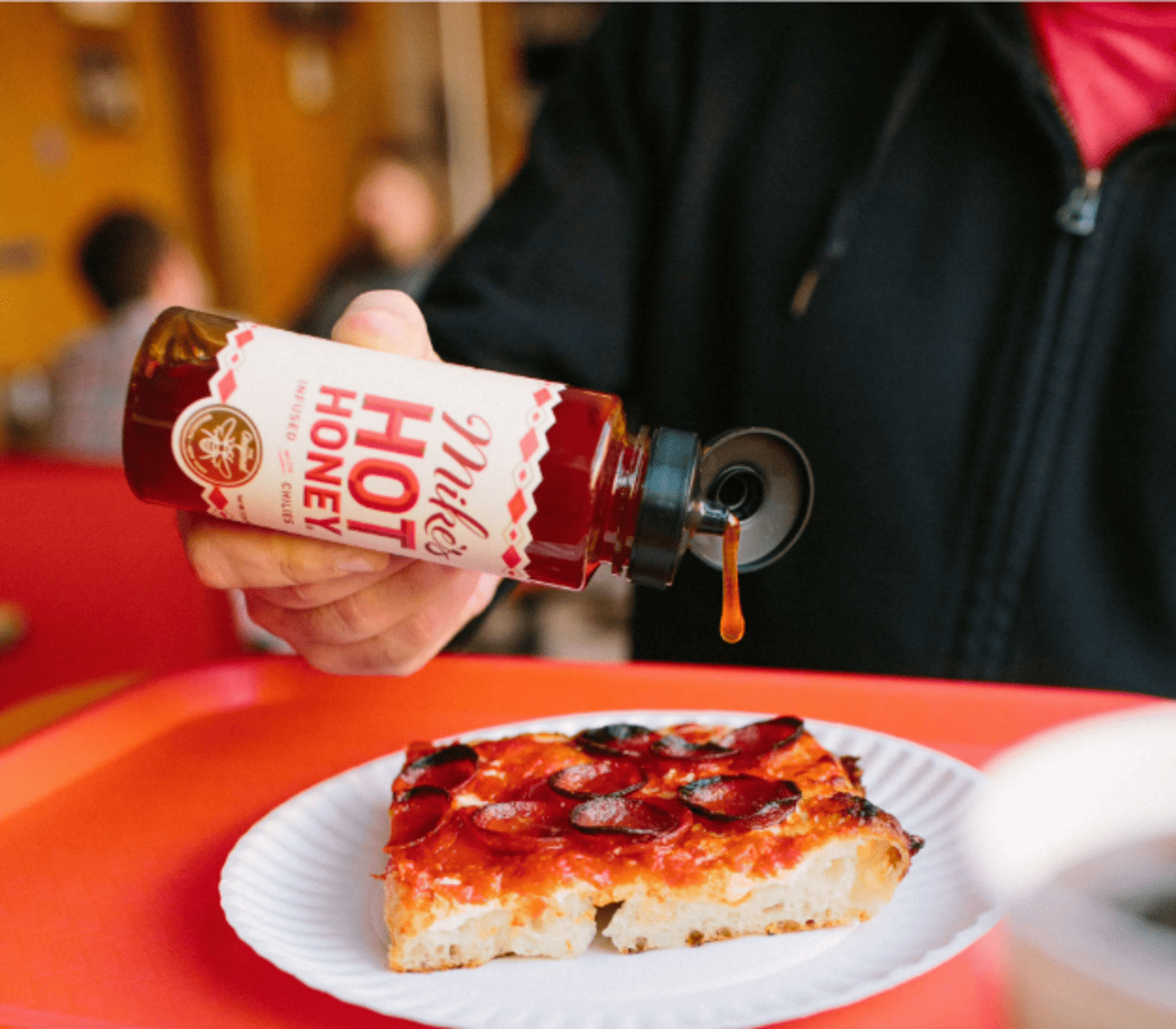
Mike’s Hot Honey has one of those origin stories that sounds almost too neat to be true, but it worked because it started with a simple, memorable use case: pizza. Founder Mike Kurtz developed the product after discovering chili-infused honey in Brazil, then began drizzling his version on pies at Brooklyn pizzeria Paulie Gee’s. That early restaurant association mattered. It gave the product not just a flavor identity, but a ritual—one that diners could see, taste, and immediately understand.
From there, the company expanded in a way that many specialty brands only talk about. According to the brand’s own materials, Mike’s Hot Honey is now sold in more than 30,000 stores and served in over 3,000 restaurants nationwide. Its 2025 national ad campaign leaned into the line that it is the “original and leading” hot honey brand, a claim that reflects how closely the category’s mainstream rise has become tied to the company’s name. In practical terms, Mike’s did not merely enter a growing market; it became shorthand for the market itself, much the way legacy brands sometimes become synonymous with a product type.
That kind of category ownership is rare in modern food. Grocery shelves are filled with trend-chasing launches that spike on social media and disappear six months later. Mike’s Hot Honey avoided that trap by building from foodservice outward. Consumers first encountered it in a craveable setting, then started looking for it at retail. By the time copycats arrived, Mike’s had already planted its flag in the minds of diners as the bottle behind the experience.
Timing helped, but structure mattered more. The product sat at the intersection of several durable consumer preferences at once: a fascination with bold flavor, a desire for low-effort meal upgrades, and the growing power of condiments as personality markers. Hot honey was not a full cuisine, a diet plan, or an intimidating pantry investment. It was a small-format indulgence with a large payoff. Mike’s understood that instinctively and sold not just a bottle, but a finishing move.
Why hot honey went from trend to mainstream habit

Hot honey’s rise might look sudden, but the groundwork had been building for years. Industry groups and menu analysts increasingly identified sweet-and-spicy flavor combinations as one of the defining ideas shaping restaurant innovation. The National Restaurant Association’s 2025 culinary forecast highlighted hot honey among the trends influencing menus, while Datassential described hot honey as more than a passing flavor fad. That distinction matters. Fads generate curiosity; lasting trends migrate across dayparts, formats, and price points.
The beauty of hot honey is that it solved multiple problems at once for both chefs and consumers. For restaurant operators, it provided an easy way to add contrast and perceived creativity without rebuilding an entire menu. A drizzle could make pizza feel elevated, give fried chicken a premium cue, or add novelty to breakfast sandwiches. For home cooks, it delivered restaurant-style flair with almost no skill barrier. It made leftovers more interesting and turned simple ingredients into something worth talking about.
Its visual appeal also played a role. Hot honey glistening over pepperoni pizza or crispy chicken photographs exceptionally well, which helped it flourish in the social media era. The format is legible in a single image: sticky, glossy, fiery, indulgent. Consumers did not need a long explanation. They could infer the experience immediately. That simplicity made it ideal for TikTok, Instagram, and short-form food media, where trend adoption often depends on visual immediacy as much as taste.
Then there is the flavor logic itself. Sweet heat is broadly appealing because it balances tension. Heat alone can narrow an audience; sweetness alone can feel flat. Together, they create contrast without becoming too polarizing. That balance gave hot honey an advantage over more niche sauces and seasonings. It felt adventurous enough to be exciting, yet familiar enough to be safe. Mike’s Hot Honey recognized that it was selling a bridge flavor—something mainstream America could adopt without feeling as if it had wandered too far from what it already loved.
The distribution play that turned one bottle into a movement

A food trend becomes a business only when distribution catches up with desire. This is where Mike’s Hot Honey made one of its smartest moves. Rather than staying confined to specialty retail, the company pushed into broad grocery distribution while maintaining strong ties to foodservice. That dual-channel model gave the brand visibility in both discovery environments: restaurants, where people first taste something new, and stores, where they can bring the experience home.
The company’s retail footprint is impressive on its own, but the real breakthrough came from ubiquity across formats. Mike’s showed up not just as a standalone bottle, but as a branded ingredient inside collaborations. That is a powerful shift. Once a flavor brand becomes something larger companies want to feature by name, it moves from condiment to cultural signal. In 2025 alone, the brand appeared in promotions and partnerships spanning Taco Bell, Blue Diamond, and other packaged and foodservice products built around the hot honey identity.
These partnerships did more than drive sales. They normalized the flavor profile for consumers who may never have wandered into a specialty grocery aisle. A limited-time fast-food sauce, a flavored almond, or a branded chip puts the concept in front of shoppers at mass scale. It teaches the market how versatile hot honey can be. It also reinforces the original brand as the authority, even when the end product is sold by someone else. That is one reason Mike’s has remained central to the conversation even as generic hot honey products proliferated.
There is a lesson here about modern brand building. In previous decades, food brands often grew by guarding a product and slowly widening access. Mike’s did something more contemporary: it let the flavor travel. By licensing, partnering, and showing up in adjacent categories, it made hot honey feel less like a niche pantry item and more like a flexible national taste preference. Once that happened, the trend stopped depending on any single menu item. It became part of the larger American flavor vocabulary.
What competitors missed about the trend Mike’s helped create

Once hot honey took off, imitators rushed in. Grocery shelves filled with private-label versions, legacy condiment makers launched their own takes, and restaurant chains developed in-house sweet-heat sauces. On the surface, this looked like a threat to Mike’s Hot Honey. In reality, it often validated the company’s original strategy. When everyone else starts copying the category leader, they are effectively admitting that the leader defined the opportunity.
Still, imitation alone does not guarantee staying power. Many competitor products treated hot honey as a novelty flavor extension rather than a fully realized brand platform. They applied it to one launch, one season, or one promotional menu window. Mike’s, by contrast, built an ecosystem around a specific eating behavior: drizzle it on pizza, chicken, biscuits, ice cream, charcuterie, roasted vegetables, and more. That versatility let the company outgrow the risk of being tied to one occasion or one audience.
The company also benefited from authenticity. In food, “first” is not always enough, but it matters when the founding story is easy to retell and closely connected to the product’s use. Mike’s origin in pizzerias gave the brand credibility that line extensions from giant manufacturers often lack. Consumers tend to reward brands that feel discovered rather than manufactured in a boardroom. That perception can be fragile, but Mike’s has preserved it surprisingly well even as it scaled nationally.
Industry data suggests the broader environment continues to favor this kind of insurgent brand. Bain & Company research highlighted challenger brands as major contributors to food-sector growth in 2025, especially those built around clean labels or on-trend ingredients. Mike’s sits neatly in that insurgent template: focused proposition, strong identity, high repeat use, and a flavor profile that larger companies can plug into their own systems. It is not just a bottle on the shelf. It is a brand that taught larger food companies what consumers wanted before many of them fully understood it themselves.
The bigger lesson for food companies chasing the next obsession

Mike’s Hot Honey offers a clear blueprint for how niche food trends become national habits. First, the product must solve a real consumer desire, not just a marketing one. Hot honey answered the demand for excitement, convenience, and customization in one move. Second, it needs a highly intuitive use case. Pizza was that gateway. Third, the company has to scale distribution without diluting its story. Mike’s managed to become widely available while still feeling rooted in a specific culinary origin.
That combination is harder to replicate than it looks. Many food brands chase trends backward, starting with social buzz and then hunting for substance. Mike’s worked in the opposite direction. It began with a genuinely tasty application, built word-of-mouth in restaurants, expanded into retail, and only later fully embraced national-scale marketing. By the time the broader market called hot honey a craze, the company had already spent years making the product feel indispensable.
There is also a cautionary note for the industry. Once a flavor trend becomes ubiquitous, overexposure can dull its edge. Hot honey now faces the same test every breakout condiment eventually faces: can it remain useful after it stops feeling new? The early signs are encouraging. Analysts continue to treat it as a durable menu and retail flavor, and brands keep finding fresh contexts for it. That suggests hot honey is evolving from obsession to staple, which is the rarest transition of all.
In the end, Mike’s Hot Honey did something most food startups never accomplish. It did not just launch a successful product. It changed how Americans season their food. That is the difference between riding a trend and creating a category. Mike’s helped turn sweet heat from a niche flourish into a nationwide habit, and in doing so, it wrote one of the clearest recent playbooks for modern food-brand success.