Some snacks are designed to disappear into lunchboxes. Others are engineered to start arguments. This year’s weirdest launches belong firmly in the second group.
From beer-inspired crisps to cola-cookie mashups and dill-pickle heat bombs, the oddest products on shelves are not accidents. They are highly calculated responses to how Americans now shop, scroll, snack and show off what they found.
Weird no longer means random

At first glance, this year’s strangest snack launches seem to share only one trait: a willingness to get weird in public. PepsiCo’s Flavor Swap line put familiar seasonings onto unfamiliar bases, including Doritos Cool Ranch on Ruffles and other brand crossovers that turned category boundaries into a marketing game. Mars and Miller Lite doubled down on that logic with new Pringles flavors such as Beer Cheese Burger and Beer-Braised Steak, a follow-up to an earlier collaboration that already tested how far consumers would go for novelty.
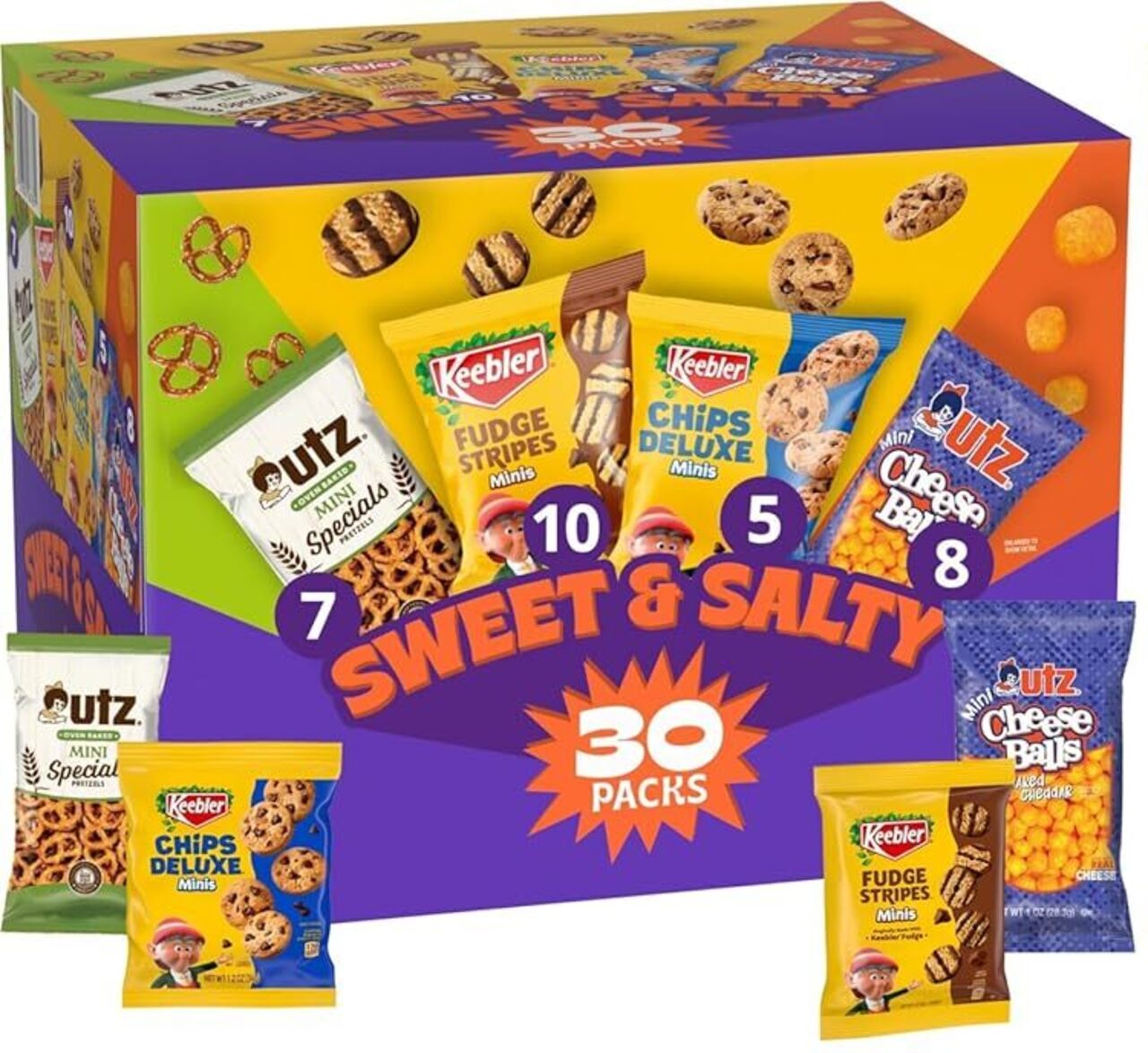
On the candy and cookie side, Ferrero used the 2026 Sweets & Snacks Expo to unveil mashups that leaned just as hard into surprise, including a Keebler Chips Deluxe CRUNCH Cookie that combines a chocolate chip cookie with CRUNCH chocolate and crisped rice. Mars also showcased M&M’S POP’d Caramel, a freeze-dried take on a familiar candy that changes the texture more than the core flavor. Bazooka Brands introduced Go Wandr Mini Mochi Gummy, explicitly pitching a hybrid that merges classic American gummy chew with a mochi-inspired bounce.
The common thread is not chaos. It is controlled disorientation. Brands are pairing something consumers already know with something they do not expect, so the product feels risky enough to earn attention but recognizable enough to earn a trial purchase. Circana has described 2026 snacking as an era shaped by function, fuel and fun, while also noting that successful brands balance bold, globally inspired flavors with familiarity. That balance is exactly what these launches are trying to achieve.
In other words, weirdness has become a design principle rather than a side effect. A truly alien snack is still hard to sell. But a snack that feels like an inside joke, a remix or a dare built from familiar brand assets has a much better chance. The industry has learned that consumers often say they want surprise, but what they usually reward is surprise with guardrails.
The real product is the reaction

One reason these launches keep multiplying is that the snack itself is no longer the whole product. The reveal, the taste test, the group text and the social video are all part of the commercial package. PepsiCo’s Flavor Swap release showed how far that logic has gone: the company did not simply ship bags to stores. It tied the rollout to digital commerce on TikTok Shop before a broader retail launch, effectively treating conversation and shopping as part of the same event.
That approach helps explain why outrageous combinations keep appearing in limited runs. A strange snack earns what marketers crave most: voluntary distribution by consumers. People post the bag, rank the flavor, bring it to a party, and dare someone else to try it. Even the products that divide opinion can succeed if they generate enough chatter. In this model, “Would you buy it again?” matters, but “Would you talk about it?” matters first.
The strategy is not limited to chips. The 2024 Coca-Cola and Oreo collaboration, which paired a Coke-inspired Oreo cookie with an Oreo-inspired Coca-Cola Zero Sugar release, offered a clean template for the category. The point was not merely flavor innovation. It was to turn two globally recognized brands into a shared pop-culture object that consumers could collect, discuss and compare. The weirdness was legible in one second, which is crucial in crowded feeds and crowded aisles alike.
This helps explain why the industry’s oddest launches often arrive with dramatic packaging, celebrity energy or crossover branding. They are built for instant comprehension. You do not need a tasting note to understand what Flamin’ Hot Dill Pickle is trying to do, and you do not need a category map to grasp a beer-inspired potato crisp. The snack has to scan quickly because modern attention scans quickly.
What these products have in common, then, is not just unusual flavor. It is performative value. They are edible media. Their job is to be consumed, but also displayed, debated and circulated. In a market where shelf space is contested and online attention is fleeting, a snack that can become content has a structural advantage over one that is merely competent.
Familiar brands are taking the biggest risks
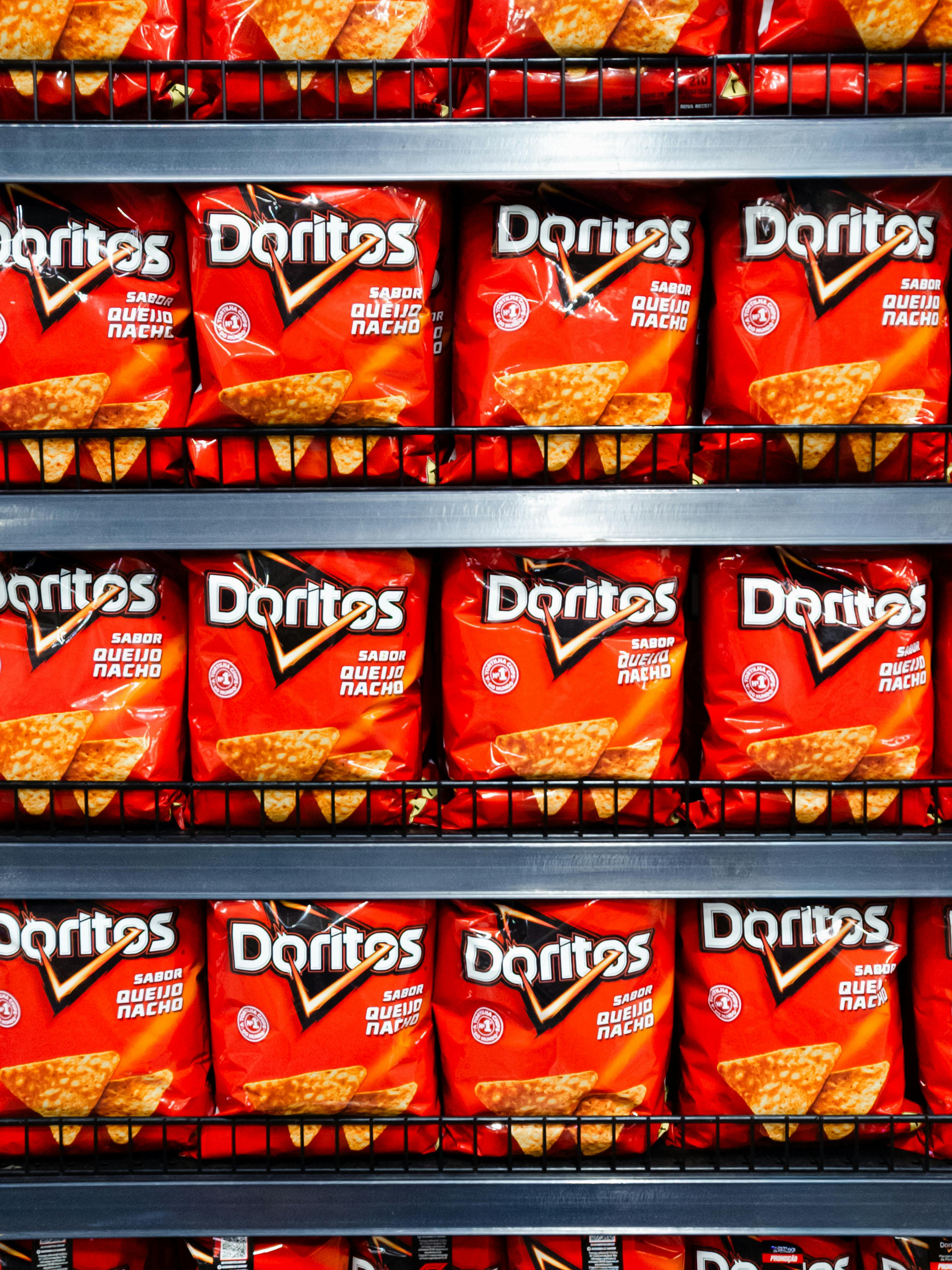
Another striking pattern is who gets to be weird. In most cases, it is not fringe startups operating from the edges of the market. It is giant, familiar companies using household names as launchpads for experimentation. PepsiCo is doing it with Lay’s, Doritos, Ruffles and Cheetos. Mars is doing it with Pringles, M&M’S and Cheez-It. Ferrero is doing it with Keebler, Wonka and Royal Dansk. The scale players are acting like insurgents because they know their brands can absorb the shock.
That matters because recognizable branding lowers the consumer’s sense of risk. A shopper may hesitate before buying an unknown brand’s pickle-and-chili puff, but may toss a Cheetos version into the cart out of trust, curiosity or habit. The brand name becomes an insurance policy. It tells the consumer that even if the concept is odd, the execution will likely be competent enough to justify the experiment.
Industry researchers have been documenting the consumer openness that makes this viable. According to reporting on Innova’s 2025 Trends Survey, more than half of consumers say they are open to trying flavor fusions and combinations. Mintel analysis cited in trade coverage has also pointed to growing willingness among consumers to vary their snack flavors rather than buy the same ones repeatedly. That does not mean shoppers want endless unpredictability. It means the barrier to trial has fallen, especially when the launch comes from a trusted name.
The brand giants also have the operational muscle to make weirdness feel polished. They can support limited editions with retailer placements, national promotions, influencer seeding and cross-channel advertising. They can test fast, scale fast and pull back fast. A bizarre idea that might bankrupt a small company can become a low-risk seasonal activation for a multinational manufacturer.
This is why so many of the year’s strangest launches feel oddly confident. They are not desperate swings. They are portfolio moves. The same company can sell plain salted staples by the truckload while using one flashy limited edition to refresh the whole brand’s image. Weirdness, in that sense, functions as halo marketing. Even consumers who never buy the stunt flavor still absorb the message that the brand feels current, playful and culturally awake.
Texture is now as important as flavor

For years, conversations about strange snacks focused mostly on flavor: hotter, tangier, sweeter, smokier, more globally inspired. That is still true, but this year’s launches make clear that texture has become just as central to the innovation story. The weirdest products are not only blending tastes. They are manipulating crunch, chew, airiness and mouthfeel to make the experience feel new even when the base ingredients are familiar.
Mars made that explicit with M&M’S POP’d Caramel, a freeze-dried product that turns a known candy into something light, crisp and dramatically different in bite. Bazooka’s Mini Mochi Gummy is another clear example, promising a hybrid texture that is neither classic gummy nor actual mochi, but a snackable approximation designed for curiosity. Ferrero’s CRUNCH-coated cookie works on the same principle: layering textural contrast so the product feels more surprising than a standard flavor extension would.
Even savory products are being framed this way. The comeback and expansion of Cheetos Flamin’ Hot Dill Pickle into Puffs, for instance, is not just about pickle plus heat. It is about what that flavor does on a puffed, airy structure versus a denser crunchy format. PepsiCo also highlighted that the product is its first 2026 Flamin’ Hot innovation without artificial colors or flavors, signaling that formulation and ingredient messaging are increasingly part of how texture-led novelties are sold.
Circana has noted that consumers want snacks that deliver more than one job at once, whether that means satisfaction, excitement, convenience or alignment with health goals. Texture helps brands deliver that layered payoff. It can imply indulgence, freshness, premium quality or sheer entertainment. A crisp shell with a soft center, a freeze-dried crunch, or a gummy with an unusual bounce gives a product a sensory hook that travels well by word of mouth. People may struggle to describe a nuanced seasoning blend, but they can easily say, “You have to try how weird this feels.”
This is one reason so many new snacks seem built around collision. Crunch meets chew. Heat meets tang. Candy meets cookie. Familiar formats get altered just enough to feel discussion-worthy. In a mature market, texture is one of the fastest ways to create novelty without forcing consumers to learn an entirely new food. That makes it a powerful tool for companies trying to keep surprise commercially safe.
Consumers want adventure, but only on manageable terms
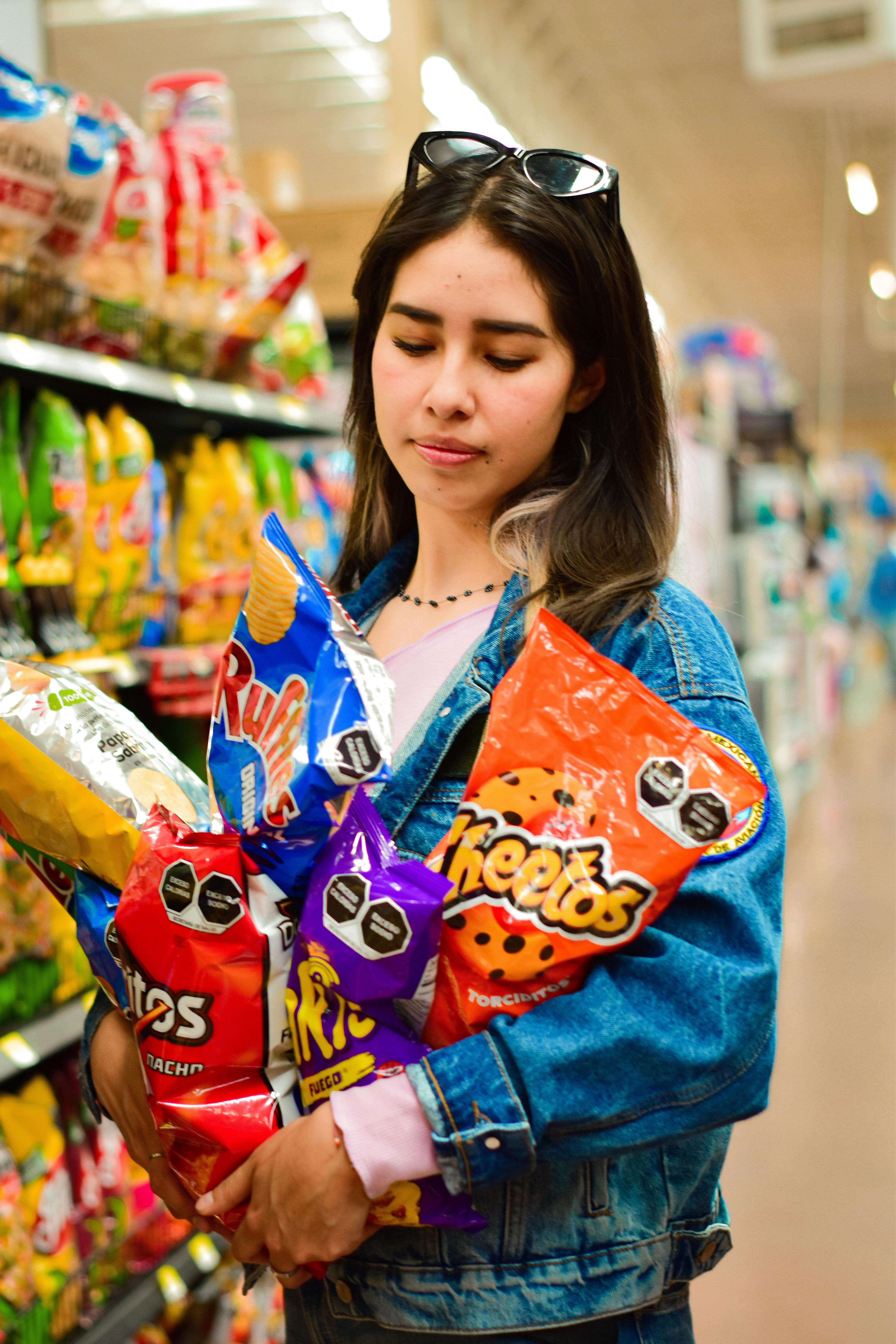
The deepest commonality among this year’s strangest snack launches is that they cater to a very specific type of consumer appetite: controlled adventure. People want to feel that they are discovering something new, but they also want the stakes to stay low. A limited-edition bag of chips or a novelty cookie offers exactly that. It is a cheap, low-commitment way to experience surprise, signal taste and participate in culture without much downside if the result is disappointing.
That behavior makes particular sense in a cautious economy. Circana’s 2026 snacking analysis argues that consumers are becoming more intentional, balancing indulgence with value, convenience and wellness cues. Hershey, presenting at the 2026 Sweets & Snacks Expo, pointed to research showing that 89% of consumers seek added benefits in snacks, foods and drinks. Meanwhile, trade reporting and company announcements show brands trying to answer that tension from multiple directions at once: bolder flavors, cleaner labels, gluten-free line extensions, portable formats and ingredient stories that feel less artificial.
This is why even the weirdest launches often carry a reassuring subtext. They may look outrageous, but many are anchored in established cravings such as pickle, barbecue, cola, burger, cheddar, fruit or heat. Others lean on familiar brands or familiar occasions, like grilling season, movie tie-ins or nostalgia. The product says, in effect, “This is wild, but not too wild.” That calibration is the secret.
There is also a broader cultural message embedded in these launches. Snacking has become less about hunger alone and more about mood management, self-expression and micro-entertainment. According to snack industry and retail analysts, consumers are using snacks for fun as much as fuel. That gives brands permission to be theatrical, but only if they remain readable and accessible. The winners are not the strangest possible ideas. They are the ideas that translate instantly and deliver a fast emotional payoff.
So what do this year’s weirdest snack launches have in common? They are not merely bizarre. They are strategically bizarre. They mix novelty with recognition, flavor with texture, retail with content and experimentation with safety. In the modern snack aisle, the products that look most unhinged are often the most carefully engineered of all.