
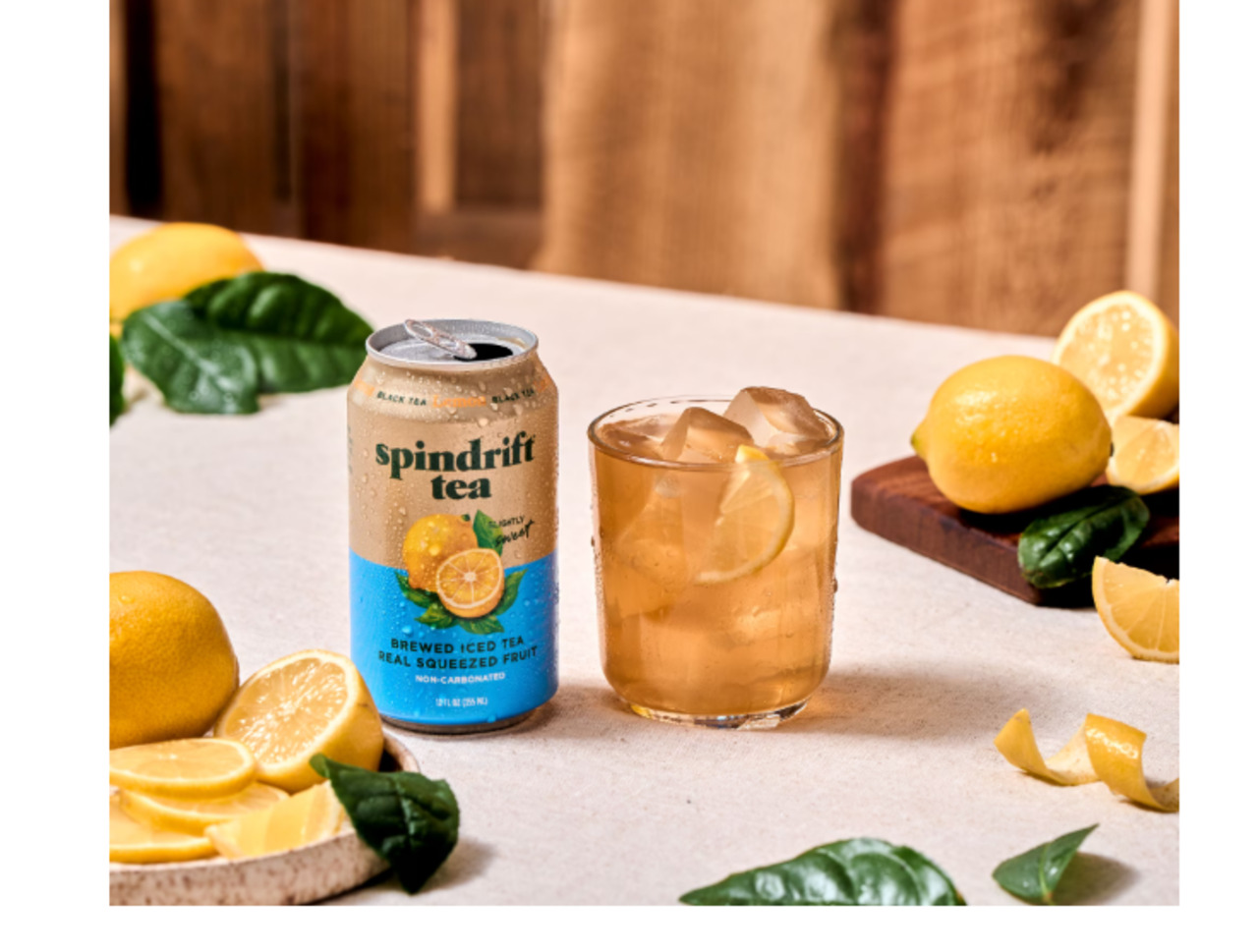
The year’s most telling food launch did not debut behind a host stand.
It arrived in cans, in grocery coolers, and in the increasingly crowded space between wellness and indulgence.
That is exactly why it matters.
Why a packaged tea launch says more than a restaurant opening

For years, the food world has treated restaurants as the primary stage for innovation. Fine-dining tasting menus, fast-casual chains, and celebrity-backed concepts have dominated the conversation because they are visually dramatic and culturally legible. But in 2026, the more consequential innovation is happening in packaged food and beverage, where companies are responding to the daily habits of millions rather than the occasional night out of a few. The most interesting launch of the year, in that sense, is Spindrift Tea, introduced in March as a line of non-carbonated iced teas made with real brewed tea and real squeezed fruit.
What makes this launch stand out is not novelty alone. Plenty of brands have released canned teas, lower-sugar drinks, and better-for-you line extensions. Spindrift’s move is more revealing because it lands at the intersection of several powerful consumer currents at once: distrust of ultra-processed formulations, demand for recognizable ingredients, interest in tea as a wellness-adjacent category, and a broader shift toward drinks that feel less engineered. The company framed the product as an extension of its identity, emphasizing that the launch continues its commitment to avoiding what it called ultra-processed shortcuts, while also noting that its full portfolio has been verified under the Non-Ultraprocessed Food Standard.
That language matters because it reflects a real change in how food is marketed and judged. Consumers are no longer evaluating a beverage only on sweetness, price, or convenience. They are evaluating whether it feels credible. The package has become a proxy for trust, and trust now depends on ingredient transparency as much as branding. A restaurant can promise seasonality and craftsmanship tableside, but a mass-market drink has to communicate those qualities instantly and repeatedly in a retail environment where choices are made in seconds.
Spindrift Tea also arrives at a moment when beverages are doing more of the cultural work once done by restaurants. According to Circana, total beverage “sips” reached $490 billion in sales in 2025, and beverages account for 6 of the top 20 growth categories in retail. That does not mean restaurants have lost relevance. It means the center of gravity in food innovation is shifting toward products that can travel through supermarkets, club stores, e-commerce, offices, gym bags, and lunchboxes without losing the story they are trying to tell.
What makes Spindrift Tea more compelling than a typical new product
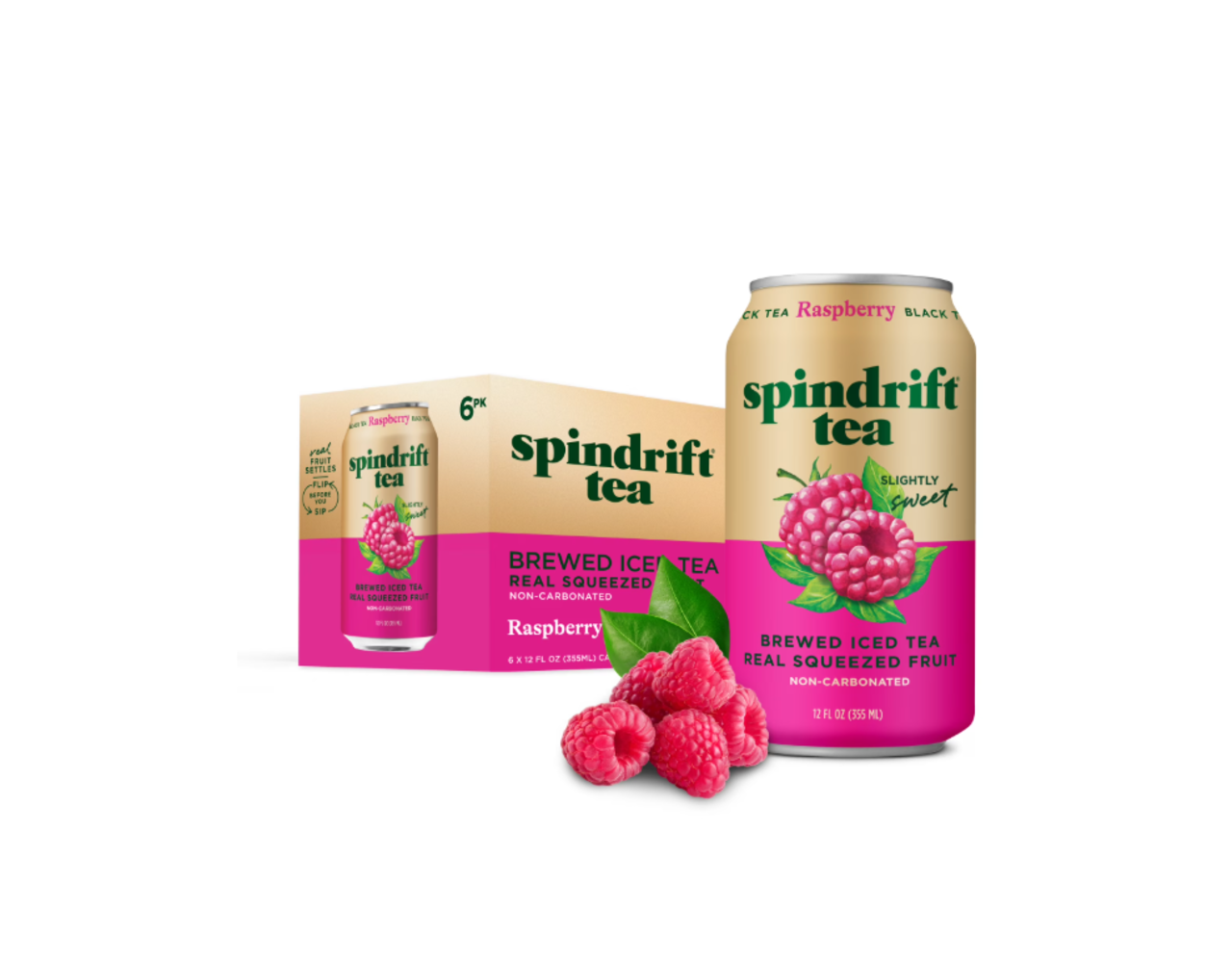
A lot of food launches are incremental, and many are intentionally so. A new flavor, a seasonal twist, or a packaging refresh can drive sales without changing very much. Spindrift Tea feels different because it represents category entry with a thesis. The company did not simply add another sparkling flavor; it moved into non-carbonated iced tea with a product it says took three years to develop, using custom-brewed black and green tea blends paired with squeezed fruit. That level of development signals ambition, not just opportunism.
The product is compelling partly because of what it is not. It is not a hard tea chasing the alcohol boom. It is not an energy drink dressed up as tea. It is not a nostalgic Southern sweet tea reboot leaning on sugar. Instead, it inserts itself into the everyday tea occasion with a cleaner-label proposition that feels calibrated for the current consumer mood. Mintel has highlighted tea’s future opportunity in its natural appeal, its alignment with hydration trends, and the role of matcha and tea culture in broader beverage growth. Spindrift is not matcha, but it is clearly benefiting from the same reappraisal of tea as a modern, versatile platform.
The timing is also sharp. The ready-to-drink tea shelf has been crowded for years, but crowding is not the same as freshness. Legacy brands often compete on familiarity and price, while newer entrants push zero sugar, adaptogens, or performance claims. Spindrift’s strategy is to split the difference: familiar enough to understand immediately, distinctive enough to justify trial. For shoppers tired of ingredient decks that read like chemistry sets, “real brewed tea and real squeezed fruit” is not just descriptive copy. It is positioning.
There is also a lesson here about brand permission. Spindrift had already trained consumers to associate its name with real fruit and minimalism in sparkling water. That trust created a bridge into tea. In a market where many brands extend too far and lose coherence, this launch feels additive. It broadens the company’s reach while staying legible. In food and beverage, that is harder than it looks. The most successful launches are rarely the loudest; they are the ones that make consumers say, almost instantly, of course this brand would do that.
The bigger consumer forces behind this year’s most interesting launch

Spindrift Tea matters because it crystallizes several trends that have been moving from niche conversation to mainstream buying behavior. The first is the clean-label reset. Consumers have long said they want simpler ingredients, but in the past year the conversation around ultra-processed foods has become more visible and more commercial. The rollout of third-party Non-UPF verification in 2026, with brands including Spindrift among the first verified participants, shows that what began as an academic and health-media discussion is now shaping real product differentiation.
The second force is the collapse of old category boundaries. Consumers increasingly want one beverage to do several jobs at once: refresh, lightly energize, signal wellness, and deliver flavor without guilt. That is why so much innovation has clustered around functional hydration, low-sugar sodas, protein drinks, and tea. PepsiCo’s Gatorade Lower Sugar launch this year, for instance, leaned heavily on having no artificial flavors, sweeteners, or colors, while still delivering a recognizable sports-drink experience. Propel’s Clear Protein introduced a hydration-and-protein mashup. These launches are different from Spindrift Tea, but they reveal the same market truth: beverages have become problem-solvers.
The third force is affordability with aspiration. A restaurant meal remains an event, but it is also expensive, time-bound, and inaccessible to many households on a regular basis. A premium canned tea, by contrast, offers a manageable indulgence. It allows consumers to buy into a lifestyle, a set of values, and a flavor philosophy for a few dollars rather than a three-figure dinner. In a period when people are still spending carefully, that matters. Packaged food innovation can now deliver the emotional reward of discovery without demanding the logistical or financial commitment of dining out.
This is why the most interesting food launch this year is not necessarily the most technologically advanced or the most luxurious. It is the one that best explains how people are actually eating and drinking now. They want products that fit into ordinary life, but still feel upgraded. They want convenience without surrendering discernment. And they want the language of food quality, once monopolized by restaurants, to show up in grocery aisles in a way that feels believable rather than performative.
Why restaurants are no longer the only place where food culture is made

Restaurants still matter enormously as incubators of taste. They test ingredients, revive regional traditions, and create the aesthetics that ripple into retail months later. But they are no longer the only institutions shaping food culture at scale, and in some ways they are no longer the fastest. Consumer packaged goods companies can identify a trend, source ingredients, package a story, and place it nationally with a speed and reach that most restaurants cannot match. When a beverage launch lands in major retailers in March, it can influence more palates in a season than even a celebrated restaurant can reach in years.
That shift has changed the meaning of innovation. In restaurants, innovation often means surprise: a new format, a dramatic plating move, an unexpected ingredient pairing. In retail, innovation means repeatability. A product has to survive manufacturing, shipping, refrigeration, pricing pressure, and competition on shelf while still delivering enough distinction to win repeat purchase. That can sound less glamorous, but it is arguably more difficult. The practical constraints are tougher, and success depends on persuading not a critic or a trendsetter, but an exhausted shopper making a fast decision on a Tuesday.
Spindrift Tea is a useful example because it borrows some of the values restaurants have long claimed as their own. It emphasizes real ingredients, careful sourcing, and a sense of culinary restraint. According to reporting in the Boston Globe and BeverageDaily, the product involved multi-year development and custom tea blends sourced from several producing countries. That is the kind of supply-chain storytelling once reserved for third-wave coffee shops and chef-driven menus. Now it is part of the retail script.
The result is a blurring of cultural authority. People still discover what is exciting through chefs, restaurants, and travel, but they increasingly adopt those ideas through packaged products they can live with every day. The grocery store has become a more important theater of food identity than many industry insiders are willing to admit. When that happens, the launches worth watching are not simply the ones with the best flavors. They are the ones that reveal how retail is absorbing, translating, and democratizing the values that used to define restaurant innovation.
What this launch tells us about where food is headed next
The broader significance of Spindrift Tea is that it points toward a future in which successful food launches will need to be simultaneously simple, defensible, and emotionally resonant. “Simple” no longer means basic or boring. It means intelligible at a glance. “Defensible” means the product has a reason to exist beyond marketing, whether that is ingredients, sourcing, process, or a credible response to consumer demand. And “emotionally resonant” means it fits into a personal narrative about health, taste, moderation, and self-respect. That is a much higher bar than simply being new.
We should expect more launches built on this model. Tea will likely remain a fertile arena because it can stretch in many directions: caffeinated but not too intense, flavorful without demanding heavy sweetness, familiar yet open to botanical and fruit variation. Research from Mintel suggests tea’s growth opportunity lies precisely in this flexibility, especially as hydration and naturalness become more central to consumer choice. Brands that can present tea as both comforting and contemporary will have room to grow.
At the same time, the launch underscores a warning for the broader industry. Consumers are getting better at detecting when “clean” is only cosmetic. They can tell the difference between a genuinely coherent product and a cynical repackaging of old formulas in earthy colors and minimalist fonts. The winners will be brands that can back up their claims with formulation, sourcing, and consistency. The fact that Spindrift tied its launch to a wider Non-UPF positioning gives it more structural credibility than a vague promise of being wholesome.
That is why this year’s most interesting food launch is not coming from a restaurant. It is coming from the retail cold case, where the stakes are increasingly higher and the audience is vastly larger. If you want to understand where food culture is moving, look beyond the reservation list. Look at the products people can actually buy every week, because that is where the next phase of influence is being built.