
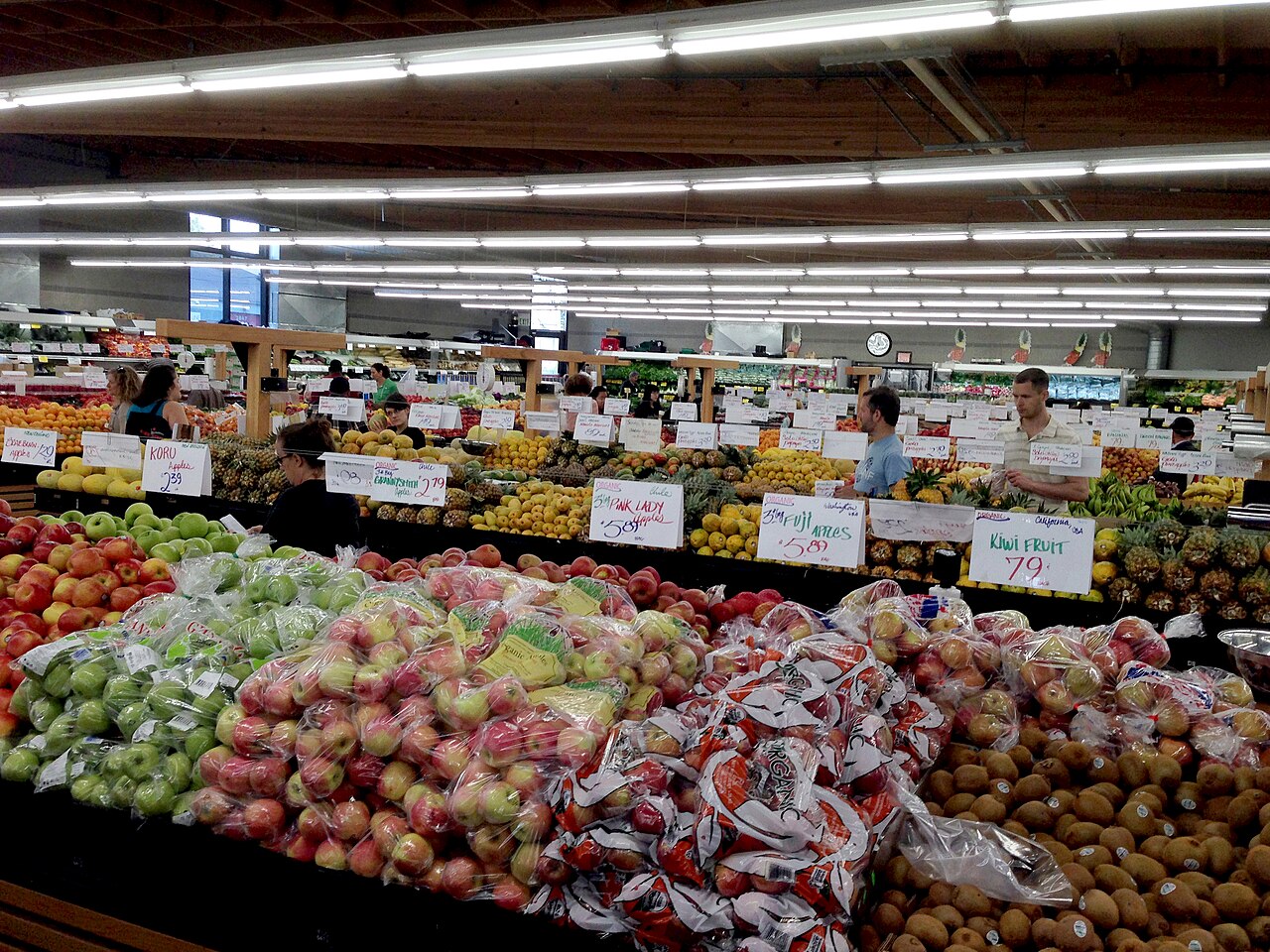
With grocery shoppers across the U.S. confronting higher food prices and a growing split between discount staples and premium food retail, specialty supermarkets have become a larger part of the industry conversation. In the Bay Area, Berkeley Bowl remains a clear example of that trend, holding onto a devoted following in Berkeley even as chains such as Trader Joe’s and Erewhon expand in California.
Berkeley Bowl’s staying power is tied to a specific scale and identity
Berkeley Bowl’s continued appeal is rooted in a business that has stayed local while growing enough to serve a wide customer base. The company says it was founded in 1977, and its second store, Berkeley Bowl West at 920 Heinz Avenue, opened in June 2009, giving the grocer two Berkeley locations rather than a statewide footprint. That structure has helped preserve the store’s identity as an independent market even as it operates at a scale larger than many neighborhood grocers.
The July 10, 2026 profile by the USA Today Network’s California reporting team described Berkeley Bowl as a Bay Area favorite that still occupies “a special place” for many California shoppers. That report pointed to a long-running reputation for bulk goods, grains, dried beans and preserved fruit, as well as a produce department that functions as a destination in its own right. Berkeley Bowl’s official site also highlights hot bar service and prepared foods, showing how the store has expanded beyond a produce-and-bulk model without abandoning it.
That combination matters because it gives Berkeley Bowl a clearer identity than many conventional supermarkets. Rather than competing primarily on national brands, the store is known for assortment, fresh departments and in-store food options. In practical terms, that means shoppers are not only buying staples there; they are also using the store as a prepared-food stop and a specialty-food destination.
The cult following is especially visible in Berkeley and the broader East Bay
The local effect is concentrated and measurable. Berkeley Bowl operates at 2020 Oregon Street and Berkeley Bowl West at 920 Heinz Avenue, both in Berkeley, according to the company and city documents. That gives the East Bay a grocery brand with deep local recognition but limited geographic spread, which helps explain why the loyalty is so place-specific.
The July 2026 California report framed Berkeley Bowl as part of Berkeley’s own culture, not simply one more supermarket option. It cited the store’s long association with college students, longtime residents and food-focused shoppers who cross the city to shop there. That history matters in Berkeley, where grocery shopping often overlaps with preferences for natural ingredients, bulk purchasing and diverse international foods.
What is not publicly confirmed is any broader expansion plan beyond Berkeley. The company’s public materials identify the two existing Berkeley stores, online ordering, hot bar offerings and Bay Area pop-ups, but they do not announce new Bay Area cities or a wider California rollout. That limited footprint appears to reinforce the store’s following, because customers are returning to a business that still feels geographically tied to one city instead of a chain replicated across the region.
Its durability reflects wider grocery trends, but also a model chains have not matched
The broader context helps explain why Berkeley Bowl has remained relevant. The July 10 report said luxury grocery retail is growing as affluent shoppers and younger consumers seek premium foods and more curated shopping experiences, citing the Food Institute. The same report said demand for foods with fewer additives has also gained traction in California as shoppers look more closely at ingredient transparency.
Berkeley Bowl fits into that environment, but not in exactly the same way as a high-end luxury chain. The report contrasted California’s premium grocery landscape with the store’s more relaxed identity and long-established reputation for natural-leaning, diverse and often value-conscious shopping. A separate FMI, The Food Industry Association, report cited in the source material also pointed to increasing consumer interest in premade foods, a trend that aligns with Berkeley Bowl’s hot bar, sushi, salads and sandwiches.
For customers, that means the store’s popularity is not based on novelty alone. Berkeley Bowl has continued to offer a mix of fresh produce, bulk staples and prepared foods that matches several current grocery trends at once. Its website also shows ongoing guest-chef and pop-up programming at Berkeley Bowl West, indicating that the company is continuing to build on the in-store experience that has helped keep its following intact.