
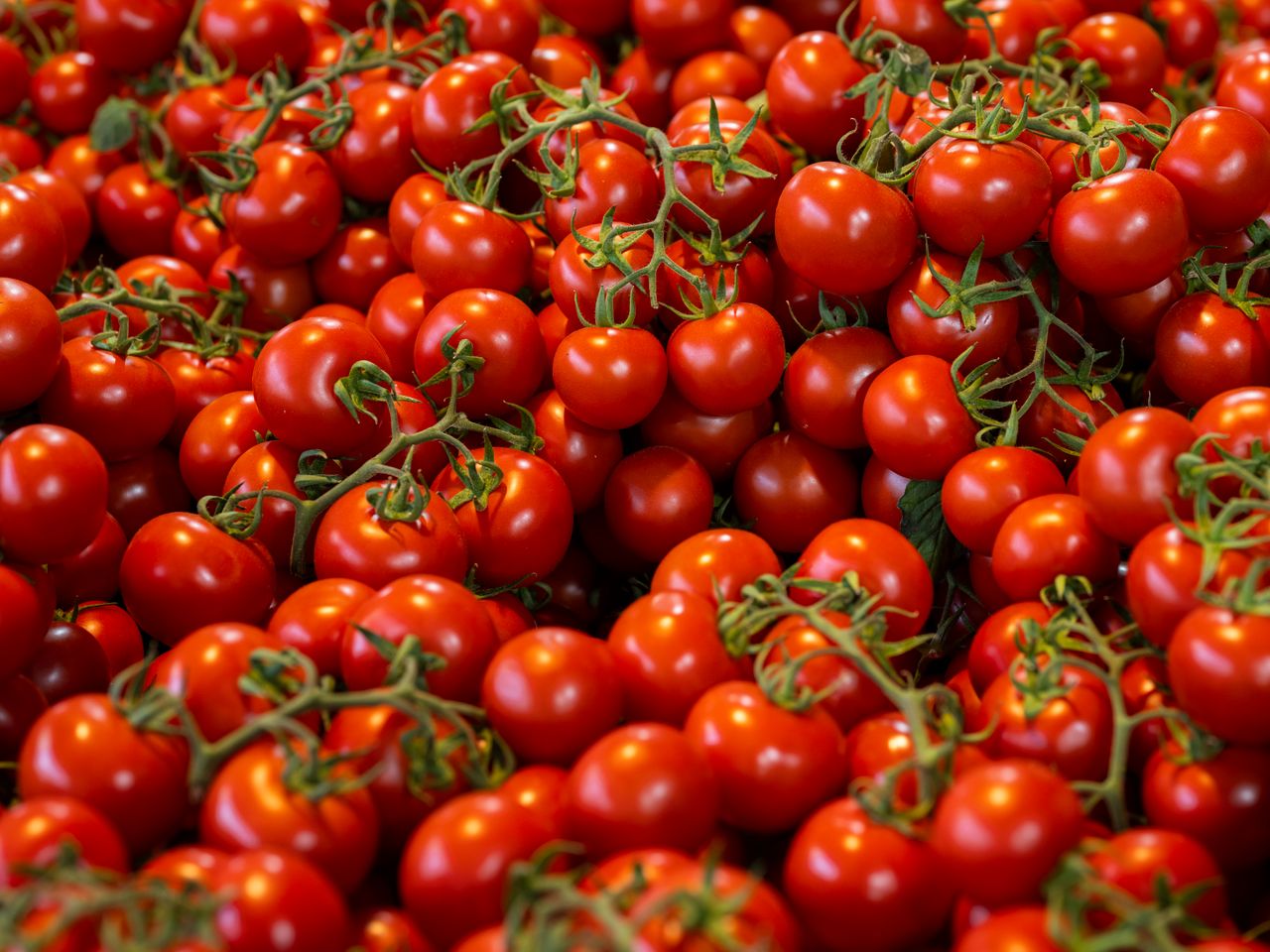
Tomatoes can go from firm and promising to mealy and moldy faster than most shoppers expect. The good news is that freshness depends less on luck than on how you handle them once they come home.
Start by sorting tomatoes by ripeness
The first step is to take tomatoes out of any tight plastic produce bag as soon as you get home. Trapped moisture speeds spoilage, especially around the stem scar and any tiny cracks in the skin. Give each tomato a quick look and separate firm, underripe fruit from fully ripe ones so you can store each group differently.
Underripe tomatoes do best at room temperature, not in the refrigerator. UC Davis postharvest guidance notes that tomatoes are chilling-sensitive, and extended exposure below 50°F can lead to flavor loss, poor color development, pitting, and faster decay. That is why a hard pink tomato often finishes better on the counter than in a cold fridge.
Set them in a single layer, stem side down if possible, on a plate, tray, or breathable basket out of direct sun. A room around 65-70°F is a good target for ripening, according to UC Davis. If you stack tomatoes in a deep bowl, pressure points can bruise them and create soft spots that shorten shelf life.
If you want to speed ripening, place firmer tomatoes near a banana or in a loosely closed paper bag for a day or two. Tomatoes naturally respond to ethylene, the ripening gas produced by many fruits. Check daily, because once they hit peak ripeness, the strategy should change.
Know when refrigeration helps and when it hurts
The usual rule that “tomatoes never belong in the fridge” is too absolute. For underripe tomatoes, cold storage is a bad trade because it can dull flavor and disrupt normal ripening. But once a tomato is fully ripe and you are not ready to eat it, short-term refrigeration can buy you a few extra days.
Consumer Reports advises leaving underripe tomatoes at room temperature, then refrigerating ripe tomatoes briefly to slow further softening. That approach fits what many cooks see at home: a perfectly ripe tomato can go from ideal to collapsing in 24-48 hours on a warm counter. Using the refrigerator at that point is a preservation move, not a ripening strategy.
Keep refrigerated tomatoes in a less-cold area if possible, and avoid shoving them against the back wall where temperatures may dip lower. USDA food safety guidance says refrigerators should run at 40°F or below, though produce quality can vary within the appliance depending on location. A shallow container lined with a paper towel can help absorb condensation.
Most important, bring chilled ripe tomatoes back to room temperature before serving. Even a short rest on the counter improves aroma and eating quality. If the skin looks slightly darker after refrigeration, that does not necessarily mean the inside is ruined; texture and flavor are what matter most.
Handle cut tomatoes carefully to avoid waste
Once a tomato is sliced, food safety becomes part of the freshness equation. USDA-backed consumer guidance on seed-bearing vegetables says fresh-cut tomatoes should be refrigerated, and leftovers left at room temperature for more than two hours should be discarded. That matters in real kitchens, where half a tomato is often forgotten beside a sandwich board or salad bowl.
Wrap cut tomatoes tightly or place them in a sealed container with the cut side protected. Excess air dries the flesh, while excess moisture encourages slime and mold. If you have only used half, press plastic wrap directly against the cut face or store it cut side down in a clean container for short-term use.
Use the most delicate tomatoes first. Cherry and grape tomatoes usually last longer because their skins are firmer, while large heirloom-style tomatoes tend to split, bruise, and soften faster. Any tomato that is leaking, sour-smelling, moldy, or badly collapsed should be thrown out rather than trimmed aggressively.
A practical household routine works best: ripen on the counter, refrigerate only when fully ripe or already cut, and check daily for soft spots. That simple sequence protects both flavor and shelf life. For store-bought tomatoes, freshness is really about timing the move from counter to fridge instead of treating every tomato the same way.