
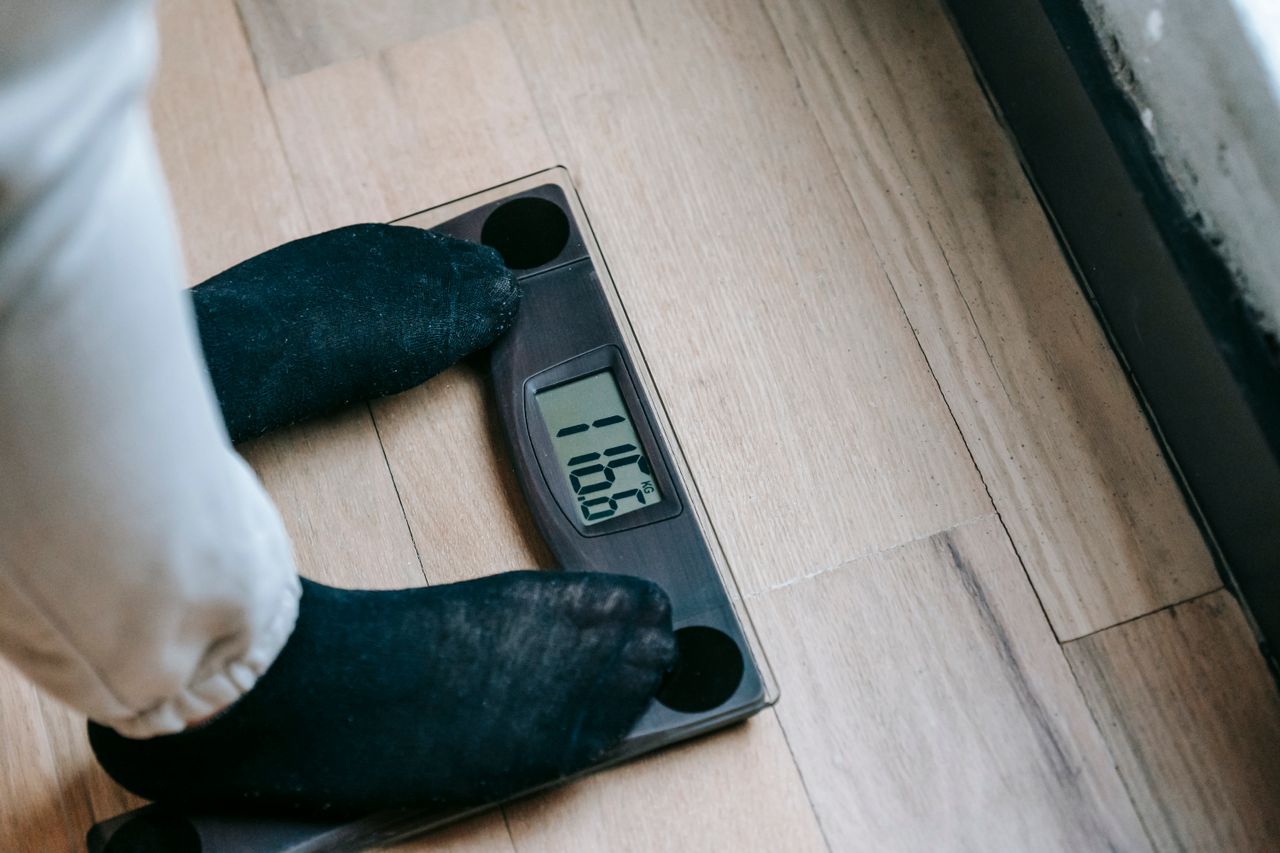
If you have ever wondered how your weight compares with the rest of the country, the latest federal data offers a measured answer. The Centers for Disease Control and Prevention, through its National Center for Health Statistics, has published the most recent national body-measurement snapshot for U.S. adults. That survey shows the average adult man weighs 199.0 pounds, while the average adult woman weighs 171.8 pounds.
CDC releases the latest measured national averages
The figures come from the National Health and Nutrition Examination Survey, or NHANES, which measures people in person rather than relying on self-reported answers. According to the CDC’s FastStats page and the NCHS anthropometric reference tables released in June 2025, the averages apply to adults age 20 and older during the August 2021 through August 2023 survey cycle. The same data shows the average adult man was 68.9 inches tall, or just under 5 feet 9 inches, and the average adult woman was 63.5 inches tall, or 5 feet 3.5 inches.
The CDC also reported average waist circumference alongside weight and height. For men, the average waist measured 103.0 centimeters, or about 40.6 inches, while for women it was 97.9 centimeters, or about 38.5 inches. Pregnant women were excluded from the weight, body mass index, and circumference tabulations, according to the federal report.
Because NHANES uses physical examinations, the dataset is considered one of the government’s most reliable sources for national body measurements. At the same time, the survey reflects a specific period, not a real-time national count. That means these numbers describe the country during a defined two-year window rather than what every American weighs today.
What the data shows — and what it does not
This is national data, not a state-by-state ranking, so the CDC report does not identify average weight by city, county, or individual state in the release tied to these headline figures. It also does not say what a healthy weight should be for any one person. Federal researchers present the numbers as population averages, not personal health targets.
The broader context is that many U.S. adults fall into the federal categories for overweight or obesity. In February 2026, the CDC reported that 40.3% of adults age 20 and older had obesity during the August 2021 through August 2023 period, while another 32.1% were classified as overweight. Combined, that means roughly 72% of adults fell into one of those two categories under standard body mass index definitions.
The obesity pattern was not uniform across age groups. According to an NCHS data brief, obesity prevalence reached 46.4% among adults ages 40 to 59, compared with 35.5% for adults ages 20 to 39 and 38.9% for adults age 60 and older. The agency also reported lower obesity prevalence among adults with a bachelor’s degree or more than among adults with less education.
Why these averages matter in the broader health picture
The long-term trend helps explain why the headline figures stand out. CDC historical obesity data shows the prevalence of obesity has risen sharply since the early 1960s, even though the most recent comparison did not show a statistically significant jump from the prior survey cycle. In its February 2026 update, the agency said changes between 2017 through March 2020 and August 2021 through August 2023 were not statistically significant for overall adult obesity prevalence.
Even so, severe obesity continued to command attention in the federal data. The CDC reported an age-adjusted severe obesity prevalence of 9.7% in August 2021 through August 2023, with a crude estimate of 9.4%. That means nearly 1 in 10 U.S. adults met the standard definition of severe obesity based on body mass index.
For readers, the practical takeaway is that the national average is a snapshot, not a prescription. The CDC notes that BMI does not measure body fat directly and does not show how fat is distributed in the body, which is why clinicians often consider waist circumference, medical history, and other indicators alongside weight. For now, the latest measured federal benchmark remains straightforward: about 199 pounds for the average U.S. man and about 172 pounds for the average U.S. woman.
Absolute game changer for me. The variety of rooms and the community vibe are just amazing. I spend most of my free time on vnhitclubpro now.
Finally found a reliable source to get the APK. Installation was quick and it works without any glitches. Download via win222downloadapk!