
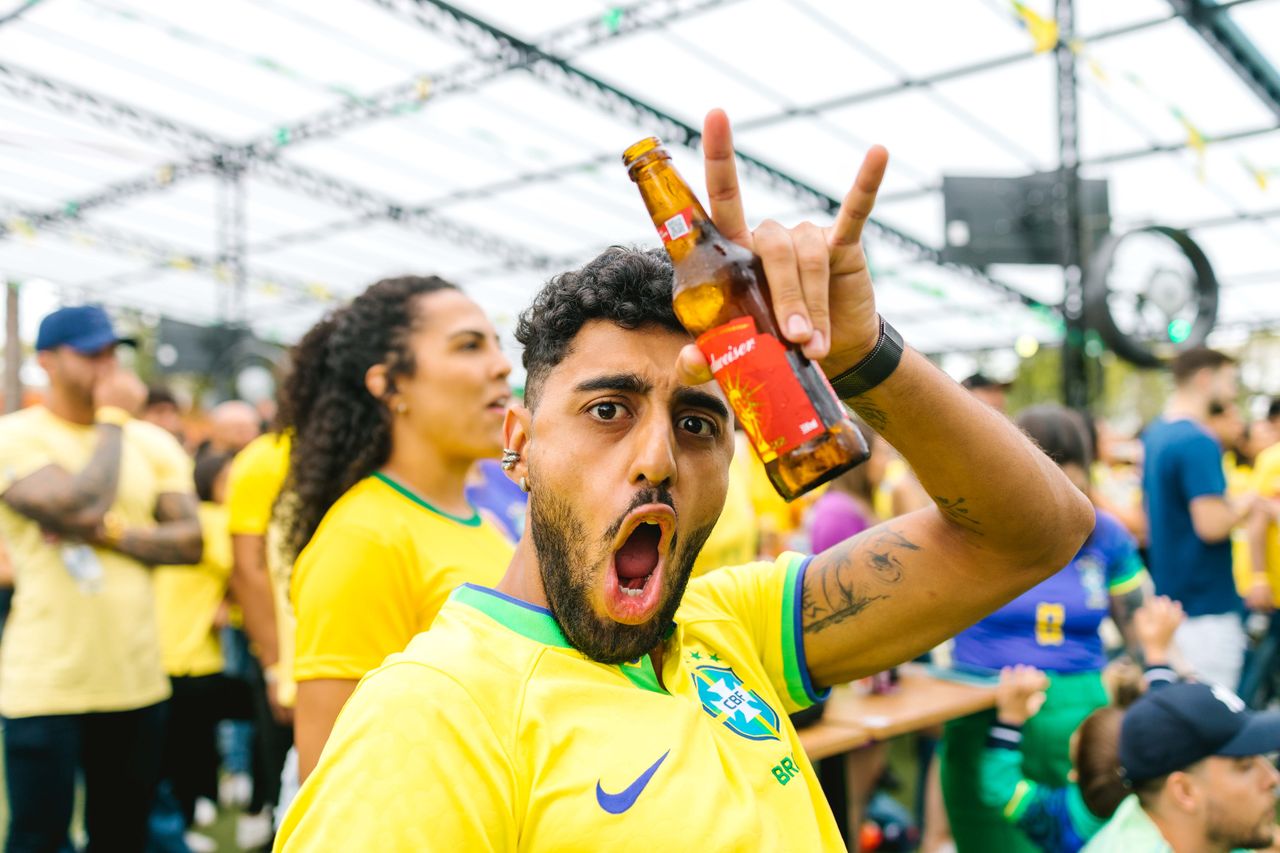
College football season arrives at a pivotal moment for the U.S. beer business, which has been balancing softer overall alcohol demand with strong event-driven spikes. As campuses, bars and retailers gear up for Saturdays, the season still represents a reliable volume driver for stadium vendors, wholesalers and brands tied to game-day drinking. Recent industry and college athletics data show that football remains one of the clearest occasions for beer sales to accelerate in the fall.
College football remains a proven sales event for beer
The most visible recent sign came on August 27, 2025, when Army announced it would begin selling alcoholic beverages at football games at Michie Stadium, leaving no service academy outside the trend, according to The Associated Press. AP also reported in 2023 that 55 of 69 Power Five schools and Notre Dame were already selling alcohol in public areas of their stadiums on game days, underscoring how widespread in-stadium beer sales have become in major college football. That shift matters because it turns game day into a direct revenue channel for athletic departments as well as for beer suppliers.
Schools and licensing partners are also finding incremental revenue in team-branded beer. AP reported that Learfield said college-licensed alcoholic beverages generated $7.5 million in total sales during fiscal 2024, while Tennessee officials said Vol Lager ranked among the top four beers sold at Neyland Stadium last fall. Those numbers show that the football season now supports both concession sales and retail beer programs tied to campus brands.
The broader beer supply chain treats football as a material selling season. The National Beer Wholesalers Association said Super Bowl demand drives beer sales about 20% above average nationally, with Americans spending $1.3 billion on beer in the two weeks leading up to the game and another $1 billion on game day. While that figure reflects the NFL rather than college football, it illustrates the scale that live football viewing can create for brewers, distributors and retailers.
The local impact is clearest around stadium districts and sports bars
In college towns and metro areas anchored by major programs, beer demand tends to spread beyond the stadium itself. Tailgates, campus bars, chain restaurants and neighborhood taverns all participate in the same weekend traffic cycle, especially where schools now sell beer both inside venues and through licensed retail partnerships. AP reported that at North Carolina, alcohol sales produced about $4 million, after net sales of $320,213 in the 2019-20 athletic year rose roughly fourfold by the following year cited in the report.
Even so, the exact distribution of those gains is uneven and often not publicly broken out by city, venue type or state. Colleges generally do not release a comprehensive public accounting of how much beer is sold at each concession stand, and beer companies rarely disclose college-football-specific weekly sell-through by campus market. What is confirmed is that many fans still split their spending between lower-cost tailgating outside and higher-margin purchases inside the stadium, a pattern AP documented in fan interviews and school reporting.
For on-premise operators, sports-driven occasions are increasingly important because draft remains a high-volume format in bars and restaurants. CGA by NIQ and Draftline Technologies said draft beer accounted for 52.3% of total beer sales by volume in U.S. bars and restaurants in the year to early 2025, with especially sharp outlet growth in neighborhood bars, sports bars and casual dining. That makes football weekends especially relevant for operators built around televisions, taps and game-day traffic.
Football matters more because beer needs dependable demand spikes
The importance of college football is sharper because the beer category is competing in a tougher market than it was a decade ago. CGA by NIQ reported that beer attracted 39.5% of all beverage alcohol sales by value in the U.S. on-premise in the 12 months to mid-June 2025, down 0.3 percentage points from a year earlier, while spirits and ready-to-drink products gained share. The same report said imported and domestic super-premium beer brands posted gains, while craft and domestic premium lost share.
Industry groups also continue to frame beer as a major economic engine even amid slower category growth. The NBWA’s 2025 Beer Serves America figures put the total U.S. beer industry’s economic impact at $56.1 billion and employment tied to the sector at 134,543 jobs in distribution alone across brewing, retail, agriculture and manufacturing links. That scale helps explain why dependable fall occasions such as college football still matter so much to local wholesalers and retailers.
For customers, that usually means wider beer assortments on game days, more stadium availability than in past seasons and continued marketing around school-branded or local labels. It does not necessarily mean uniform pricing or identical offerings from one campus or state to another, and many schools still have different rules on where alcohol can be sold. What is clear from recent AP and industry reporting is that beer has become a standard part of the college football business model, even as the category works to hold share in a more competitive drinks market.
Really impressed with the game variety. Everything loads quickly and the graphics are top notch. br52betwin is definitely my new go-to spot.