
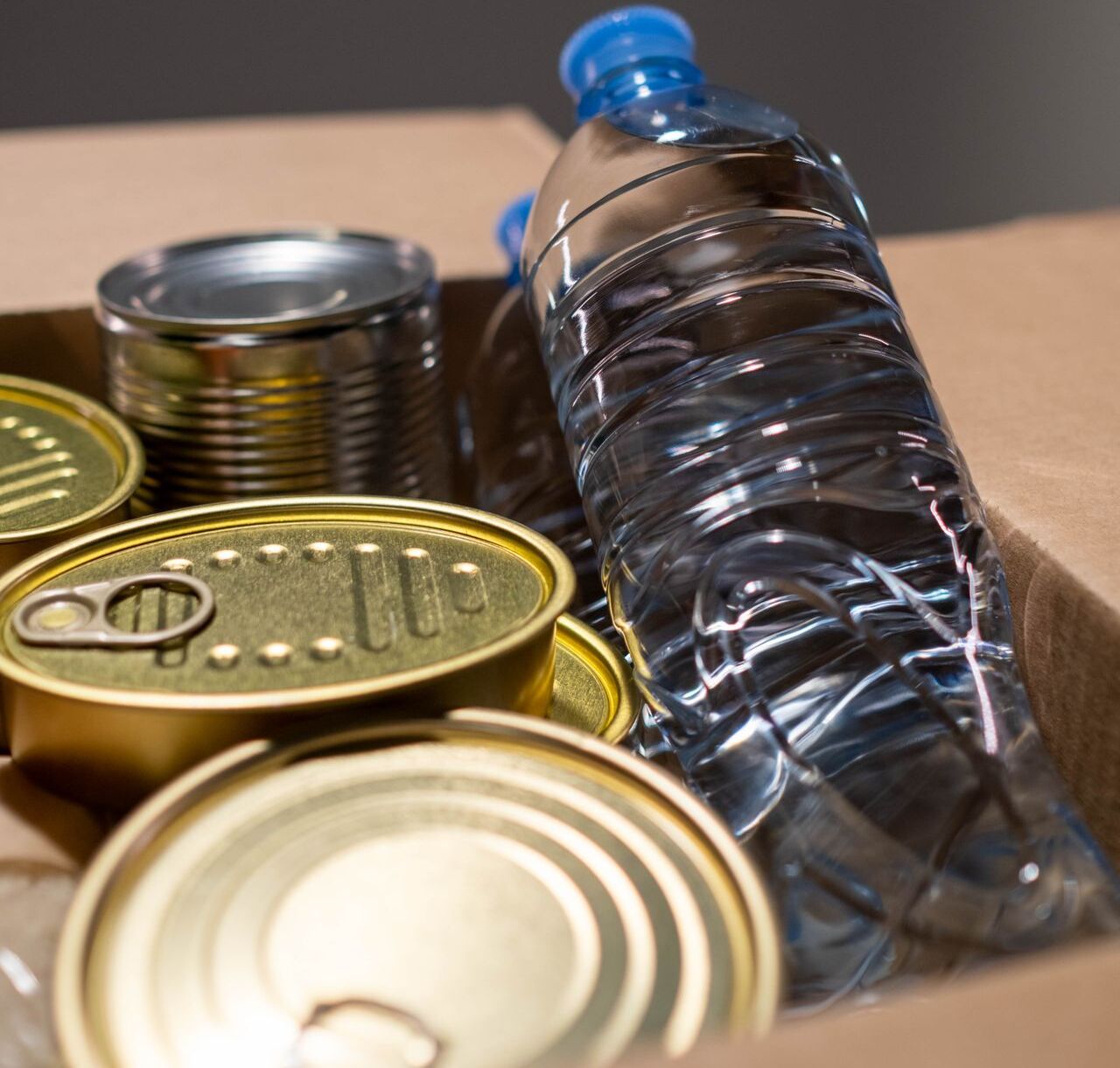
Wildfire survival in America has never looked like a glossy pantry ad. It has looked like paper trays, bottled water, motel lobby meal drops, and donated sandwiches handed over in parking lots.
When whole towns burn, food becomes more than fuel. It becomes logistics, comfort, and one of the first signs that somebody is still taking care of you.
The first meals were built for speed, safety, and sheer volume
In the biggest wildfire responses, Americans did not live on artisanal emergency kits. They ate what disaster systems could move fast: shelf-stable snacks, bottled water, cafeteria-style hot meals, and simple grab-and-go food that could be counted, packed, and distributed under pressure. According to the American Red Cross, its Hawaii wildfire response had already served more than 625,600 meals and snacks by September 8, 2023, and that figure grew to more than 1.37 million by November 8. In the January 2025 California wildfires, the Red Cross said it served more than 154,500 meals and snacks within the first month, later rising to more than 188,500.
That scale explains the menu. The food most often available in shelters and temporary housing is designed to be reliable rather than memorable: sandwiches, fruit, snack bars, chips, juice, coffee, and hot plated meals that can be prepared in bulk. Red Cross reports on Maui described “nutritious meals purchased from local vendors” and hot meal delivery to survivors staying in hotels, showing how quickly disaster feeding shifts from congregate shelters to distributed lodging.
In Los Angeles after the 2025 fires, shelters doubled as food hubs where evacuees could get a warm meal, charge a phone, and gather information. That matters because in a wildfire, eating is tied to displacement itself: many survivors are not cooking, shopping, or storing perishables. They are moving between gyms, motels, cars, and relatives’ homes, so food has to travel with them.
Comfort food mattered because disaster eating is emotional, not just nutritional
The most revealing detail in major wildfire responses is not how many meals were served, but what kinds of meals people remembered. During the 2018 Camp Fire, one of the deadliest and most destructive blazes in California history, PBS reported that roughly 15,000 evacuees and rescue workers across Butte County sat down for a Thanksgiving meal of turkey, stuffing, and potatoes provided by volunteers. It was not survival rations in the cinematic sense. It was holiday food chosen to restore a sense of normal life.
That pattern repeats across disasters. Even when official reports summarize meals as a number, the lived experience tends to revolve around recognizable foods: hot breakfasts, donated coffee, sandwiches, burritos, pizza, and plate lunches that feel local and familiar. In the 2025 Los Angeles wildfire response, the Los Angeles Times described volunteers handing out more than 100 burritos and tortas, while food banks emphasized staples such as canned goods, pasta, and rice for families trying to reestablish basic routines.
This is why comfort food carries outsized weight in wildfire recovery. People who have lost houses, medications, pets, paperwork, and sleep are not simply hungry. They are disoriented. A warm, familiar meal does practical work, but it also signals continuity, dignity, and local solidarity in the middle of upheaval. That is as essential as calories.
The real wildfire pantry was a mix of institutions, donations, and local food culture
What Americans actually ate during historic wildfires came from overlapping systems rather than one pipeline. National relief groups provided mass feeding capacity. Government agencies and community partners supplied shelter space and distribution support. Local restaurants, churches, mutual-aid groups, and food banks filled the emotional and cultural gaps with meals people genuinely wanted to eat.
In Maui, that meant hotel-based deliveries and meals sourced from local vendors as survivors were moved out of congregate shelters and into temporary lodging. In California, it often meant shelters with standardized snacks and hot meals supplemented by community donations, restaurant drop-offs, and holiday spreads assembled by volunteers. The result was not one “wildfire diet” but a layered food network built from necessity.
The clearest conclusion is also the least glamorous. In America’s worst wildfires, people got through on ordinary food served at extraordinary scale: packaged snacks, cafeteria meals, rice and pasta donations, sandwiches, burritos, tortas, turkey dinners, and whatever hot meal could reach them that day. Disaster eating was not about scarcity theater. It was about getting enough familiar food, fast, to keep people moving until life became recognizable again.
Great article! I’ve been using Claude Fable 5 () for similar projects. Claude Fable 5