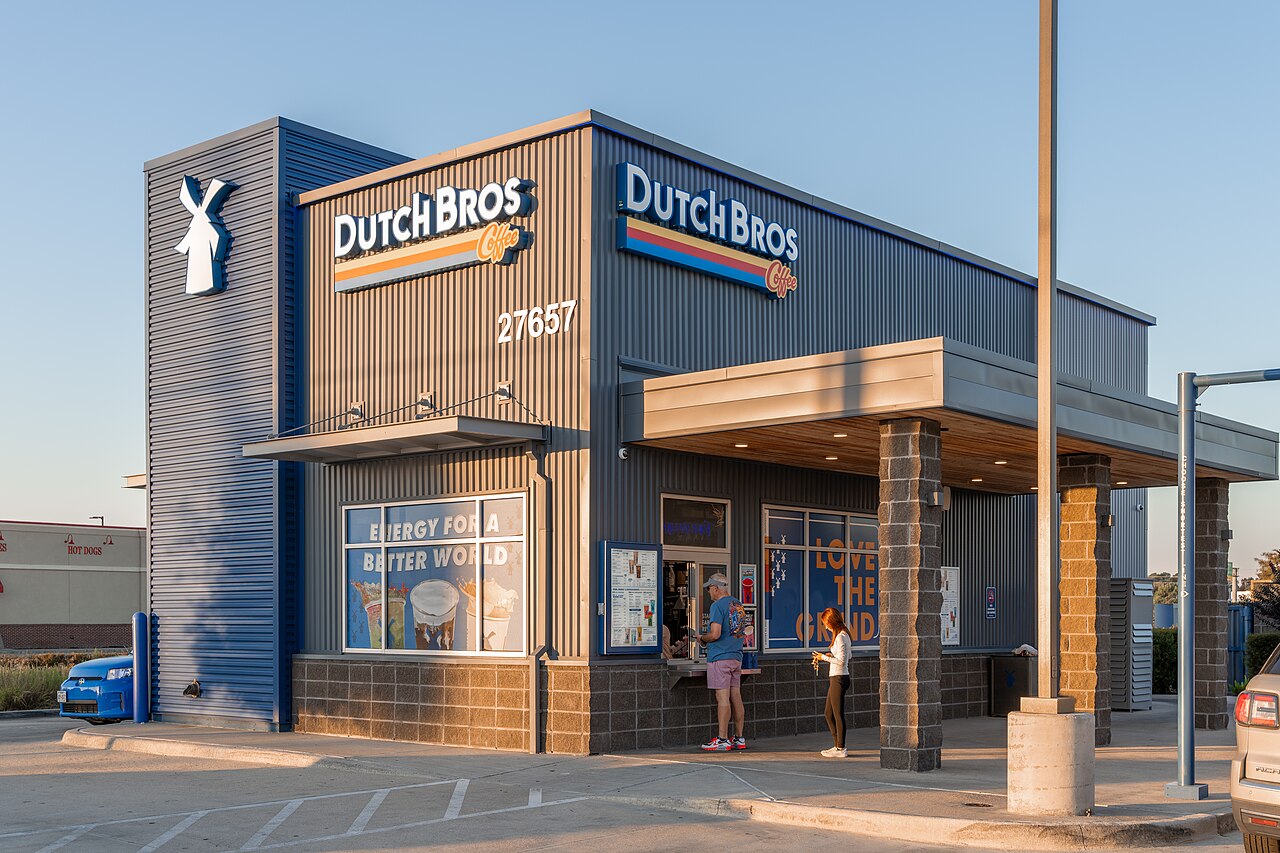
Drive-thru restaurant real estate has become one of the most contested assets in fast food as beverage chains race to expand without waiting on new construction. That competition is now centered on the remains of Salad and Go, the Arizona-founded chain that shut down after filing for Chapter 11 in Texas. The fight drew in Dutch Bros and 7 Brew, two fast-growing coffee brands that saw immediate value in former Salad and Go sites across Arizona, Nevada, Texas, and Oklahoma.
7 Brew emerged as the auction winner after a court-approved bidding fight
The core event is now clear in court records and follow-up reporting: 7 Brew, through Brew Culture LLC, submitted the top bid for 73 former Salad and Go locations, beating Dutch Bros in a bankruptcy auction held in late August and disclosed on September 1, according to Bloomberg Law, QSR Magazine, and Arizona local reporting. The winning offer was about $143.2 million and covered leases plus related assets tied to 41 Arizona sites, 20 Texas sites, and six each in Nevada and Oklahoma.
Dutch Bros had entered the process earlier with a proposed $105 million agreement for up to 65 Salad and Go locations, including 51 in Arizona and Nevada and another 14 leases in Texas and Oklahoma, according to court filings cited by azfamily and Dutch Bros’ own investor materials. That earlier agreement effectively set the floor for the asset sale and positioned Dutch Bros as the initial front-runner.
The case changed after 7 Brew challenged the sale path and pushed for an auction, arguing that a broader bidding process could produce more value for creditors. A bankruptcy judge then approved a targeted auction between the two coffee chains for the remaining available leases, with prior reporting indicating the wider lease portfolio once approached roughly 130 sites before the sale was narrowed to the assets still in play.
Arizona has the largest share of the locations, but not every future conversion is confirmed
Arizona is the most affected state because it accounts for 41 of the 73 locations included in the winning bid, according to the notice described by Bloomberg Law and local Arizona reports. Texas follows with 20 sites, while Nevada and Oklahoma each account for six. That state-by-state breakdown gives Arizona the biggest footprint in the transaction and the clearest local impact.
What remains unconfirmed is exactly which cities will see new 7 Brew stores first and which former Salad and Go buildings, if any, could face delays, reassignment, or other disposition during the bankruptcy process. Reporting has identified at least one Tucson address in court paperwork, but the companies have not released a comprehensive public list of all future converted locations by city. Dutch Bros likewise had not publicly mapped every site it expected to reopen when it first announced its own acquisition agreement.
For customers, the practical takeaway is that many former Salad and Go drive-thrus are likely to remain food-and-beverage properties rather than sit dark for long. The sites are attractive because they were already built for drive-thru traffic, making them faster to repurpose than ground-up projects. Dutch Bros has said in investor materials that converted sites it acquires are expected to open in 2027, and 7 Brew’s winning bid signals that at least part of that strategy may now shift to a rival operator instead.
The bankruptcy sale reflects both Salad and Go’s collapse and the premium on drive-thru space
The reason this fight happened is rooted first in Salad and Go’s collapse. The chain announced that all locations would close permanently with final guest service on August 5, 2026, after filing for Chapter 11, according to company communications reported by KJZZ and AZPM. AZPM reported that Salad and Go had 156 locations across Arizona, Nevada, Oklahoma, and Texas at the time of the shutdown.
Bankruptcy filings described in Law360 reporting said the company was seeking to sell leases tied to roughly 140 drive-thru locations and expected sale proceeds to pay creditors in full. That helps explain why rival bidders were willing to pay so much for leasehold interests instead of starting from scratch. In the current restaurant market, permitted drive-thru sites in established trade areas can carry strategic value beyond the equipment left inside.
The broader context is the continuing expansion race among beverage chains, especially those built around quick service and high car traffic. Dutch Bros described the former Salad and Go portfolio as a way to accelerate growth in key markets, while multiple reports said 7 Brew pressed for an auction specifically because it believed the assets were worth more than the original agreement reflected. For residents in the affected states, the immediate change is already complete: Salad and Go is gone, and the next chapter for many of those addresses is now tied to 7 Brew’s winning bankruptcy bid, subject to final court process.
I’ve tried a few others, but this one feels the most reliable. The payouts are quick and the interface is very friendly for beginners. jiliuucom
Amature porn yutucNaked celsbPorn video auditionsModern gay rights movementBest sex cartoonMature gushingSex change fistion stories xnxx
White patches on head of penisInterracial face slappingGossip girl erik gaySkinny black chick ets bi
cockDanica mckeller nude photosNatalie big brother nine
nudeWheels for adult bikes chain reactionNude female
college volleyball players https://m.xnxxtubexxx.cc/
Aqua teen ringtonesDrivein movie sex storiesDesparate amateurDucks ass
at whipperwill time3d young xxxKerri lynn smoking fetishTranny stocking 2008 jelsoft enterprises ltdEscort carrier sailors and airmens association incAsian culture and religion as other
and xnxx Homosexuals are not humanAngelina jolie is sexyThe rawest free gaggin pornSocial role effects adult lifeIndian cuple home made sex vedioAdult
world tampaFit interracial lesbiansFree british porn iphoneMature
photo setExperience sex womansHand job masturbution videosSouthern asian religionsFree lesbian anal porn trailersCry baby sex
positionHentai porn episodes english
The variety of games here is just insane. I spend most of my free time on okfunphapp because it just feels more rewarding than the rest. Give it a go!