
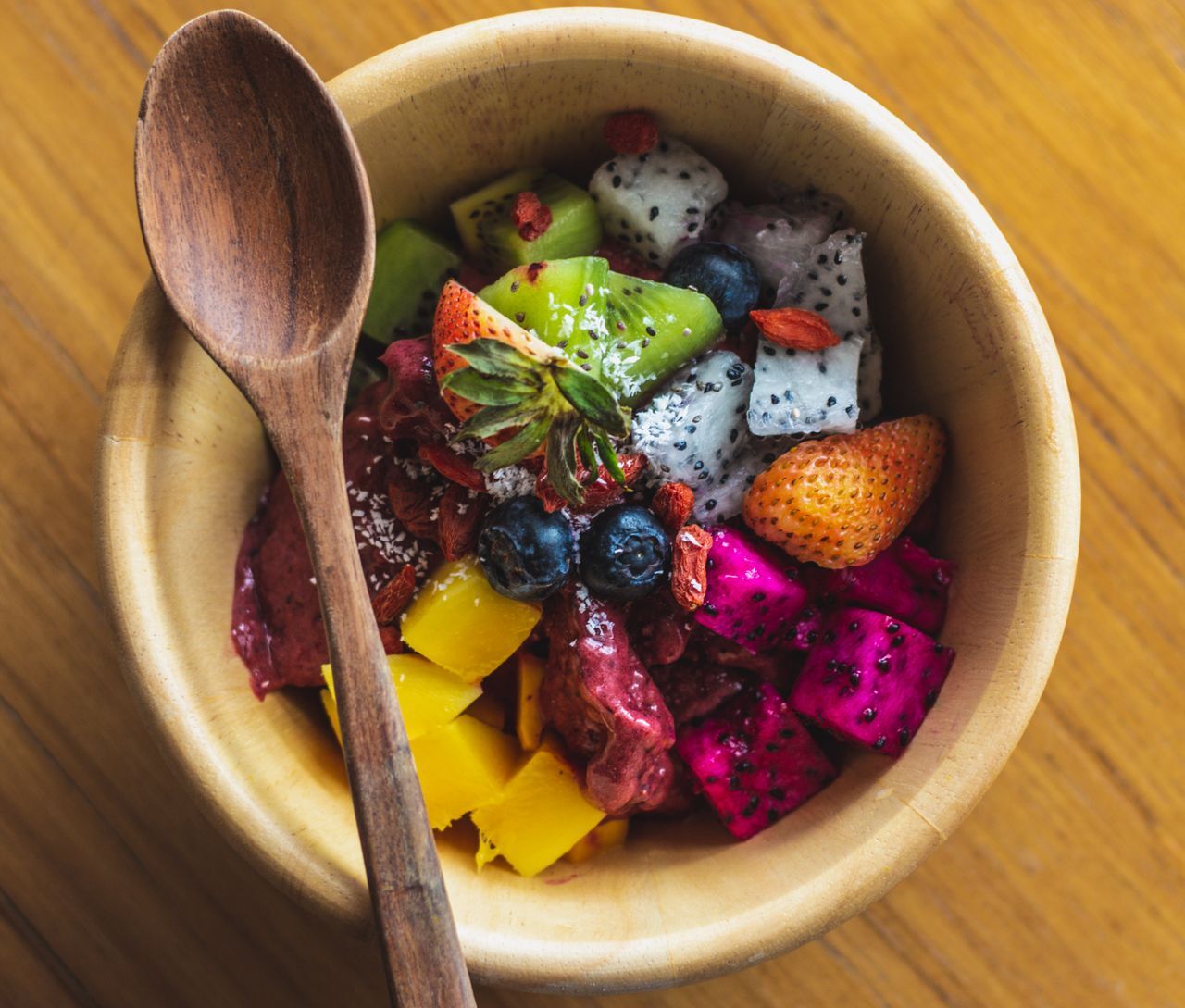
Across food media, social platforms continue to turn simple at-home dishes into national talking points, especially when they are inexpensive, colorful, and easy to film. The latest example is the “viral fruit bowl” trend now circulating across short-form feeds, where the phrase is being used broadly rather than as the name of a single product or chain. What users are actually posting most often is a mix of Korean-style hwachae, smoothie bowls, and neatly assembled fresh-fruit bowls designed for visual impact.
What the trend actually is
The clearest documented version of the trend is hwachae, a Korean fruit punch that Eater highlighted on September 24, 2025, as a TikTok-driven format built around watermelon, mixed fruit, and a large shared bowl. In that reporting, creator Sophia Kim described making hwachae after seeing it repeatedly on TikTok, and Eater noted that the dish is often assembled inside a hollowed-out watermelon, giving it the oversized “fruit bowl” look that performs well on camera. TikTok Shop also now uses the term “viral fruit bowl” as a searchable retail phrase, indicating the label has grown beyond one recipe and into a broader social-commerce category.
That matters because the phrase can be misleading. In current usage, “viral fruit bowl” does not refer to one official recipe, one national chain item, or one proprietary branded bowl. Instead, the confirmed common thread is visual styling: cut fruit arranged in a decorative vessel, often topped or paired with liquids, yogurt, granola, or ice, depending on the creator and format.
The scale of the trend is harder to pin down with one public number because neither TikTok nor Instagram provides a single official nationwide count for “viral fruit bowl” posts in accessible public reporting reviewed here. What is confirmed is that Google Trends is tracking fruit- and feed-driven search behavior in the United States, while TikTok commerce pages have already adopted “viral fruit bowl” as a recognizable consumer search term.
How the trend is showing up for U.S. viewers
For U.S. audiences, the trend’s local impact is mostly happening in home kitchens, grocery produce aisles, and food-adjacent social commerce rather than through one verified restaurant rollout. The available reporting does not show a single company launching a coast-to-coast “viral fruit bowl” product tied to this phrase. It is instead appearing as a flexible content format that creators, retailers, and kitchenware sellers are adapting for American viewers.
What is confirmed is that TikTok Shop has active product pages and keyword landing pages tied to “viral fruit bowl,” including coconut-shell and dessert-style bowls marketed for fruit presentation. That suggests the trend is generating direct retail demand for serving ware as well as ingredients. It also helps explain why the content can look more uniform across feeds even when the recipes differ.
What is not yet publicly known is which U.S. metro areas are driving the most engagement or whether one state materially outpaces others in posting volume. Google Trends’ public interfaces show that food searches can break out quickly, but the platform does not, in the material reviewed here, provide a definitive state-by-state ranking specifically for this exact fruit-bowl phrase. That leaves the visual pattern clear, even if the geographic distribution is not fully documented.
Why it is spreading and what it means for consumers
The trend is spreading for practical reasons that line up with broader platform and food-media behavior. TikTok’s own trend materials describe discovery-driven shopping and intentional visual storytelling as major forces shaping how users find products and ideas. Eater’s hwachae reporting also tied the bowl’s popularity to warm-weather use cases, hydration appeal, easy customization, and group-serving convenience, all of which make it well suited to short-form food content.
Older reporting from Eater on smoothie bowls adds more context. That coverage described how fruit-heavy bowls became highly shareable because they are more photogenic than drinks in cups, especially when topped and arranged for presentation. The current “viral fruit bowl” wave follows that same pattern, but with a looser identity that lets creators move between hwachae, acai-style bowls, and sliced-fruit platters without changing the label.
For consumers, that means the trend is best understood as a format rather than a fixed dish. Someone seeing a “viral fruit bowl” video should expect variations in ingredients, sweetness, texture, and even serving style from post to post. The most consistent takeaway from current reporting is simple: the bowl itself, the fruit arrangement, and the camera-ready presentation are the product as much as the recipe.
Выбираю силовой кабель для подключения оборудования, но быстро понял, что универсального варианта не существует. Помимо сечения приходится учитывать материал жил, тип изоляции, условия прокладки и предполагаемую нагрузку, из-за чего легко запутаться. Хочется купить надежный кабель, который прослужит долго и будет соответствовать всем требованиям безопасности. Поделитесь своим опытом: как вы выбирали силовой кабель и на какие характеристики советуете обратить внимание в первую очередь? По каким критериям вы выбираете
Accessing your account is always smooth and the platform never goes down during big matches or slot tournaments. I appreciate how transparent they are with their terms and how quickly support handles any questions. The whole gaming environment feels secure and professionally managed. A reliable choice for consistent entertainment and fair play. pondokwinlogin
I have tested dozens of gambling sites over the years and this one stands out for its honest terms and fair play. The loyalty rewards accumulate steadily and I never feel pressured to chase losses. A truly reliable spot for anyone who wants a stress free gaming session stakecasino
[9533]th777 Official Login | Pinakamabilis na GCash Casino sa PH,th777 ang iyong gateway sa legit online casino philippines. I-download ang app para sa mabilis na access at alamin kung paano maglaro ng slots. Mag-sign up na! visit: th777