
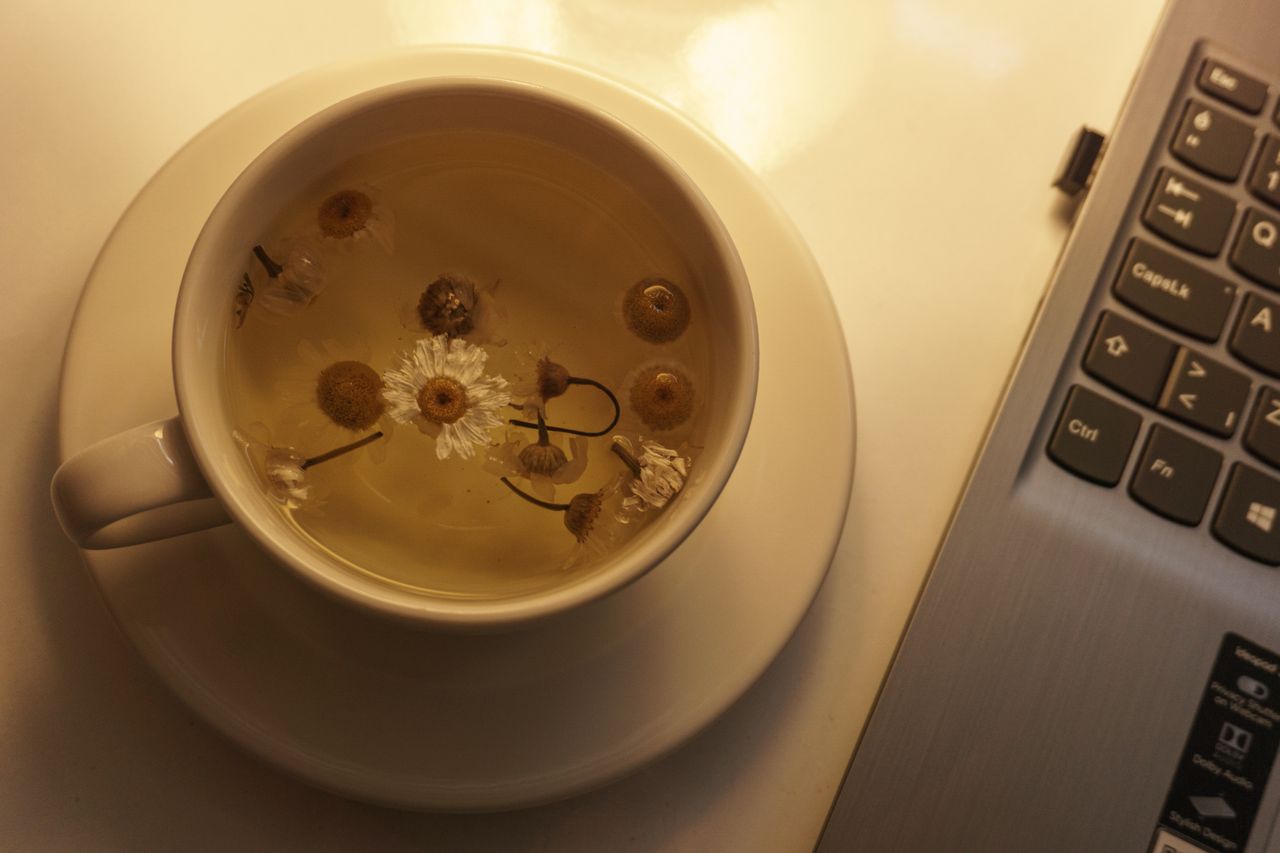
Americans continue to spend heavily on sleep aids, herbal teas, and other evening wellness products as anxiety and poor sleep remain closely linked public-health concerns. Within that broader market, chamomile tea remains one of the most common after-dinner drinks promoted for relaxation, and federal health sources say it has some early evidence behind it. The key distinction is that chamomile’s anxiety data, while limited, is stronger than the evidence for many other popular nighttime drinks.
Chamomile is the clearest after-dinner pick with human anxiety data
Chamomile tea is the simplest verified pick for an after-dinner calming drink because chamomile itself has been studied for anxiety in humans, according to the National Center for Complementary and Integrative Health, or NCCIH. In its clinician guidance, NCCIH says chamomile extract has shown possible benefit for generalized anxiety disorder, while also stressing that the evidence remains preliminary and not conclusive. That makes it a more supportable choice than trend-driven bedtime drinks that are marketed mainly around sleep rather than anxiety.
NCCIH cites a 2016 randomized controlled trial involving 179 participants with moderate to severe generalized anxiety disorder that found a clinically meaningful reduction in anxiety symptoms over eight weeks. The same federal review also points to a 2009 randomized, double-blind, placebo-controlled trial in 57 patients with mild to moderate generalized anxiety disorder that suggested modest anxiolytic activity. Those trials evaluated chamomile extract rather than a mug of brewed tea, but they are the most direct anxiety-specific evidence tied to a widely available evening beverage ingredient.
That distinction matters for consumers deciding what to drink after dinner. A tea made from chamomile is caffeine-free, widely sold in grocery and pharmacy aisles, and fits naturally into an evening routine without adding alcohol or stimulants. NCCIH last updated its public chamomile safety page in November 2024, making it one of the more current federal summaries available on the topic.
What is confirmed for everyday use, and what is still unknown
What is confirmed is limited but useful: chamomile has some human clinical evidence related to anxiety, and it is commonly consumed as an herbal tea in the evening. What is not confirmed is that one cup after dinner will “melt away” anxiety on demand. Federal sources do not make that claim, and the better-studied trials measured symptom changes over weeks, not immediate one-night effects.
NCCIH also says there is very little evidence that chamomile helps insomnia, despite its strong association with bedtime routines. That means the strongest case for chamomile is not that it is a proven sleep cure, but that it may support relaxation and may have modest relevance for anxiety symptoms based on early clinical research. For readers choosing between chamomile tea and more fashionable options such as tart cherry juice, the evidence base is different.
Tart cherry juice has research behind sleep quality and duration, according to Sleep Foundation’s review of published studies, partly because it contains melatonin and tryptophan. But that evidence is centered on sleep outcomes, not direct anxiety relief, and the organization says more research is needed. In other words, tart cherry juice may be reasonable for sleep-focused routines, but chamomile is the more defensible pick if the goal is easing anxiety after dinner.
Why chamomile keeps surfacing in evening wellness advice
Chamomile stays prominent because it sits at the intersection of habit, safety, and early evidence. It is sold as a tea rather than only as a supplement, which makes it easier to incorporate into a normal dinner-to-bed routine. It is also caffeine-free, unlike black tea, green tea, coffee, energy drinks, or many sodas that could work against relaxation in the evening.
There are still important caveats. NCCIH says allergic reactions can occur, including rare severe reactions, particularly in people allergic to ragweed, chrysanthemums, marigolds, or daisies. The agency also notes reported interactions involving cyclosporine and warfarin, meaning people taking those medications should be cautious and discuss use with a clinician before making it a nightly habit.
For most readers, the practical takeaway is narrow and factual: if there is one simple after-dinner drink with the clearest anxiety-related evidence, chamomile tea is the best-supported pick. The evidence does not show an instant cure, and federal health reviewers say findings are still preliminary. But compared with many evening beverage trends, chamomile has the most direct anxiety-specific research and remains one of the few options supported by an up-to-date NIH-backed review.