
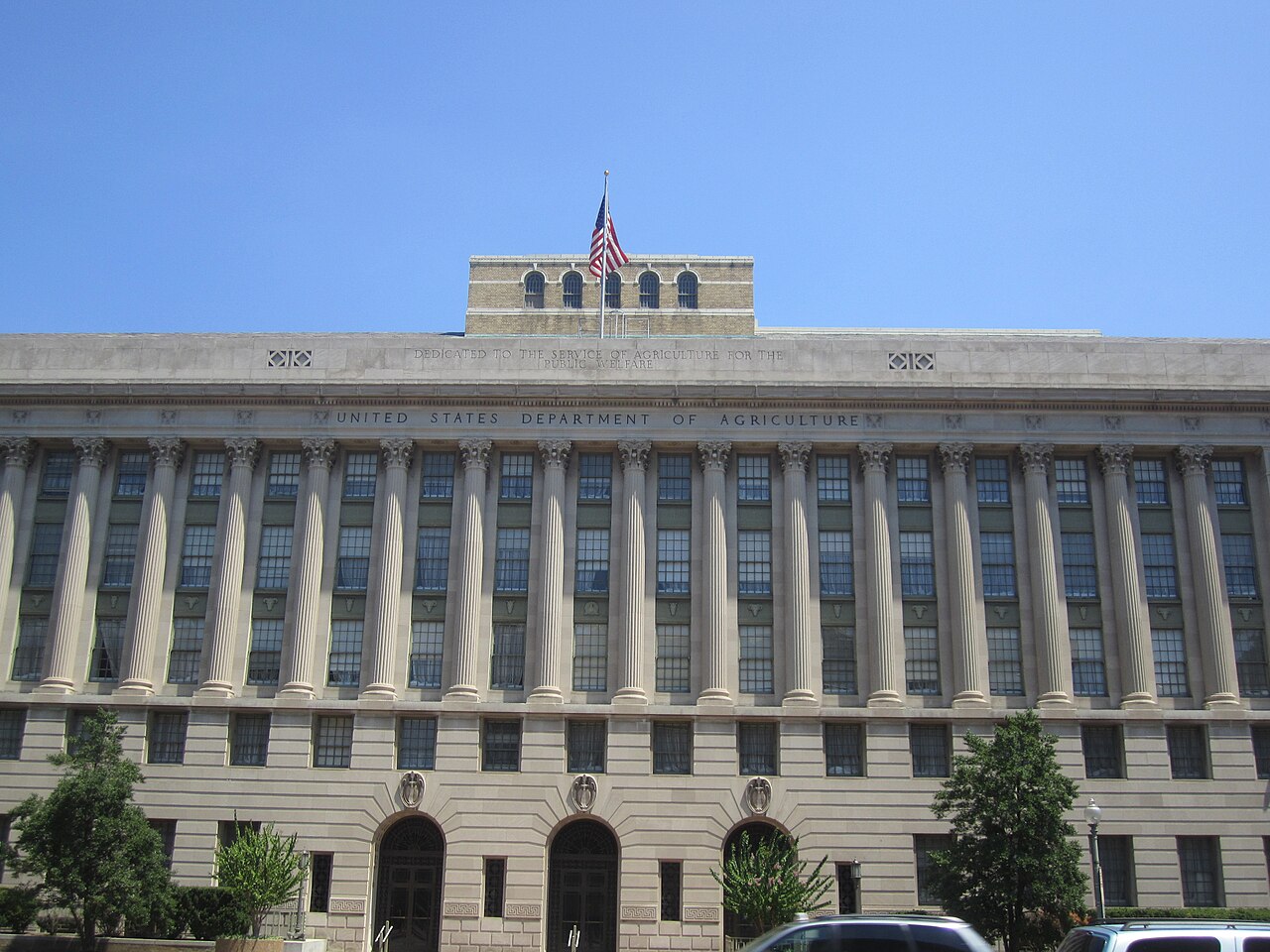
Food prices remain a central budget issue for U.S. households as inflation cools unevenly across essential goods and services. The latest update from the U.S. Department of Agriculture puts that pressure into a specific number, with the agency forecasting a 3.4% increase in overall food prices in 2026.
USDA’s latest forecast puts a 3.4% increase on this year’s food bill
The USDA’s Economic Research Service updated its Food Price Outlook on May 22, 2026, and said prices for all food are expected to rise 3.4% this year. The agency said food-at-home prices, the category that tracks groceries, are forecast to increase 3.2%, while food-away-from-home prices, which cover restaurant and other foodservice spending, are projected to rise 3.5%.
The USDA also said food prices in April 2026 were already 3.2% higher than in April 2025. That gap matters because the Food Price Outlook uses recent Consumer Price Index and Producer Price Index data to estimate the annual average change for the full year, rather than a single month-to-month reading.
Within grocery categories, the USDA said several items are expected to rise faster than their 20-year average pace. Its May 2026 summary said beef and veal, other meats, fish and seafood, fresh fruits, fresh vegetables, processed fruits and vegetables, sugar and sweets, nonalcoholic beverages, and other foods are among the categories forecast to post faster growth than their long-run average.
The same USDA report said some categories are expected to move differently. Prices for eggs, dairy products, and fats and oils are forecast to decline in 2026 compared with 2025, showing that the increase is broad but not uniform across every aisle.
The impact is national, but households will feel it most in weekly grocery routines
This forecast is national, not state-specific, and the USDA has not released a state-by-state breakdown tied to the 3.4% figure. That means consumers in places with different wage levels, tax structures, and local food costs may experience the increases differently, even though the federal forecast measures the overall U.S. trend.
For most households, the immediate effect is likely to show up in recurring purchases rather than one large bill. Grocery staples, school lunch ingredients, fresh produce, and restaurant meals all sit inside categories the USDA and Bureau of Labor Statistics track closely, and both agencies’ recent data point to continued upward pressure.
The Bureau of Labor Statistics said food prices increased 3.1% from May 2025 to May 2026, including a 2.7% increase for food at home and a 3.5% increase for food away from home. That aligns closely with the USDA’s annual forecast and suggests restaurant prices are still running hotter than supermarket prices on a year-over-year basis.
What is not yet known is how individual retailers, restaurant chains, or regional markets will absorb or pass through those costs during the rest of 2026. Neither the USDA outlook nor the BLS inflation releases identify which supermarket brands or local markets will see the sharpest increases.
Why prices are still rising, and what households can realistically do next
The USDA says its forecasts are based on statistical models fitted to recent CPI and PPI trends, and its reported prediction interval for all food is 2.2% to 4.7%. In other words, 3.4% is the midpoint of the federal forecast, not a guaranteed final result, but it is the government’s current official estimate for 2026.
The agency’s own breakdown points to the broader context: food-away-from-home inflation is expected to rise at its 20-year historical average of 3.5%, while food-at-home inflation is projected to outpace its 20-year average of 2.6%. That suggests grocery inflation has eased from the sharpest peaks of recent years but has not returned to a low-growth environment.
For shoppers trying to limit the effect on household budgets, the clearest response is not a federal program announcement but a practical shift in buying habits. The USDA report itself does not issue consumer budgeting advice, but its category data supports strategies that reduce exposure to higher-cost items, including more selective meat purchases, tighter use of perishable produce, and more reliance on lower-cost staples when prices in fresh categories rise.
Consumers should expect food costs to remain elevated through the year even if the pace varies by category. As of the USDA’s May 22, 2026 update, the federal forecast still points to higher average food spending in 2026 than in 2025, with grocery and restaurant prices both contributing to the increase.