
Food launches rarely arrive by accident. What looks like a fun new snack or a trendy drink is often the visible tip of a much larger business decision.
In 2026, the biggest launches tell a surprisingly coherent story. Behind the bright packaging and bold claims is an industry quietly redesigning what innovation means when shoppers want more value, more function, and fewer compromises.
The age of “functional everything” has fully arrived

The clearest message in this year’s major launches is that food companies no longer believe taste alone is enough. Protein, fiber, gut health, hydration, and satiety have moved from specialist wellness aisles into the center of mass-market food. What was once a niche language used by sports nutrition brands is now turning up on chips, boxed pasta, coffee drinks, and powdered beverages.
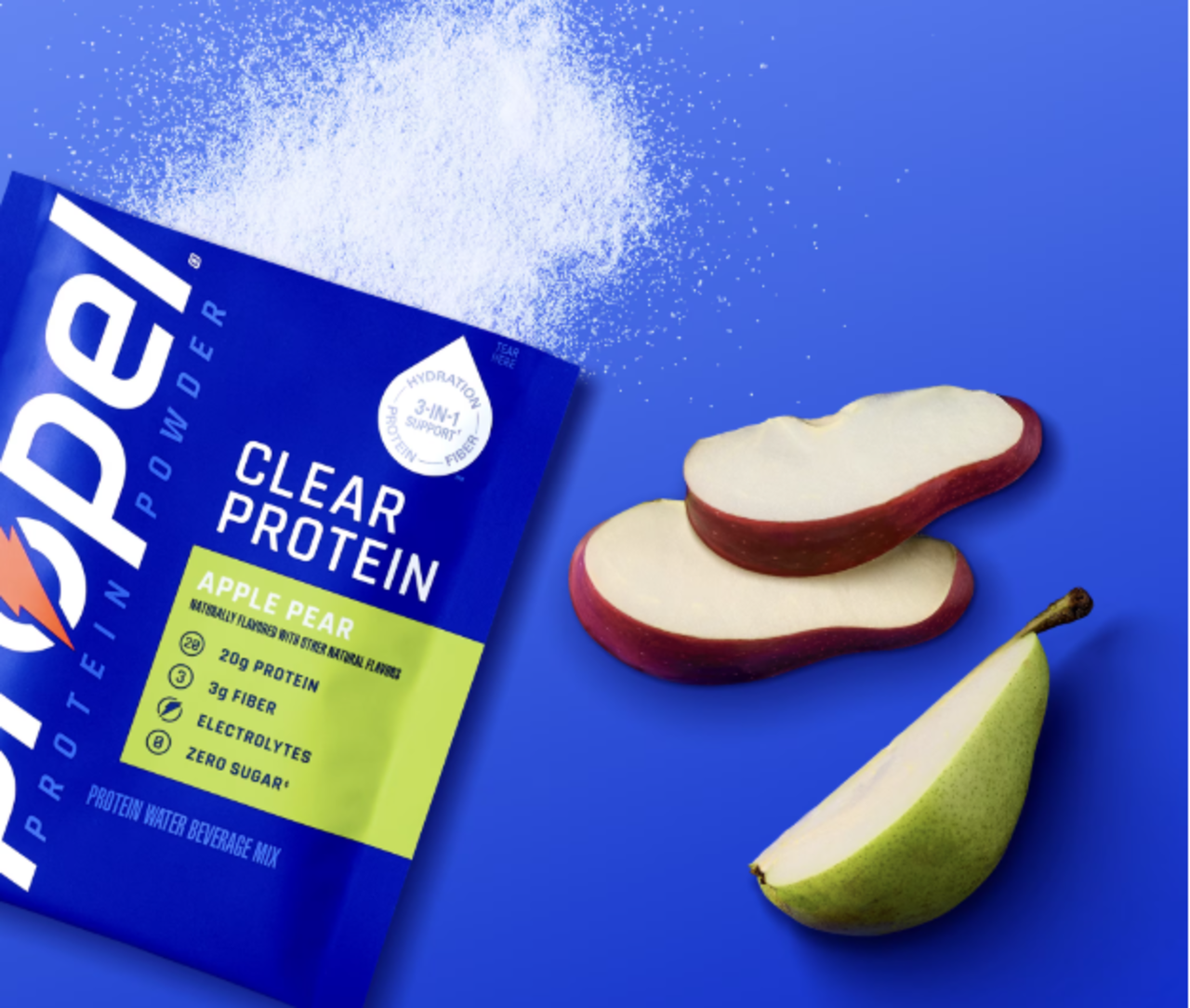
PepsiCo’s 2026 launch slate makes that shift impossible to miss. Doritos Protein entered the market as a strategic move into protein snacking, while the company also rolled out Good Warrior beef sticks with 10g of protein, 0g sugar, and 100 calories per serving. It added Propel Clear Protein, a mixable product combining 20g of protein with fiber and electrolytes, and Starbucks ready-to-drink Coffee & Protein with 22g of complete protein, 5g of prebiotic fiber, and low sugar. Taken together, these are not one-off experiments. They are a map of where large food companies think growth will come from next.
Kraft Heinz is sending the same signal from a different aisle. Its new Kraft Mac & Cheese PowerMac, rolling out nationally in April 2026, promises 17g of protein and 6g of fiber per serving while staying close to the comfort-food identity that made the original a staple. That matters because it shows how “better for you” innovation has shifted. The old formula was subtraction: less fat, less sugar, fewer calories. The new formula is addition: more protein, more fiber, more tangible utility.
Analysts have been describing this transition for months. Food Dive reported that protein remains a dominant force in 2026, while Innova Market Insights pointed to fiber and gut health as the next major wave of functional positioning. Food Business News asked whether the market had reached peak protein and concluded the answer was essentially no. The hidden story in this year’s launches, then, is not merely that consumers want healthier options. It is that the definition of health has become practical, measurable, and portable.
Big brands are launching like startups because the growth math has changed
Another surprise behind this year’s biggest launches is structural rather than culinary: large packaged-food companies are behaving more like venture-backed insurgents. They are moving faster, placing smaller but more targeted bets, and building launches around very specific consumer occasions instead of broad category logic. Innovation is becoming less about giant moonshots and more about sharp, high-probability moves.
Mintel’s 2026 innovation framing captures the mood well. The firm says meaningful innovation now depends on precision, real consumer needs, and fewer wasted bets. It also noted that only 35% of global CPG launches in 2024 were genuinely new products, down sharply from earlier decades. That decline in true novelty helps explain why so many 2026 launches feel tightly engineered. Companies are no longer rewarded simply for putting something new on shelf. They need products that can justify their existence quickly.
That is why so many launches are designed around a clear use case. Good Warrior is aimed at “busy humans,” not the general snack market. Starbucks Coffee & Protein is a morning-routine product, not just another bottled coffee. Propel Clear Protein turns hydration into a multifunction benefit system. Even Tostitos’ first refrigerated guacamole is not just a flavor extension. It is a deliberate move into a new store perimeter and a signal that brands are willing to chase growth by entering adjacencies that once seemed off-limits.
This startup-like behavior is also being reinforced by acquisition strategy. Food Dive noted that PepsiCo acquired Poppi for nearly $2 billion, using M&A to strengthen its position in functional beverages rather than waiting to build everything organically. That kind of deal says something important about launch strategy in 2026: food companies increasingly see branded innovation, portfolio gaps, and consumer trend capture as the same problem. If they cannot create the next hot platform fast enough, they will buy it.
The hidden story, in other words, is not only about what products launched. It is about how much more disciplined the launch process has become. Companies are trying to reduce risk without looking cautious, which is why so many products arrive with laser-focused claims, polished storytelling, and immediate relevance to a trend that is already in motion.
Value is shaping innovation as much as wellness is

If function is the most visible theme in 2026 food launches, value is the most underestimated one. Many new products are marketed as premium, but they are being designed in an environment where household budgets still matter deeply and where shoppers are increasingly willing to switch brands if the proposition feels weak. The result is a new style of launch that tries to make consumers feel smart, not indulgent.
Circana reported in March 2026 that U.S. private-label CPG sales reached $330 billion, with trust in store brands continuing to rise across food and beverage categories. Its broader research shows private label food and beverage now hold roughly 23% market share, and projections suggest continued gains this year. That is a profound pressure point for national brands. When retailer brands become credible on quality, incumbents can no longer rely on shelf presence and familiarity alone.
This helps explain why branded launches now work so hard to communicate “earned” value. A protein snack must not only taste good; it must justify a higher ring at checkout through satiety, convenience, or multiple benefits. A premium coffee drink increasingly arrives with protein and fiber, not just caffeine. Even comfort foods are being reformulated to deliver more nutrition per serving. The hidden calculation is simple: if shoppers are scrutinizing every purchase, the product has to do more jobs.
Retailers are also becoming stronger brand builders in their own right. Walmart’s 2026 overhaul of Great Value, covering nearly 10,000 products, underscored how serious private label has become. According to Axios, Walmart described Great Value as one of the nation’s largest grocery and household brands, larger than many standalone food companies. That changes the launch equation for everyone else. National brands are no longer only competing against each other; they are competing against the scale, price architecture, and merchandising muscle of the stores themselves.
Seen this way, this year’s launches are not just trend chasing. They are defenses against commoditization. Brands are trying to stay one step ahead of store-label imitation by moving into function, convenience, and emotional identity all at once. The story hidden inside the packaging is that food innovation in 2026 is being shaped just as much by retail power and value anxiety as by culinary creativity.
Ingredient volatility is quietly rewriting what gets launched
Consumers often assume food launches begin with flavor inspiration or market research. In reality, they also begin with spreadsheets full of unstable costs. One of the least visible forces shaping this year’s launches is raw-material and supply-chain volatility, which is pushing companies toward products and formulations that can better withstand shocks in cocoa, dairy, protein inputs, packaging, and logistics.
Chocolate is a revealing case. The Associated Press reported in February 2026 that cocoa prices had fallen nearly 70% from the previous Valentine’s Day peak, yet shoppers were still unlikely to see much relief at retail. Axios similarly noted in May that cocoa prices had tumbled while chocolate prices had not meaningfully followed. The reason is not mysterious: manufacturers bought high-cost inventory, signed contracts earlier, and often used the period of peak inflation to reset pricing structures they are reluctant to reverse quickly.
Those dynamics influence innovation choices. When a category becomes too volatile, companies may narrow launches, favor smaller formats, lean into premium positioning, or reformulate around different cost structures. Even when a company does not say so explicitly, the economics show up in the product architecture. Higher-cacao products, portion-controlled items, and premium “trading up” narratives can all help protect margins in categories under raw-material pressure.
Packaging is part of the same story. FoodNavigator reported that 2026 launches are increasingly tied to packaging strategy, with brands using format changes and sustainability claims not just for image, but for operational reasons. PepsiCo has also highlighted sustainability startup solutions across its supply chain, reinforcing that packaging, sourcing, and logistics are now core innovation variables rather than back-end functions. The package is no longer a wrapper around innovation; it is often one of the reasons innovation takes a particular form.
This is why the year’s most successful launches often feel oddly pragmatic beneath their marketing gloss. They are built to survive a tougher planning environment. Shelf-stable formats, ingredient-flexible recipes, multifunction claims, and channel-specific rollouts all reduce exposure to cost surprises. The hidden story behind many 2026 launches is that they are not simply designed to win attention. They are designed to remain financially viable in a business where input costs can still turn sharply.
The real shift is cultural: launches now sell reassurance, not just excitement

The oldest model of food innovation was built around surprise. A new launch was supposed to be louder, stranger, more decadent, or more limited-edition than whatever came before it. That approach has not disappeared, but it is no longer the center of gravity. In 2026, the strongest launches tend to offer a subtler promise: they reassure consumers that familiar foods can still fit modern concerns about health, time, budget, and trust.
That is why comfort foods are being fortified instead of abandoned. It is why brands are moving into adjacent aisles with products that feel accessible rather than radical. Tostitos’ move into refrigerated guacamole is a good example. It signals freshness and elevated usage occasions, but it remains anchored to an already understood ritual of chips and dip. Likewise, PowerMac does not ask shoppers to give up boxed macaroni and cheese; it asks them to see it as more useful.
This reassurance model also helps explain why launches increasingly blend emotional familiarity with technical claims. Consumers still want pleasure, but they want permission too. They want indulgence that comes with protein, coffee that comes with added nutrition, soda that comes with a gut-health halo, and snacks that feel substantial enough to count as fuel. Food companies understand that the modern grocery trip is full of low-grade trade-offs, and launches that reduce that psychological friction have a better chance of sticking.
There is a larger strategic implication here. When products are built around reassurance, launch success becomes less dependent on novelty spikes and more dependent on habit formation. A flashy seasonal flavor may generate buzz, but a protein coffee that solves breakfast can become routine. A fortified mac and cheese can turn into a family staple. That is why so many launches now read like behavior design. They are trying to enter repeated, practical moments of consumption rather than chase one-time curiosity.
So the surprising story hidden behind this year’s biggest food launches is not that companies suddenly became more inventive. It is that they became more realistic. They now understand that the winning product in 2026 is not just delicious or trendy. It is credible, functional, priced with care, operationally resilient, and emotionally easy to buy again. That may sound less glamorous than old-school food innovation, but it is far more revealing about where the industry is heading next.