
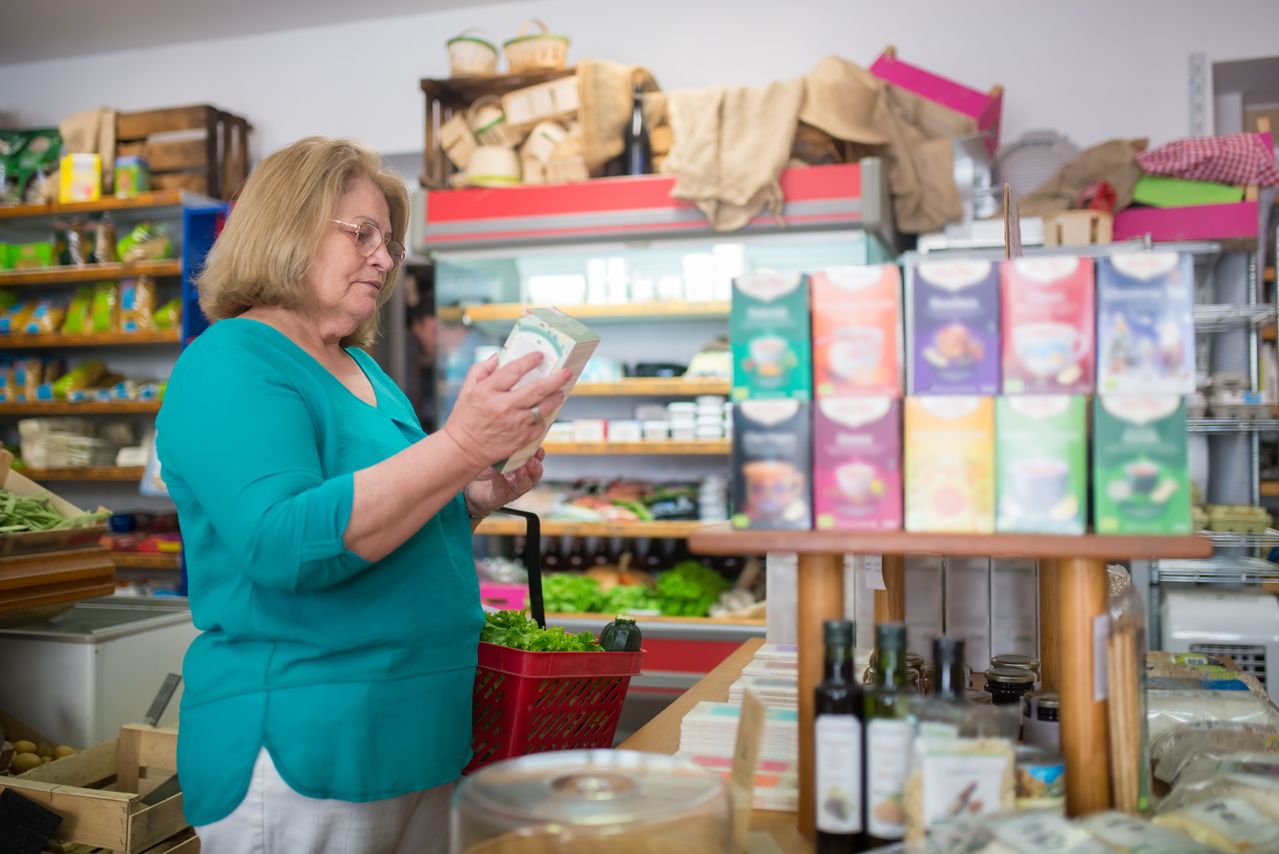
It happens in seconds. You reach for the smaller package because it feels cheaper, smarter, and more practical. But grocery shelves are designed to make that snap judgment unreliable.
Why your brain treats a smaller package as the safer deal
Most shoppers do not calculate value from scratch in the aisle. They rely on visual shortcuts, and package size is one of the strongest. A smaller box, pouch, or bottle often signals lower spending, even when the cost per ounce is worse. That instinct feels rational because the shelf price is lower, but it does not always reflect the better buy.
Research and government guidance both point to the same problem: consumers are much better at spotting price changes than quantity changes. Purdue’s October 2024 Consumer Food Insights Report found that 82% of surveyed shoppers often or always check overall price, while shrinkflation is harder to detect without looking at weight or unit price. The U.S. GAO also reviewed consumer response to downsizing and found that size reductions can raise the per-unit price while drawing less attention than a direct sticker shock increase.
That gap matters because grocery shopping is a high-speed decision environment. A 2024 CFPB research release on price complexity found that when prices become harder to compare, consumers tend to pay more. While that study was not about cereal boxes or coffee bags specifically, the lesson carries over: the more mental math a shopper must do, the easier it is to misjudge value.
How packaging design helps create the illusion of value
The smaller package can look like the better buy for another reason: brands rarely present value in a neutral way. Shape, height, width, and empty headspace all affect what consumers think they are getting. A shorter, sturdier container can feel efficient and premium, while a taller one can appear generous even when the net contents say otherwise.
Food packaging rules do try to limit deception. Federal regulation says a food container can be misleading if it contains nonfunctional slack-fill, meaning empty space that serves no legitimate purpose. But many packages still use legal design choices that create strong impressions without technically mislabeling the contents. The front panel sells the feeling; the net weight tells the truth.
Unit pricing was created to counter exactly this problem. According to NIST’s 2025 Unit Pricing Guide, shelf labels became the preferred method because they are easier for consumers to use, and 74% of shoppers use unit pricing in stores when it is available, citing FMI grocery shopper data. NIST calls unit pricing one of the most effective tools consumers have for comparing value, especially when package sizes change.
The number that actually tells you which package wins
If two packages seem close, the deciding factor should usually be the unit price, not the package size or even the sticker price. That small shelf number, listed by ounce, pound, or quart, strips away the visual tricks. It lets shoppers compare brands, store labels, and oddly sized packages on equal terms.
That matters more than ever in an era of downsizing. A 2024 Marketing Science study using U.S. grocery retail data found that after a size reduction, price per volume was about 12% higher on average over the following 12 months. In other words, a product can look familiar, cost about the same, and still quietly become a worse deal.
None of this means the largest package is always the winner. Sometimes a smaller pack makes sense if it prevents waste, fits a budget this week, or matches how fast your household actually uses the product. But when the question is pure value, the smartest move is simple: ignore the shape, ignore the “convenient” size, and read the per-unit cost first. That is where the better buy usually reveals itself.