
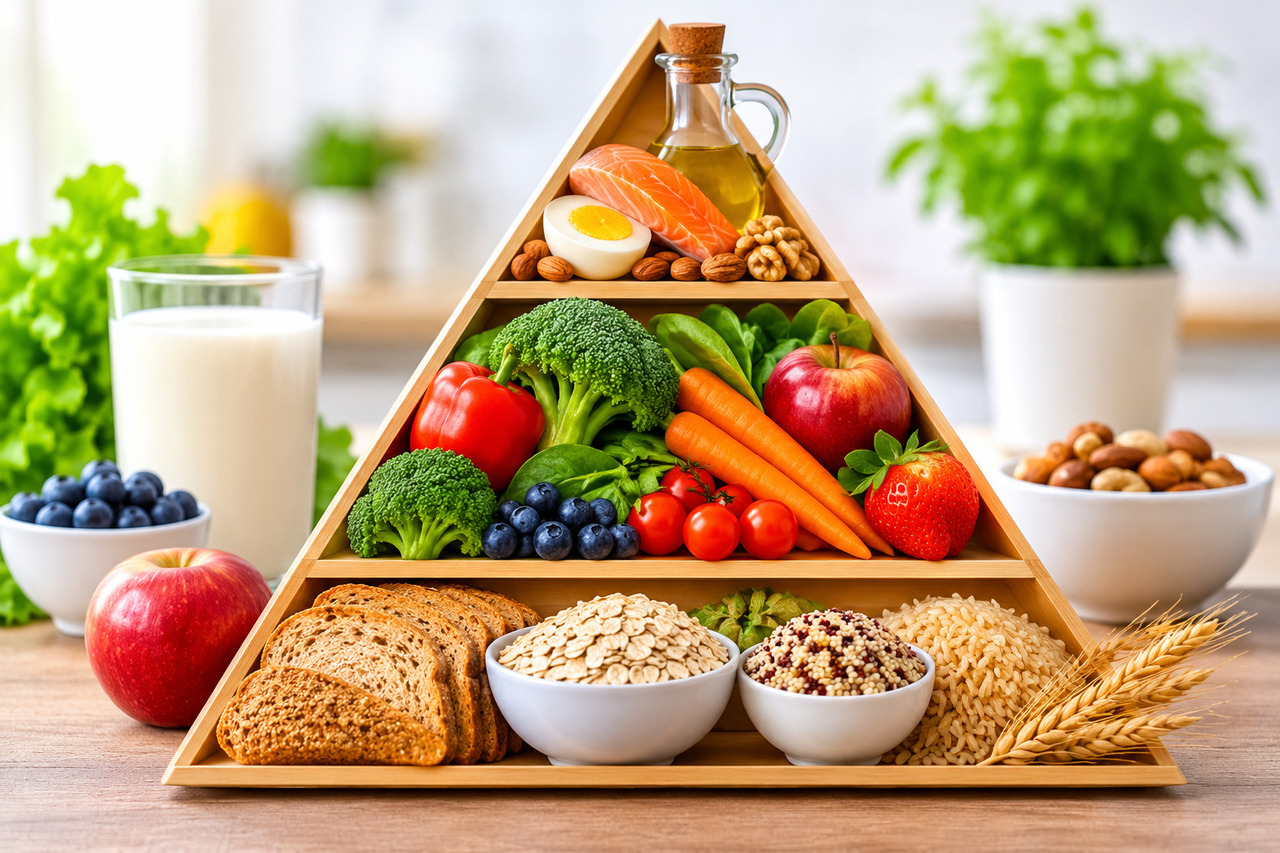
A new federal food pyramid is now part of the Dietary Guidelines for Americans, 2025 to 2030. Released January 7, 2026, the update from the U.S. Departments of Agriculture and Health and Human Services replaces the long familiar MyPlate style visual with a new pyramid tied to an “Eat Real Food” message.
For home cooks, the shift is less about a single weeknight dinner and more about what foods the government is putting front and center. The new graphic and its companion website place protein, dairy, and healthy fats at the top of the framework, with vegetables and fruits in the middle and whole grains at the base.
What the new pyramid says to eat
According to the federal dietary guidelines page, the current edition is the 2025 to 2030 Dietary Guidelines for Americans, issued in January 2026 and updated every five years. The official summary says the guidance prioritizes whole, nutrient-dense foods, including protein, dairy, vegetables, fruits, healthy fats, and whole grains, while recommending less highly processed food.
On the RealFood.gov companion site, the new pyramid is broken into three main bands. One section is labeled protein, dairy, and healthy fats. Another is vegetables and fruits. The third is whole grains. The site also gives serving targets of 3 servings of vegetables per day, 2 servings of fruit per day, and 2 to 4 servings of whole grains per day.
The same site says every meal should prioritize protein and gives a target of 1.2 to 1.6 grams of protein per kilogram of body weight per day. It also lists foods such as eggs, seafood, meats, full-fat dairy, nuts, seeds, olives, and avocados under that top tier. STAT reported that the new inverted pyramid emphasizes fruits and vegetables along with protein, dairy, and healthy fats, replacing MyPlate as the main consumer visual.
Why the update is getting a mixed reaction
Some nutrition experts have praised parts of the new guidance, especially its tougher tone on added sugars and heavily processed foods. Harvard T.H. Chan School of Public Health highlighted positive elements, including advice to avoid highly processed packaged and ready-to-eat foods that are salty or sweet, avoid sugar-sweetened beverages, and keep emphasizing whole foods and whole grains.
At the same time, Harvard experts also raised concerns about how the pyramid presents animal foods and dairy. In Harvard Health’s review, experts said the new recommendations give animal protein sources top billing, promote three daily servings of full-fat dairy, and add butter and beef tallow to the healthy fats category. They argued that this could make it harder for people to stay within the long standing cap of 10% of calories from saturated fat.
Harvard’s public health school made a similar point in a January 13, 2026 explainer. Faculty members said fruits and vegetables remain prominent and that reducing refined grains is appropriate, but they also questioned whether the stronger emphasis on meat and full-fat dairy lines up with the broader evidence base. That tension helps explain why the new pyramid seems to be marching to its own beat compared with older federal visuals.
What it means in a home kitchen
For cooks and grocery shoppers, the most practical takeaway is that the guidelines still push meals built from recognizable foods rather than heavily processed ones. Vegetables, fruit, whole grains, and a range of protein foods all remain in the picture, and the official page says the aim is to support health and prevent disease through everyday food choices.
The harder part is deciding how literally to follow the pyramid’s hierarchy. The federal companion site leans heavily into protein and full-fat dairy, while outside experts quoted by Harvard recommend paying close attention to saturated fat and keeping plant proteins, fiber-rich grains, and minimally processed foods in the mix. That means a home cook may want to read the pyramid as a framework, not a strict menu.
In practical terms, that could look like dinners built around beans, fish, eggs, yogurt, vegetables, fruit, oats, brown rice, or other whole grains, with fewer packaged sweets and sugary drinks. The new symbol may be different, but the kitchen question stays familiar: how much of the plate comes from foods that still look like food.