
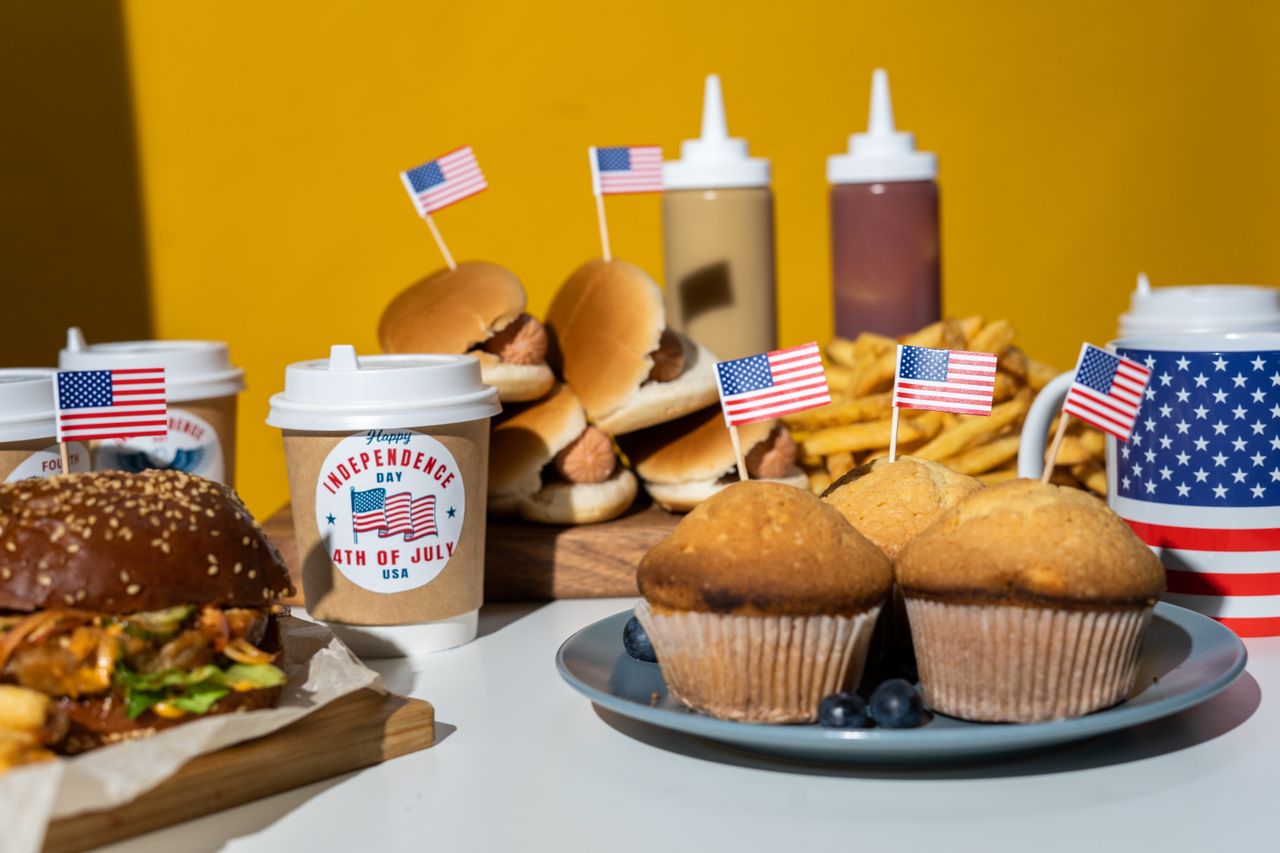
The backyard cookout was already an American ritual by 1976, but the food on the table was not always the burger-and-brat lineup people imagine today. A look at Bicentennial-era menus shows a holiday spread that was broader, sweeter, and often far more formal than the modern Fourth. In many homes, Independence Day food still carried the fingerprints of midcentury entertaining.
The 1976 Fourth of July table was more elaborate than today’s cookout
Magazine menus from the Bicentennial year make one thing clear: Americans did not all celebrate with a simple grill-and-chill dinner. Food Timeline’s archive of July 1976 food features shows national magazines suggesting full holiday menus with baked ham, oven-fried turkey strips, potato salad, braised pepper salad, pecan pie, buttermilk chocolate cake, lemonade, peanuts, and watermelon. Gourmet even proposed a July 4 luncheon built around vichyssoise, broiled salmon steaks with dill butter, tomato aspic, rolls, and a watermelon bombe.
That sounds strikingly formal now, but it fit the era. Holiday entertaining in the 1970s still borrowed heavily from magazine food culture, where hostesses were encouraged to build coordinated menus rather than just put out chips and let the grill do the work. A Fourth of July spread could be patriotic, seasonal, and carefully staged all at once.
Even barbecue looked broader than many people expect. Good Housekeeping’s Bicentennial-style menus featured beef short ribs, red snapper, shrimp, chicken with smoky barbecue sauce, dirty rice, tortillas, and peach cobbler. The message was not that one “correct” July 4 plate existed, but that the holiday could showcase regional American food in a highly curated way.
Molded salads, aspics, and sweet-savory sides were still mainstream
What would probably surprise modern eaters most is not the presence of meat or watermelon, but the side dishes. In the 1970s, gelatin-based salads and molded dishes still had real social currency. Food Timeline’s survey of period foods highlights the decade’s affection for Watergate salad and other molded, fluffy, sweet-savory creations, while Smithsonian has noted how deeply Jell-O culture had embedded itself in American home cooking by the time the 1970s arrived.
That helps explain why a tomato aspic could appear on a July 4 menu without irony. So could macaroni salads loaded with salami, “health salad,” sweet-and-sour slaw, or fruit-heavy dishes that blurred the line between side and dessert. These foods were portable, make-ahead friendly, and visually impressive, which mattered in the picnic-and-potluck culture of the time.
The era also sat at an interesting crossroads. Smithsonian has written that the 1960s and 1970s brought a wider range of culinary influences and more interest in whole foods and global flavors. So the same Independence Day table might include old-school molded salad, smoky barbecue, and something like Szechwan broccoli and beef salad. The combination feels eclectic now, but in 1976 it read as modern.
The biggest surprise may be how transitional the menu really was
Some July 4 staples were already firmly in place. Watermelon, potato salad, cold drinks, and grilled meats were central enough to feel recognizable today. Hot dogs were certainly part of the broader American summer tradition, and federal food surveys from the late 1970s show hot dogs were common enough to be singled out as a standard household food category.
But the holiday menu had not yet narrowed into the streamlined, brand-friendly cookout many Americans know now. The 1976 spread still left room for ham, seafood, layer cakes, molded desserts, homemade relishes, and multicourse picnic menus. It reflected a country that still cooked more from magazines, served more from casseroles and molds, and treated holiday food as a presentation event.
That is why the menu from 50 years ago feels so surprising. It was not exactly old-fashioned and not yet contemporary either. It sat between midcentury domestic showmanship and the casual grill culture that would dominate later decades, making the Bicentennial Fourth less like a modern barbecue and more like a carefully composed summer banquet.
Amazing explanation. the step-by-step details were very helpful. I will share this with my friends.
Really enjoyed reading this. your explanation was simple and practical. Looking forward to your next post.
Amazing explanation. I appreciate the effort you put into this content. I will share this with my friends.