
Americans like to think of themselves as adventurous eaters, and the data gives that idea some support. But curiosity has limits, especially once the suitcase is unpacked and the dinner choice moves from travel fantasy to a weeknight menu.
Why the gap exists in the first place
The broad trend is real: Americans are eating more globally than they used to. The National Restaurant Association reported in its 2025 State of the Restaurant Industry research that 58% of adults say they now eat a wider variety of global cuisines, while 74% say their favorite restaurant foods deliver flavors that are hard to duplicate at home. That helps explain why unfamiliar foods can feel exciting in a destination setting, even when they remain niche in ordinary U.S. ordering habits.
What the evidence does not prove, however, is that the same Americans who avoid certain foods at home suddenly become devoted fans abroad. That distinction matters. A 2025 YouGov survey found especially high dislike or hate ratings for anchovies at 56%, liver at 54%, sardines at 52%, squid at 44%, and oysters at 42%, showing that several internationally celebrated ingredients remain polarizing with U.S. consumers.
That makes this list best understood as a map of foods Americans often admire, seek out, or willingly sample when traveling, but order far less consistently at home. The reasons are practical as much as cultural. Abroad, these foods are often signature dishes, served with confidence and local context; in the United States, they are more likely to appear as specialty items, premium small plates, or ingredients that require a leap of faith many diners do not make.
The seafood Americans praise abroad
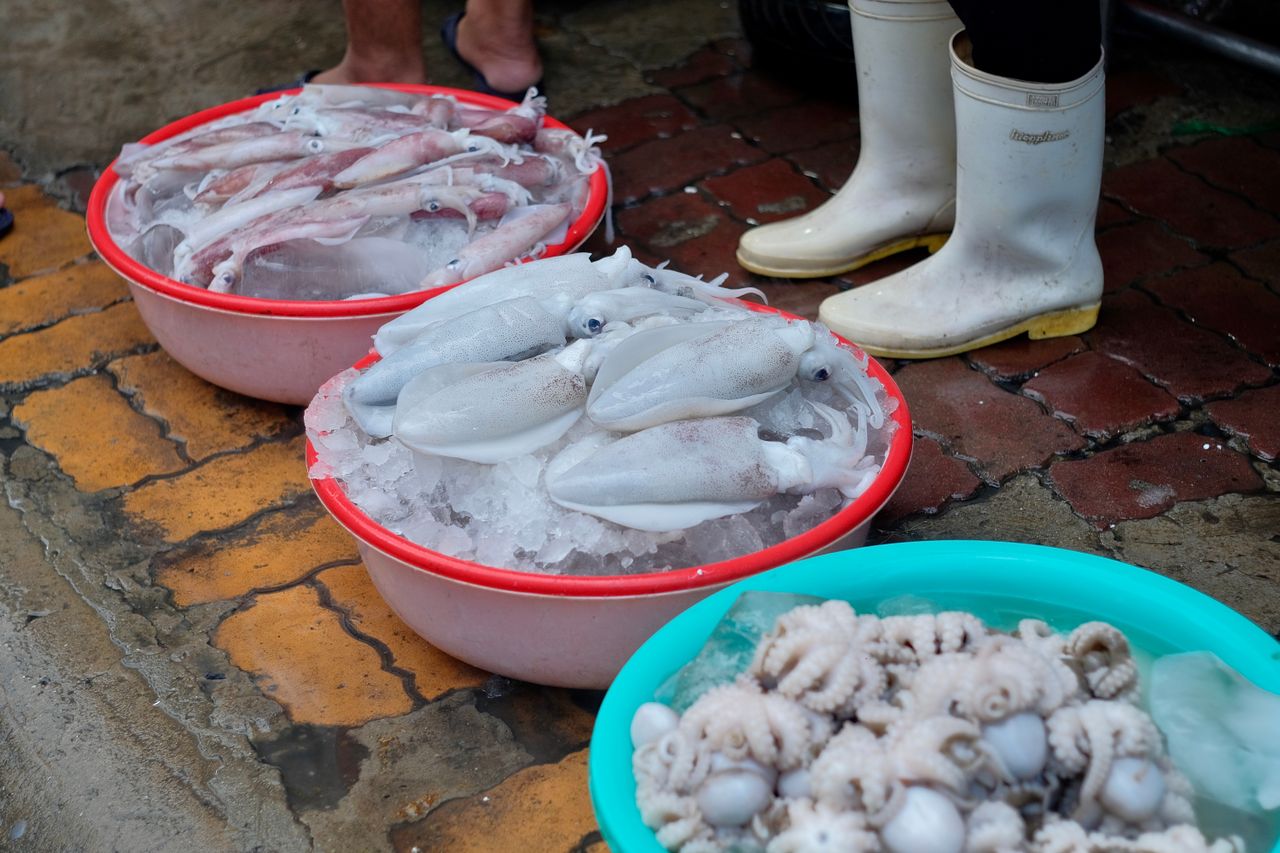
Start with the briny, intensely flavored group: anchovies, sardines, squid, oysters, and octopus. In Spain, Portugal, Japan, Greece, and coastal Italy, these foods are not framed as culinary dares. They are staples, often grilled, marinated, tinned with care, or served hours after harvest. That context changes perception. A plate of grilled octopus on a seaside terrace reads as regional craft, not risk.
Back home, the same foods can struggle against image problems. Anchovies are still reduced to a pizza argument. Sardines remain associated with pantry austerity rather than elegance, despite their prestige in parts of Southern Europe. Squid often fares better when renamed calamari, which is telling: menu language can make an ingredient feel approachable without changing the ingredient itself.
Oysters are the clearest example of how setting influences demand. In a famous coastal market or historic oyster bar abroad, they can feel essential to place. In everyday U.S. dining, though, they remain expensive, texturally divisive, and strongly tied to occasion. Americans may rave about these foods on trips, yet the YouGov numbers suggest many are still not eager to make them routine orders at home.
The richer, funkier foods that stay niche in the U.S.
Then there are the meats and flavors that travel well in memory but poorly in mainstream repetition: liver, lamb, blue cheese, chitterlings, and other deeply savory foods with strong aromas or acquired textures. These are the dishes people recall from Paris bistros, Turkish grills, Moroccan tagines, or British gastropubs with real affection, yet rarely plug into their standard domestic rotation.
Lamb is a particularly revealing case. USDA Economic Research Service data shows U.S. per-capita lamb and mutton consumption has fallen from nearly 5 pounds in the 1960s to about 1 pound today. USDA also stresses that food-availability figures are a proxy for consumption rather than a direct count of what each person ate, but the pattern is still unmistakable: lamb remains far less central in the American diet than beef, pork, or chicken.
Blue cheese and liver tell a similar story from a different angle. Both are widely respected in culinary culture, and both remain easy to praise in the abstract. Yet the same YouGov data that ranks liver among America’s most disliked foods suggests admiration does not automatically convert into ordering behavior. In other words, Americans increasingly embrace global food culture, but some ingredients still function more as destination pleasures than dependable hometown picks.