
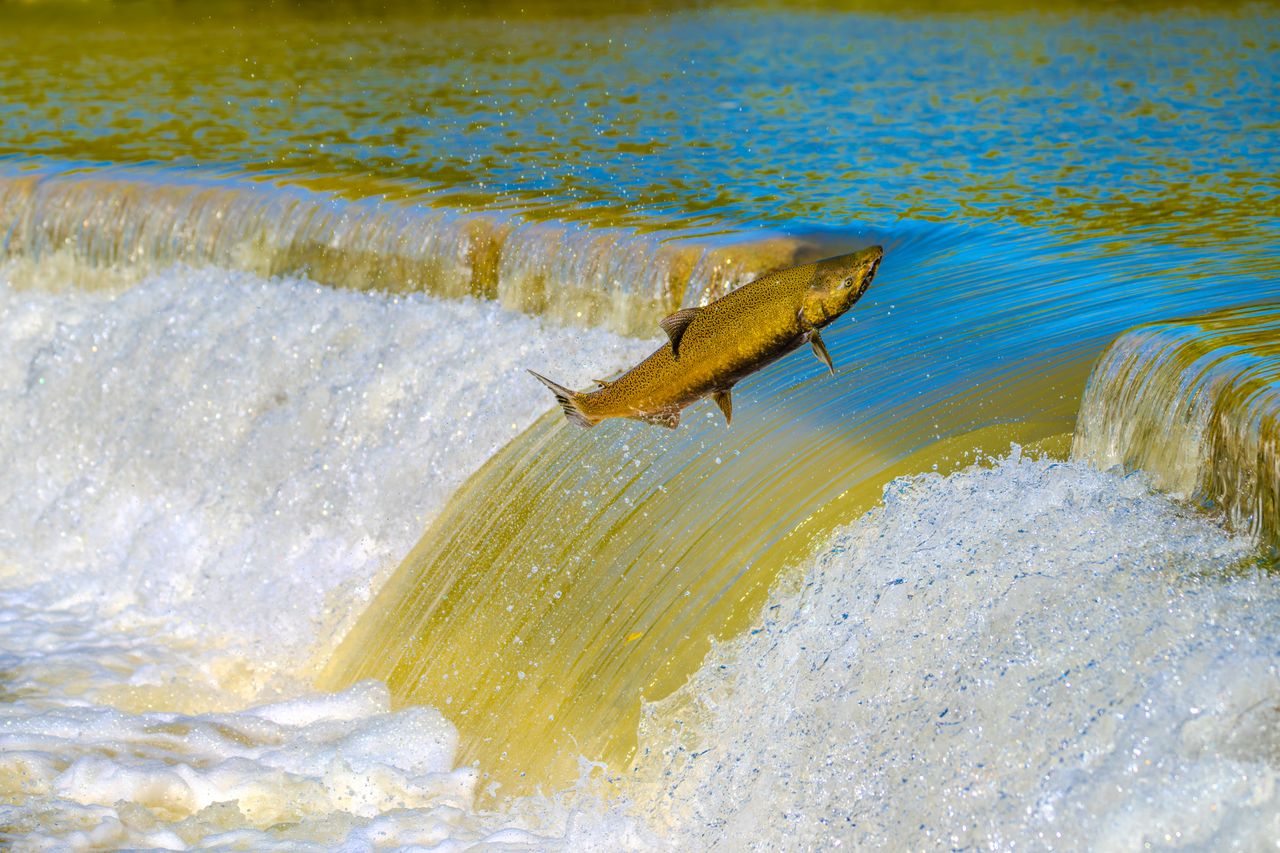
The salmon are back, and that alone would be a major story. But on the Klamath River, their return signals something far larger: a rare moment when ecology, culture, and food security begin to heal at the same time.
For decades, the Klamath stood as a warning about what happens when a river is cut off from its fish. Now it is becoming a test case for how quickly life can return when barriers come down.
A River Reopened, A Food System Revived
In October 2024, the last major steps in removing four hydroelectric dams on the Klamath River were completed, finishing what NOAA Fisheries and other agencies have described as the largest dam removal project in U.S. history. The work reopened hundreds of miles of habitat, with NOAA saying salmon and steelhead gained access to roughly 420 miles of river and tributaries. Within days, Chinook were documented moving into stretches they had not reached in more than a century.
That matters far beyond fisheries biology. The Klamath was once one of the most productive salmon rivers in the lower 48, according to NOAA, and salmon are not just wildlife here; they are food, ceremony, trade, and identity. For the Yurok, Karuk, Hoopa and other tribal communities, the loss of salmon was never merely environmental decline. It was a direct blow to subsistence, health, and cultural continuity.
The urgency was sharpened by catastrophe. In 2002, a disease outbreak fueled by low flows and warm water killed more than 34,000 fish, mostly Chinook, in one of the basin’s defining ecological disasters. That die-off became a turning point in the long fight to restore the river, and it remains a vivid reminder that salmon recovery is inseparable from water quality and river management.
Why Early Returns Matter So Much
The most striking part of the Klamath story is how quickly salmon responded once the river was reconnected. The Associated Press reported that Chinook began migrating into newly accessible habitat above the former Iron Gate Dam site just days after completion. By late 2025, California Department of Fish and Wildlife scientists were describing “salmon everywhere,” saying fish were reoccupying much of their historic range surprisingly fast.
Scientists had reason to expect benefits, but not to take them for granted. Oregon State University researchers concluded before full removal that taking out the dams should reduce disease risk and help restore balance in a river long plagued by warm water, toxic algae, and parasite pressure. Removing stagnant reservoirs changes temperature patterns, improves flow conditions, and reduces some of the slow-water conditions that favored outbreaks harmful to juvenile salmon.
Early monitoring is also showing why this recovery is bigger than a single species. NOAA says the basin-wide effort is designed to track Chinook, coho, steelhead, lamprey, and other native fish as they spread into reopened habitat. In practical terms, more connected habitat creates resilience. If one tributary suffers from drought, wildfire, or heat, fish in other parts of the watershed can still sustain the broader population.
The Klamath’s Real Lesson for America
It is tempting to tell this as a feel-good before-and-after story, but the Klamath’s importance is more serious than that. Dam removal alone does not guarantee abundance. NOAA, tribal fisheries teams, and restoration groups have all emphasized that recovery also depends on cold-water tributary restoration, water-quality improvement, floodplain function, and long-term monitoring. The fish are back, but the work is not over.
What makes the Klamath exceptional is that it links restoration to everyday human realities. Salmon are a premium wild food, a subsistence staple, and a pillar of tribal food sovereignty. When salmon runs collapse, communities lose not only income and commercial opportunity but also reliable access to culturally essential protein. When they return, the benefit moves from the riverbank to the dinner table.
That is why the Klamath now carries national significance. It offers a real-world example of how environmental repair can support biodiversity, public health, and regional economies at once. In an era of hotter rivers and shrinking runs across the West, the Klamath is not just a comeback story. It is evidence that restoring a food-producing river system can still be one of the smartest investments a society makes.