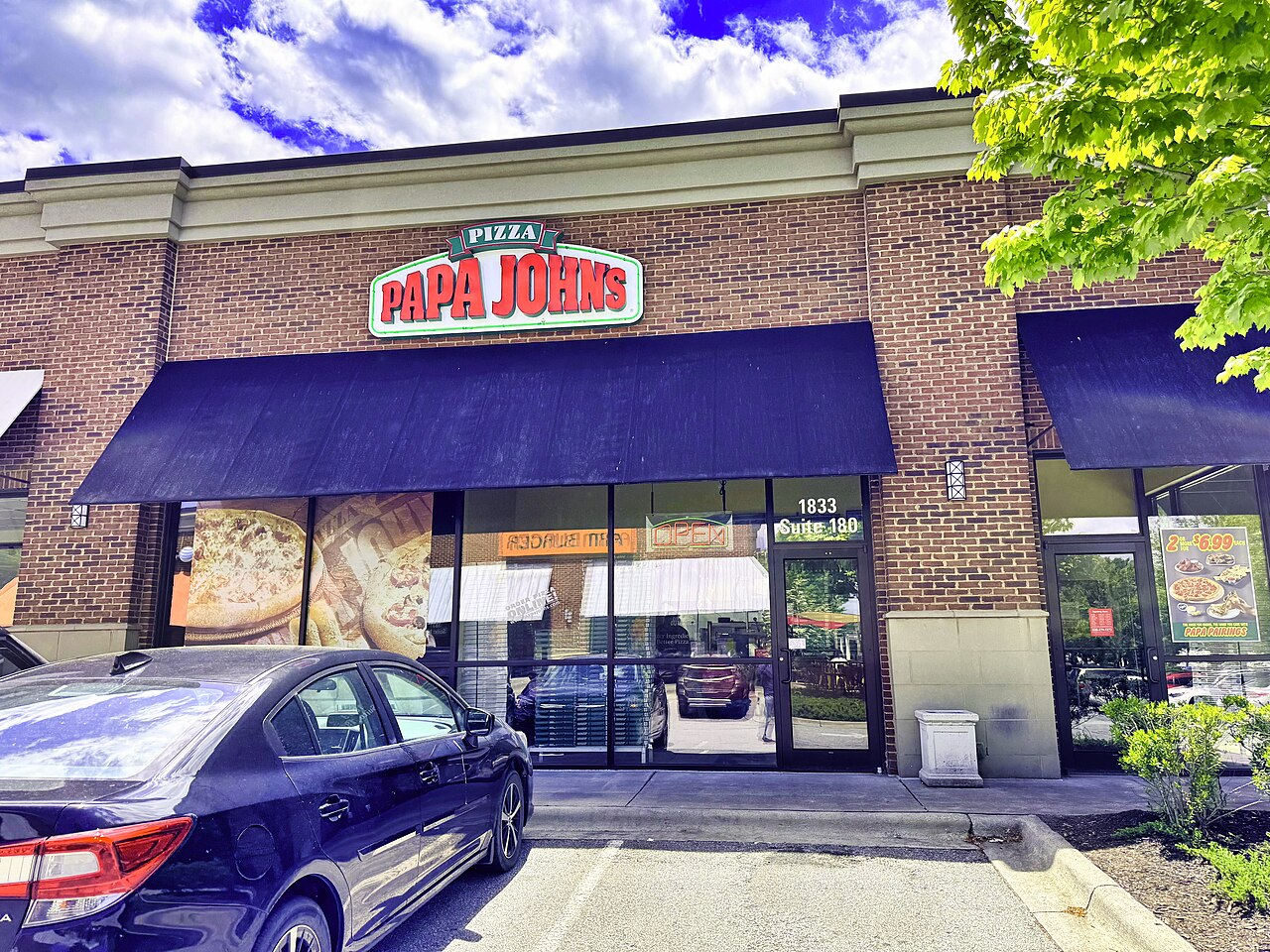
It starts as a gimmick and quickly becomes something much harder to resist. Suddenly, Papa Johns is not just selling pizza, it is selling a childhood memory with extra cheese.
A movie landmark just got a real-world address

Papa Johns has officially launched a Pizza Planet-themed campaign in partnership with Disney and Pixar ahead of Toy Story 5, which is scheduled to arrive in theaters on June 19, 2026. According to the company, the promotion is built around immersive pop-ups, limited-edition menu items, collectibles, and a broad international rollout designed to bring the fictional pizzeria from the Toy Story universe into everyday life. That matters because Pizza Planet is not just a background setting from 1995; it is one of the most recognizable food spaces in animation.
The scale is notable. Papa Johns said the pop-up experiences are landing in Los Angeles, London, Seoul, and Madrid, while themed menus are rolling out across 43 markets worldwide. For a quick-service pizza brand, that is not a tiny licensing stunt or a one-city experiment. It is a coordinated global campaign with the kind of geographic ambition usually reserved for major movie launches.
What makes the idea click is its emotional precision. Pizza Planet sits in a rare category of fictional restaurant: a place many people feel they already know. By recreating it physically, Papa Johns is tapping into nostalgia that spans generations, from adults who saw the first Toy Story in theaters to younger fans arriving through streaming, sequels, and merchandise.
The menu is doing more than wearing a costume

The campaign is not just visual dressing. In U.S. markets, Papa Johns introduced Toy Story 5 Personal Pizzas, a limited-time product positioned as an individual 4-slice pie. Customers can choose among three themed builds or create their own, and the pizzas are served in Toy Story 5-inspired packaging with a side of Rootin’ Tootin’ Ranch, a dipping sauce seasoned with pepperoni-style flavor. It is a simple product move, but a smart one because it turns novelty into an actual ordering format.
The featured pizzas lean into character branding with names such as Space Ranger Roni, Reach For The Pie, and Sheriff’s Round Up. That naming strategy matters more than it may seem. Fast-food tie-ins often fail when the food remains generic and only the box changes, but these products are being sold as a distinct mini-line with their own identity, size, and sauce.
There is also a broader strategic angle here. Papa Johns brought pan pizza back permanently in January 2026 after years of development, signaling a renewed push to strengthen its core pizza platforms instead of relying only on side items and short-term stunts. The Pizza Planet campaign fits that strategy well: it is promotional, but it still keeps the spotlight squarely on pizza.
The pop-ups are built for the camera and the memory
Papa John’s describes the Pizza Planet activations as retro-inspired pizza arcades filled with games, themed surprises, and easter eggs connected to the new film. That is a crucial detail because modern branded pop-ups live or die on whether they feel immersive enough to justify leaving the app and showing up in person. A wall decal is not enough anymore. Consumers expect spaces that are interactive, photogenic, and emotionally legible within seconds.
This is where the campaign looks especially current. The company says fans can expect themed menus, exclusive merchandise, collectible items, and even chances to score free limited-edition pizzas. In other words, Papa John’s is selling the entire event stack: food, fandom, discovery, social content, and scarcity. That combination tends to travel well online, even among people who never visit the physical site.
The broader lesson is that restaurant marketing now competes with entertainment, not just with other dinner options. A branded meal has to feel like an experience. By turning Pizza Planet into an actual destination instead of a printed logo on cardboard, Papa John’s is acknowledging that the modern consumer often wants a story to go with the slice.
Why this collaboration makes so much sense right now

The timing is unusually strong. Toy Story remains one of the few family franchises with genuine multi-decade emotional equity, and Toy Story 5 gives Disney and Pixar a fresh release window to reactivate it. Papa John’s, meanwhile, gets a cultural shortcut into family movie night, group ordering, and nostalgia-led impulse buying. The overlap is natural enough that the partnership feels less forced than many branded crossovers.
Disney executives have framed the collaboration around friendship, imagination, and shared moments, while Papa John’s has leaned into the long-standing connection between movie nights and pizza nights. That message works because it reflects actual consumer behavior. Pizza remains one of the most common group-order foods in the U.S., especially for casual at-home entertainment, making the partnership operationally sensible as well as emotionally resonant.
There is another reason the campaign lands. In a crowded restaurant market, chains increasingly need a recognizable cultural angle to break through. Price promotions alone do not create talk value. Pizza Planet does. It gives Papa John’s a visual language, a narrative, and a built-in emotional archive that most brands would spend years trying to build from scratch.
Nostalgia is powerful, but execution still matters

Not every licensed promotion succeeds just because the intellectual property is beloved. Consumers are much more skeptical than they were a decade ago, and they can tell the difference between a thoughtful collaboration and a shallow cash-in. That raises the stakes for the food quality, packaging, availability, and in-store consistency. When a campaign trades this heavily on memory, disappointment can feel sharper because the emotional promise is larger.
Papa John’s appears to understand that risk. The company is not only offering themed food, but also in-app engagement through Operation Pizza, described as its first in-app game, available to Papa Rewards members in the U.S. That matters because it extends the campaign beyond a one-time order and turns it into a repeat-touchpoint loyalty play. The promotion runs from May 26 through July 19, giving it enough runway to function as a sustained summer event rather than a fleeting weekend gimmick.
Still, the real test will be whether customers feel the experience matches the fantasy. If the product is memorable, the campaign will look clever. If it feels underdelivered, Pizza Planet becomes a reminder that nostalgia is easiest to sell and hardest to satisfy.
Papa John’s may have found the new template for chain marketing

What makes this campaign stand out is not just that Papa John’s borrowed a famous fictional restaurant. It is that the brand translated that idea across physical spaces, menu architecture, mobile engagement, and collectible culture all at once. That is a far more sophisticated play than the old movie tie-in model of limited cups and logoed boxes. It suggests a future where quick-service restaurants behave more like entertainment platforms during major launches.
For consumers, that can be both fun and revealing. It shows how much the dining experience has shifted from pure convenience to emotional packaging. People are not only buying dinner; they are buying association, identity, and a chance to briefly step inside a piece of pop culture they already love.
And honestly, that is why this one works. Pizza Planet was always designed to feel loud, playful, slightly chaotic, and unforgettable. If Papa John’s can capture even part of that energy in the real world, then no, I am not sure I would want to leave either.