
Food budgets usually unravel in slow motion. It is rarely the big holiday meal or one expensive restaurant splurge that does the damage.
More often, the real leak comes from routine choices that seem too minor to matter. Make them often enough, though, and they can reshape what you spend every month on food.
Convenience is expensive, even when it doesn’t look like a splurge

The first quiet budget killer is paying for convenience without realizing how often you do it. Pre-cut fruit, shredded cheese, single-serve yogurt, marinated proteins, microwaveable rice, chopped vegetables, and grab-and-go snack packs all save time, but they also bundle labor, packaging, and marketing into the price. USDA research has long shown that consumers constantly trade money for time in food purchasing, and that dynamic has only become more visible as prepared grocery items take up more shelf space. In practice, the extra $1 here and $3 there can turn a normal cart into an expensive one very quickly.
That does not mean convenience foods are always a bad decision. For some households, they prevent takeout, reduce stress, and make healthy eating more realistic on busy weeknights. But the cost difference is meaningful when convenience becomes your default instead of your backup plan. A bagged salad kit, pre-portioned deli packs, or heat-and-eat grain bowls may not feel extravagant, yet they often replace cheaper staple-based meals you could assemble for a fraction of the cost with a few extra minutes of prep. NIH has also noted that many ultra-processed foods are intentionally designed to be low cost and long-lasting, which can make them feel economical even when they encourage a pattern of paying more for less food value overall.
A second layer of hidden cost is waste. Highly convenient foods often come in specialized portions or short shelf-life formats, so if you do not eat them promptly, you lose both the premium price and the food itself. That is especially true for prepared produce, deli trays, and refrigerator meals bought with good intentions and forgotten two days later. FDA guidance on reducing food waste specifically warns consumers to be careful when buying in bulk or buying perishables they may not finish, because spoiled food is money thrown away.
The budget-smart move is not to reject convenience entirely. It is to choose it strategically. If buying rotisserie chicken prevents a $45 delivery order, that is smart spending. If paying extra for chopped onions saves you two minutes but pushes your weekly bill up every trip, that is where a “small” decision starts acting like a major expense.
The biggest food budget trap may be what you buy after you already have enough at home
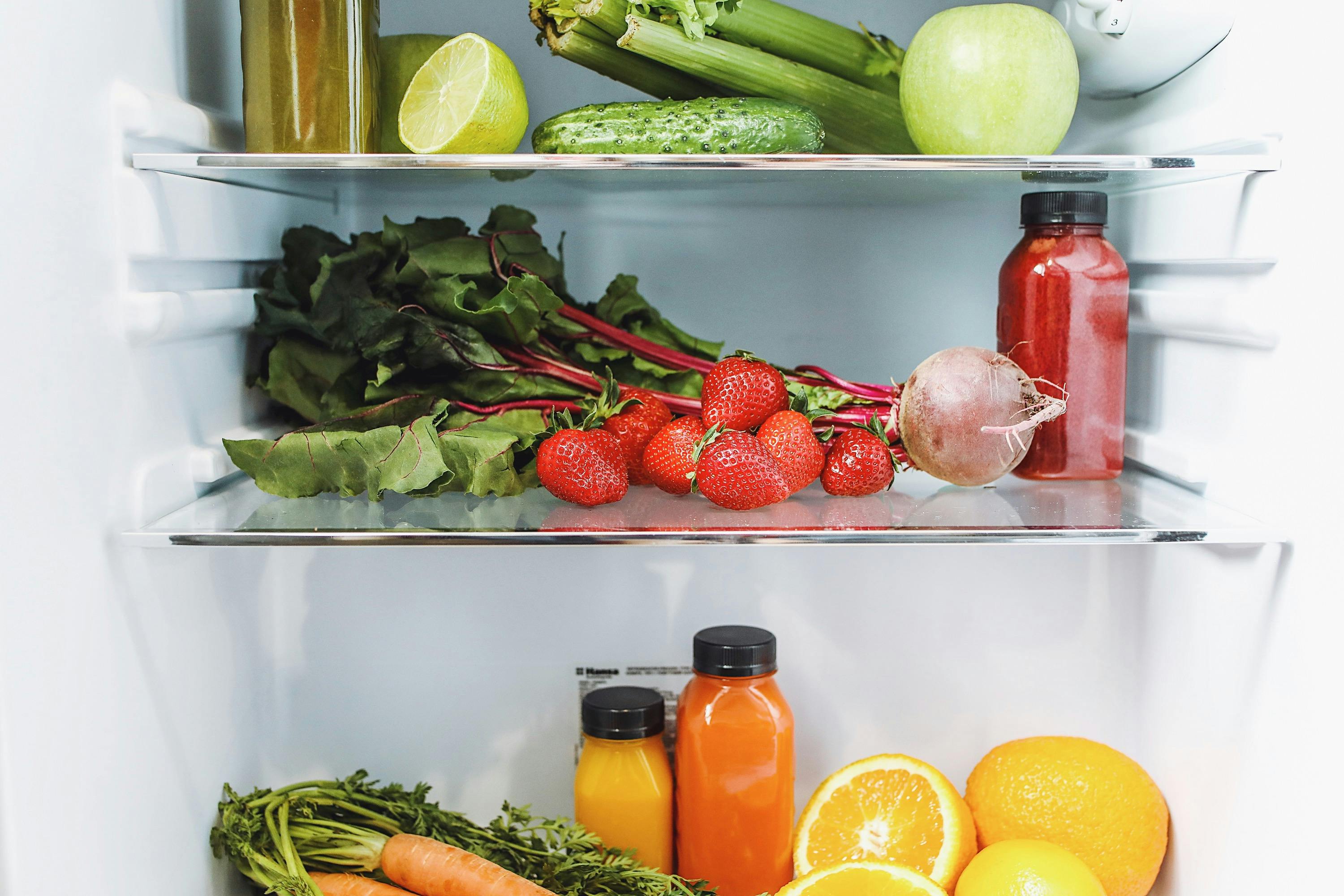
One of the most expensive habits in any kitchen is shopping without a clear plan for what is already in the refrigerator, freezer, and pantry. People often think their food problem is high prices, when the more immediate issue is duplication. You buy another carton of eggs because you forgot you had one. You grab lettuce for tacos, then abandon taco night. You stock up on chicken breasts, then order takeout twice and let the produce wilt. Those are tiny choices individually, but together they inflate a food budget without improving how anyone actually eats.
Food waste is a budget issue first and a sustainability issue second. EPA says preventing wasted food by buying and preparing only what is needed saves grocery money, and the agency’s recent reporting indicates households are a major source of wasted food in the United States. USDA’s food loss data system likewise tracks consumer-level losses across major food categories, underscoring how much of the food purchased for home use never gets eaten.
Storage mistakes make that problem worse. FDA says refrigerators should be kept at or below 40°F, and perishable leftovers that sit above that threshold for four hours or more should be discarded. That means poor storage is not just a food safety risk; it is a direct financial loss. The same applies to leftovers that are never labeled, produce shoved into a crisper drawer until it turns to sludge, and freezer items buried so long they become unrecognizable.
The households that control food spending best usually make one simple adjustment: they shop from home first. Before ordering groceries or walking into a store, they check what proteins need to be cooked, what vegetables are at risk, and what leftovers can become lunch. That one habit changes buying behavior immediately. Suddenly the budget question is no longer “What sounds good?” but “What do I need to use?” That is a small mental shift with a large financial payoff.
A related mistake is overestimating how aspirational your cooking week can be. If you know you realistically have time to cook three dinners, buying ingredients for six fresh meals is not ambition. It is waste waiting to happen. Budget-conscious shoppers build around their real schedule, not their ideal self, and that honesty alone can cut food spending without sacrificing quality.
Drinks, snacks, and “little treats” can quietly outrun the cost of actual meals
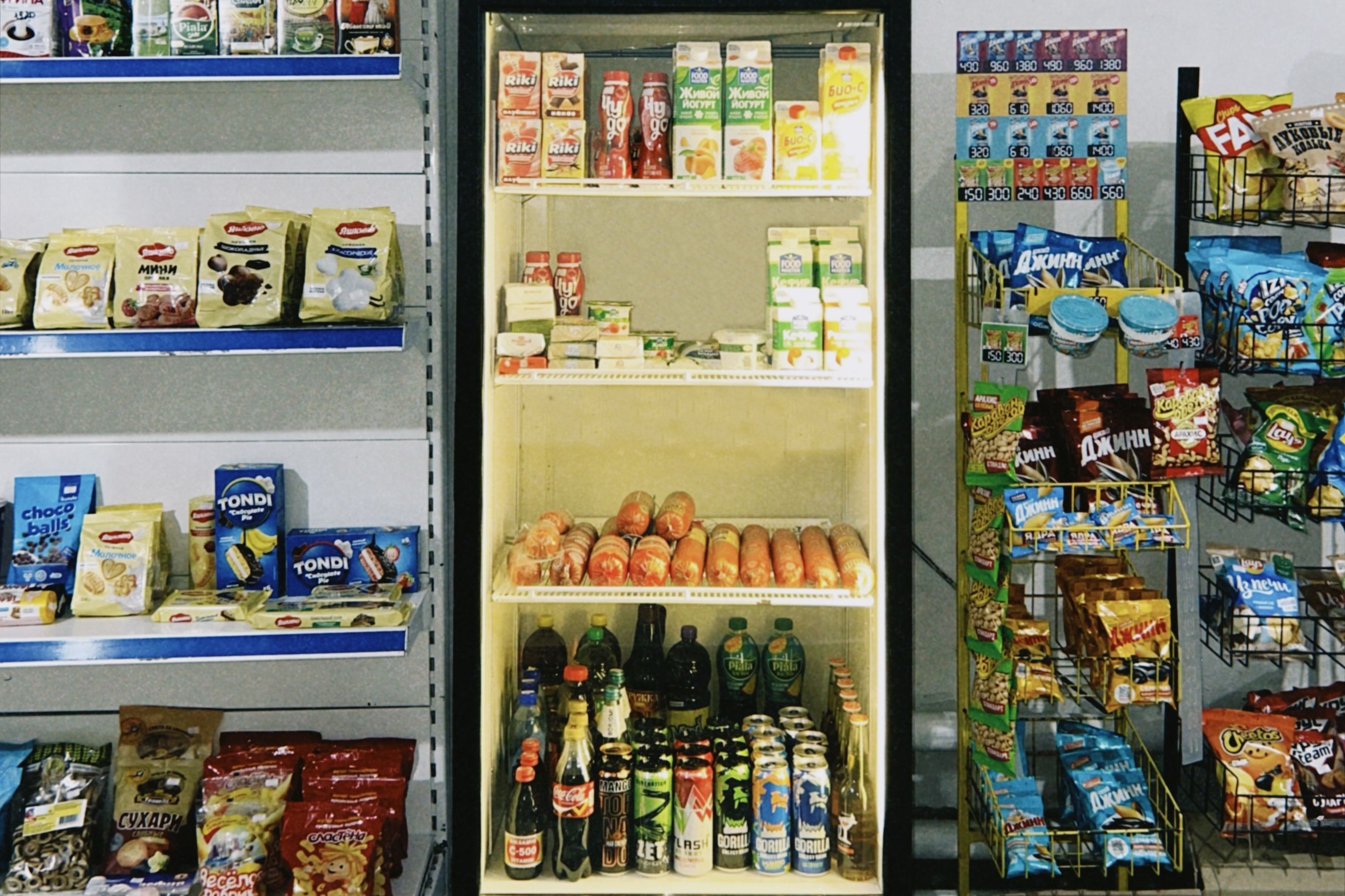
Many people scrutinize the cost of chicken, bread, and produce while barely noticing what beverages and snack items are doing to the total. Yet these are often the fastest-growing parts of a cart because they feel incidental. A case of sparkling water, two coffees, sports drinks, soda, protein bars, chips, cookies, and a “just because” dessert can add more to a receipt than the ingredients for several dinners. The budget problem is not that any one item is outrageous. It is that these purchases happen almost automatically.
The public health evidence is revealing here because it shows how routine drink spending can become. CDC notes that sugar-sweetened beverages remain a leading source of added sugars in the American diet, and that nearly half of adults consumed one on a given day in the underlying national data it cites. Separately, BLS reported that U.S. households spent an average of $294 on alcoholic beverages consumed at home and $343 on alcoholic beverages consumed away from home in 2023. Those figures do not prove overspending, but they illustrate how beverage habits become a substantial annual category of food-related expense.
The same pattern applies to snack convenience. Individually wrapped foods and impulse treats tend to have high markups relative to staples because you are paying for portioning, branding, and immediacy. If you buy a family-size tub of yogurt and portion it yourself, or pop popcorn at home instead of buying snack bags, the per-serving cost usually falls sharply. But when households operate on autopilot, convenience wins, and the cart fills with items that disappear in days while the bill lingers all month.
This category is emotionally tricky because treats matter. Food is not just fuel, and a rigid budget that bans pleasure usually fails. The more effective strategy is to distinguish intentional enjoyment from mindless drift. A planned Friday bakery dessert may cost less than a week of unplanned checkout candy, bottled coffees, and “I deserve it” add-ons. The difference is not deprivation. It is simply choosing where indulgence happens.
If a household wants one high-impact change, this is a strong place to start. Track beverages and snack purchases for a month, including convenience-store stops and add-on drinks with takeout. Most people are surprised by the total because these decisions rarely feel like “real spending” in the moment, even though they behave like a recurring bill.
Where and how you shop matters almost as much as what you buy
A fourth major factor is store choice. The same household can buy roughly the same foods and still end up with meaningfully different totals depending on whether they shop at a warehouse club, discount grocer, conventional supermarket, convenience store, or delivery platform. USDA’s food price resources show that prices vary by food category and geography, while BLS data continue to show food away from home rising faster than grocery prices in many recent periods. That matters because the more your routine pushes you toward high-cost channels, the more your budget absorbs those premiums.
Online grocery shopping is a particularly important modern example. It can absolutely save money if it reduces impulse buying and makes comparison shopping easier. But it can also do the opposite once delivery fees, service charges, tips, minimum orders, and higher item prices enter the picture. Consumer Reports reported in late 2025 that some grocery prices on Instacart differed by as much as 23 percent per item between customers during pricing experiments, and the FTC has also highlighted how delivery platforms can drive food costs significantly higher. That does not mean every online order is a bad deal, but it does mean convenience technology is not automatically budget-friendly.
Another quiet drain is treating every shopping trip like a restock of everything. People often buy pantry staples, produce, frozen items, paper goods, and treats from whatever store they happen to be in, rather than matching categories to the best-value retailer. You do not have to become an extreme couponer to benefit from store strategy. Simply using one lower-cost store for staples and reserving premium stores for specialty items can make a real difference over a year.
Unit pricing also deserves more respect than it gets. Sale signs, family packs, and buy-more-save-more promotions are designed to steer attention toward the sticker, not the true value. If the cheaper-per-ounce product is something your household will not finish, it is not actually cheaper. The best budget shoppers compare unit prices and shelf life at the same time, because low cost per ounce means very little if 1/3 of the package ends up in the trash.
Small planning habits beat heroic frugality every time

The most powerful budget-saving food decisions are often boring. They are not flashy hacks or extreme restrictions. They are repeatable systems: making a list, assigning ingredients to specific meals, freezing leftovers before they become unappealing, and keeping one or two low-cost fallback dinners on hand. BLS said household spending on food at home averaged $6,224 in 2024, compared with $3,945 for food away from home. That gap helps explain why small decisions that reduce restaurant dependence can have an outsized financial effect. Even trimming one or two takeout occasions a week by having a realistic home option can materially change monthly spending.
Leftovers are central here, but only if they are handled with intent. USDA food safety guidance says leftovers should be refrigerated or frozen promptly, and frozen leftovers remain safe indefinitely, though quality can decline over time. In practical terms, the households that save the most money do not merely “have leftovers.” They portion them, label them, and plan when they will be eaten. Otherwise leftovers become a feel-good story you tell yourself while ordering dinner the next night.
It also helps to build a budget around flexible ingredients instead of highly specific meal ambitions. Rice, pasta, beans, eggs, tortillas, broth, frozen vegetables, chicken thighs, canned tomatoes, and shredded cheese can move across multiple dinners and lunches. That flexibility lowers the odds of spoilage and gives you a buffer when schedules change. By contrast, shopping for one intricate recipe after another can leave you with half-used herbs, specialty sauces, and expensive perishables that do not convert easily into the next meal.
The deeper lesson is that food budgets are shaped less by discipline than by design. If your kitchen is organized to support easy, decent meals, you spend less without feeling deprived. If every meal decision starts from zero, convenience and fatigue will usually win. The nine small decisions behind most overspending are not dramatic at all: buying convenience as a default, overbuying perishables, ignoring what you have, wasting leftovers, treating drinks as invisible spending, letting snacks multiply, shopping in the wrong channel, falling for fake bargains, and failing to plan one step ahead. Correct even a few of those, and the savings tend to show up faster than people expect.