This Sold-Out Grocery Favorite Just Got Recalled: Here’s What Went Wrong

Frozen convenience foods have become one of grocery’s fastest-moving categories, especially as shoppers snap up globally inspired meals with limited shelf time. That trend now includes a recall at ALDI, where a sold-out favorite has been pulled over an undeclared allergen issue.

ALDI recalls a popular Fusia kimbap item over undeclared tuna

Gellert Global Group announced on July 2, 2026 that it was recalling 8.1-ounce packages of ALDI Brand Fusia Asian Inspirations Kimchi & Tofu Kimbap after the product was found to potentially contain undeclared tuna, according to the U.S. Food and Drug Administration. The FDA listed the recall under food and beverage allergens and said the item was sold in a sealed, microwave-safe plastic wrapper marked with a Best If Used By date of OCT.08.2027. The company said no illnesses had been reported as of the announcement date.

The specific product named in the recall is ALDI Brand Fusia Asian Inspirations Kimchi & Tofu Kimbap, net weight 8.1 ounces. The FDA notice publicly lists the reason as undeclared fish, specifically tuna, which is one of the major food allergens that must be declared on packaging. The company said the recall began after a consumer found that a fish-containing product had been distributed in packaging that did not disclose the presence of fish.

The official FDA recall posting identifies the company as Gellert Global Group of Elizabeth, New Jersey. The agency’s public recall page shows the event as active or completed but not marked terminated as of the most recent FDA listing available through July 7, 2026. An FDA enforcement recall number and a hazard classification such as Class I, Class II, or Class III were not listed in the public recall materials reviewed for this article.

The recall reaches 20 jurisdictions, but store-level lists have not been released

The recalled kimbap was distributed to select ALDI retail stores in Connecticut, Washington, D.C., Delaware, Louisiana, Maryland, Maine, Massachusetts, North Carolina, New Hampshire, New York, Ohio, Oklahoma, Pennsylvania, Rhode Island, South Carolina, Tennessee, Texas, Virginia, Vermont, and West Virginia, according to the FDA notice. That means the recall spans the Northeast, Mid-Atlantic, South, and parts of the Midwest, with no public indication that stores outside those jurisdictions received the affected product.

What remains unconfirmed is which individual stores within those states and the District were sent the item. ALDI has not released a comprehensive store-by-store list of affected locations in the public materials reviewed, and the FDA notice identifies only “select ALDI retail stores.” That leaves customers to identify the product by name, size, packaging format, and Best If Used By date rather than by a published local store roster.

The notice also does not provide a UPC code or lot code in the public recall posting reviewed for this article. Instead, the identifying details center on the 8.1-ounce package, the Fusia Asian Inspirations branding, and the OCT.08.2027 date mark. Consumers who bought that specific item were told to return it to the place of purchase for a full refund, and the company also provided a customer contact line for questions.

A packaging breakdown caused the problem, and shoppers should expect refunds

The company said a temporary breakdown in production and packaging procedures caused the recall and that the issue has since been corrected. That explanation, published in the FDA-posted company announcement, points to a labeling and packaging failure rather than a contamination event. In practical terms, the problem was that tuna ended up in product packaging marketed as kimchi and tofu without fish being declared on the label.

That distinction matters for shoppers with fish allergies or severe sensitivities. The FDA notice said people with an allergy or severe sensitivity to fish could face a serious or life-threatening allergic reaction if they consume the product. As of July 2, 2026, however, the company said no adverse reactions or illnesses had been reported in connection with this recall.

For customers, the immediate guidance is narrow and specific: return the recalled 8.1-ounce ALDI Brand Fusia Asian Inspirations Kimchi & Tofu Kimbap to the place of purchase for a full refund. Gellert Global Group said consumers with questions can contact the company during weekday business hours, while ALDI’s separate public notice has also advised shoppers not to consume the affected item. The recall remains one more example of how a single packaging error can quickly affect a high-demand grocery item across multiple states.

Two Nebraska Restaurant Icons Are Closing Their Doors This Month

Restaurant closures have continued to reshape dining districts across the country as operators confront lease decisions, uneven traffic and higher operating costs. In Nebraska, that pressure is now hitting two familiar names tied to Omaha and Lincoln, with one confirmed closure in Aksarben Village and one Lincoln closure report that remains unresolved.

Oklahoma Joe’s in Omaha is set to close its last Nebraska restaurant

Oklahoma Joe’s BBQ is expected to close its restaurant at 1912 South 67th Street in Omaha’s Aksarben Village when its lease expires in July, according to reporting published by NewsBreak and attributed to local business details about the property and operator. The restaurant chose not to renew the lease, and the building owner, Noddle Companies, has already begun looking for another restaurant tenant for the space.

The Omaha location opened in November 2018 in one of the city’s busiest mixed-use dining and entertainment districts. Its closure is significant because it is the last Oklahoma Joe’s location in Nebraska after the chain’s west Omaha restaurant at 1405 South 204th Street in Elkhorn closed permanently on December 31, 2024, according to the same report. That leaves the Aksarben restaurant as the final Nebraska outpost until the lease expiration takes effect.

The restaurant name has also caused confusion for some diners. This Omaha operation is not affiliated with Joe’s Kansas City Bar-B-Que, the Kansas City restaurant group that used the Oklahoma Joe’s name before rebranding in 2014. The Nebraska restaurant is tied instead to Tulsa-based pitmaster Joe Davidson’s Oklahoma Joe’s brand, a separate operation described in the NewsBreak report.

Lincoln’s reported China Garden closure remains unclear

In Lincoln, reports surfaced in early July that a China Garden location had closed, but the exact location and status have not been fully confirmed. NewsBreak reported the closure as part of a broader roundup of Nebraska restaurant changes, while also noting that Lincoln has more than one restaurant operating under the China Garden name.

That uncertainty matters because the best-known China Garden at 2901 S. 84th Street in Lincoln appeared to remain open with current business hours at the time of the report. No official closure notice, company statement or comprehensive public list identifying a specific closed Lincoln address was cited in the source material provided for this story. As a result, it is confirmed only that a closure report exists, not that all China Garden restaurants in Lincoln have shut down.

The lack of a verified location list limits what can be said about citywide impact. No statewide location count for China Garden was provided in the source material, and no public filing or landlord announcement was identified there to clarify whether the reported closure involved a permanent shutdown, relocation or temporary interruption.

Lease decisions and local restaurant churn are driving the immediate picture

For Oklahoma Joe’s in Omaha, the clearest stated reason is the lease decision. The restaurant did not renew its lease at Aksarben Village, according to the NewsBreak report, and Noddle Companies is already marketing or seeking a replacement restaurant for the site. No separate public statement in the provided materials gave a more detailed explanation tied to labor, food costs or sales.

The broader context is that restaurant turnover has remained a regular feature in Nebraska markets, even when the state has not seen the same volume of closures reported elsewhere. A prior Lincoln Journal Star business feature noted that Lincoln recorded a net loss of restaurants in one recent year, with 29 openings and 31 closings, underscoring the narrow margins many operators face. That city data does not explain either July closure by itself, but it does show the broader climate in which restaurants are making renewal and operating decisions.

For customers, the immediate takeaway is practical. Omaha diners should expect the Aksarben Oklahoma Joe’s to leave the market this month when its lease ends, removing the chain’s final Nebraska location. Lincoln diners interested in China Garden should expect continued uncertainty until a specific address or operator statement confirms which location, if any, has permanently closed.

5 Grocery Items Where the Name Brand Might Not Be Worth It

You do not always need the familiar logo to get a good grocery product. In many aisles, the real difference is less about quality and more about packaging, marketing, and habit.

Private label has evolved well beyond the bargain-bin stereotype. NielsenIQ reported in 2025 that U.S. private label sales were still growing year over year, showing how comfortable shoppers have become with store-brand basics.

Breakfast cereal and basic oats

Breakfast cereal is one of the clearest examples of a category where branding can outweigh substance. For plain toasted oats, corn flakes, rice squares, and shredded wheat, ingredient panels are often remarkably similar, even when the shelf price is not. That matters because cereal is one of the easiest products to compare side by side: whole grain, sugar, sodium, and serving size are all plainly listed.

Consumer Reports has repeatedly found that store brands can hold their own in blind taste tests, and the organization has also noted that store-brand groceries often cost at least 20% to 25% less than comparable name brands. In a high-volume category like cereal, that gap adds up fast over a month. For families buying multiple boxes a week, the premium for a mascot and a national ad campaign can be hard to justify.

The exception is highly specific texture-driven cereals, where some shoppers do notice differences in crunch or sweetness. But for oatmeal, toasted oat rings, bran flakes, and basic granola, the better play is usually to compare nutrition labels and unit prices instead of assuming the biggest brand is best. If the ingredient list and nutrition panel are close, the cheaper box usually wins.

Canned tomatoes and frozen vegetables

Canned tomatoes are another smart place to challenge brand loyalty. USDA maintains grade standards for canned tomato products, and basic versions across brands often rely on the same simple building blocks: tomatoes, salt, citric acid, and sometimes calcium chloride to help diced tomatoes keep their shape. In practice, that means many everyday uses such as soup, chili, pasta sauce, and braises do not require the most expensive national label.

Where the name brand may matter more is in specialty styles, especially premium whole peeled tomatoes or varieties prized for sweetness and low seed count. But for crushed tomatoes, sauce, puree, and standard diced cans going into cooked dishes, store brands are often perfectly adequate. The cooking process itself tends to narrow any subtle flavor gap.

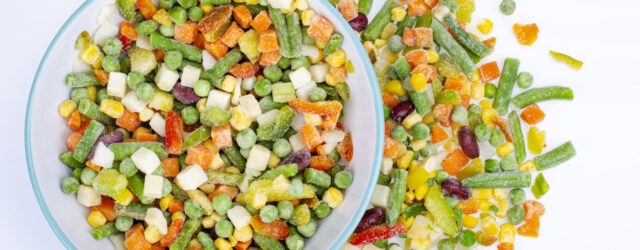
Frozen vegetables follow a similar logic. Consumer Reports has praised some store-brand frozen vegetables for delivering quality comparable to national competitors at lower prices. Since these products are typically processed quickly after harvest, the deciding factors are usually cut size, sauce or seasoning, and whether the bag contains unnecessary extras, not whether the logo is famous.

Yogurt, spices, and pantry seasonings

Yogurt can also be a value trap when shoppers buy reputation instead of reading the label. The FDA’s yogurt standard allows a wide range of safe, suitable ingredients, including sweeteners and stabilizers, so a premium-looking cup is not automatically simpler or better. For plain Greek yogurt, vanilla yogurt, and large tubs used for breakfasts, dips, or baking, store brands can be excellent if protein, sugar, and ingredient lists line up well.

The same principle applies to many dried spices, though with one important twist: cheaper is not the only consideration. Consumer Reports found concerning levels of heavy metals in some herbs and spices across multiple brands, while the FDA has also posted recalls and public health alerts involving ground cinnamon with elevated lead levels in recent years. In other words, a famous brand name is not a guarantee of superiority, but shoppers should still read recall news and buy from retailers with strong quality control.

For garlic powder, oregano, paprika, and cinnamon used in ordinary home cooking, the best strategy is not blind loyalty to either national or store labels. Compare freshness dates, inspect packaging, and buy quantities you will actually finish. In these categories, value comes from smart label reading and turnover, not from paying extra just because a brand is more recognizable.

Experts Say You’ve Probably Been Using Your Freezer Wrong This Whole Time

Most people think of the freezer as a simple stop button for food. In reality, it only works well when temperature, packaging, and timing all line up.

That is why experts say many home cooks are not just underusing the freezer, but using it in ways that quietly damage food quality and sometimes food safety.

Your freezer is not a magic time capsule

A surprising number of people treat the freezer like indefinite storage with no downside. USDA and FDA guidance makes an important distinction: food kept at 0°F stays safe for much longer, but quality still declines over time. That means flavor, texture, and moisture can deteriorate even when the food is technically still safe to eat.

This is especially true with leftovers, which USDA says should be frozen within 3 to 4 days and are best used within 3 to 4 months for quality. If you wait too long to freeze them, you are locking in decline rather than preserving freshness. Freezing works best when food goes in at its peak, not after it has already spent too long in the refrigerator.

Experts also stress that appliance settings matter more than many households realize. USDA and FDA both recommend keeping the freezer at 0°F or below, and they note that frequent door opening or weak freezer compartments are not ideal for long-term storage. In other words, a crowded, warm, frost-heavy freezer may be preserving less than you think.

Packaging mistakes are ruining your food

If your frozen meat comes out leathery, discolored, or covered in ice crystals, the problem is often not the freezer itself. It is the packaging. USDA says the porous store wrap used for meat and poultry is often not enough for long-term freezing, and recommends overwrapping with freezer-safe materials to prevent air exposure and freezer burn.

That advice extends beyond meat. The National Center for Home Food Preservation says proper containers protect flavor, color, moisture, and nutritive value, and notes that rigid containers and freezer bags are both useful when matched to the food. Air is the enemy, so bulky containers half-filled with soup or loosely tied bags are a recipe for deterioration.

Vegetables present another common mistake. Many people wash, chop, and freeze them raw, assuming the freezer will do the rest. But the National Center for Home Food Preservation says blanching is essential for almost all vegetables before freezing because it slows the enzyme activity that keeps degrading produce even in frozen storage. Skip that step, and your vegetables may return from the freezer limp, dull, and disappointing.

Thawing and organizing matter more than you think

One of the biggest freezer errors happens after the food comes out. FDA says food should be thawed safely in the refrigerator, under cold water, or in the microwave, not on the counter. And if food is thawed in cold water or the microwave, it should be cooked immediately, because room-temperature shortcuts create the conditions bacteria need.

Organization matters, too. A freezer stuffed with mystery containers and unlabeled bags encourages waste. Experts recommend dating items, freezing in usable portions, and rotating older items to the front. That simple system turns the freezer from a graveyard of forgotten food into a tool for meal planning, budget control, and safer storage.

The smartest approach is to think of freezing as a technique, not a dumping ground. Freeze foods quickly, package them tightly, label them clearly, and use them within their best-quality window. Done right, your freezer can preserve far more than convenience. It can protect taste, cut waste, and make the food you already bought work harder for you.

Your Grocery Store Knows More About You Than You Think

A grocery store looks ordinary on the surface. Behind the scenes, it can function like a data company with carts, scanners, and produce bins.

Every swipe, tap, and click helps build a picture of who you are, what you buy, and what you may buy next.

The loyalty card is really a data engine

Most shoppers think of loyalty programs as a simple trade: hand over a phone number, get a lower price. In reality, that discount is also a consent mechanism that ties purchases to an identifiable household over time. Consumer Reports reported in May 2025 that Kroger was collecting extensive loyalty-program data and making inferences such as an “income predictor,” showing how grocery records can become far more revealing than a list of favorite brands.

That matters because grocery data is unusually intimate. It can suggest whether a household has a baby, a pet, dietary restrictions, a medical condition, or a change in financial stress. Purchase patterns around gluten-free foods, pregnancy tests, low-sodium items, or bulk instant noodles may not tell the whole story, but they can help retailers and their partners make strong assumptions about a shopper’s life.

The business case is powerful. NielsenIQ has described loyalty data as an asset that retailers can monetize with supplier partners through personalized offers and campaign measurement. McKinsey has likewise noted that grocers increasingly treat loyalty data, digital engagement, and in-store attention as core inputs for retail media and targeted promotions. In other words, the supermarket is not just selling groceries; it is selling audience insight.

Your data can shape the deals you see

Once a grocer can identify and segment shoppers, it can personalize promotions with remarkable precision. That may mean digital coupons for the cereal you buy every two weeks, a meat discount when your purchase cycle suggests you are due, or app notifications timed to your usual shopping day. McKinsey has said promotions informed by analytics and personalization can lift sales, giving retailers a direct incentive to refine these systems constantly.

Regulators are paying closer attention to where that logic could lead. In July 2024, the Federal Trade Commission issued orders to companies involved in what it calls surveillance pricing, seeking information about technologies that use personal data such as location, demographics, browsing history, and shopping history to influence targeted prices. The FTC has explicitly said grocery stores may be among the retailers using these systems.

That does not mean every supermarket is secretly charging each customer a completely different price on every banana. It does mean the line between a personalized coupon and a personalized price environment is getting thinner. If one shopper reliably sees better app offers, richer rewards, or more relevant discounts than another, data is already shaping who gets the best path through the store.

Why this matters for shoppers now

For consumers, the biggest issue is not only privacy but power. A grocer that knows your routines can influence your choices without making the mechanism obvious. The app highlights one deal, the shelf tag reinforces another, and the retailer’s ad network helps suppliers pay to appear in your digital path. What feels like convenience can also be a carefully engineered nudge.

This shift is happening as grocery chains search for profits beyond the checkout lane. McKinsey’s 2025 North America grocery outlook said retail media is becoming part of the industry’s profit architecture, built on shopper traffic, loyalty data, and digital engagement. That helps explain why stores want you in the app, in the rewards program, and in the delivery ecosystem all at once.

Shoppers are not powerless, but they should be realistic. If you use a loyalty account, shop online, clip digital coupons, and keep location services on, your supermarket likely has a richer profile of you than you expect. The modern grocery business still sells milk and bread, but it also sells prediction, persuasion, and data-driven access to your attention.

A New FDA Rule Could Change How Fast You Learn About a Food Recall

FDA

Food recalls have long depended on how quickly regulators and companies can trace a product through farms, processors, distributors and stores. A federal FDA traceability rule, finalized in late 2022 and still the subject of compliance changes in 2026, is meant to make that process faster for a defined list of higher-risk foods.

FDA finalized the rule in 2022, and it targets a defined list of foods

The Food and Drug Administration finalized its “Requirements for Additional Traceability Records for Certain Foods” rule on November 21, 2022, according to the agency and the Government Accountability Office. The rule requires companies that manufacture, process, pack or hold foods on the FDA’s Food Traceability List to keep additional records on key points in the supply chain, including shipping, receiving, transformation and initial packing.

The FDA has said those records are intended to support faster identification and removal of potentially contaminated food from the market. Under agency guidance, firms subject to the rule must be able to provide requested records to FDA within 24 hours, or within another reasonable time agreed to by the agency. That 24-hour standard is a central reason the rule could change how quickly consumers learn about a recall tied to a contaminated product.

The Food Traceability List is narrower than the full grocery store inventory. FDA materials identify fresh leafy greens, fresh-cut leafy greens, fresh melons, fresh cucumbers, fresh herbs, peppers, sprouts, tomatoes, tropical tree fruits, shell eggs, nut butters, soft and semi-soft cheeses, certain seafood products, and refrigerated ready-to-eat deli salads among the covered foods. The rule also applies in some cases to foods containing listed ingredients when those ingredients remain in the same form.

What the rule means nationally, and what is still unclear for shoppers

The rule is national in scope, not tied to one state or one retail chain. That means shoppers in every state could eventually see more precise recall announcements for covered foods if a contamination event occurs and the required records allow investigators to isolate a specific traceability lot code instead of warning against an entire category such as all romaine from a broad region.

What is not yet known is exactly how individual retailers will communicate that information to shoppers. The FDA rule governs recordkeeping and traceability, but it does not mandate one uniform consumer alert system such as text messages, app notifications or email warnings. Some grocers already use loyalty accounts and digital receipts to notify customers about recalls, but those practices vary by company.

The company-by-company details also remain unconfirmed because the rule applies across the supply chain, from producers to distributors to retailers, rather than naming specific brands in the regulation itself. There is no official FDA list of stores that will notify consumers directly under the rule, and the agency has not said that every shopper will receive personalized alerts when a covered product is recalled.

Why the timeline changed, and what customers should expect next

The rule was originally set to carry a compliance date of January 20, 2026, and the FDA reiterated that date in earlier guidance. But the agency later announced that it intended to extend the compliance date by 30 months to July 20, 2028. FDA said the change reflected concerns about whether all affected parts of the supply chain would have enough time to comply fully.

In 2026, the FDA also said Congress directed the agency not to enforce the Food Traceability Rule before July 20, 2028, matching the proposed extension date. The agency has continued holding public meetings and releasing guidance as it works through implementation questions, including lot-level tracking challenges and possible exemptions for some products such as certain cottage cheese items.

For customers, the practical takeaway is that the system is intended to make future recalls faster and more targeted for foods on the traceability list, but the full benefits depend on implementation across the supply chain. Until that date arrives, recalls will continue to rely on existing reporting systems, while FDA and industry prepare for a more detailed digital paper trail behind some of the foods most often linked to outbreaks.

5 Texas Restaurants So Weird You Won’t Believe They’re Real

Themed dining remains a durable part of the U.S. restaurant business, especially as operators look for experiences that give customers something beyond a standard meal. In Texas, that model is especially visible at five restaurants that pair food with stagecraft, oversized props, performance, and attractions that are unusual even by state standards.

Five restaurants, five very different kinds of spectacle

The Magic Time Machine in Addison remains one of the clearest examples of a restaurant built around performance. The company states that the concept first opened in San Antonio in August 1973, and that its Addison location followed in 1979. Its servers appear in costume as pop-culture characters, and the dining rooms are split into themed areas including a carousel, a teepee, a lunchbox and an astronaut-style space module, according to the restaurant’s official history.

In Boerne, Darkside Brick Oven Pizza Co. has built its identity around 1970s and 1980s nostalgia. The restaurant’s official site says owners Michael and Denice Hawes designed the concept to take guests “back in time,” and Community Impact reported the dining room includes props and memorabilia tied to films such as “Star Wars,” “Back to the Future,” “E.T.,” “Jaws,” “Superman,” “Indiana Jones,” and “The Terminator.” The business lists its address as 25 Truss Drive in Boerne.

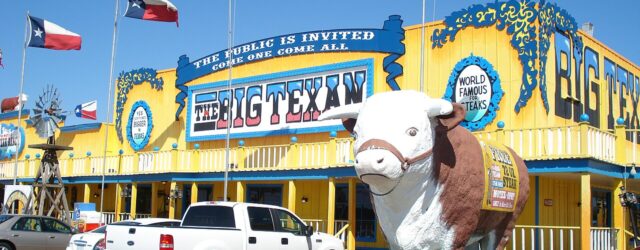
The Big Texan Steak Ranch in Amarillo remains the best-known entry on the list because the restaurant has turned a single oversized plate into a long-running public event. The company says founder R.J. Lee opened the steakhouse in March 1960, and its history timeline says the one-hour 72-ounce steak challenge began in November 1960. The challenge still includes the steak, shrimp cocktail, baked potato, salad and a roll, and the restaurant says contestants who finish within one hour receive a full refund.

Where the Texas locations make the experience part of the draw

Some of these restaurants are unusual because of their dining rooms, while others add a location-specific attraction that is harder to replicate elsewhere. In Canyon, Feldman’s Wrong Way Diner describes itself as a place for anyone who has “gone the wrong way” or “wandered off the beaten path,” and its official site says the restaurant was established in 2003 at 2100 N. 2nd Avenue. The business is known for a room filled with vintage objects and a train running overhead, a detail also echoed in customer descriptions posted on the restaurant’s site.

Galveston’s Rainforest Cafe goes further by attaching a ride to the dining experience. Rainforest Cafe’s official Galveston location page says the property at 5310 Seawall Blvd. includes the Rainforest River Adventure Ride, a family boat ride sold separately for $9.99 per person. The company also describes Galveston as the only Rainforest Cafe location with a ride, making it a local outlier even within a national themed chain.

That geography matters because these restaurants are not interchangeable. Addison offers a long-running dinner-theater format in North Texas, Boerne leans into movie memorabilia near the San Antonio market, Amarillo ties its identity to roadside travel culture, Canyon mixes diner food with curated clutter, and Galveston combines a tourist-corridor restaurant with a paid attraction. The operators have not presented these five businesses as a formal statewide group, but each is publicly positioned as more than a standard restaurant.

Why these concepts continue to stand out in Texas

The common thread is not a shared menu or ownership structure. It is the decision to compete on atmosphere, novelty and repeatable storytelling at a time when many restaurants are trying to create experiences that stand apart from delivery-focused or fast-casual competition. Darkside’s owners say the concept was shaped by childhood memories of late-20th-century movies, arcades and pop culture, while The Magic Time Machine says its founding vision centered on serving food in an “energized atmosphere” with entertaining servers.

At The Big Texan, that strategy predates modern experiential marketing by decades. The company’s official materials continue to frame the 72-ounce challenge as a central attraction, not a side promotion, and the restaurant still markets the challenge as an on-site event supervised by staff in Amarillo. Rainforest Cafe, meanwhile, ties its Galveston identity to thunder effects, animatronic animals and its river ride, showing how chain restaurants can still carve out a one-off local feature.

For customers, the practical takeaway is straightforward: these are real operating Texas restaurants, but they are built as destination experiences as much as places to eat. Hours, admission charges for add-on attractions, and challenge rules vary by location, and at least one stop on this list includes a separately ticketed ride. What is confirmed is that all five businesses continue to present their unusual formats as part of the main draw, not a seasonal promotion or limited-time event.

A Fast Food Giant Just Pulled Something From the Menu And It’s Not the First Chain to Do It

Fresh produce has repeatedly become a pressure point for national restaurant chains when foodborne illness investigations intensify. This week, Taco Bell locations in Michigan drew attention after pulling several toppings from the menu as state and federal officials continued tracking a fast-growing cyclospora outbreak.

Taco Bell removed five fresh ingredients as the outbreak widened

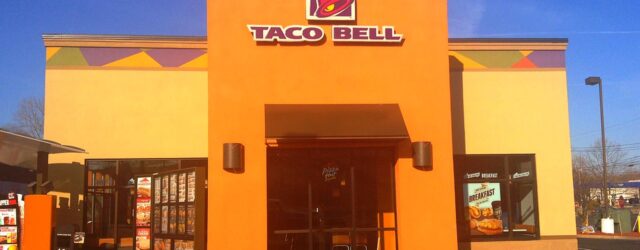
Some Taco Bell locations posted notices stating they were “currently unable to sell Lettuce, Cilantro Onion, Pico de Gallo, and Guacamole,” according to WWJ Newsradio’s July 7 report. The station said the signage described the change as tied to a “nationwide recall,” though Michigan health officials had not publicly identified a specific recalled product, grower, or supplier at that point.

The move affected ingredients used across a wide range of Taco Bell menu items rather than a single product line. Lettuce appears on tacos and burritos, while pico de gallo, guacamole, and the cilantro-onion blend are used in customizable items and limited-time offerings, making the change visible to customers ordering both in stores and through apps.

It is not the first time a fast-food giant has pulled produce-heavy items during a public-health investigation. In July 2018, McDonald’s removed salads from about 3,000 restaurants in 14 states, according to Reuters and the CDC, during a cyclospora outbreak later tied to 511 laboratory-confirmed illnesses in people who reported eating McDonald’s salads. That earlier episode remains one of the clearest recent parallels for what customers are seeing now.

What is confirmed in Michigan, and what is still not known

Michigan is the center of the current outbreak. The Michigan Department of Health and Human Services said July 1 that an outbreak of cyclosporiasis was occurring in the state, and on July 4 the department said cases continued to rise, with the largest increase in Southeast Michigan. State officials also said no specific produce grower, supplier, or produce type had yet been identified as the source.

That uncertainty matters for customers trying to understand whether the Taco Bell menu change is statewide, regional, or broader. Public reporting has confirmed signs at some Metro Detroit and Southern Michigan locations, but the company has not released a comprehensive list of affected Michigan restaurants. It also has not publicly detailed how many stores removed the toppings or whether the same restrictions apply outside Michigan.

State health guidance has been careful not to name a chain restaurant as the cause of the outbreak. Officials have said only that recent U.S. cyclospora outbreaks have often involved fresh produce and that investigators are still working to find the source. As of July 11, no public FDA recall notice tied to a named Taco Bell ingredient had been identified in the source material provided for this story.

Why chains keep pulling produce first, and what customers should expect

Cyclospora investigations often focus on uncooked produce because the parasite is commonly linked to foods that do not receive a kill step before serving. The Michigan health department said heating food to 158 degrees Fahrenheit, or 70 degrees Celsius, kills Cyclospora, and Food Safety News reported that past U.S. outbreaks have frequently been connected to raw items such as basil, cilantro, berries, peas, and salad mixes.

That helps explain why chains act quickly on toppings and salads. Reuters reported during McDonald’s 2024 E. coli investigation that produce is often harder for restaurants to manage in outbreak conditions than cooked proteins, and other chains also removed onions or lettuce from some menus during that event. In practical terms, removing a handful of raw ingredients can allow stores to keep most of the menu operating while supply and safety questions are sorted out.

For customers in Michigan, the near-term effect is straightforward: some Taco Bell orders may arrive without ingredients that are normally standard, and availability may vary by location. What remains unconfirmed is whether a specific supplier, product, or restaurant chain will ultimately be linked to the outbreak. For now, the company’s visible menu pull appears to be a precautionary step in a broader food-safety investigation that is still unfolding.

Wendy’s Fans Are Walking Away: And They’re Not Shy About Saying Why

Wendy’s

Fast-food chains across the U.S. have spent the past year confronting weaker traffic, more price-sensitive customers, and growing pressure to prove value. Wendy’s is now at the center of that conversation after announcing a new round of restaurant closures while customers publicly describe why they say the chain no longer fits their budgets or expectations.

Wendy’s announced 140 more restaurant closures in late 2024

Wendy’s said on its third-quarter 2024 earnings call on October 31, 2024, that it would close 140 additional underperforming restaurants by the end of the year. The company said those units were outdated and located in weaker trade areas, and executives said the closures were intended to improve what CEO Kirk Tanner called the chain’s overall restaurant footprint and system health.

That move came on top of about 100 closures Wendy’s had already discussed earlier in 2024, according to multiple reports covering the company’s latest earnings update. At the same time, the company said it expected those shutdowns to be offset by new openings, leaving net unit growth for the year roughly flat rather than sharply negative.

The financial backdrop was modest rather than catastrophic. Coverage of the earnings call reported that Wendy’s U.S. same-store sales were up only slightly, with growth under 1% in the first half of the year and limited momentum in core dayparts. Trade reporting on the call also said some of the stores targeted for closure produced average unit volumes of about $1.1 million, below stronger performers in the system.

What is known locally, and what Wendy’s has not publicly detailed

For customers trying to figure out whether a nearby restaurant is affected, one major detail remains unresolved: Wendy’s has not released a comprehensive public list of the 140 locations slated for closure. That means specific city-by-city or state-by-state impacts have not been broadly confirmed through the company’s public earnings materials.

The company said the targeted stores were in underperforming trade areas, but it did not identify which local markets would lose locations as part of the late-2024 plan. Because of that, it is not yet possible to verify from company disclosures which individual neighborhoods, suburbs, or downtown corridors are directly affected by this round of closures.

That lack of location-level detail matters because customer experience appears to vary widely by restaurant. In the source material provided for this story, Wendy’s customers described sharply different experiences depending on the store, with some saying one nearby restaurant performed well while another a short drive away delivered lower food quality, thinner burger patties, or fries that did not seem fresh. Those accounts are anecdotal, but they help explain why location-specific consistency has become part of the broader story.

Pricing and consistency are central to the customer backlash

The sharpest customer criticism in the provided source material centers on value. Several Wendy’s customers said rising prices had changed the chain from a routine convenience purchase into an occasional or avoidable expense, with one widely shared comment saying the brand had effectively priced out working customers who once relied on it as an affordable meal option.

Quality and consistency were the second major themes. Customers in the source material said Wendy’s had built its reputation on fresher food and a slightly more premium fast-food experience, but some now say that advantage feels less dependable when portion sizes seem smaller or food quality varies from store to store. Those complaints do not represent every customer, but they align with the company’s own acknowledgment that some restaurants were outdated or underperforming.

The broader industry context also supports why value complaints are gaining traction. Restaurant analysts and company earnings reports across the sector have pointed to inflation, higher labor and operating costs, and softer discretionary spending as pressures on both chains and consumers. For Wendy’s customers, the practical takeaway is straightforward: some restaurants may disappear, others may be replaced, and the company has said its goal is a smaller set of stronger locations positioned for renewed growth in 2025.

This Beloved California Mexican Chain Is Shrinking Fast; Here’s Why!

Casual dining chains across the U.S. have been closing stores, remodeling core units, and rethinking growth as labor, food, and occupancy costs stay elevated. In California, that pattern is especially visible at El Torito, the long-running Mexican chain that once had a national footprint but now operates only about two dozen restaurants, almost entirely in its home state.

El Torito’s footprint has narrowed sharply from its peak

El Torito, founded in California in 1954, has closed more than 150 restaurants since its late-1980s peak, when the chain operated 187 locations across 25 states, according to the reference reporting provided for this story. Today, the brand operates about two dozen California locations, according to Food On Demand’s March 5, 2026 report on the chain and El Torito’s current locations page.

The latest confirmed local setback involved the Irvine-area restaurant at 18512 MacArthur Boulevard, identified by Patch in Orange County’s restaurant closure roundup published January 5, 2026. That Patch report listed El Torito Cantina Autentica in Irvine as temporarily closed on December 31 because of rodent and cockroach issues, and reopened the same day after inspectors cleared it. The broader reference reporting tied Irvine to the chain’s recent downsizing, though El Torito has continued operating in the market through other units and promotions.

The contraction has been gradual rather than tied to a single bankruptcy-era collapse. Reference material indicates El Torito still had roughly 75 locations across California, Arizona, and Oregon as recently as 2005, but that number has steadily declined over the past two decades. Xperience Restaurant Group, the Cypress-based parent, still lists El Torito among its flagship brands as part of a 56-location restaurant portfolio across all concepts.

Southern California has seen confirmed closures, but not every affected city is public

In California, the most visible impact has been in Southern California, where reference reporting identified closures in Dana Point, Laguna Hills, Orange, Westminster, Tustin, and Irvine. Those city names matter because the company has not released a comprehensive public list of every shuttered California restaurant tied to the brand’s long decline. Where city-level closures are not publicly confirmed, they should not be assumed.

What is confirmed is that El Torito’s remaining base is heavily concentrated in California. Food On Demand reported in March 2026 that the chain operates about two dozen locations across the state, and a third-party location dataset published in July 2026 counted 23 verified California restaurants in 21 cities. El Torito’s own remodeling page also names a shorter list of refreshed California restaurants, including Cypress, Ontario, Monterey, Sherman Oaks, Irvine, Milpitas, Anaheim, Corona, Torrance, Pasadena, Long Beach, and others.

Outside California, the reference reporting says El Torito has exited Arizona and Oregon entirely. That means the chain’s retrenchment is no longer just a national story about fewer out-of-state stores; it is now primarily a California story about preserving a smaller in-state base. Xperience Restaurant Group has not publicly released a full state-by-state breakdown for El Torito alone on its corporate site.

Rising costs and shifting habits help explain the retreat

The reasons cited for El Torito’s shrinking footprint align with the broader pressures on full-service dining. The reference reporting attributes the chain’s contraction to rising labor costs, inflation, shifting consumer spending, and stronger competition from fast-casual operators, all of which have weighed on legacy casual dining brands in the past two years. Those pressures have affected chains nationally, not just California-based restaurant groups.

Xperience Restaurant Group’s public messaging suggests the company is focusing less on expansion and more on strengthening existing restaurants. Its corporate site says the company is “organically growing existing stores,” while El Torito’s own materials emphasize refreshed dining rooms and remodeled bars at a defined group of California locations rather than a new-store push. That is consistent with a strategy of concentrating capital on fewer units with stronger sales potential.

For customers, the practical takeaway is that El Torito remains active in California, but the chain is operating on a much smaller scale than in prior decades. Diners should expect the brand to be centered in established California markets, with remodeled locations playing a larger role in its future than rapid expansion. As of 2026, El Torito is still part of Xperience Restaurant Group’s active brand lineup, even as its footprint remains far below its historic peak.