10 Diner Menu Items You Might Want to Think Twice Before Ordering

Diners are built on nostalgia, convenience, and oversized comfort food. That is exactly why some of the most familiar orders can also be the easiest to underestimate.

The breakfast classics that add up fast

Few diner meals look more harmless than a full breakfast, but pancakes, French toast, waffles, and giant omelets can turn into calorie-dense, sugar-heavy, sodium-loaded plates before the coffee is half gone. The American Heart Association notes that restaurant meals often deliver far more saturated fat, sodium, and added sugar than people expect, and it also says more than 70% of the sodium Americans eat comes from prepared and restaurant foods. That matters when a “simple” breakfast includes butter, syrup, salted breakfast meat, cheese, and hash browns all on one plate.

Omelets deserve special scrutiny because the fillings usually matter more than the eggs. Ham, bacon, sausage, and extra cheese can push a diner omelet into processed-meat territory, and the World Health Organization has long advised limiting processed meats because of links to cancer risk. Add toast, potatoes, and a side of gravy, and the meal becomes a concentrated hit of sodium and saturated fat that is hard to balance later in the day.

Eggs Benedict is another smart pause point. Hollandaise is rich by design, but it can also raise food-safety questions if a restaurant uses unpasteurized eggs or holds the sauce improperly. The CDC specifically flags foods like hollandaise and certain dressings as items diners should ask about, especially for pregnant people, older adults, and anyone with a higher risk of foodborne illness.

Fried favorites and sandwich-board staples

Chicken-fried steak, country-fried chicken, mozzarella sticks, onion rings, and loaded fries all share the same issue: heavy breading, deep frying, and often a salty finishing layer of gravy, cheese, or seasoning. The World Health Organization’s healthy diet guidance recommends limiting fried foods and foods high in saturated fat, free sugars, and sodium, and diner fryers can turn a side dish into the nutritional centerpiece of the meal. These items are satisfying in the moment but rarely gentle on blood pressure or overall daily intake.

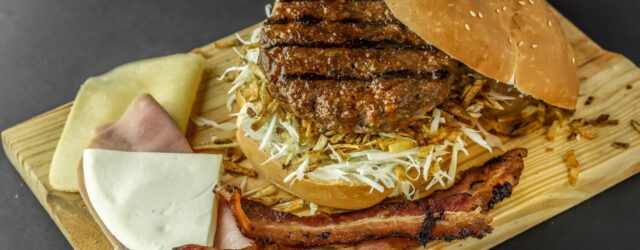
Then there are the burgers and club sandwiches that seem manageable until they arrive stacked with bacon, cheese, deli turkey, ham, mayo, and a mound of fries. Processed meats such as bacon, sausage, and deli meats are repeatedly identified by public health groups as foods to limit, not just because of sodium but because regular intake is tied to poorer long-term health outcomes. In a diner setting, these meats often appear in combination, not isolation.

Even soup-and-sandwich orders can be deceptive. Cream soups and chili can be especially salty, and the sandwich beside them may add cured meat, melted cheese, and buttered bread. The meal reads lighter than a burger basket, but from a sodium standpoint it can land in the same neighborhood.

Sweet finishes and the hidden food-safety traps

Milkshakes, pie à la mode, giant muffins, and diner desserts are the easiest splurge to rationalize because they feel separate from the meal. In reality, they often stack on top of an already rich breakfast or lunch, adding a large dose of added sugar and saturated fat. The American Heart Association recommends asking about ingredients and preparation methods when dining out, and that advice applies just as much to dessert as it does to entrées.

There is also a practical safety angle that gets overlooked. Soft-serve style shakes, whipped toppings, and ice-heavy fountain drinks depend on clean equipment and careful handling, and the CDC estimates that common foodborne pathogens still cause millions of illnesses in the United States each year. Most diners operate safely, but items made from dairy, eggs, or machines that require meticulous cleaning deserve more caution when a place looks poorly maintained.

The point is not to avoid diners or order joyless meals. It is to think twice before choosing the menu items most likely to combine oversized portions, processed meats, frying, sugary add-ons, and potential food-safety concerns in a single plate. If you still want the classic, splitting it, skipping one side, or asking a few smart questions can make the meal feel just as comforting with fewer regrets.

Here’s the One Rotisserie Chicken Mistake Almost Everyone Is Making

Rotisserie Chicken

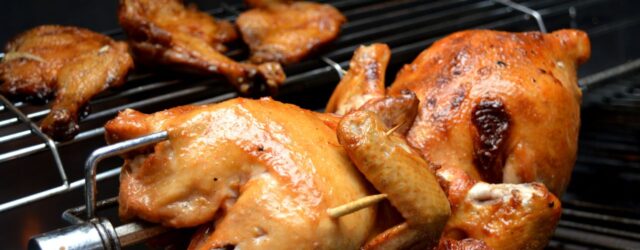
Prepared foods remain one of the fastest-growing convenience categories in U.S. grocery retail, with rotisserie chicken still a staple purchase for weeknight meals. But federal food safety guidance narrows the issue to a simple handling mistake after checkout: leaving the chicken out too long before eating or refrigerating it. In practice, that means the problem is less about the bird itself and more about how long it spends between the deli case, the car, the counter, and the refrigerator.

The mistake is delaying refrigeration after purchase

The specific mistake is delaying refrigeration of a hot, fully cooked rotisserie chicken after purchase. The U.S. Department of Agriculture’s Food Safety and Inspection Service states in its chicken handling guidance that ready-prepared chicken should be eaten or refrigerated within two hours, and that if it will not be used within that window, it should be cut into several pieces and refrigerated in shallow, covered containers. FoodSafety.gov also states that cooked leftovers should be chilled promptly within two hours.

That timing matters because perishable food does not stay protected indefinitely once it leaves hot holding equipment. FoodSafety.gov says perishable food left at room temperature for more than two hours should be discarded, and the limit drops to one hour if the temperature is above 90 degrees Fahrenheit. The FDA gives the same practical warning for takeout-style foods and leftovers that need refrigeration.

Recent consumer-facing coverage has echoed that federal guidance. Consumer Reports, in guidance published in 2026, advised shoppers to transfer rotisserie chicken from store packaging to a covered container and refrigerate it within two hours. The consistent message across government agencies and consumer testing groups is that the biggest mistake is treating a store-bought rotisserie chicken like a shelf-stable item when it is still a perishable cooked meat.

What that means once the chicken gets home

What is confirmed is that a rotisserie chicken remains perishable whether it is purchased from a supermarket deli, warehouse club, or takeout counter. USDA guidance says that if the chicken is hot at the time of purchase and will not be eaten within two hours, consumers should divide it into smaller pieces so it can cool faster in the refrigerator. FoodSafety.gov separately advises storing leftovers in shallow containers for rapid cooling.

What is not universally specified is a single brand-by-brand handling instruction that overrides federal rules. Retailers may print sell-by or use-by information on packaging, but federal food safety agencies still base safe handling on time and temperature. That means a long drive home, a stop at another store, or leaving the container on the kitchen counter can all affect whether the food remains safe.

For households, the practical impact is straightforward. If the chicken is dinner, buy it near the end of the shopping trip and serve it promptly. If it is for later use, refrigerate it quickly, use cooked leftovers within four days according to FoodSafety.gov, and reheat leftovers to 165 degrees Fahrenheit before serving.

Why food safety agencies focus on time and temperature

The reason agencies focus so heavily on prompt refrigeration is bacterial growth. FoodSafety.gov says some bacteria and viruses linked to foodborne illness can multiply when food is not kept hot enough or cold enough, and it advises consumers to refrigerate leftovers within two hours. The FDA also warns that some organisms can create toxins when perishable food is left unrefrigerated, and those toxins may survive later reheating.

USDA guidance adds a second layer of context for rotisserie chicken specifically. A whole cooked chicken cools more slowly than cut portions, which is why the agency recommends breaking it into several pieces and using shallow covered containers if it will not be eaten promptly. That is a storage step, not a cooking step, but agencies treat it as central to safe handling.

For customers, the takeaway is not a new recall, a retailer-specific warning, or a product defect. It is established federal guidance, last reviewed by FoodSafety.gov on August 14, 2025, that hot prepared chicken should be treated like any other cooked perishable food: eat it soon, chill it fast, and discard it if it has been left out beyond the safety window.

Is It Actually Safe to Eat Around Mold? Here’s What Experts Say

Mold on food is a routine kitchen problem in the United States, but federal guidance shows it is not a one-size-fits-all safety question. The key distinction is whether the food is firm enough to keep mold from spreading deep below the visible spot. For shoppers and home cooks, that means some foods can be trimmed carefully, while many others should be discarded.

What federal food safety guidance says about moldy food

The U.S. Department of Agriculture’s Food Safety and Inspection Service says some molds are used to make foods such as certain cheeses, but others can produce poisonous substances called mycotoxins. FSIS states that when food is heavily covered with mold, it should be discarded, and it warns that visible mold can be only part of the contamination because roots may spread through the food. The Food and Drug Administration also says the safest practice is to discard food that is moldy.

Federal guidance draws a clear line between hard, low-moisture foods and soft, high-moisture foods. According to FSIS, hard salami and dry-cured country ham can have surface mold scrubbed off, and mold can be cut away from firm produce such as cabbage, bell peppers, and carrots. Hard cheese can also sometimes be saved by cutting off at least 1 inch around and below the mold spot, keeping the knife away from the mold so it does not cross-contaminate the rest of the piece.

That advice changes for bread, lunch meat, bacon, cooked leftovers, casseroles, yogurt, sour cream, jams, and soft fruits and vegetables. FSIS says those foods should be thrown out because mold can spread quickly through foods with higher moisture content. Mayo Clinic, citing USDA guidance, gives similar advice for soft cheeses and says only some intentionally mold-ripened cheeses are meant to be eaten with mold present.

What that means for shoppers and home kitchens in the U.S.

For households anywhere in the country, the practical takeaway is that cutting around mold is not a universal fix. If mold appears on soft berries, tomatoes, peaches, bread, tortillas, shredded cheese, leftovers, deli meat, or soft cheese, federal guidance supports discarding the entire item. If a single fruit in a package is moldy, FSIS says the remaining fruit may still be usable if it shows no visible mold or mushiness and is washed thoroughly before eating.

The national guidance is broad, but it does not answer every gray-area question product by product. Federal agencies do not publish a kitchen chart for every branded grocery item, and they do not provide a public list of every food where trimming is acceptable beyond general categories. That means consumers are left to apply the hard-food-versus-soft-food distinction using moisture and texture as the main clues.

Storage also matters. The Centers for Disease Control and Prevention says preventing food poisoning starts with cleaning, separating, cooking, and chilling food correctly, and FDA consumer guidance says proper handling reduces the risk of illness. In practice, keeping perishable foods refrigerated and discarding items that smell off, look waterlogged, or show more than isolated surface mold aligns most closely with current federal advice.

Why experts treat mold as more than a cosmetic problem

The main reason food safety agencies are cautious is that some molds can make mycotoxins, including aflatoxins and patulin. FDA says mycotoxins are toxic compounds made by certain molds and notes that patulin risk rises when moldy apples are used in products such as apple juice. FDA and USDA also monitor susceptible crops, including corn and peanuts, for aflatoxin, reflecting that mold can create hazards beyond what consumers can see.

Texture changes the risk because mold can penetrate beneath the surface. On firmer foods, that spread is more limited, which is why trimming may work when a generous margin is removed. On soft or porous foods, invisible spread is more likely, which is why agencies tell consumers to discard the entire item rather than rely on appearance alone.

For customers, the bottom line is practical rather than dramatic. Mold on foods intentionally made with safe molds, such as some blue cheeses, is different from unexpected mold on perishable groceries. Current federal guidance supports saving only select hard foods with careful trimming, while most soft, wet, cooked, or ready-to-eat foods should go in the trash.

New Study Reveals How Eating This Everyday Food Could Boost Your Brain Health

As researchers and public health officials look for practical ways to reduce dementia risk, diet remains one of the most closely watched lifestyle factors in brain health. A newly published U.S. study has put a familiar grocery staple, eggs, at the center of that discussion, with findings that link regular consumption to a lower risk of Alzheimer’s disease in older adults. The research does not prove that eggs prevent dementia, but it adds fresh data to a growing body of evidence that everyday eating habits may matter for long-term cognitive health.

A large U.S. cohort study tied egg intake to lower Alzheimer’s risk

The study, titled Egg Intake and the Incidence of Alzheimer’s Disease in the Adventist Health Study-2 Cohort Linked with Medicare Data, was published April 17, 2026, in the Journal of Nutrition. According to the paper and a May 5 announcement from Loma Linda University Health, researchers examined dietary data from roughly 40,000 participants and tracked outcomes through linked Medicare records over an average follow-up period of 15.3 years.

Researchers reported that adults age 65 and older who ate at least five eggs per week had up to a 27% lower risk of an Alzheimer’s diagnosis compared with participants who never ate eggs. The same report said more modest intake was also associated with lower risk, including a 17% reduction for people who ate eggs one to three times per month and a 20% reduction for those eating them two to four times per week.

The study’s lead and senior researchers said eggs may matter because they contain nutrients tied to brain function, including choline, lutein, zeaxanthin, omega-3 fatty acids and phospholipids. Loma Linda University professor Joan Sabaté said choline is especially important because it helps form acetylcholine and phosphatidylcholine, compounds involved in memory and synaptic function. The authors also said the analysis accounted for other dietary and lifestyle factors, although the findings remain observational rather than causal.

What the findings mean in the U.S., and what they do not show

The study population came from the Adventist Health Study-2, a U.S.-based cohort of Seventh-day Adventists whose diets often differ from the broader American population. That matters because the participants generally have distinctive health behaviors, and the researchers themselves described the cohort as health-conscious. The paper therefore offers evidence from a large national sample, but not a guarantee that the same risk estimates would apply equally across every community, region or diet pattern in the country.

What is confirmed is that the association was identified through physician-diagnosed Alzheimer’s cases found in Medicare-linked records. The research did not test eggs as a treatment, did not randomly assign people to eat more eggs, and did not establish that eggs alone reduced disease risk. The company-backed announcement also said moderate egg consumption should be part of a balanced diet, not viewed as a stand-alone solution.

Public health guidance around brain health continues to emphasize broader patterns rather than a single “superfood.” The University of Arkansas Division of Agriculture said in June 2026 that nutrition is one modifiable risk factor for cognitive decline and pointed to eating patterns rich in leafy greens, berries, beans, whole grains, nuts and healthy fats. That guidance aligns with the idea that any benefit from eggs would likely fit into an overall dietary pattern rather than replace one.

The broader context is heart health, aging and modifiable risk factors

Researchers and dementia specialists have increasingly focused on the overlap between cardiovascular health and brain health. In an Associated Press report published September 12, 2026, experts said people can lower dementia risk by addressing high blood pressure, diabetes and smoking, while also following habits such as regular exercise and the MIND diet. That eating pattern emphasizes leafy greens, berries, whole grains, poultry and fish, and is part of a broader strategy rather than a single-food approach.

The University of Arkansas guidance made a similar point, stating that what supports the heart also supports the brain because diet affects blood pressure, blood sugar, cholesterol and vascular health. The same guidance said healthy fats, fiber-rich foods and antioxidant-rich produce may help support blood flow, reduce inflammation and protect brain cells over time. In that context, the egg study fits into a wider research trend examining how routine food choices may shape brain aging.

For consumers, the practical takeaway is narrower than the headlines: the study suggests that regular egg intake can be part of a brain-healthy diet, but it does not establish prevention or prescribe a universal amount for everyone. People with questions about diet, cholesterol, or dementia risk still need individualized medical advice, while researchers continue studying which food patterns have the strongest effect on cognitive aging. For now, the evidence points most consistently to long-term habits, not a single ingredient, as the foundation of brain health.

The Ultimate Guide to Buying Frozen Vegetables Without Wasting Your Money

Frozen Vegetables

Rising grocery prices and persistent concern about food waste have kept frozen foods in focus for U.S. shoppers. Frozen vegetables, in particular, sit at the intersection of value, nutrition, and convenience, with federal and industry data showing they can compete with fresh produce on both price and shelf life. The money-saving question is not whether to buy frozen vegetables, but which products deliver the best value once packaging, additives, and spoilage are factored in.

Start with plain vegetables, price per cup, and package condition

The strongest value in the freezer case usually starts with plain vegetables rather than sauced or seasoned blends. USDA’s Economic Research Service reported in its fruit and vegetable price data, updated July 31, 2026, that fresh products are not consistently cheaper or more expensive than processed ones, and that some frozen items can cost less than their fresh counterparts on a cup-equivalent basis. The agency also reported that in 2023, 19 vegetables in its data set cost $0.50 or less per cup equivalent, underscoring that value depends on the specific item rather than the department where it is sold.

That makes unit-price shopping more important than front-label marketing. A bag that looks inexpensive can cost more per serving if it includes sauce, pasta, or cheese, or if it contains less edible vegetable volume than a plain store-brand alternative. USDA previously found that frozen raspberries, for example, were less costly than fresh raspberries, while fresh carrots were cheaper than canned or frozen carrots, showing that the best buy changes by product, not by a simple fresh-versus-frozen rule.

Packaging also matters because damage can erase value. FDA advises consumers not to buy products if packaging is open, torn, or damaged, including items in freezer cases. USDA’s Food Safety and Inspection Service says food in a torn package may still be safe if properly rewrapped at home, but excessive drying from poor packaging or lengthy storage can dull color and reduce eating quality, turning a bargain into a disappointing purchase.

Frozen can stretch budgets, but not every bag saves money

Frozen vegetables can help households control how much they cook at one time, which is where much of the savings shows up. In a 2022 survey commissioned by the American Frozen Food Institute, 83% of respondents said frozen fruits and vegetables helped them reduce food waste and save money, and 94% of U.S. households reported buying frozen fruits and vegetables. AFFI also said U.S. sales of frozen fruits and vegetables reached $7.1 billion in the 52 weeks ending June 26, 2022, with plain vegetables representing the largest segment at $2.9 billion.

That national data has practical implications for shoppers in every market, including local grocery aisles where store brands often dominate freezer doors. Because frozen produce is portionable, buyers can use part of a bag and return the rest to storage, avoiding the spoilage risk that often comes with fresh broccoli, spinach, peas, or mixed vegetables bought for a single meal. FDA’s food-waste guidance separately notes that confusion over food handling and storage contributes to waste, which gives longer-lasting frozen produce an economic advantage for households that do not cook every day.

What remains less clear is which retailers offer the best frozen-vegetable value market by market. Public federal pricing data compares forms and products, but it does not provide a comprehensive city-by-city list of the cheapest supermarket brands. Shoppers therefore still need to compare unit prices in their own stores, especially across private-label and national-brand bags of plain corn, peas, green beans, spinach, and mixed vegetables.

Why frozen vegetables remain a value play for shoppers

The broader context for frozen vegetables is convenience paired with reduced spoilage. AFFI says modern freezing methods, including individual quick freezing, help processors preserve flavor, quality, and portionability, while produce is often frozen near peak ripeness. The group’s consumer education materials cite research from the University of California, Davis and the University of Georgia finding that frozen fruits and vegetables can match, and in some cases exceed, the nutritional value of fresh-stored produce.

Federal agencies draw a useful distinction between food safety and food quality. FDA says freezer burn is a quality issue, not a safety issue, while USDA says foods frozen too long can develop off odors or excessive drying. For shoppers trying to avoid wasting money, that means the best-value purchase is not simply the lowest sticker price, but the product most likely to be used before quality drops.

In practical terms, that favors plain vegetables in resealable or easy-to-close bags, especially for households cooking for one or two people. It also favors buyers who skip premium seasoning blends unless they would otherwise buy those ingredients separately. The frozen case remains one of the few grocery sections where shoppers can balance cost, convenience, and waste reduction in a single purchase, according to USDA and industry data, as long as they treat price-per-serving and package condition as the deciding factors.

I Worked at Costco for 21 Years, These 8 Finds Always Made My Personal Shopping List

Costco

As warehouse retailers head into the fall merchandising season, shoppers are seeing a familiar mix of seasonal products, gift items, and pantry staples rotate onto sales floors across the country. That broader retail pattern is now showing up in a new list centered on Costco, where a 21-year employee outlined eight items she says would make her personal shopping list. The roundup was published September 9, 2026, and offers a snapshot of what is currently drawing attention in at least one Costco warehouse.

A longtime Costco employee identified eight current standouts

Business Insider published the list on September 9, 2026, by Veronica Thatcher, who wrote that she has worked at Costco for 21 years and sees new merchandise as it arrives. In the piece, Thatcher highlighted eight products she said stood out on shelves right now: Halloween faux-fur throw blankets, Nutella Peanut spread, Hunter women’s short-back adjustable rain boots, an AR Blue Clean electric pressure washer, a Pokémon holiday calendar, a Canon Ivy 2 mini photo printer bundle, a GreenPan Jewel Pro ceramic 11-piece cookware set, and Kirkland Signature organic golden maple syrup. The article was later republished in aggregated form by CNCB News, which credited Business Insider as the original source.

The list is not a corporate Costco announcement, and Costco was not involved in the sourcing or writing of the story, according to the article’s disclosure. That distinction matters because the selections reflect one employee’s observations and preferences rather than a chainwide merchandising guide or official recommendation from the retailer. Still, the details in the article show the range Costco is pushing this month, with products spanning home décor, apparel, outdoor cleaning equipment, kitchenware, snacks, and gift-oriented seasonal merchandise.

Several of the items were described as especially timely for early fall. Thatcher wrote that shoppers at her location had been responding strongly to Halloween-themed throw blankets and said the Pokémon holiday calendar had been “selling like crazy” there, while also calling out waterproof Hunter boots as a fit for rainy-day errands. Those details point to the seasonal urgency that often shapes Costco buying decisions, particularly for limited-run products that can disappear quickly from local warehouse floors.

What is confirmed, and what is not, about local Costco availability

What is confirmed is that these eight products were on shelves at the Costco location where Thatcher shops and works when the article was published. The article gives product-level descriptions, including features such as the Canon Ivy 2 printer’s Bluetooth connection and 2-by-3-inch sticky-backed photo output, the GreenPan set’s 11-piece configuration, and the maple syrup’s limited-edition positioning and Canadian sourcing. Those specifics provide a useful guide for shoppers trying to identify the exact items mentioned.

What is not confirmed is how broadly those items are distributed across Costco’s U.S. warehouse network, including in any particular state or city. The article does not identify Thatcher’s warehouse location, and Costco has not released, in connection with this story, a public list showing which local stores carry each of the eight items. It also does not state inventory counts, end dates for availability, or whether some items are online-only in certain markets.

For shoppers, that means the list functions more as a real-time indicator of merchandise trends than as a guaranteed store-by-store inventory report. That is especially relevant for seasonal and limited-edition products such as holiday calendars, décor, and specialty pantry items, which can vary by region and sell through at different speeds. The article confirms consumer-facing features of the products, but not universal availability across all Costco locations.

The broader context is Costco’s rotating seasonal merchandise model

The strongest context in the article is Costco’s fast-turn merchandising strategy, where seasonal, novelty, and opportunistic buys sit alongside staple household goods. Thatcher wrote that shelves this month include “seasonal decor, unique tech products, and chic kitchen accessories,” a description that aligns with the mix represented in the eight-item list. Items such as cookware, maple syrup, and spreads serve routine household demand, while products like the Pokémon calendar and mini photo printer fit holiday gifting and impulse-buy patterns.

The article also reflects how Costco’s in-store appeal often depends on discovery rather than a fixed assortment. Thatcher framed her role as giving her a “front-row seat” to new arrivals, and several recommendations were based on what had newly caught her eye rather than on long-established Costco bestsellers. That helps explain why practical items like a pressure washer appear alongside decorative blankets and fashion boots in the same roundup.

For customers, the immediate takeaway is straightforward: the list offers a verified September 9 snapshot of items a veteran employee says are worth noticing now, but it is not a chainwide stock guarantee. Shoppers can reasonably expect fall décor, giftable merchandise, and limited-time pantry items to continue appearing as Costco moves deeper into the holiday selling season, even though product selection will vary by warehouse. The published story ends by making clear that the views were the author’s own, not Costco’s, leaving the article as a timely but unofficial guide to what is currently catching attention on the sales floor.

This Olive Garden Rival Is Closing More Locations, and Fans Are Heartbroken

Casual dining chains across the U.S. are still cutting locations as operators contend with weaker traffic, higher labor costs, and more expensive leases. That pressure is now showing up again at Bravo Italian Kitchen and Brio Italian Grille, two long-running Italian restaurant brands often viewed as rivals to Olive Garden. Recent closures in Ohio and Iowa, on top of earlier shutdowns in New Jersey and Florida, show the chains are still shrinking more than a year after their latest bankruptcy filing.

Bravo and Brio have closed 18 locations since the bankruptcy filing

Bravo Brio Restaurants LLC, the company behind Bravo Italian Kitchen and Brio Italian Grille, filed for Chapter 11 bankruptcy protection on August 18, 2025, in the U.S. Bankruptcy Court for the Middle District of Florida, according to court records. At the time of that filing, the company said it operated 23 Bravo Italian Kitchen locations and 25 Brio Italian Grille restaurants across 12 states. The bankruptcy was intended to let the company restructure debt, cut costs, and close underperforming restaurants, according to reporting that cited the company’s court filings.

Since that filing, the company’s store count has continued to fall. Recent reporting carried by Yahoo Finance said the operator has closed nine Bravo Italian Kitchen locations over the last year and now runs 14, while Brio Italian Grille has also closed nine locations and now operates 16. That brings the combined confirmed reduction to 18 restaurants since the August 2025 filing.

The latest confirmed Bravo closures include the Dayton Mall restaurant in Miami Township, Ohio, which local outlet WDTN reported as closed on September 8, 2026, and the Jordan Creek Town Center location in West Des Moines, Iowa, which the Des Moines Register reported as permanently closed on September 4, 2026. Earlier in 2026, Brio closures were also reported in Cherry Hill, Marlton, and Freehold, New Jersey, as well as Orlando, Florida, according to local business and regional news reports.

Ohio and other local markets are seeing the footprint get smaller

In Ohio, the newly confirmed closure is the Bravo Italian Kitchen at the Dayton Mall in Miami Township. Local television outlet WDTN reported the restaurant was marked permanently closed, and the Dayton Business Journal said the mall location had opened in 2006. That closure matters locally because it further reduces the company’s visibility in a state where the brands once had a broader suburban mall presence.

Iowa has also now lost a confirmed location. The Jordan Creek Town Center Bravo in West Des Moines has closed, according to the Des Moines Register report published September 4, 2026. Based on the recent confirmed reports cited in the source material, Ohio and Iowa have each lost at least one Bravo location in this latest stretch of downsizing.

What is not yet public is a complete state-by-state closure list from the company. Bravo Brio Restaurants LLC has not released a comprehensive list of all affected locations in Ohio, Iowa, or nationwide since these latest closures were reported. That means the confirmed local impact currently rests on individual location reports rather than a single company-issued summary of every restaurant that has gone dark.

Inflation, softer spending, and weak traffic remain at the center of the cuts

The company has directly tied the restructuring to broader economic strain. In reporting cited by Restaurant Business, Bravo Brio said inflationary pressure, rising food and labor costs, and softening discretionary consumer spending had contributed to underperformance. The company also said the problem was especially severe in shopping centers with high vacancies and declining foot traffic, a notable detail because several of the recently closed restaurants were located in malls or major retail centers.

That explanation fits a broader pattern across casual dining. The same Yahoo Finance report noted that Red Robin has planned additional closures and that Ruby Tuesday’s unit count has steadily fallen for years, underscoring how established chains are still retrenching. For Bravo and Brio, the combination of debt restructuring and continued location exits suggests the bankruptcy process did not end the need for further cuts.

For customers, the practical takeaway is that closures are continuing on a market-by-market basis rather than through one national announcement. Diners in affected cities should expect some locations to disappear with limited notice, while remaining restaurants continue operating unless the company or local reporting confirms otherwise. As of the latest reported counts, Bravo remains at 14 locations and Brio at 16, showing that both brands are still operating, but on a much smaller national footprint than when the bankruptcy case began.

This Beloved California Grocery Chain Is Closing Every Store After Nearly 50 Years in Business

Independent grocery stores across the U.S. continue to face pressure from inflation, labor costs and shifting shopping habits. In California’s Central Valley, that strain is now ending the nearly 50-year run of O’Brien’s Market, a longtime family-owned chain based in Modesto. The company’s final two stores are set to close, bringing the local grocer’s store count to zero.

O’Brien’s Market is closing its last two stores in Modesto

O’Brien’s Market, founded in 1978, is closing its two remaining locations in Modesto, according to local reporting by The Modesto Bee and follow-up coverage summarized by NewsBreak. The stores are at 4120 Dale Road and 839 West Roseburg Avenue, which have been the company’s final operating locations since O’Brien’s sold its Riverbank store in 2024. The Modesto Bee’s Biz Beat index shows a July 28, 2026 report on the looming closure, while NewsBreak reported that both stores are scheduled to shut down in late September.

The Roseburg Square store on West Roseburg Avenue is expected to close on September 26, and the Dale Road store is expected to close on September 27, according to the NewsBreak report. The same report said the closures could affect about 117 workers across the two stores. That includes 50 employees tied to the Roseburg Avenue location and 67 tied to the Dale Road store.

Those two stores represent the entire remaining footprint of the chain in California. O’Brien’s previously operated a Riverbank location, but The Modesto Bee reported that store was sold to Cost Less Food Company and officially closed as an O’Brien’s on July 7, 2024. At that time, the company’s two Modesto stores remained open, making the current decision the final step in the chain’s wind-down.

Modesto will absorb the full local impact, with details still limited

The closure is concentrated entirely in Modesto, where O’Brien’s has maintained its last two stores. The affected sites are the Dale Road store in north Modesto and the Roseburg Square location on West Roseburg Avenue. Past local coverage from The Modesto Bee also identified those stores as community shopping anchors, and earlier reporting listed both addresses in routine local business and holiday-hours coverage.

What is confirmed is that Modesto is losing both remaining O’Brien’s supermarkets. What is not yet publicly clear is whether every department and service inside each store will wind down on the same timetable or whether any assets will be transferred before the final shutdown dates. NewsBreak reported that the company has explored a possible sale of the Roseburg Avenue store, but no final agreement had been reached at the time of that report.

The company also has not released a broader public list of next-step details for customers beyond the reported closure dates. There is no indication from the available reporting that any other California cities remain in O’Brien’s operating network. Because the Riverbank store was sold in 2024, Modesto is the only city confirmed to be affected by the final store closures.

Retirement, pandemic aftereffects and a hard grocery market drove the decision

The reasons cited for the closure reflect a mix of company-specific and industry-wide pressures. NewsBreak reported that O’Brien’s attributed the move to a difficult business climate and the lingering effects of the COVID-19 pandemic. The same report said founder Chuck O’Brien is retiring, making leadership transition part of the context behind the shutdown.

Earlier reporting from The Modesto Bee documented that O’Brien’s had already been shrinking. The sale of the Riverbank location in July 2024 reduced the chain from three stores to two, leaving the Modesto locations as its entire operation. That earlier sale did not end the business, but it showed the company was already contracting before this final closure decision surfaced in 2026.

For shoppers, the practical takeaway is straightforward: the O’Brien’s name is expected to disappear from California retail after the late-September closures unless a last-minute transaction changes one site’s future. For employees, the confirmed impact is the reported loss of about 117 jobs across the two Modesto stores. As of the latest public reporting, O’Brien’s has not announced a new expansion plan or replacement format, meaning the expected outcome is the end of the chain’s nearly five-decade run in the Central Valley.

PepsiCo Is Shutting Down a Major Warehouse and Cutting Almost 200 Jobs, Here’s Where

PepsiCo

PepsiCo is the latest major food and beverage company to reshape its distribution network as manufacturers push for lower costs and more automated operations. In Tulsa, that strategy now includes a significant change at one of the company’s longtime Oklahoma facilities. PepsiCo Beverages says it will stop warehouse operations at its site on West Skelly Drive while keeping beverage production running there.

PepsiCo will end warehouse operations at its Tulsa site

PepsiCo Beverages U.S. plans to discontinue warehouse operations at 510 W. Skelly Drive in Tulsa, Oklahoma, with the change taking effect November 15, 2026, according to a Worker Adjustment and Retraining Notification filing reviewed by Food Dive and other trade publications. The filing says 184 jobs will be permanently affected at the site. Reports citing the WARN notice said employees had already been notified of the planned layoffs.

The total includes a wide range of warehouse roles, not just one job category. Food Dive reported that the cuts include 63 warehouse workers and 57 forklift operators, along with checkers, inventory control specialists, lead workers, supervisors, truck jockeys and other support staff. The filing described the action as a permanent reduction tied specifically to warehouse operations rather than a full shutdown of the Tulsa facility.

That distinction matters because PepsiCo is not exiting the property altogether. Vending Market Watch reported that beverage production will continue at the Tulsa site even after warehouse work ends there. In practical terms, PepsiCo is shrinking one part of the operation while maintaining another, a move that separates manufacturing from the warehouse function at the same address.

The Oklahoma impact is centered on one Tulsa address

The confirmed Oklahoma impact is tied to a single facility in Tulsa: 510 W. Skelly Drive. Based on the reporting from the WARN filing, all 184 affected positions are connected to that location, making Tulsa the clear center of this workforce reduction. No other Oklahoma cities were publicly identified in the available reporting tied to this notice.

What remains unclear is where the warehouse work will move and how much of that work could stay in the Tulsa area. Multiple reports said PepsiCo plans to relocate warehouse operations to a new site elsewhere in Tulsa, but the company has not publicly identified the new warehouse address or the logistics provider expected to handle the operation. The company also has not released a full public breakdown of how many workers, if any, may transfer into other local jobs.

PepsiCo said it is working with affected employees on other opportunities, including positions at the existing Tulsa facility or nearby PepsiCo operations. Reports also said the company is offering support to workers who want to pursue jobs with the new logistics provider once that operator is identified. For now, the publicly confirmed change in Oklahoma is limited to the warehouse operation and the 184 jobs listed in the WARN-related reporting.

PepsiCo ties the move to broader productivity and logistics changes

The Tulsa decision fits into a broader restructuring effort across PepsiCo’s North American operations. In a December 2025 company announcement and in 2026 investor materials, PepsiCo said it planned to accelerate productivity initiatives through more automation, digitalization and simplification across the business. The company told investors it expected a record year of productivity savings in 2026, with automation and supply-chain optimization playing a central role.

That broader strategy has already shown up in other facility actions. Earlier in 2026, a Frito-Lay warehouse in Rancho Cucamonga, California, closed and eliminated 248 logistics and distribution jobs, according to trade reporting referenced alongside the Tulsa notice. The Tulsa change therefore appears to be part of a larger network redesign rather than an isolated decision tied only to one building.

For Oklahoma residents and Pepsi customers, the immediate effect is more likely to be on workers than on product availability. PepsiCo has said beverage production will continue in Tulsa, and the company has indicated that warehouse operations will move elsewhere in the local area rather than disappear entirely. As of now, the company has not announced changes to local beverage production at the Skelly Drive facility, and the confirmed deadline for the warehouse shutdown remains November 15, 2026.

This Fried Chicken Chain Is Shutting Down Hundreds of Stores, and One State Is Getting Hit the Hardest

Fast-food chains across the U.S. are still reshaping their footprints as operators weigh labor, traffic, and franchise economics against new growth plans. KFC is now at the center of that shift after a new national analysis found hundreds of its restaurants have disappeared from the chain’s domestic map. California is absorbing the largest share of those closures, making it the hardest-hit state by total store losses.

KFC’s U.S. footprint shrank by at least 312 restaurants

KFC has permanently closed at least 312 U.S. restaurants between July 15, 2025, and July 6, 2026, according to a July 9, 2026 analysis by Local Falcon that compared archived and current versions of the chain’s public store locator and then checked removed listings against Google Maps. The report said that decline equals a 7.64% reduction in KFC’s American footprint over 356 days, or roughly six restaurants a week.

The same analysis found the closures were not evenly distributed nationwide. Local Falcon reported that California lost 44 restaurants, Texas lost 34, and Ohio lost 18, placing those states at the top for total closures. Tennessee followed with 17, while Illinois and Indiana each lost 13.

KFC’s parent company, Yum! Brands, has not announced a nationwide closure program in the same terms as the Local Falcon count. But Yum! Brands’ 2025 annual report said the KFC Division had 33,897 units globally at the end of 2025, with 90% of those units outside the U.S., underscoring how heavily the brand’s growth is now weighted overseas. The company also said 99% of KFC Division units were franchised as of the end of 2025.

California is taking the biggest hit, but the full location list is not public

California recorded the largest raw number of KFC closures in the country, with 44 locations disappearing during the period measured by Local Falcon. That matters because California also has one of the chain’s biggest remaining footprints, and the state’s losses alone accounted for more than one in seven of all KFC closures identified in the analysis.

What is confirmed is the statewide total. What is not yet public is a comprehensive company-issued list of every affected California restaurant, and KFC has not released a full list of shuttered California locations tied to the 44-store figure. Independent follow-up coverage has identified closures in some California markets, but there is not a single official statewide closure roster from the company.

By comparison, Texas ranked second with 34 closures, though San Antonio was identified by Local Falcon as the single hardest-hit city in the country, with seven permanent KFC closures. California still led all states in raw losses, which is the basis for saying it was hit the hardest. Without a full company list, city-by-city confirmation inside California remains incomplete.

The closures come as KFC leans on franchising and a U.S. brand reset

The reasons behind individual restaurant closures can vary by operator, lease, and market, and KFC has not publicly attributed all 312 closures to one cause. Still, the available documents point to a broader context: a heavily franchised U.S. system, uneven domestic performance pressures, and a corporate push to modernize the brand.

Yum! Brands said in its 2025 annual report that 99% of KFC Division units were franchised, meaning most store-level closure decisions would be tied to franchise economics rather than company-operated strategy alone. The same filing showed KFC’s global unit count continued to grow even as domestic closures drew attention, highlighting the difference between KFC’s international momentum and its U.S. footprint changes.

On July 30, 2026, Yum! Brands said KFC had launched its “next chapter” on June 15, centered on a refreshed identity and a menu revamp built around boneless chicken, beverages, and sauces. For customers in California, that means some local restaurants may already be gone, while the remaining KFC system is being repositioned around a narrower, updated U.S. strategy rather than a simple count of how many stores remain open.