Regular Customers Say These 5 Cracker Barrel Menu Items Should Be Off Your List for Good

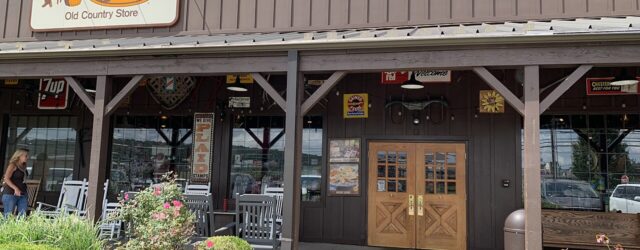
Cracker_Barrel_restaurant

Cracker Barrel knows how to trade on comfort. That is exactly why its misses feel so noticeable when a meal arrives bland, greasy, or far heavier than diners expected.

Among regulars, a few orders come up again and again as the ones to avoid.

Why certain Cracker Barrel staples keep disappointing regulars

A smart “do not order” list at Cracker Barrel is not just about calories. Regular customers tend to complain about three things more than anything else: inconsistency, dated execution, and menu items that sound more comforting than they actually eat. That pattern shows up across customer discussions, food-media rankings, and Cracker Barrel’s own menu descriptions, which often reveal when a dish is built around fried coatings, gravy, or sugary add-ons rather than strong core ingredients. Cracker Barrel’s official site also notes that its kitchens use shared prep spaces and common fryer oil, a reminder of how much of the menu depends on similar preparation methods.

That helps explain why fried entrées dominate the skip list. Eat This, Not That! singled out Chicken Fried Chicken at 1,140 calories before sides, and listed Country Fried Shrimp at 900 calories with more than 2,000 milligrams of sodium before the extra sides most guests actually choose. Those numbers do not automatically make a meal bad, but they do increase the odds that diners end up with a plate that feels heavy rather than satisfying.

Regulars also tend to be hardest on dishes that should be signature Southern comfort foods. When a chain builds its reputation on homestyle cooking, watered-down grits or limp seafood stand out more sharply than they would elsewhere. That is why some menu items attract criticism out of proportion to their place on the menu.

The 5 menu items regular customers most often say to avoid

First is the Lemon Pepper Rainbow Trout. It has one of the strangest reputations on the menu because it is lighter than many Cracker Barrel entrées, yet Mashed reported that 37.44% of surveyed diners named it the chain’s worst dinner item. The issue seems less about nutrition and more about expectation: guests come for rich comfort food, then get a fish dish many say lacks the payoff they wanted.

Second is grits. This should be a safe order at a Southern-leaning chain, but it has become a recurring weak point. Mashed found that nearly 33% of poll respondents considered Cracker Barrel’s grits the worst breakfast dish, while customer commentary frequently describes them as watery and underseasoned.

Third is Chicken Fried Chicken. It is one of the brand’s most familiar comfort plates, but its official menu positioning and outside nutrition analysis show why some loyal customers now skip it. With fried chicken, sawmill gravy, bread, and multiple sides, it can quickly turn from indulgent to exhausting.

Fourth is Country Fried Shrimp. The plate promises a crowd-pleasing Southern seafood dinner, yet the combination of fried shrimp, hushpuppies, sauce, and added sides makes it one of the easiest meals to over-order. Diners looking for seafood often leave feeling they paid for breading more than shrimp.

Fifth is Country Fried Steak. This one remains popular, but popularity is not the same as universal approval. Cracker Barrel lists the entrée at 600 calories before sides, and regulars often lump it together with other gravy-heavy fried plates that arrive greasy, soft, and one-note rather than crisp and savory.

What to order instead if you still want the Cracker Barrel experience

Skipping these five does not mean skipping Cracker Barrel altogether. In fact, the best strategy is usually to lean into dishes that let the kitchen do less masking. Grilled proteins, simpler breakfast plates, and classic sides with clearer textures tend to travel better from kitchen to table and hold up more consistently across locations.

The official menu highlights several lighter alternatives, including Smokehouse Grilled Chicken at 380 calories and Grilled Chicken Tenders at 320 calories before sides. Those dishes do not carry the same breading-and-gravy burden, which means the flavor has to come from the meat itself. When regulars praise Cracker Barrel, they often point to exactly that kind of straightforward order.

Breakfast can also be better when built more simply. Pancakes, eggs, and bacon remain closer to the chain’s core identity than overloaded specialty combinations. Even Grandma’s Sampler, while hearty, makes more sense when shared or customized thoughtfully than when treated as a routine solo breakfast.

The bigger takeaway is not that Cracker Barrel has five universally bad dishes. It is that some menu items ask the kitchen to do too much at once, and regular customers have noticed. At a restaurant built on nostalgia, the safest bet is still the food that feels closest to the old-fashioned promise on the sign.

Domino’s Is Doing Something Unusual: Telling Customers to Go Order From Its Competitors

Domino's Pizza

Fast-food chains are competing harder than ever for attention as major brands lean on limited-time offers, loyalty programs, and menu launches to stand out. Domino’s narrowed that battle on August 31 by telling customers to order from McDonald’s, Burger King, Taco Bell, Chick-fil-A, and Chipotle as part of a promotion tied to its new pizza. The campaign marks an unusual approach for a national pizza chain because it explicitly uses rival brands’ flagship items to market Domino’s latest product.

Domino’s ties a national giveaway to purchases at rival chains

Domino’s said its “Is the Domino Worthy?” campaign began August 31, the same day the company rolled out the Domino nationwide, according to the company’s press release and promotional site. The offer asks customers to buy one of five signature fast-food items from competing brands and upload proof of purchase for a chance to receive a code for one free Domino pizza, while supplies last. The qualifying items listed by Domino’s are McDonald’s Big Mac, Burger King’s Whopper, Taco Bell’s Crunchwrap Supreme, Chick-fil-A’s Original Chicken Sandwich, and a Chipotle burrito.

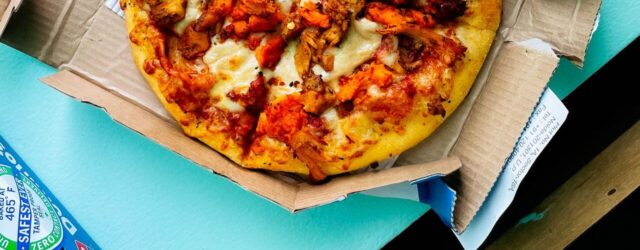
Nation’s Restaurant News reported that the campaign is built around Domino’s confidence that its new product belongs alongside those widely recognized menu items. Domino’s described the Domino as a Detroit-style pizza for one person, shaped like the company’s logo and cut into two slices. The company said the product includes buttery-flavored dough with parmesan, two layers of cheese, a choice of sauce, and up to three toppings, finished with its signature garlic seasoning.

Domino’s Chief Marketing Officer Kate Trumbull said in a company statement that the product was created for customers who want customization, portability, and convenience in an individual meal. The company also said the Domino was rated as one of the best-tasting products in its history and called it one of the strongest-performing items it has tested. Those statements, from Domino’s and repeated by Nation’s Restaurant News, frame the promotion as a trial-driving launch rather than a discount campaign centered only on price.

The promotion is national, but store-level participation details remain limited

For customers in the United States, the immediate impact is broad availability rather than a state-by-state rollout. Domino’s said the Domino officially launched nationwide on August 31, meaning the product is intended to be available across the chain’s U.S. system, though the company has not released a public, comprehensive list of individual participating stores by city or state. The company’s promotional materials also do not break out how many free-item codes are allocated by region.

That leaves some local details unconfirmed. Domino’s has not publicly identified whether supplies for the free-item giveaway are distributed evenly across markets, and it has not published a city-level list showing where demand has been highest since launch. The company’s website states only that codes are available on a first-come, first-served basis and that the promotion runs from August 31, 2026, through September 30, 2026, or until all eligible prizes are claimed.

What is confirmed is the size of Domino’s operating footprint behind the launch. In its August 31 press release and earlier product announcement, the company said 99% of Domino’s stores were operated by independent franchise owners as of the end of the second quarter of 2026. That matters locally because menu launches and redemption volume are likely to be felt at the store level, even though the promotion is being marketed nationally.

Domino’s is using competitors to position the product as an “icon” item

The broader context is a menu strategy built around signature products that can drive traffic and repeat visits. Domino’s said the Domino fills a gap in its portfolio because a traditional pizza order can force groups or individuals to compromise on toppings, while the new item is designed for solo ordering and portability. In its own materials, the company repeatedly positioned the product as potentially iconic, which explains why the promotion asks consumers to compare it directly with established fast-food staples from rival chains.

The campaign also fits a larger industry pattern in which chains use launch promotions to create urgency and trial, but Domino’s approach stands out because it tells customers to spend money at competitors first. Nation’s Restaurant News described that as Domino’s encouraging customers to order other brands’ signature products to decide whether the new pizza belongs in that category. Based on the company’s terms, customers should expect a limited-time national promotion tied to receipt submission, with availability ending either on September 30 or earlier if all rewards are claimed.

Domino’s has not said whether the campaign will be extended beyond that window, and it has not released updated redemption totals since the August 31 launch. For now, the company’s public position is that the Domino is meant to compete for the same kind of menu recognition long held by burger, burrito, chicken sandwich, and taco-centered products at larger quick-service rivals.

This Common Vitamin Could Cut Your Dementia Risk in Half, According to New Research

Vitamin D

As dementia cases rise and prevention research draws wider public attention, nutrition has become one of the most closely watched areas in brain-health science. The latest discussion centers on vitamin D, a common nutrient now linked in multiple recent studies to lower dementia risk, though public-health guidance remains more cautious than many headlines suggest. For U.S. readers, that means the science is worth watching, but it has not yet produced a blanket recommendation to take supplements specifically to prevent dementia.

Recent research points to vitamin D, with one review finding a 49% gap

The clearest recent figure comes from a 2025 meta-analysis published in Frontiers in Neurology, which pooled 22 observational studies covering 53,122 participants. That analysis found people in the lowest vitamin D category had a 49% higher risk of dementia than those in the highest category, and it reported that each 10 nmol/L increase in vitamin D was associated with a 1.2% lower dementia risk. The researchers also stated that the findings show an association, not proof that vitamin D directly prevents dementia.

More recent individual studies have pushed that conversation forward. In findings highlighted by the American Academy of Neurology in April 2026, researchers followed 793 dementia-free adults with an average age of 39 and found that higher vitamin D levels in midlife were associated with lower tau burden on brain scans about 16 years later. Tau is one of the key biological markers linked to Alzheimer’s disease.

A smaller Emory University study, published August 19, 2026, looked at 54 older adults with both sleep disturbance and mild cognitive impairment, a group already considered at elevated risk of dementia. Emory said participants taking at least 5,000 IU of vitamin D daily scored more than 13% higher on a standard cognitive screening test than those who were not, after adjustment for other factors. The researchers described that study as preliminary.

What the findings mean in the United States, and what remains unconfirmed

For people in the United States, the main confirmed takeaway is that low vitamin D status is increasingly being studied as a potentially modifiable risk factor. That matters because dementia already affects millions of Americans, and Emory noted that more than 7 million Americans are living with Alzheimer’s dementia, with that number projected to approach 13 million by 2050.

What is not confirmed is equally important. None of these recent studies establishes that taking vitamin D supplements will cut dementia risk in half for the general population. The “half” figure seen in some coverage reflects a comparison between low and high vitamin D groups in observational data, not a controlled trial showing that a supplement intervention prevents half of future dementia cases.

There is also no new federal recommendation telling healthy adults to start vitamin D solely for dementia prevention. The available research varies widely in design, population and dosage, and some of the most eye-catching findings come from small or specialized groups, including adults with mild cognitive impairment or sleep problems rather than the broader public.

Global health guidance remains cautious as researchers sort out cause and effect

The broader context helps explain why experts are being careful. On July 15, 2026, the World Health Organization released updated dementia risk-reduction guidelines stating that up to 45% of dementia risk could be prevented or delayed through modifiable factors such as physical activity, diet, blood-pressure control, diabetes management and reduced exposure to air pollution.

But the WHO guidance also drew a firm line on supplements. The agency said vitamins B and E, omega-3 fatty acids and multivitamin or mineral supplements are not recommended specifically to reduce dementia risk in people without a diagnosed deficiency because the evidence is not strong enough to show benefit that outweighs possible harms. Supporting guidance in the WHO evidence review also emphasized that whole-diet approaches appear more promising than focusing on single nutrients.

That leaves vitamin D in a closely watched but unresolved category. Researchers continue to report associations between better vitamin D status and markers of brain health, while also saying randomized controlled trials are still needed to determine whether supplementation itself changes dementia outcomes. For now, the strongest public-health message remains broader: preventing deficiency and managing established dementia risk factors are supported more clearly than any single-vitamin strategy.

Wonder Just Laid Off 7% of Its Staff, and the Reason Points to Something Bigger Coming

Food tech companies are under pressure to show disciplined growth as investors reward scale, efficiency, and clear paths to profitability. Wonder, the mealtime platform founded by Marc Lore and expanded through deals including Grubhub and Blue Apron, is now making that shift more visible. Its latest layoffs point to a broader restructuring as the company prepares for a possible public offering and its next phase of expansion.

Wonder confirms about 150 job cuts in a 7% workforce reduction

Wonder laid off about 7% of its workforce, affecting roughly 150 employees companywide, according to Restaurant News and a company statement published August 31. A Wonder spokesperson said the company eliminated roles to focus resources on “key growth areas” as it enters what the company described as its next chapter. The layoffs also included positions at Wonder-owned Grubhub.

The reduction marks at least the second major round of job cuts tied to Wonder’s post-acquisition restructuring. In a February 28, 2025 message posted by the company, Grubhub CEO Howard Migdal said Wonder had decided to eliminate approximately 500 positions at Grubhub as the businesses integrated functions and removed duplication. In that message, Migdal said the company was reducing management layers and bringing leaders closer to the business.

The latest cuts come as Wonder continues to present itself as a fast-scaling restaurant and delivery platform. Restaurant News reported that the company now operates more than 150 stores across 10 East Coast states and Washington, D.C. The same report said Wonder is working to become “IPO-ready” by early 2027, putting the layoffs in the context of a company preparing to show investors tighter operating discipline.

New Jersey is central to Wonder, but the full local layoff picture is not public

For readers in Wonder’s home region, New Jersey remains one of the most relevant states to watch. The New Jersey Department of Labor’s 2025 WARN notice archive lists a Wonder Group notice in Englewood showing 121 affected workers with an effective date of February 19, 2026. That filing offers a confirmed location and worker count for one prior layoff event in the state.

What is not yet public is a full state-by-state or site-by-site breakdown for the newly reported 7% reduction. Wonder has not released a comprehensive list of affected New Jersey locations, offices, or operating units tied to the latest round. It also has not publicly identified how many of the roughly 150 affected workers were based in New Jersey versus other markets in its East Coast footprint.

That leaves an incomplete local map even as New Jersey remains important to the company’s operating history and expansion story. Wonder’s recent growth has spread across the Northeast, and the company has publicly announced continued openings in newer markets such as Massachusetts and New Hampshire. But for this layoff round, only the companywide estimate and the inclusion of Grubhub roles have been confirmed publicly.

The cuts reflect IPO preparation, integration work, and investment in automation

The clearest stated reason for the layoffs is streamlining ahead of a planned IPO. Restaurant News reported that the cuts were made as Wonder prepared for a public offering, and the company said it was shifting resources toward “key growth areas.” That language lines up with how private companies often reshape payroll and management structures before trying to enter public markets.

Wonder’s own recent fundraising announcements add more context. In July 2026, the company said it raised $650 million at a $9 billion pre-money valuation and stated that the money would support physical expansion, marketplace growth, and investments in technology, robotics, and artificial intelligence. Wonder also said its footprint had tripled from 46 to 140 locations since May 2025, underscoring how quickly the business has been scaling.

For customers, the immediate effect is not a announced rollback in service or store openings. Instead, the company’s public statements point in the opposite direction: more locations, more integration with Grubhub, and more technology inside the operation. Based on what Wonder has confirmed so far, residents should expect the company to keep expanding while it reorganizes internally around growth, automation, and IPO readiness.

Where a Top Chef Judge Actually Eats When They’re in Charlotte

National food television can reshape how diners view a city, especially when a franchise as established as Bravo’s Top Chef spends weeks filming there. In Charlotte, that attention turned quickly from the set to the restaurants host Kristen Kish and judges Tom Colicchio and Gail Simmons were actually choosing on their own time. Their stops, documented by local reporting and social media posts, offer a practical snapshot of which Charlotte restaurants made the strongest impression during filming.

Lang Van emerged as the clearest repeat favorite

The most clearly verified answer is Lang Van, the Vietnamese restaurant at 3019 Shamrock Drive in east Charlotte. Eater Carolinas reported on August 29, 2025, that Kristen Kish, Tom Colicchio, and Gail Simmons had all eaten there while in town for Season 23 filming, and Kish called it “probably one of my favorites so far and most frequented,” according to that interview. The Charlotte Observer separately reported that Lang Van had become a repeat stop for the judges and quoted Colicchio describing it as “Fantastic.”

That combination matters because it moves the story beyond a one-off celebrity sighting. Eater’s reporting confirmed all three core on-air figures had visited the same restaurant, while the Observer added that Lang Van was not just a filmed backdrop or sponsored stop but a place they returned to while exploring Charlotte’s dining scene. Kish also told the Observer that the restaurant’s hospitality stood out, saying the staff remembered guests, their orders, and even where they sat.

Eater attributed part of that appeal to owner An “Dan” Nguyen and the restaurant’s longstanding role in Charlotte’s food culture. The outlet described Lang Van as known for traditional Vietnamese dishes including pho, vermicelli noodles, and lemongrass curries, and reported that Nguyen’s personal style of service is part of why the restaurant has such a loyal following.

The Charlotte trail stretched from Bojangles to fine dining

Lang Van may have been the standout, but it was not the judges’ only stop in Charlotte. The Charlotte Observer reported that Kish publicly marked her arrival in the city with a Bojangles meal on August 16, 2025, posting that she was “Confirming my attendance in Charlotte, NC” with the chain’s food in hand. The paper later reported that Simmons also posted a Bojangles meal, suggesting the local fast-food chain became part of the judges’ off-set routine as well.

Other confirmed stops show a wide range of dining across Charlotte neighborhoods. According to the Observer, Simmons visited Albertine, the uptown Mediterranean restaurant from Joe and Katy Kindred, while she and Colicchio were also photographed at Church and Union. The paper also reported stops at Coquette, Customshop, Substrate, Yunta, Euro Grill & Cafe, and Clark’s Snack Bar.

What is not known is every meal the judges ate in Charlotte or a complete chronological list of their visits. The reporting is based on interviews, restaurant posts, and social media documentation, and no full official itinerary has been released by Bravo. Still, the overlap among outlets shows a consistent pattern: the judges sampled both established local institutions and newer independent restaurants rather than sticking to one corridor or one style of dining.

Their restaurant choices reflected Charlotte’s broader food moment

The context for those choices is larger than celebrity dining. Eater reported that Top Chef was in Charlotte to film its 23rd season, with the production using the Carolinas as a culinary showcase. The Charlotte Observer reported that the season was planned as a way to highlight North Carolina and South Carolina food traditions, hospitality, and regional ingredients, placing Charlotte at the center of a national television conversation about Southern dining.

That helps explain why the judges’ off-camera meals drew such attention. Axios Charlotte reported that Charlotte’s restaurant growth mirrors a broader industry pattern described by Colicchio: chefs leaving larger cities, returning to hometowns, and opening smaller independent restaurants. In separate Axios reporting, the city’s current restaurant landscape has also been framed as increasingly shaped by national recognition, including Top Chef and Michelin attention.

For Charlotte diners, the practical takeaway is straightforward. The publicly confirmed restaurant trail shows that when Top Chef’s judges were free to choose where to eat, they gravitated toward locally rooted places with established followings, distinctive points of view, and strong hospitality. Among those, Lang Van is the closest thing to a documented consensus pick, supported by both direct quotes and repeat visits during the Charlotte filming period.

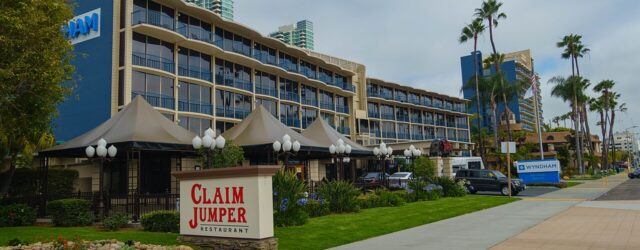
This Iconic California Steakhouse Chain Just Shut Another Location, and Only Four Are Left in the Whole Country

Claim_Jumper

National restaurant chains have continued trimming store counts as operators face high occupancy costs, uneven traffic, and a tougher casual-dining market. That pressure has now hit Claim Jumper again, with the California-founded steakhouse brand losing another location in San Bernardino. The latest closure leaves only four restaurants still operating across the country.

Claim Jumper has closed its San Bernardino restaurant, leaving four locations nationwide

Claim Jumper Steakhouse & Bar has permanently closed its San Bernardino restaurant at 1905 South Commercenter East, according to reporting by Patch that cited the chain’s removal of the restaurant from its online location list and signage posted at the site. Uber Eats also listed the restaurant as closed effective June 24, 2026, providing the clearest confirmed date attached to the shutdown.

The closure further reduced a chain that was once widespread across California and other Western states. SFGATE reported on July 6 that, after the San Bernardino closure in June and the earlier April closure of a Claim Jumper in Henderson, Nevada, the brand was down to four operating restaurants in the United States. Those remaining restaurants were identified as Buena Park, Costa Mesa, and San Diego in California, plus one Oregon location.

Claim Jumper’s own website supports that reduced footprint, showing active location pages for Buena Park and broader site activity tied to Costa Mesa, San Diego, and Tualatin, Oregon. The company has not issued a public announcement outlining the closure timeline for San Bernardino or providing a nationwide closure count of its own.

The closure ends Claim Jumper’s last Inland Empire outpost

For California diners, the San Bernardino closure carries added local significance because it removed Claim Jumper’s last confirmed Inland Empire location. Patch reported that the restaurant had served the area since 1999 and described the San Bernardino store as the final remaining unit for the chain in that region. The report also noted that Rancho Cucamonga had already lost its Claim Jumper in 2024, citing San Bernardino County public health records.

The remaining California restaurants are concentrated elsewhere in Southern California. Claim Jumper’s current web listings and event pages show operating locations in Buena Park, Costa Mesa, and San Diego, while no San Bernardino restaurant appears among active stores. That means California still has three of the chain’s four remaining restaurants, but none are left in the Inland Empire.

What is not yet known is whether Claim Jumper plans additional closures or a restructuring of its California footprint. The company has not released a comprehensive statement explaining the San Bernardino shutdown, and it has not published a full recent list of previously closed California sites as part of this latest round.

The chain’s contraction reflects a long decline in the casual steakhouse segment

Claim Jumper’s shrinking store base did not happen all at once. SFGATE described the brand’s recent losses as part of a prolonged slide following its 2010 bankruptcy sale to Landry’s, which acquired the chain when it still had dozens of restaurants. Yahoo Finance, summarizing the chain’s trajectory, similarly reported that Claim Jumper’s owners entered Chapter 11 in 2010 and that the company once operated 45 locations in eight states before the business contracted sharply.

Broader restaurant industry conditions help explain why large-format casual-dining chains have struggled. Public company filings across the sector have pointed to inflation, higher borrowing costs, labor pressures, and softer guest traffic as ongoing risks for restaurant operators, especially brands with large dining rooms and high fixed costs. Those pressures do not amount to a company-specific explanation from Claim Jumper, but they provide the broader market context for why older full-service chains have been closing units.

For customers, the practical takeaway is straightforward: Claim Jumper remains available in California only in Buena Park, Costa Mesa, and San Diego, along with one Oregon restaurant in Tualatin. As of early September 2026, the chain’s website continues to market those remaining locations for regular dining and private events, indicating that they are still operating even as the brand’s national footprint has fallen to four.

Utah’s First Buc-ee’s Just Hit an Unexpected Snag, and It Has Nothing to Do With the Chain Itself

Buc-ee's

As Buc-ee’s continues pushing beyond its Texas roots, new stores in western states have become a closely watched part of the chain’s expansion. In Utah, that attention has centered on Springville, where the company selected a site for what would be its first location in the state. The latest setback is not a retreat by Buc-ee’s, but a reminder that a large-format travel center cannot open before the surrounding land is made build-ready.

Springville approved the deal, but not immediate construction

Springville City Council approved a memorandum of understanding and development agreement with Buc-ee’s on September 2, 2025, clearing the way for the company to pursue its first Utah travel center, according to reporting by the Daily Herald, KSL and FOX 13. The planned store is a 74,000-square-foot facility on undeveloped land near 1400 North and 2600 West, just west of Interstate 15 at Exit 261. Plans presented publicly called for roughly 120 fueling positions, electric-vehicle charging and more than 200 full-time jobs, making it one of the largest single retail development announcements in the area.

What the council approved was a framework for development, not a notice that construction would begin immediately. Springville Mayor Matt Packard said at the time that no final document had yet been signed, even as city leaders expressed confidence the transaction would be completed, according to KSL. That distinction has become central as residents have looked for visible progress at the site and found little activity on the ground.

Buc-ee’s real estate and development director Stan Beard told city leaders the company expected a long runway before physical construction. Per the Daily Herald and FOX 13, Beard said the project was likely nine months to a year away from groundbreaking, followed by another 15 to 18 months before opening. That timeline placed any store debut well beyond the initial announcement and made early delays more likely than unusual.

The confirmed issue is the site itself, not Buc-ee’s commitment to Utah

The specific problem in Springville is that the proposed property is still largely raw land. Patrick Mooney, Springville’s director of administration, told FOX 13 that the location does not yet have the power, sewer, water service or road access needed to support a Buc-ee’s of this scale. In practical terms, that means the first visible work may involve utility lines, street improvements and traffic infrastructure rather than the store building itself.

City documents and local reporting show Springville agreed to reimburse Buc-ee’s for some of those public-facing improvements. The commitments include $625,000 toward a sewer lift station, half the cost of certain curb-to-curb street work, future traffic-signal infrastructure at 1400 North and 2600 West, and some water-line expenses, according to the NewsBreak summary citing local officials and details previously reported by Utah outlets. Access-related work also requires coordination with the Utah Department of Transportation, adding another layer to the schedule.

What is confirmed is that Springville still considers the project active. What is not yet known is an exact groundbreaking date or a guaranteed opening date. Mooney told FOX 13 that a spring 2028 opening remains a possibility if the process stays on track, but he also said projects of this kind can take years, especially in an area where surrounding development must be created almost from scratch.

For Utah drivers, the wait now depends on public works timelines

For residents and freeway travelers, the immediate takeaway is that the Utah Buc-ee’s project has shifted into an infrastructure phase that is often less visible than store construction. The city and Buc-ee’s still appear aligned on the Springville location, and no public statement from either side has indicated that the project has been canceled, according to FOX 13 and earlier local coverage from KSL and the Daily Herald. That matters because rumors circulated in early 2026 that the chain had backed away from Utah, even though city officials said the slowdown reflected process and utility work.

The local impact is concentrated in Springville because Utah does not currently have any Buc-ee’s locations. If completed, the store would become the chain’s first in the state and another marker in its western growth after openings in states including Colorado and Arizona, as local Utah reporting noted. So far, neither the company nor the city has released a more detailed public schedule for phased site work, utility installation or vertical construction.

That means customers should expect a long preconstruction period before the familiar Buc-ee’s building, canopies and signage appear. For now, the most important developments are likely to be municipal approvals, utility extensions and transportation coordination. As city officials have said publicly, the beaver-branded travel center is still planned for Springville; the current snag is that the neighborhood around it has to be built first.

This Beverage Giant Is Cutting Dozens of Jobs as Its Ohio Plant Quietly Changes What It Does

Refresco

Beverage manufacturers across the U.S. have been reworking production networks as operating costs and customer demand patterns shift. In southwest Ohio, that is now playing out at Refresco Beverages’ Carlisle site near Dayton, where the company has ended manufacturing and is cutting dozens of jobs while keeping the property open in a different role. The change means the plant at 300 Industry Drive will no longer produce beverages, even though the facility itself is no longer slated for a full shutdown.

Refresco revised the scale of the job cuts at Carlisle

Refresco Beverages US Inc. has reduced the number of expected job losses at its Carlisle facility to 44, according to a revised WARN notice reported in August and tied to the company’s operational shift at 300 Industry Drive. The updated plan replaced an earlier notice that projected roughly 63 affected workers if the plant closed entirely. The official change matters because Carlisle is no longer headed for a full permanent shutdown, even though beverage production there has ended.

The company’s first WARN letter to the Ohio Department of Job and Family Services was dated April 14, 2026. In that filing, Refresco said it would discontinue manufacturing operations at the Carlisle plant on or about June 24, 2026, and expected warehousing to conclude on or about July 11, 2026, with the facility then closing permanently. The filing described the notice as a plant-closing notice under federal WARN and Ohio law.

A later company letter received by the state on July 14, 2026, and described by trade publication FreshlyBottled, said Refresco had changed course. Instead of shutting the property, the company said the Carlisle site would transition into a distribution center for warehousing, storage, and shipment. That revision lowered the expected employment impact, but it did not reverse the end of beverage manufacturing at the site.

What the change means in Carlisle and Warren County

The confirmed location is Refresco’s facility at 300 Industry Drive in Carlisle, Ohio 45005, in Warren County near Dayton. The plant had handled both beverage manufacturing and downstream logistics, including warehousing and distribution, before the restructuring. Refresco’s earlier state filing also said employees at the facility were not represented by a union and did not have bumping rights.

What is confirmed is that manufacturing work at Carlisle ended on or about June 24, 2026, per the April WARN filing, and that the site is being retained for distribution functions under the revised plan described in the July 14 update. What is not publicly clear is the full list of individual employees who will remain at the site or the exact staffing structure for the repurposed operation. The company has not released a comprehensive public roster of retained positions at the Ohio facility.

The earlier WARN filing included a schedule of affected job categories that spanned production, quality, maintenance, warehouse, and supervisory roles. Those titles included machine operators, maintenance technicians, forklift operators, quality technicians, and warehouse staff, showing that the impact reaches beyond a single department. Seven employees were offered positions at other Refresco locations under the original closure plan, according to the April filing, but the company has not publicly detailed how many accepted those transfers.

Refresco tied the move to customer needs and operating costs

Refresco said in its April 14 WARN notice that the decision followed an extensive review of its manufacturing operations and network. The company stated that ceasing production in Carlisle was driven by the needs of its customers as well as high operating costs. That makes the Carlisle change a network and cost decision, not a food-safety event or product recall.

The practical result for Ohio residents is narrower than a full plant closure but still significant for the local workforce. Customers should not expect the Carlisle property to disappear entirely, because the revised plan keeps the building in use as a warehousing and shipping center. What changes is the site’s function: it is no longer making beverages there, and dozens of manufacturing-related jobs are being eliminated as a result.

For Carlisle and the surrounding area, the latest confirmed position is that Refresco has preserved some activity at the site while reducing headcount from the original closure scenario. The company’s prior filing said affected workers would be offered severance packages, on-site job fairs, and resume assistance tied to their separations. As of the revised plan, the forward-looking fact is that Carlisle remains part of Refresco’s network, but as a distribution operation rather than a beverage manufacturing plant.

Here’s the Bagged Ice Safety Mistake You’re Probably Making Without Realizing It

Bagged ice is one of the most overlooked food items in home coolers, tailgates, and backyard gatherings, even though federal regulators treat it as food. The specific mistake food safety officials and industry guidance repeatedly warn about is handling edible ice as if it were just a sealed accessory for drinks, rather than a product that can be contaminated during storage, scooping, and serving. That distinction matters in the United States because packaged ice falls under Food and Drug Administration oversight when it is manufactured and sold across retail channels.

Bagged ice is food, not just part of the cooler setup

The FDA states that packaged ice is regulated as food under the Federal Food, Drug, and Cosmetic Act, which means it is subject to food safety requirements during manufacturing, packaging, transport, and storage. That federal framework is the broadest verified point in this story: bagged ice sold at grocery stores, gas stations, and convenience retailers is not treated as neutral packaging material. The agency’s guidance also makes clear that packaged ice must be produced under sanitary conditions and truthfully labeled, including when it is marketed as coming from a specific water source.

That is why the most common consumer mistake is significant: people often cut open a bag, plunge hands into it, or use the same ice to chill beverage cans and then later pour that melt-exposed ice into cups. Food safety guidance cited by the Conference for Food Protection says ice used to cool cans and bottles should not be used in cup beverages and should be stored separately. The same guidance says ice should be dispensed with a scoop, never with hands.

Additional public health guidance reinforces the same point. The CDC says ice and ice-making equipment can be contaminated through improper storage or handling and advises minimizing direct hand contact with ice intended for consumption while using a hard-surface scoop to dispense it.

What the mistake looks like in everyday use

In practical terms, the mistake usually happens after purchase, not necessarily at the manufacturing plant. A bag of retail ice may be safe when sold, but contamination risks increase when consumers rest the bag on dirty garage floors, dump it into coolers with bottles and cans, or reach directly into the ice after touching food packaging, raw meat trays, or cooler lids. That turns a regulated food product into a cross-contact surface.

Public guidance on ice handling is consistent on the main points. Food safety materials used by retail and foodservice regulators say glasses should not be used to scoop ice because they can contaminate the supply and can also break. Other hygiene guidance says scoop handles should be stored so they do not touch the ice, reducing the chance that the hand-contact portion of the utensil becomes a contamination point.

What is not fully quantified in public national data is how often home handling errors involving bagged ice directly cause reported illness. Federal and public health sources broadly identify improper handling and cross-contamination as food contamination risks, but they do not publish a single national estimate tied only to consumer bagged-ice misuse. What is confirmed is the handling standard itself: edible ice should be treated like ready-to-consume food.

Why food safety agencies focus on ice handling

The reason agencies focus on ice is simple: unlike many foods, ice is consumed without a kill step. Once bacteria, viruses, or environmental contamination are introduced through hands, dirty scoops, unsanitary coolers, or contact with beverage containers, there is no later cooking process to reduce that risk. USDA food safety materials define contamination broadly to include pathogens and contamination introduced through improper handling, preparation, and storage.

CDC contamination guidance for food service investigations also identifies transfer from contaminated hands, utensils, and surfaces as a recognized pathway. In other words, the concern is not that ice is uniquely hazardous by itself, but that it is often treated casually even though it directly contacts drinks and food. That mismatch between consumer habits and food safety rules explains why regulators and training materials keep returning to the same advice.

For customers and residents, the practical takeaway is narrow and factual. Bagged ice should be stored off the floor, kept in clean containers, separated from ice used only to chill cans or bottles, and served with a clean scoop rather than hands or a drinking glass, according to food safety guidance cited by federal and industry sources. The FDA’s position that packaged ice is food is the clearest baseline for what consumers should expect from the product and from their own handling of it.

Top CEOs From Kraft, McDonald’s, and Whirlpool Are All Sounding the Same Alarm About Grocery Budgets

American consumer spending has held up longer than many economists expected, but major household brands are now describing sharper signs of budget stress. In recent public comments and earnings discussions, leaders at Kraft Heinz, McDonald’s and Whirlpool all pointed to the same problem: shoppers are becoming more selective about basic purchases, including food consumed at home and away from home. Their remarks do not describe a single recall, closure or state-specific event, but they do offer a broad warning about how stretched grocery and household budgets remain across the U.S.

Kraft Heinz, McDonald’s and Whirlpool are all flagging the same consumer pullback

The clearest warning came from Kraft Heinz CEO Steve Cahillane in early May 2026. According to Axios, which cited his interview comments, Cahillane said lower-income consumers are “literally running out of money at the end of the month,” a blunt assessment from the company behind Heinz ketchup, Kraft macaroni and cheese and other pantry staples. The Wall Street Journal also reported that Kraft Heinz has been emphasizing value, including lower prices on some items, more promotions and smaller package sizes at lower price points.

McDonald’s delivered a similar message on May 7, 2026, during its first-quarter earnings discussion. The Associated Press reported that CEO Chris Kempczinski said higher gas prices would disproportionately affect low-income consumers, while company leadership also described consumer sentiment as marked by heightened anxiety. Axios separately reported that Kempczinski said lower-income consumers were still pulling back and that the broader environment might be getting worse.

Whirlpool’s warning came through its earnings commentary on consumer demand. In the company’s second-quarter earnings transcript, Whirlpool said elevated interest rates, trade policy uncertainty and weaker consumer sentiment were hurting industry demand. While Whirlpool sells appliances rather than groceries, its results are often watched as a read on middle-income household finances because big-ticket purchases are among the first items families delay when budgets tighten.

The impact is national, but companies have not tied the warning to a list of states or cities

For readers looking for a state-by-state breakdown, that information is not available from the companies’ recent comments. Kraft Heinz, McDonald’s and Whirlpool have all described broad pressure on U.S. consumers, but none of the cited reports released a comprehensive list of specific cities, counties or states where households are under the greatest strain. That means the warning is national in scope, not a localized chain update or a market-specific announcement.

What is confirmed is that the pressure spans both grocery aisles and restaurant spending. Kraft Heinz is talking about consumers making trade-down decisions inside supermarkets, while McDonald’s is talking about diners who remain highly sensitive to value pricing. Whirlpool’s comments suggest the same households are also postponing durable-goods purchases, reinforcing the idea that food budgets are being managed alongside other essential expenses.

The overlap matters because these are three very different businesses. When a packaged-food company, a fast-food chain and a home-appliance maker are all describing the same consumer caution, it signals a spending pattern that reaches well beyond one category. Still, the companies have not published local maps or state-level consumer stress data tied to these remarks.

Inflation has cooled from its peak, but food costs and other essentials are still pressuring households

Recent federal inflation data helps explain why these executives are using similar language. The U.S. Bureau of Labor Statistics said the food-at-home index in July 2026 was up 2.7% from a year earlier, while the South region’s grocery index was up 2.3% over the same period. Those figures are far below the sharpest pandemic-era increases, but they still reflect higher ongoing costs for shoppers who have already absorbed years of price increases.

At the same time, restaurant and fuel costs continue to shape consumer behavior. The Associated Press reported in May that McDonald’s specifically warned higher gas prices could dent demand, especially among lower-income customers. AP also reported in June that executives across major retailers and restaurant chains were still seeing cutbacks by lower-income consumers as refunds faded and families contended with more expensive food, clothing, insurance and other bills.

For customers, that means companies are increasingly focused on value messaging rather than assuming spending will rebound quickly. Kraft Heinz has been using promotions and smaller packs to meet tighter budgets, while McDonald’s has continued leaning on value offers to keep lower-income diners engaged. The most practical takeaway is not that one region is being singled out, but that large national brands are adjusting to a consumer who is still watching every dollar of the household food budget.